
Viking Blood Mead: Recipe, Honey Choices, and Tips
Viking’s Blood (also known as Viking’s Blod) is a cherry and hibiscus mead with a deep red color and a strong fruit character. This recipe comes from the early days of Doin’ the Most. The recipe uses honey, mixed berries with tart cherries, dried hibiscus, pectic enzyme, and RC-212 red wine yeast. You can make it as a one-gallon or five-gallon batch.
The recipe uses 3 pounds of honey, 20 ounces of mixed berries with tart cherries, and 2.5 ounces of dried hibiscus for one gallon. It is a fruit-forward mead with enough honey to produce a strong fermentation and enough fruit and hibiscus to make the finished drink stand out.
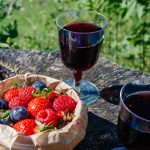
Viking’s Blood Mead
Equipment
Ingredients
- 3 lbs honey in primary
- 20 oz mixed berries – with tart cherries in primary
- 2.5 oz dried hibiscus in primary
- 1 gallon spring water in primary
- 1 tsp pectic enzyme in primary
- 1 packet red wine yeast, like RC-212 in primary
- 3 grams Fermaid-O use meadtools.com to calculate alternative nutrients.
- Stabilizers, use by packaging instructions
- .5 lb honey, or to taste in secondary, and you may like it more or less sweet based on personal preference
Instructions
- Boil hibiscus briefly in 8 oz of spring water and allow to cool. Strain petals from liquid.
- Blend primary ingredients in bucket.
- Pitch yeast.
- Affix airlock.
- After 24 hours, add nutrients.
- Use sanitized spoon to punch fruit cap daily.
- Allow to ferment two weeks.
- Confirm fermentation is complete using hydrometer readings.
- Siphon to secondary.
- Stabilize.
- Wait 24 hours, then add honey to sweetness preference.
- Allow to clear.
- Siphon to bottles using bottling wand.
- Cork bottles.
- Allow to age 3 months.
- Serve lightly chilled.
Video
Why this recipe works
Each ingredient has a clear job.
- Honey provides the fermentable sugar. It also provides the base flavor of the mead.
- Tart cherries provide strong fruit flavor and acidity. They help keep the mead from tasting too sweet or heavy.
- The other berries add more fruit character. They can also add color and body.
- Hibiscus is one of the most important ingredients in this recipe. It gives the mead a deep red color and a bright, tart flavor. It also adds a floral character that works well with cherries and berries.
Pectic enzyme helps break down pectin from the fruit. This can improve juice extraction and help the finished mead clear.
RC-212 is a red wine yeast. It is a good match for a fruit mead because it can ferment a higher-gravity must while allowing fruit character to remain noticeable.

Choose your honey
You do not need expensive honey for this recipe.
The original recipe recommends inexpensive wildflower honey. That is a good choice because the fruit and hibiscus provide so much flavor.
A mild wildflower honey gives you a clean base without competing with the cherries.
You can also experiment with orange blossom, clover, or another mild honey. A strongly flavored honey will change the character of the finished mead.
This is a good recipe for testing different honeys because the fruit provides a consistent background.
Work with the fruit
Frozen fruit works well for mead. It is easy to measure and usually releases juice well after thawing.
Use fruit without preservatives that could interfere with fermentation.
Tart cherries are especially useful because they provide both flavor and acidity. You can adjust the fruit blend if you want more cherry character or a different berry profile.
Fruit can create a large amount of pulp and sediment. Leave enough space for fermentation activity and use a blowoff tube if needed.
Ferment and finish
Sanitize all equipment before you begin.
Add the honey, fruit, hibiscus, water, pectic enzyme, and yeast according to the recipe. Give the yeast the nutrients it needs for healthy fermentation.
Use a hydrometer to track fermentation. Do not package the mead until fermentation is complete and the gravity is stable.
After primary fermentation, remove the fruit and allow the mead to clear. Additional conditioning can help the flavors become more integrated.
The recipe allows you to sweeten the mead after primary fermentation.
If you add fermentable honey for sweetness, stabilize the mead first or use another method that prevents renewed fermentation. Do not bottle a sweetened mead while viable yeast can still ferment the added sugar.
Things to keep in mind
Hibiscus is powerful. More is not always better. Too much can produce a very tart or tea-like flavor.
The same is true of cherries. Tart cherry can dominate a recipe quickly.
The final balance depends on the honey, fruit, fermentation, and sweetness. A dry version will taste much more tart than a sweet version.
Do not judge the mead immediately after fermentation. Young fruit mead can taste sharp and disjointed. Time can soften the acidity and help the fruit, honey, and hibiscus work together.
The goal is a bold fruit mead with a deep color, tart cherry character, floral hibiscus, and a honey base. It is simple enough for a beginner but gives you plenty of room to experiment.