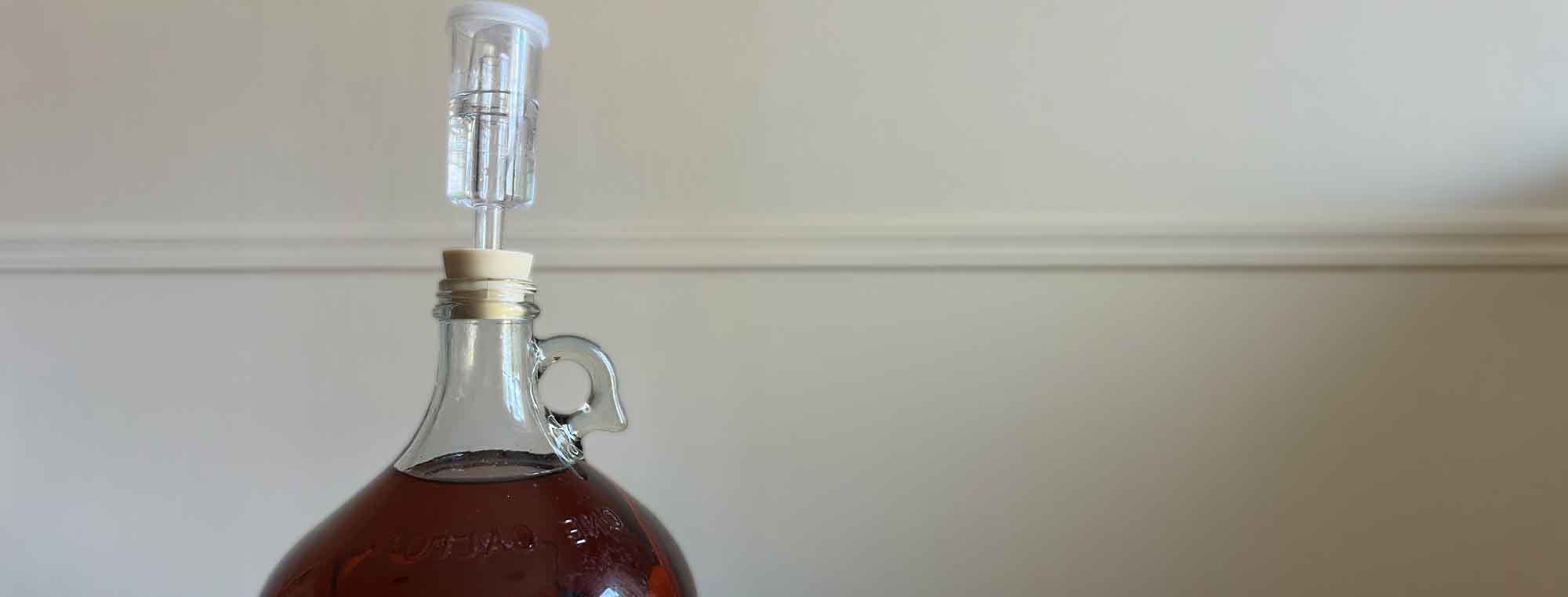

Clean equipment is one of the most important parts of homebrewing.
Yeast must grow in your beer, mead, cider, or wine. Other microorganisms must not.
Bacteria and wild yeast can change the flavor of a fermented drink. They can produce sour, vinegar-like, medicinal, or other unwanted flavors. Good sanitation reduces this risk.
The process is simple:
Clean → rinse if required → sanitize → drain → use
You do not need a sterile laboratory. You need the correct products and a consistent process.
Cleaning and Sanitizing Are Different
Cleaning and sanitizing are not the same thing.
- Cleaning removes dirt and residue.
- Sanitizing reduces microorganisms on a clean surface.
You must clean equipment before you sanitize it. A dirty fermenter can contain dried yeast, fruit pulp, hop residue, or other material. Sanitizer cannot reliably work through a layer of dirt. This is why putting dirty equipment into sanitizer is not enough.
A Simple Example
Imagine a fermentation bucket with dried krausen around the inside.
You fill the bucket with sanitizer.
The sanitizer contacts the clean plastic.
It does not necessarily reach every microorganism underneath the dried material.
Clean the residue first. Then sanitize the surface.
What Equipment Should You Sanitize?
Sanitize anything that will contact your finished wort, must, or beer after the stage where boiling provides protection.
This can include:
- Fermenters
- Fermenter lids
- Airlocks
- Stoppers
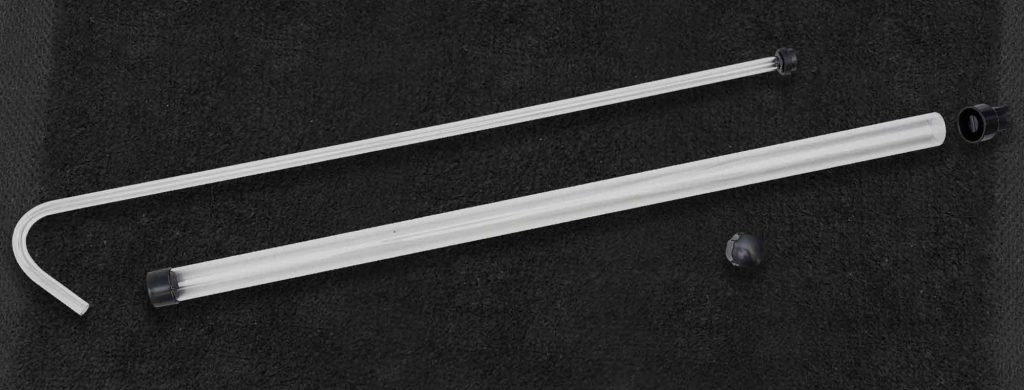
- Siphons
- Auto-siphons
- Siphon tubing
- Bottling buckets
- Bottle fillers
- Bottles
- Bottle caps
- Hydrometers
- Hydrometer test jars
- Funnels
- Wine thief
- Brewing spoons
- Measuring equipment
- Keg parts
- Keg posts
- Keg lines
- Beer faucets
- Thermometers
The exact equipment depends on the type of brewing you do.
When Do You Need to Sanitize?
Sanitize equipment immediately before you use it.
For example, if you are transferring beer from a fermenter to a bottling bucket:
- Clean the bottling bucket.
- Sanitize the bottling bucket.
- Sanitize the siphon.
- Sanitize the tubing.
- Transfer the beer.
Do not sanitize equipment hours before you use it and leave it exposed to dust. Sanitize it as close to use as practical.
The Most Useful Homebrew Sanitizers
Several products are commonly used by homebrewers.
Popular options include:
- Star San
- Iodophor
- One Step
- Other products specifically labeled for no-rinse food-contact sanitation
Follow the manufacturer’s instructions for the product you use. Do not assume that all sanitizers have the same concentration, contact time, or storage requirements.
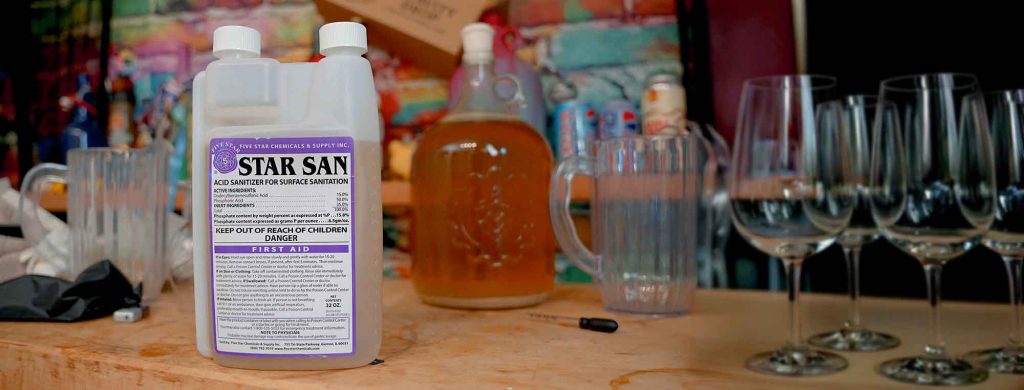
Star San
Star San is a popular acid-based no-rinse sanitizer.
It is commonly used by homebrewers because it is:
- Fast
- Easy to use
- No-rinse
- Suitable for many brewing surfaces
- Able to be stored in a spray bottle for easy application
Use the concentration specified by the manufacturer.
A common Star San dilution is approximately 1 ounce per 5 gallons of water. Always check the current product label because formulations and instructions can change.
How to Use Star San
A simple process is:
- Clean the equipment.
- Rinse if required.
- Prepare the Star San solution.
- Completely wet the surface.
- Allow the required contact time – generally about 2 minutes.
- Drain.
- Use the equipment.
Do not rinse the equipment with tap water after using Star San, as the product instructions specify no rinsing.
What About the Foam?
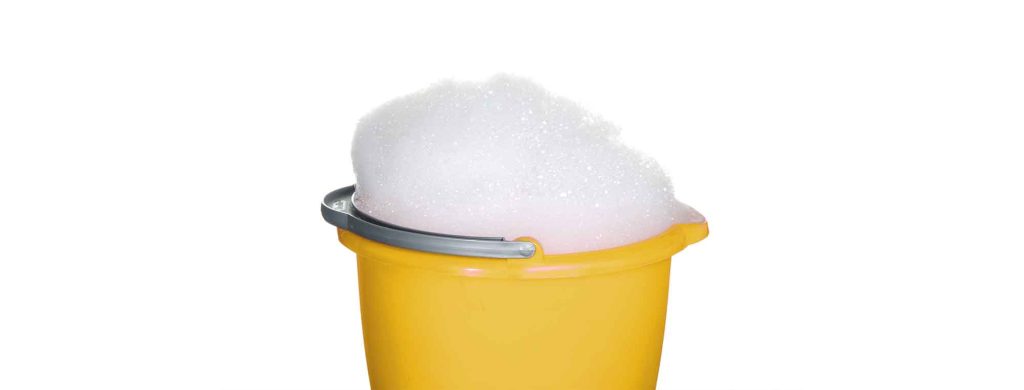
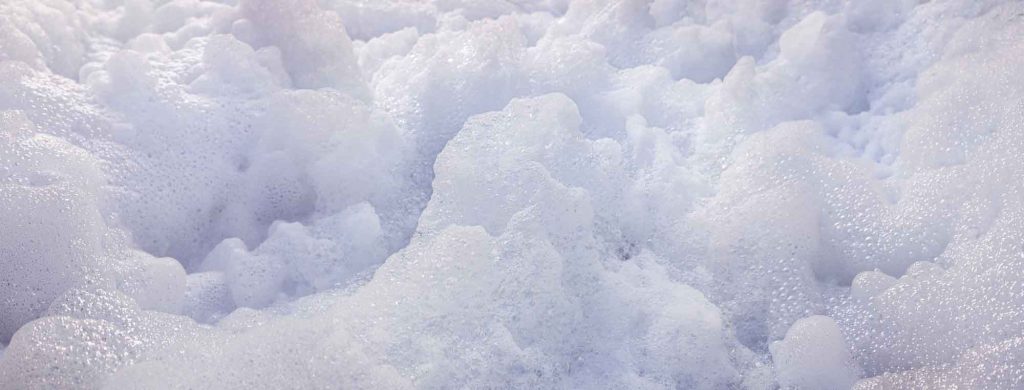
Star San produces foam. This can look alarming.
It is not a problem when the product is used according to its instructions.
The foam can remain in a fermenter. You do not need to remove every bubble or let it dry.

Iodophor
Iodophor is an iodine-based sanitizer. It is also widely used in brewing.
It can be useful for:
- Fermenters
- Bottles
- Keg equipment
- Small brewing equipment
Follow the manufacturer’s instructions for concentration and contact time.
Iodophor can stain some materials. It will also have a noticeable iodine color when concentrated.
Use the correct dilution.
One-Step Cleaners and Sanitizers
Some products are marketed as cleaners and sanitizers. One Step is an example.
These products can be convenient for some brewing applications. However, do not assume that every cleaner is an effective sanitizer. Read the product label.
For high-confidence sanitation, use a product specifically intended and labeled for sanitizing food-contact equipment.
What Is a No-Rinse Sanitizer?
A no-rinse sanitizer is designed to be used without rinsing with water after the required contact time. This is useful for homebrewers.
Tap water is not necessarily sterile. If you rinse sanitized equipment with untreated water, you can introduce microorganisms again. Follow the product instructions – if the product says no rinse, do not rinse it.
What Water Should You Use?
Use clean water to prepare sanitizer.
Many homebrewers use tap water. However, water chemistry can affect some acid sanitizers, which leads many homebrewers to use distilled water instead of tap for mixing up sanitizers. Reverse osmosis or distilled water can be useful for preparing sanitizer if your tap water causes problems. You do not normally need special water for every batch.
Cleaning Products
Sanitizer is not a substitute for cleaner.
Common brewing cleaners include:
- PBW
- OxiClean Free
- Brewing-specific alkaline cleaners
- Unscented brewery cleaners
Choose products that are suitable for your equipment. Avoid household cleaners that contain perfumes, dyes, or other ingredients that can remain on brewing equipment.
PBW
PBW is a popular alkaline brewery cleaner.
It is useful for removing:
- Dried beer
- Yeast
- Hop residue
- Krausen
- Organic material
Use the manufacturer’s recommended concentration and temperature.
Soaking is often more effective than aggressive scrubbing.
Do Not Use Scented Dish Detergent
Dish detergent can leave residues. These residues can affect beer head retention and flavor.
Some homebrewers use unscented dish detergent for certain cleaning tasks. However, a brewery-specific cleaner is usually a better choice for equipment that directly contacts the beverage. Never use a scented cleaner on equipment that will contact your homebrew.
Cleaning Fermenters
Cleaning a fermenter is simple.
After transferring the beer:
- Empty the fermenter.
- Rinse out loose residue.
- Add warm water and cleaner.
- Allow the cleaner to work.
- Remove remaining residue.
- Rinse thoroughly if required.
- Allow the fermenter to drain.
- Sanitize before the next use.
Do not allow dried beer or yeast to remain on the equipment. Cleaning equipment soon after use makes the process much easier. Always be thinking about future you.
Cleaning Glass Carboys
Glass carboys can be difficult to clean because you cannot easily reach the inside.
Do not use metal objects to scrape the glass. A scratch can weaken the glass. Instead, use a suitable carboy brush or cleaning product.
Avoid placing a glass carboy directly on a hard surface. Handle it carefully. A cracked or damaged carboy should not be used for fermentation.
Cleaning Plastic Fermenters
Plastic fermenters are easy to use.
They can also scratch.
Do not use abrasive pads or aggressive tools. Scratches can create places where residue and microorganisms can remain.
Use soft cleaning tools.
If a plastic fermenter becomes heavily scratched, replace it. Plastic fermenters are inexpensive compared with the value of the beer inside them.
How to Clean Siphons and Tubing
Siphon tubing can be one of the most difficult pieces of equipment to clean. And we have a comprehensive article on the topics of cleaning both siphons and tubing.
Beer residue can remain inside the tubing.
Immediately after use:
- Rinse the tubing.
- Run clean water through it.
- Run cleaner through it.
- Rinse as required.
- Drain it.
- Sanitize it before the next use.
Do not store wet tubing in a closed container. Allow it to drain and dry.
Replace tubing when it becomes:
- Cloudy
- Cracked
- Stained
- Difficult to clean
- Permanently contaminated
Tubing is inexpensive. Replacing questionable tubing is often easier than trying to rescue it.
Cleaning Bottles
Bottles must be clean before you sanitize them.
A bottle can look clean and still contain dried beer residue.
The Easy Method
Clean the bottle immediately after you drink the beer.
Rinse it several times. Turn it upside down. Allow it to dry.
This prevents most residue from drying inside the bottle.
Before Bottling
Inspect every bottle.
If you see residue:
- Add cleaner.
- Add warm water.
- Soak the bottle.
- Use a bottle brush if necessary.
- Rinse.
- Sanitize.
Do not bottle beer in a bottle that you cannot clean properly.
Sanitizing a Bottling Bucket
A bottling bucket should be clean before you sanitize it.
Pay special attention to:
- Inside surface
- Lid
- Spigot
- Spigot seals
- Threads
- Bottle filler connection
The spigot is easy to overlook. Disassemble it when appropriate. Clean and sanitize the individual parts. A dirty spigot can contaminate an entire batch.
Sanitizing a Siphon
Sanitize every part of the siphon that touches the beer.
This includes:
- Siphon body
- Siphon tip
- Tubing
- Connectors
- Auto-siphon seals
If you use an auto-siphon, follow the manufacturer’s instructions for disassembly. Do not assume that sanitizer on the outside of the equipment means the inside is sanitized. The sanitizer must contact all the surfaces that touch the beer.
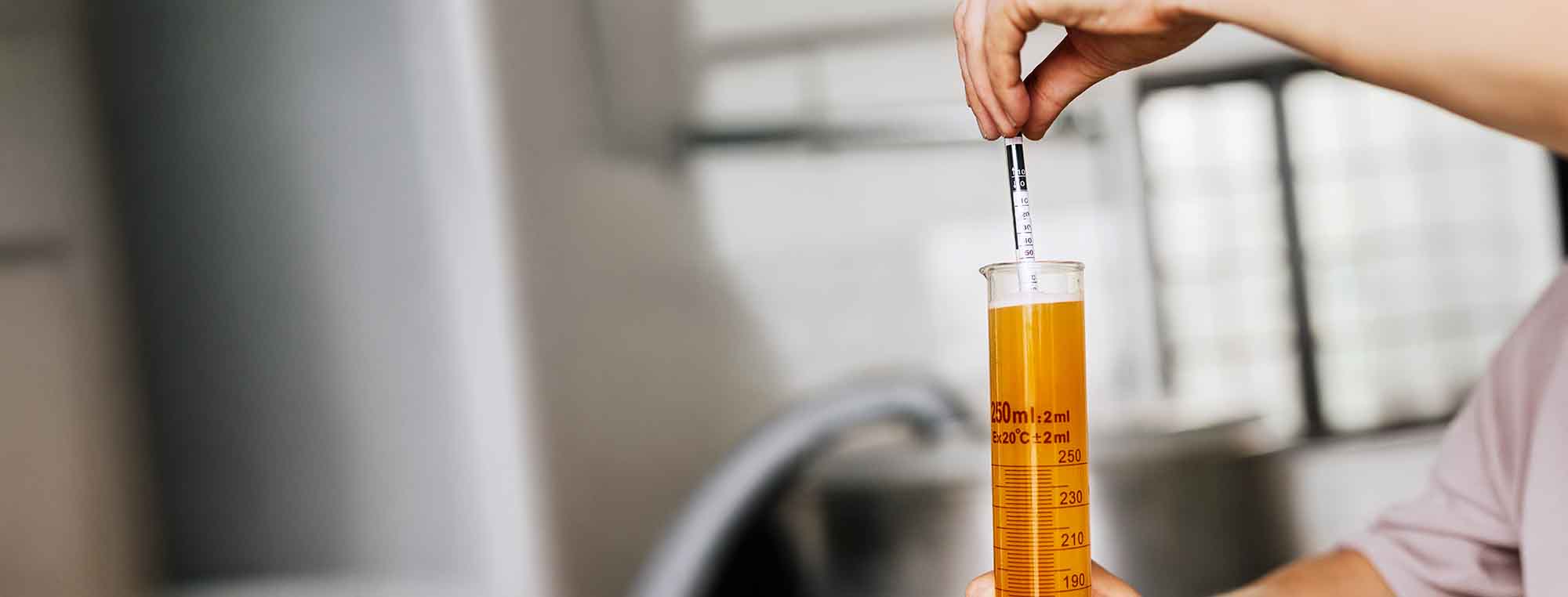
Sanitizing a Hydrometer
Your hydrometer enters the beer. Sanitize it before you use it.
Also sanitize the test jar.
Take your sample. Measure the gravity.
Only return the sample to the fermenter if you’re confident about your sanitizing practices. This can be an easy way to introduce contamination. You can drink the sample if it is clean and safe to consume.
Sanitizing a Spoon
A brewing spoon is simple.
- Clean it
- Sanitize it
- Allow the sanitizer to drain
- Use it
Do not place it on an unclean counter after sanitizing it.
Do You Need to Sanitize During the Boil?
Usually, the boiling wort provides a high level of microbial control.
Equipment that only touches the wort before or during the boil does not require the same sanitation process as equipment that touches the cooled wort.
After the boil, the rules change. Anything that touches cooled wort should be clean and sanitized. This is sometimes called the cold side.
Hot Side vs. Cold Side
Homebrewers often divide brewing into two stages.
Hot Side
The hot side includes:
- Mash
- Boil
- Kettle
- Hot wort
High temperatures provide significant microbial control. Cleaning is still important.
Cold Side
The cold side includes:
- Chilled wort
- Fermentation
- Fermenter
- Siphon
- Bottling
- Kegging
Cold-side sanitation is critical.
The beer is no longer protected by boiling temperatures.
The “Cold Side” Is Where Sanitation Matters Most
Once wort has cooled, treat everything that touches it as a potential contamination source.
This includes:
- Fermenter
- Airlock
- Thermometer
- Hydrometer
- Siphon
- Tubing
- Bottling bucket
- Bottle filler
- Bottles
- Keg
A five-minute sanitation step can protect several weeks of work.
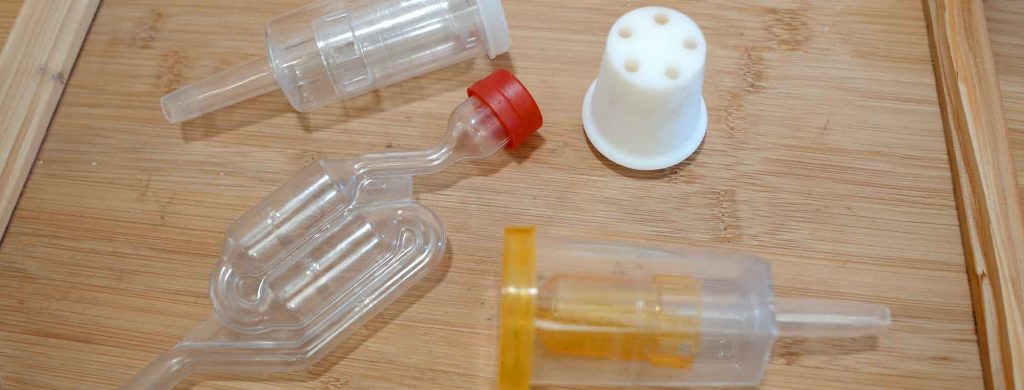
Airlocks and Stoppers
Airlocks are easy to overlook.
Clean the airlock and stopper. Sanitize them before use.
Fill the airlock according to its instructions. Do not use a dirty or dried-out airlock.
If you use sanitizer in the airlock, make sure the sanitizer is suitable for that application. Some brewers use boiled and cooled water or inexpensive vodka.
Sanitizing Kegs
Kegs need the same attention as bottles.
Clean and sanitize:
- Keg body
- Lid
- O-ring
- Dip tube
- Posts
- Disconnects
- Beverage lines
- Faucets
Keg lines and faucets are common places for beer residue to accumulate. Clean them after use. Sanitize them before use.
Do You Need to Sanitize the Outside of Equipment?
Not every external surface needs the same level of sanitation. The important surfaces are those that will contact the beverage.
For example, you do not need to sanitize the entire outside of a bottling bucket. You do need to sanitize the inside and the parts that contact the beer. And keep the work area clean so that sanitized equipment does not contact dirty surfaces.
Avoid Touching Sanitized Equipment
Once something is sanitized, keep it sanitized.
Do not touch:
- Inside surfaces
- Siphon ends
- Bottle openings
- Bottle filler tips
- Fermenter openings
with dirty hands.
If you touch a sanitized surface, sanitize it again.
Can You Over-Sanitize?
More sanitizer is not necessarily better.
Using a sanitizer at too high a concentration can:
- Waste product
- Damage equipment
- Leave unwanted residue
- Create safety problems
Follow the manufacturer’s instructions. The correct concentration is more important than using a large amount.
Do You Need to Sanitize Your Hands?
Wash your hands before handling brewing equipment. If you are handling sanitized equipment, clean hands are important.
You can also use a suitable food-safe sanitizer on your hands if the product is specifically intended for that use. Do not use brewing sanitizer as a hand sanitizer unless the manufacturer says that it is safe for that purpose.
What About Starsan and Stainless Steel?
Acid sanitizers such as Star San are commonly used with stainless steel brewing equipment. Short-term contact is generally appropriate when the product is used according to its instructions.
Do not leave acidic sanitizer in contact with equipment for unnecessarily long periods. Rinse or drain equipment according to the product instructions.
What About Aluminum?
Acidic products can react with aluminum.
Do not assume that every sanitizer is suitable for every material. Check the sanitizer instructions and the equipment manufacturer’s recommendations. Stainless steel, glass, and suitable brewing plastics are common choices for homebrew equipment.
A Simple Sanitation Routine
You can make sanitation almost automatic.
Before brewing:
- Gather all equipment.
- Clean dirty equipment.
- Rinse when required.
- Prepare sanitizer.
- Sanitize cold-side equipment.
- Drain the equipment.
- Keep it covered until use.
During brewing:
- Keep clean equipment separate from dirty equipment.
- Sanitize anything that touches cooled wort.
- Avoid touching sanitized surfaces.
- Keep fermenter openings covered.
After brewing:
- Rinse equipment immediately.
- Clean equipment thoroughly.
- Rinse if required.
- Allow equipment to dry.
- Store equipment in a clean location.
The Best Sanitation Habits
You do not need to obsess over every microorganism.
You need consistent habits.
Clean Immediately
Dried beer is much harder to remove than fresh beer residue.
Keep Dirty and Clean Equipment Separate
Do not put a dirty spoon next to a sanitized bottle filler.
Keep Sanitizer Fresh
Prepare sanitizer according to the manufacturer’s instructions.
Replace it when it is no longer effective.
Protect Sanitized Equipment
Keep equipment covered until you use it.
Replace Damaged Plastic
Deep scratches are difficult to clean.
Replace badly scratched fermenters and tubing.
Keep Bottles Clean
Rinse bottles immediately after drinking the beer.
This saves a lot of work later.

A Simple Sanitizing Checklist
Before transferring or bottling beer, ask:
- Is every piece of equipment clean?
- Has every beer-contact surface been sanitized?
- Is the sanitizer at the correct concentration?
- Has the required contact time been met?
- Did I accidentally rinse a no-rinse sanitizer?
- Have I touched any sanitized surfaces?
- Are the bottles clean?
- Are the bottles sanitized?
- Is the bottling bucket sanitized?
- Is the siphon sanitized?
- Is the tubing sanitized?
- Is the bottle filler sanitized?
If the answer to all of these questions is yes, you have greatly reduced the risk of contamination.
Sanitation Is Simple
Homebrew sanitation does not require complicated equipment.
The basic system is:
- Clean the equipment.
- Sanitize the equipment.
- Keep it clean until you use it.
- Sanitize it again if it’s been a while.
A good cleaner removes the material that microorganisms can hide in. A good sanitizer reduces the microorganisms that remain.
Good sanitation protects the beer after the boil, when the beer no longer has the protection provided by high temperatures. The best homebrewers are not necessarily the people who use the most sanitizer. Rather, they are the people who develop a consistent process.
- Clean immediately after use.
- Sanitize before the equipment touches your beer.
- Do not touch sanitized surfaces.
- Replace damaged equipment.
- Follow the sanitizer manufacturer’s instructions.
Once these habits become part of your brewing routine, sanitation becomes one of the easiest parts of homebrewing.