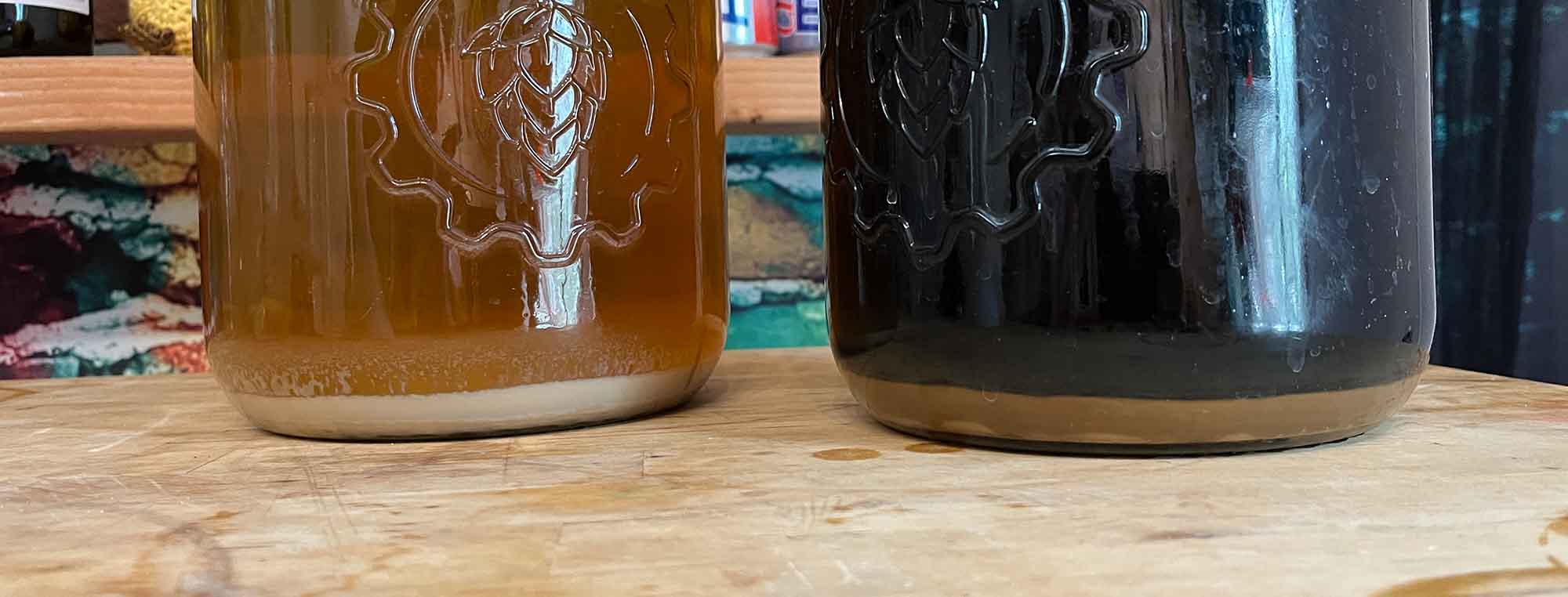

SRM stands for Standard Reference Method. It is a measurement used to describe the color of beer.
The basic idea is simple:
The higher the SRM number, the darker the beer.
For example:
- 2 SRM = very pale
- 5 SRM = pale gold
- 10 SRM = amber
- 20 SRM = brown
- 30 SRM = dark brown
- 40+ SRM = very dark
SRM is useful when you want to describe beer color without relying on words such as “golden,” “amber,” or “dark brown.”
However, SRM does not tell you what the beer tastes like. A beer can be dark without tasting heavily roasted, like a schwarzbier. A beer can also have a relatively pale color and still have strong malt character, like a golden stout.
What Does SRM Actually Measure?
SRM measures how much light a beer absorbs. A sample of beer is placed in a spectrophotometer. The instrument shines light through the beer and measures how much light is absorbed. The measurement is made at a wavelength of 430 nanometers.
More light absorption produces a higher SRM value. Less light absorption produces a lower SRM value.
You do not need to own a spectrophotometer to use SRM. For homebrewing, SRM is mainly useful as a way to describe and predict beer color.
SRM Is Not a “Darkness” Scale
This distinction is important. SRM measures color, not darkness in the everyday sense. A beer with a high SRM absorbs more light.
That does not necessarily mean it is:
- Stronger
- Heavier
- More bitter
- More roasted
- More alcoholic
- More flavorful
A dark beer can be smooth and sweet. A pale beer can be bitter and strong.
Color is one characteristic of beer, so do not use it as a shortcut for flavor.
What Do Different SRM Numbers Look Like?
Here is a rough guide:
| SRM | Approximate Color | Examples |
|---|---|---|
| 1–2 | Very pale straw | Very pale lager |
| 2–4 | Straw to pale gold | Pilsner |
| 4–6 | Gold | Blonde ale |
| 6–9 | Deep gold | Pale ale |
| 9–14 | Amber | Amber ale |
| 14–20 | Copper to light brown | Brown ale |
| 20–30 | Brown | Porter |
| 30–40 | Dark brown | Stout |
| 40+ | Very dark to black | Very dark stout |
These are approximate color descriptions.
Beer color can look different depending on:
- Glass shape
- Beer clarity
- Lighting
- Head thickness
- Background
- Beer volume in the glass
A beer with the same SRM can look different in different conditions.
SRM and EBC
You may also see EBC when looking at beer color. EBC stands for European Brewery Convention, and it uses a different numerical scale.
EBC numbers are roughly 1.97 times the SRM value.
A useful conversion is:
EBC ≈ SRM × 1.97
And:
SRM ≈ EBC ÷ 1.97
For example:
10 SRM × 1.97 = 19.7 EBC
So 10 SRM is approximately 20 EBC.
Do not confuse the two scales. A beer listed as 20 EBC is not the same color number as a beer listed as 20 SRM.
Where Does Beer Color Come From?
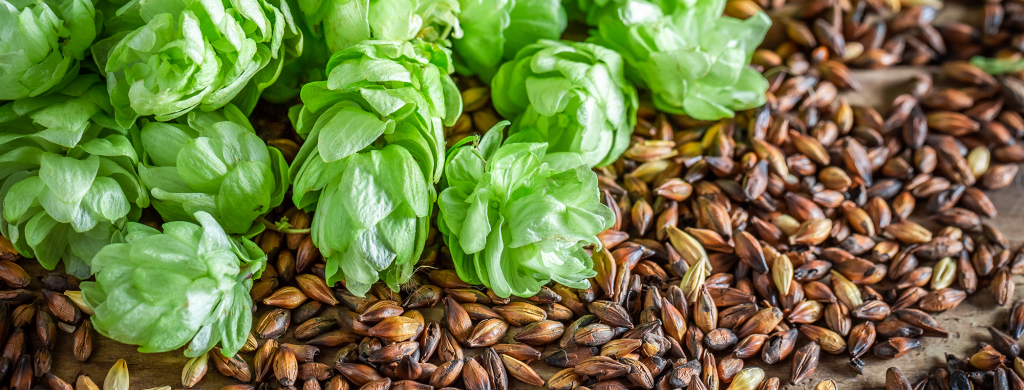
Most beer color comes from the malt. Pale base malt produces a light beer, while darker specialty malts produce darker beer. The way malt is processed changes its color.
Some important types include:
- Pale malt
- Vienna malt
- Munich malt
- Crystal or caramel malt
- Biscuit and toasted malts
- Chocolate malt
- Roasted barley
- Black malt
You can create a huge range of beer colors by changing the types and amounts of malt in the recipe.
Base Malt and Beer Color
Base malt makes up most of the grain bill in many beers.
Examples include:
- 2-row
- Pale ale malt
- Pilsner malt
- Maris Otter
These malts are relatively light. A beer made mostly from pale base malt will usually have a low SRM. This is why many lagers, blonde ales, and pale ales are light in color.
However, base malt does not need to be the only source of color. A small amount of dark specialty malt can change the final color dramatically.
Crystal and Caramel Malt
Crystal malt can add both color and flavor. Crystal malts are produced by allowing the starches inside the grain to convert to sugar before the grain is kilned. Different crystal malts have different color ratings.
You may see names such as:
- Crystal 20L
- Crystal 40L
- Crystal 60L
- Crystal 80L
- Crystal 120L
The number refers to the malt’s color in Lovibond, not SRM. Darker crystal malts generally contribute more color.
They can also contribute flavors such as:
- Caramel
- Toffee
- Raisin
- Dark fruit
- Burnt sugar
The exact flavor depends on the malt.
What Is Lovibond?
Lovibond (°L) is another color measurement used in brewing. You will often see malt sold with a Lovibond rating.
For example:
2-row: about 1–2°L
Crystal 60L: about 60°L
Chocolate malt: often several hundred °L
Lovibond and SRM are related, but they are not interchangeable in every situation. For very light colors, the numbers can be reasonably close. For darker materials, the relationship becomes less direct.
This is one reason brewing software uses malt-specific color calculations rather than simply adding every Lovibond number together.
How Do I Calculate the SRM of My Recipe?
To calculate SRM easily, use our simple calculator and input your variables:
Beer Color (SRM) Calculator
This demonstrates how homebrewers can estimate beer color from the grain bill. The traditional method uses Morey units. Let's look at the math, though.
The first step is to calculate Malt Color Units (MCU):
MCU = (weight of grain in pounds × color in °L) ÷ batch volume in gallons
Then you can estimate SRM using the Morey equation:
SRM = 1.4922 × MCU^0.6859
That looks worse than it is. So let's work through an example.
Suppose you are making 5 gallons of beer with:
- 9 lb pale malt at 2°L
- 1 lb crystal malt at 60°L
First calculate MCU for the pale malt:
(9 × 2) ÷ 5 = 3.6 MCU
Then calculate MCU for the crystal malt:
(1 × 60) ÷ 5 = 12 MCU
Add them:
3.6 + 12 = 15.6 MCU
Then use the Morey equation:
SRM = 1.4922 × 15.6^0.6859
The estimated color is about 9.5 SRM.
That would put the beer in the amber range. You do not need to calculate this by hand for every recipe. Brewing software normally does it for you.
Why Is Recipe Color Only an Estimate?
The actual color of your beer can differ from the calculated color.
Several things affect the result.
Boil Length
Longer boiling can darken wort.
This is especially relevant for long boils and concentrated wort.
Boil Intensity
A vigorous boil can produce more color development than a gentle boil.
Maillard Reactions
Heating sugars and amino acids can create darker compounds and new flavors.
These reactions are part of why wort can darken during brewing.
Mash Conditions
Mash conditions can affect wort composition and color.
Brewing Efficiency
Your actual extraction can differ from the recipe's assumptions.
Wort Concentration
Extract brewing can produce different color results depending on how and when the extract is added.
Fermentation
Yeast and fermentation can change the appearance of beer.
Haze
Haze can make a beer look lighter, darker, or less transparent than the calculated color suggests.
Because of these factors, recipe SRM is an estimate.
Why Does a Small Amount of Dark Malt Make Such a Big Difference?
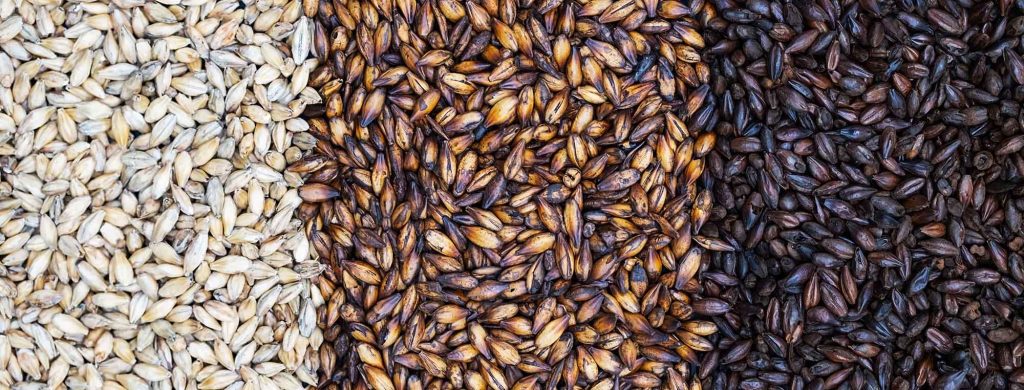
Dark malts contain a lot of color. You may only need a small percentage of a dark malt to change the appearance of an entire batch. For example, a small amount of black malt can shift a beer from brown toward nearly black.
This is useful when you want color without adding a large amount of dark-malt flavor. Brewers sometimes use very small amounts of dark malt for this reason. The exact flavor contribution depends on the malt and the amount used.
Can I Make a Dark Beer Without Making It Taste Roasty?
Yes. Color and flavor are related, but they are not identical. You can use small amounts of very dark malt to increase color without making it the dominant flavor.
You can also use:
- Debittered black malt
- Dehusked dark malt
- Sinamar or other coloring products
- Dark crystal malts
Each option has different flavor effects.
The important idea is:you do not need a huge amount of roasted malt just because you want a dark beer.
Does Darker Beer Mean More Alcohol?
No. Color does not determine ABV.
For example, you can make:
A 4% ABV black beer
or
A 10% ABV pale beer
The color and alcohol level come from different parts of the recipe and fermentation. A strong stout is dark because of its ingredients, not because alcohol makes beer dark.
Does Darker Beer Mean More Bitter?
No. SRM does not measure bitterness. Bitterness is usually measured in IBU, or International Bitterness Units.
You can make:
- Pale beer with high bitterness
- Pale beer with low bitterness
- Dark beer with high bitterness
- Dark beer with low bitterness
Color and bitterness are separate characteristics. This is one reason a black beer can surprise someone who expects it to taste bitter.
SRM vs. IBU vs. ABV
These three numbers describe completely different things.
| Measurement | What It Tells You |
|---|---|
| SRM | Beer color |
| IBU | Measured bitterness |
| ABV | Alcohol content |
A beer might be: 6% ABV, 40 IBU, 15 SRM
That tells you the beer's approximate alcohol content, bitterness measurement, and color. None of these numbers tells you the complete flavor of the beer.
How Can I Measure SRM at Home?
Most homebrewers do not directly measure SRM. You can estimate it from the recipe. You can also compare the finished beer to color references.
Professional breweries can use spectrophotometers to measure beer color more precisely. But for most homebrewers, recipe software provides a useful estimate.
If you want to compare your beer to a commercial beer, visual comparison is useful but not exact.
Why Does Beer Look Black?
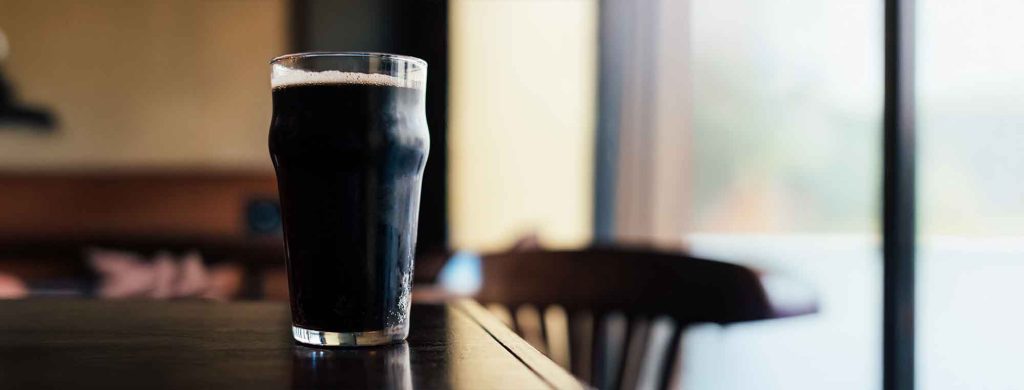
Some beers have such high color that very little visible light passes through them. When you look at a stout in a normal glass, it may appear completely black.
However, hold the glass up to a bright light and you may see:
- Brown
- Ruby
- Red
- Dark amber
This is why "black" does not always mean the beer has literally zero visible color. The beer is absorbing most of the light.
Does Head Affect SRM?
The beer's foam can make the beer look much lighter. This does not mean the beer changed color simply because you just poured it.
The same beer can look:
- Very dark through the liquid
- Pale through the foam
The foam contains a lot of air and scatters light.
Judge the beer color through the liquid rather than through the head.
What About Hazy Beer?
Haze can change how you perceive beer color.
A clear beer allows light to pass through it, while a hazy beer scatters light. This can make the same underlying color appear different. For this reason, calculated SRM is more useful for comparing recipes than for predicting exactly what the beer will look like in a glass.
How Does Extract Brewing Affect Color?
Extract brewers can also calculate and control beer color.
Liquid malt extract and dry malt extract have their own color ratings. A recipe calculator can use the extract's color contribution to estimate the finished beer.
Late extract additions can also help keep the wort lighter during the boil. This can be useful when making a light-colored beer from extract.
Do not assume that every brand of malt extract has exactly the same color. Use the manufacturer's specifications when available.
Can I Make a Pale Beer Darker?
Yes! The easiest method is to add a dark specialty malt. However, you do not need to add a large amount. A small amount of a high-color malt can have a major effect.
You can also use brewing color products designed to add color with less flavor contribution. Additions should be planned with the whole recipe in mind.
Can I Make a Dark Beer Lighter?
Yes, but this is harder after the fact. You cannot easily remove malt color from finished beer.
If you want a lighter beer, change the recipe.
Use:
- Lighter base malt
- Less dark specialty malt
- Lighter crystal malt
- Colorless or low-color fermentables where appropriate
If you are already brewing, recipe design is much easier than trying to fix color later.
SRM and Beer Styles
Beer styles often have expected color ranges.
For example:
- Pilsners are usually very light.
- Blonde ales are usually light gold.
- Pale ales are usually gold to amber.
- Amber ales are darker.
- Brown ales are brown.
- Porters are very dark.
- Stouts are usually very dark.
These are general descriptions. Style guidelines can define specific color ranges. The important point is that SRM gives brewers a numerical way to describe that color.
What If My Beer Does Not Match the Expected SRM?
Do not panic. Recipe calculations are estimates.
Your beer may differ because of:
- Actual malt color
- Mash efficiency
- Boil conditions
- Extract characteristics
- Recipe volume
- Specialty malt distribution
- Haze
- Lighting
If the beer tastes good, a small difference in color is usually not a problem. If color is important for a competition or a specific style, use more accurate measurements and more controlled brewing.
A Simple Way to Think About SRM
You do not need to memorize the equations.
Think of SRM like this:
- Low SRM = light beer
- High SRM = dark beer
The number describes how much light the beer absorbs. Malt is the main source of the color. Dark specialty malts can contribute a lot of color in small amounts. And color does not automatically tell you what the beer will taste like.
Bottom Line
SRM stands for Standard Reference Method. It is a measurement of beer color based on how much light the beer absorbs.
You can estimate SRM from your grain bill, and brewing software will usually do the calculation for you. The important thing to remember is that SRM measures color, not flavor.
A dark beer does not have to taste roasted. A pale beer does not have to be light in flavor. Use SRM to understand and control the color of your beer, then use the rest of your recipe to decide what that beer actually tastes like.