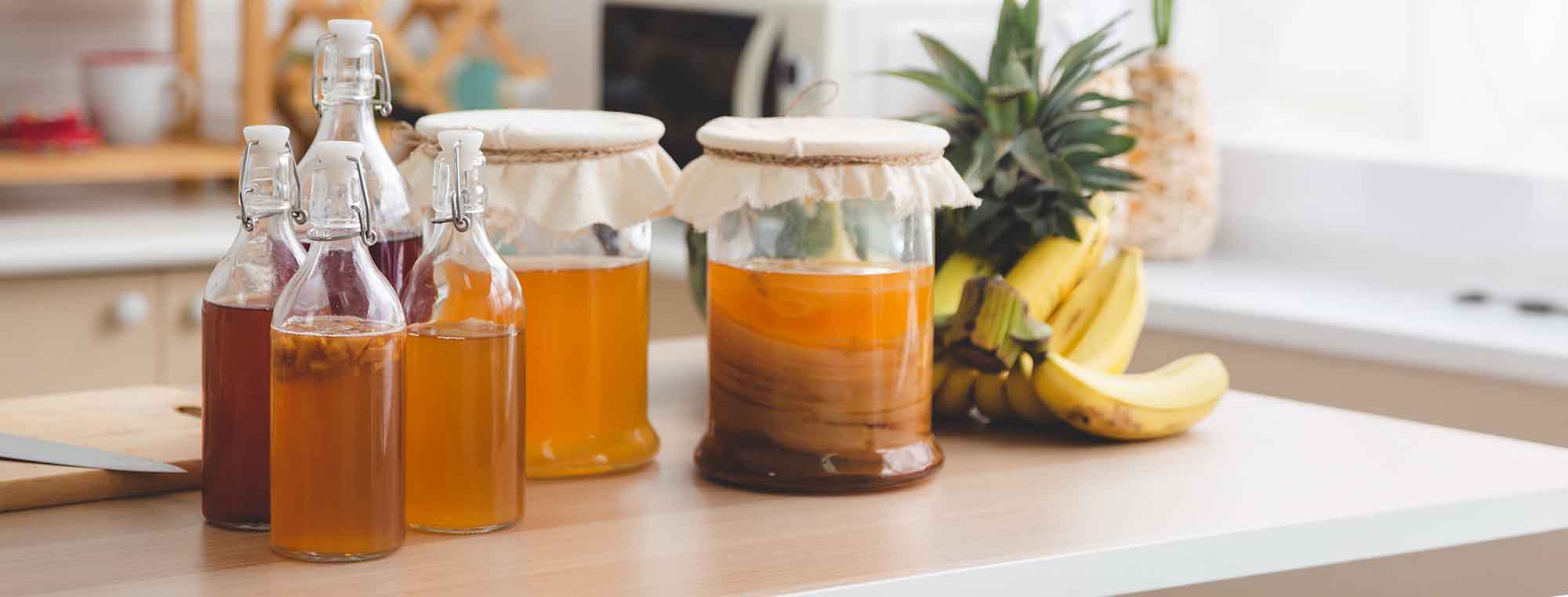
Kombucha is a fermented tea drink.
It is made from:
- Tea
- Sugar
- Water
- A culture of microorganisms
The culture contains bacteria and yeast. The yeast consumes sugar and produces alcohol and carbon dioxide. The bacteria use some of the alcohol and other compounds to produce organic acids.
This creates the characteristic tart flavor of kombucha.
Kombucha is usually made with black tea or green tea. You can also use blends of these teas.
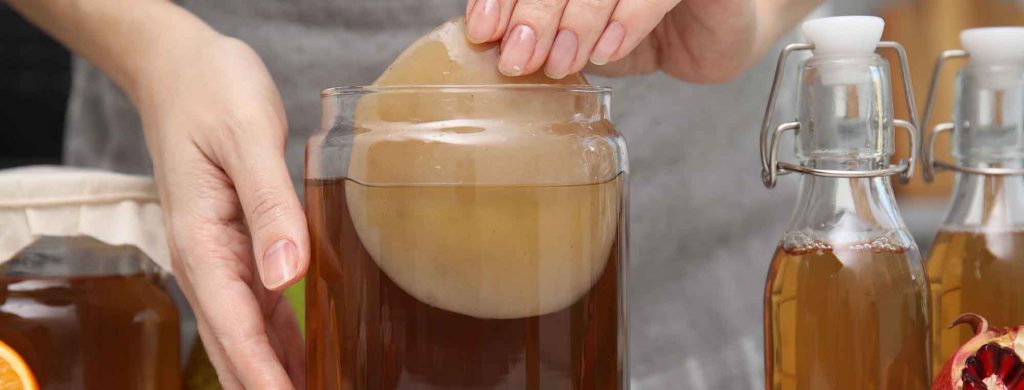
The culture is often called a SCOBY – it is a Symbiotic Culture of Bacteria and Yeast. The SCOBY is not a single microorganism. It is a community of microorganisms that work together during fermentation. SCOBY refers to both the mass of congealed biological material and the liquid accompanying it.
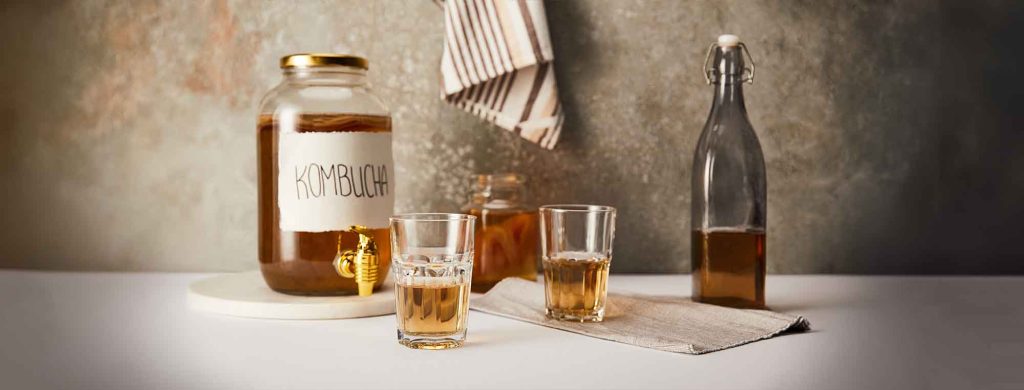
What Does Kombucha Taste Like?
Kombucha is usually:
- Tart
- Slightly sweet
- Lightly acidic
- Tea-like
- Slightly carbonated
The flavor changes during fermentation. A young kombucha can taste sweet. A longer fermentation produces more acid.
You can also add fruit, herbs, spices, or juice after the main fermentation.
Is Kombucha Alcoholic?
Kombucha fermentation produces alcohol.
The amount can vary. Commercial kombucha is normally produced and controlled to meet applicable alcohol limits. Home-made kombucha can have a different alcohol level because fermentation conditions are less controlled.
Factors that can affect alcohol production include:
- Sugar level
- Fermentation time
- Temperature
- Yeast population
- Oxygen exposure
- Bottling conditions
If you need to avoid alcohol, home-made kombucha is not a reliable choice.
What Are the Health Benefits of Kombucha?
Kombucha is often marketed as a health drink. Some claims are bolder than the scientific evidence supports.
Kombucha contains:
- Organic acids
- Tea compounds
- Small amounts of vitamins and minerals
- Microorganisms
- Compounds produced during fermentation
Tea also contains polyphenols and other compounds that have been studied for potential health effects. Fermented foods can contain live microorganisms. However, the health effects of home-made kombucha are not well established.
There is not enough high-quality human evidence to say that kombucha prevents or treats diseases.
Claims that kombucha:
- Detoxifies the body
- Cures infections
- Prevents cancer
- Treats diabetes
- Replaces medication
- “Cleanses” the liver
are not supported by strong clinical evidence.
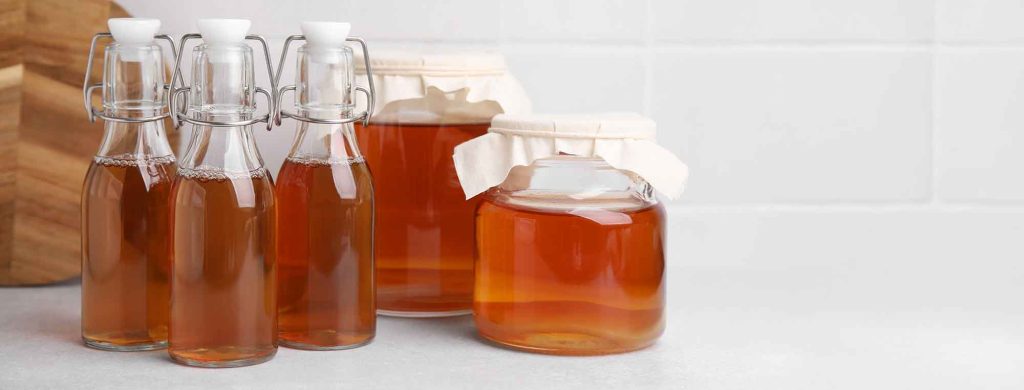
Kombucha and Gut Health
Kombucha contains microorganisms from the fermentation culture. Some of these microorganisms may survive into the finished drink. This has led to interest in kombucha as a possible source of probiotics.
However, not every microorganism in kombucha is a proven probiotic.
A probiotic must provide a demonstrated health benefit at a known dose. Home-made kombucha does not provide a standardized dose of specific probiotic organisms.
Kombucha may be part of a varied diet. But it should not be treated as a medical treatment.
The Main Health Benefit May Be Simpler
If you enjoy kombucha, it can be a useful replacement for sugary soft drinks.
You can make it with less sugar than many sweetened beverages. It also provides compounds from tea.
This does not make kombucha a medicine. It simply makes it one possible fermented drink to include in a balanced diet.
Is Home-Made Kombucha Safe?
Kombucha can be made safely at home.
However, it is an uncontrolled fermentation. You need to control the basic conditions.
The most important controls are:
- Clean equipment
- Safe ingredients
- Correct acidity
- Healthy starter culture
- Proper fermentation
- Mold inspection
- Safe bottling
- Refrigeration
The most important rule is simple: If the kombucha has visible mold or an unusual rotten smell, throw it away.
Do not try to remove the mold and save the rest. Mold creates mycotoxins, which can build up inside your body. By the time you see mold, you cannot reasonably know whether or not mycotoxins are already present throughout the whole batch. Safety first. When in doubt, dump it out.
What Equipment Do You Need?
For a simple one-gallon batch, you need:
- 1-gallon glass fermentation jar
- Clean cloth or paper filter
- Rubber band
- Large spoon
- Measuring cup
- Digital scale
- Thermometer
- pH meter or high-quality pH test strips
- Fine strainer, optional
- Bottles designed for carbonation
- Funnel
- Cleaner
- Food-safe sanitizer
You also need a refrigerator for the finished kombucha.
A glass fermentation jar is a good choice. Avoid containers made from materials that are not intended for acidic foods.
What Ingredients Do You Need?
For one gallon, use approximately:
- 8 tea bags or about 2 tablespoons of loose tea
- 1 cup of white sugar
- 1 gallon of water
- 1–2 cups of mature kombucha
- One healthy SCOBY
The mature kombucha is called starter tea. The starter tea makes the new tea acidic before fermentation starts. This helps create an environment that favors the desired fermentation culture.
What Tea Should You Use?
Black tea is the easiest choice for a first batch.
You can also use:
- Green tea
- Black and green tea blends
Use plain tea for the main fermentation.
Avoid flavored teas that contain large amounts of oils. Some essential oils can interfere with the fermentation culture.
Do not use herbal tea as the only tea for repeated batches. The culture needs nutrients (and benefits from caffeine) present in traditional tea. You can use herbal tea for flavor after you understand the basic process.
Brew the Tea
The first step is to make sweet tea.
1. Clean the Equipment
Clean the jar, spoon, measuring equipment, and other equipment.
Remove all visible residue.
2. Sanitize the Equipment
Sanitize equipment that will contact the finished tea or fermentation culture.
Follow the instructions for your sanitizer. Do not use harsh chemical cleaners without checking that they are suitable for food-contact equipment.
3. Heat the Water
Heat enough water to make the tea.
You do not need to boil the entire gallon. Use the temperature recommended for your tea. Black tea can tolerate hotter water than many green teas.
4. Make the Tea
Add the tea to the hot water.
Allow it to steep.
Remove the tea after the recommended steeping time. Do not leave the tea leaves in the water for an excessive amount of time.
5. Add the Sugar
Add the sugar while the tea is hot.
Stir until the sugar is completely dissolved. White or demerara sugar is the simplest choice. The SCOBY culture is adapted to ferment sucrose.
Do not replace the sugar with honey for your first batch. Honey can support different microorganisms and can change the fermentation process.
6. Cool the Tea
Allow the sweet tea to cool to room temperature.
Do not add the SCOBY or starter tea to hot tea. High temperatures can damage the fermentation culture. The tea should be at or near room temperature before you add the starter culture.
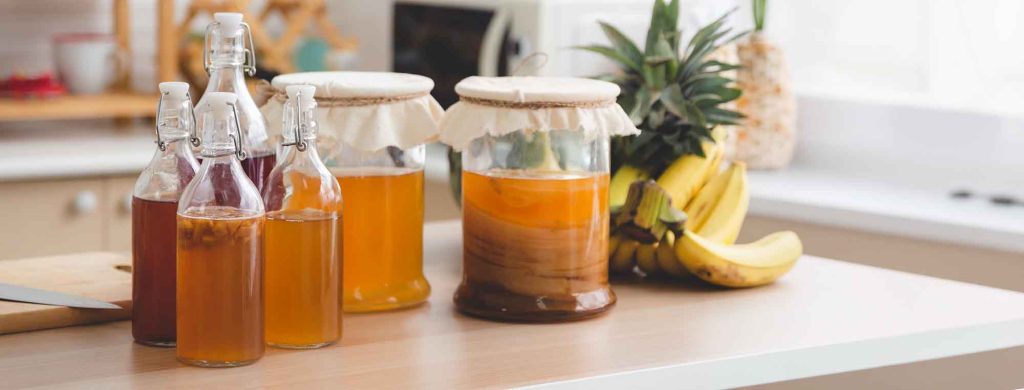
Start the Fermentation
1. Add the Starter Tea
Pour the mature kombucha into the cooled sweet tea.
The starter tea should be acidic. Do not replace the starter tea with plain water, as the starter tea helps lower the initial pH.
2. Add the SCOBY
Place the SCOBY into the jar.
- It may float.
- It may sink.
- It may remain partly submerged.
All of these behaviors can be normal.
The SCOBY can also change shape during fermentation.
3. Cover the Jar
Cover the jar with a clean cloth or paper filter and secure the cover with a rubber band.
The cover must allow air to enter. It must also keep insects and debris out.
Do not seal the jar with an airtight lid during primary fermentation. The fermentation culture needs access to oxygen.
4. Ferment the Kombucha
Place the jar in a clean location.
Keep it away from direct sunlight.
A temperature around 75–80°F can work well for many kombucha cultures. The exact temperature depends on the culture. Avoid extreme temperature changes.
Primary fermentation often takes about 7–14 days.
The exact time depends on:
- Temperature
- Tea
- Sugar concentration
- Culture
- Desired flavor
Taste the kombucha after about one week using a clean utensil. If it is too sweet, allow it to ferment longer. If it is too acidic, stop the fermentation and refrigerate it.
Monitor the Acidity
Acidity is one of the most important safety controls.
Use a pH meter or suitable pH strips. The pH should decrease during fermentation.
A common safety target is a pH below 4.2. Do not use pH alone as proof that a batch is safe. Good sanitation, a healthy starter culture, proper fermentation, and inspection are also important.
If the pH does not decrease as expected, do not assume that the batch is safe. Do not taste a batch that shows visible mold or obvious spoilage.
What Should Healthy Kombucha Look Like?
A healthy batch can look unusual.
You may see:
- A new pale layer forming on the surface
- Bubbles
- Sediment
- Stringy material
- Brown strands
- Yeast particles
- A new SCOBY forming
These changes can be normal. The culture can form a new cellulose layer across the surface. The new layer may become thicker as fermentation continues. I’ve had SCOBYs grow to over an inch thick!
What Does Mold Look Like?
Mold is different.
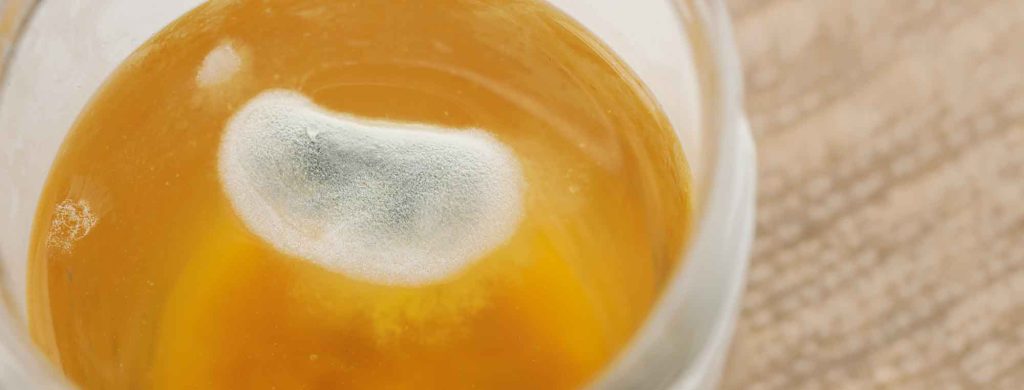
Mold can appear as:
- Fuzzy patches
- Dry-looking spots
- Blue spots
- Green spots
- Black spots
- White fuzzy growth
If you see mold, discard the entire batch. Do not remove the mold and continue fermentation. Do not use the SCOBY from a moldy batch to start another batch.
Clean and sanitize the equipment before you use it again.
How Do You Know When Kombucha Is Ready?
Taste is the main indicator.
The kombucha should have a balance of:
- Sweetness
- Acidity
- Tea flavor
A short fermentation produces sweeter kombucha. A longer fermentation produces more acidity. Do not let the kombucha ferment until it becomes extremely acidic simply because “more fermentation is better.”
Stop when the flavor is right for you.
Move the Kombucha to Secondary
After the first fermentation, you can bottle the kombucha.
You can also use a secondary fermentation to add flavor and carbonation. Secondary fermentation is not required, but it is useful if you want flavored, naturally carbonated kombucha.
Add Fruit and Other Flavors
Good flavor additions include:
- Strawberry
- Raspberry
- Blueberry
- Peach
- Mango
- Pineapple
- Cherry
- Ginger
- Lemon
- Lime
- Mint
- Basil
Juice is easy to use. Pureed fruit produces more flavor but can create more sediment.
For a one-gallon batch, start with a small amount. For example, you can add about 1 cup of fruit juice to a gallon of kombucha. Taste the next batch and adjust the amount.
Ginger Kombucha
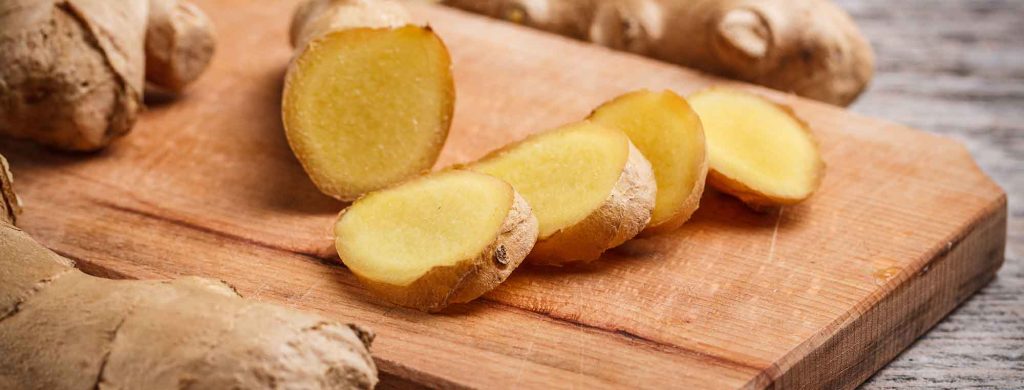
Ginger is one of the simplest flavor additions.
Add thin slices of fresh ginger to the bottles. You can also use ginger juice. Start with a small amount, as ginger can become very strong during carbonation.
Bottle Conditioning
Kombucha can develop natural carbonation during secondary fermentation.
The yeast consumes remaining sugar. The yeast produces carbon dioxide, which remains in the sealed bottle. This creates carbonation!
Use Suitable Bottles
Use bottles designed to hold pressure.
Good choices include:
- Swing-top beer bottles
- Beer bottles with crown caps
- Commercial kombucha bottles designed for reuse
Do not use thin decorative glass bottles or ordinary food jars. They may not be designed to hold pressure.
Fill the Bottles
Sanitize the bottles.
Add the flavoring.
Pour the kombucha into the bottles. Be sure to leave some headspace.
Close the bottles and store them at room temperature for a short period. The yeast will produce carbon dioxide.
Check the Pressure
Carbonation can develop quickly. The exact time depends on the sugar content and temperature.
Check a bottle periodically with a quick “burp” of the seal. When the carbonation is correct, move the bottles to the refrigerator.
Cold temperatures slow fermentation. They also help the kombucha retain carbon dioxide.
Do not leave sealed kombucha at room temperature indefinitely. Continued fermentation can create excessive pressure, and a bottle can break if the pressure becomes too high.
Do Not Add Large Amounts of Sugar
Fruit juice and fruit contain sugar. The yeast can ferment this sugar, which produces carbon dioxide.
You do not need to add a large amount of sugar to carbonate kombucha. If you add extra sugar, monitor the bottles carefully. More sugar means more potential pressure.
Refrigerate Finished Kombucha
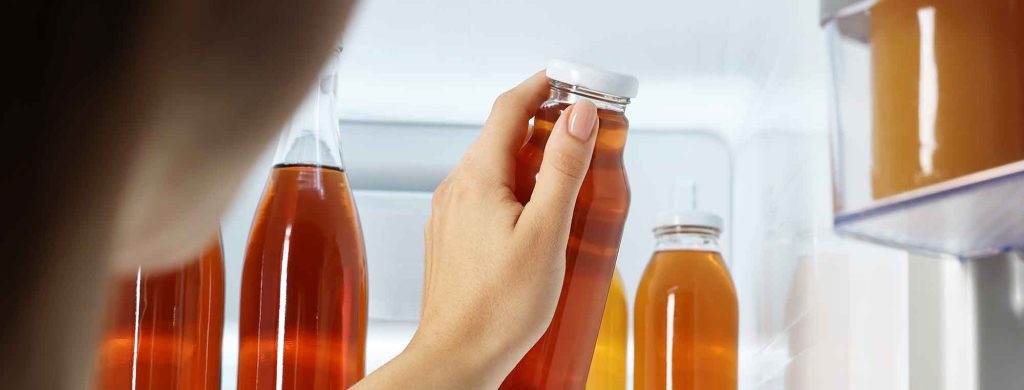
Keep finished kombucha refrigerated. Cold storage slows fermentation and helps maintain carbonation. If a develops excessive pressure, open it carefully while it is cold, preferably with a towel over the top to contain any projectiles if the flip-top or crown cap flies off.
Open carbonated bottles slowly. Keep the bottle pointed away from your face.
Make a New Batch
One advantage of kombucha is that you can use part of the finished batch to start the next batch.
Reserve some mature kombucha as starter tea. Leave the SCOBY with the starter tea if you want to maintain a SCOBY culture.
You can then prepare another batch of sweet tea and begin the process once more. It’s commonly called “infini-tea.” You can continue this cycle for many batches.
Keep a Separate SCOBY Culture
You can also maintain a SCOBY hotel. A SCOBY hotel is a container that holds extra SCOBYs in mature kombucha. This gives you a reserve culture.
Keep the container covered. Add mature kombucha when needed. Inspect the culture regularly. Discard any culture that develops mold or obvious spoilage.
You do not need a SCOBY hotel for your first batch. But it is useful when you start making kombucha regularly!
Common Beginner Mistakes
Starting With Too Little Starter Tea
The starter tea helps lower the initial pH. Use an adequate amount.
Do not fill the entire jar with fresh sweet tea and only a small amount of mature kombucha.
Adding the SCOBY to Hot Tea
Hot tea can damage the culture. Cool the sweet tea first.
Using Dirty Equipment
Poor sanitation can allow unwanted microorganisms to grow. Clean and sanitize your equipment.
Sealing the Primary Fermentation
Primary fermentation needs oxygen. Use a cloth or other breathable cover.
Do not seal the jar with an airtight lid.
Using Moldy Kombucha
Do not try to save a moldy batch. Discard it.
Leaving Bottles at Room Temperature Too Long
The yeast can continue to ferment. Pressure can increase.
Refrigerate finished bottles.
Using Random Bottles
Use bottles designed to hold carbonation.
Do not assume that a glass bottle is pressure-safe.
A Simple One-Gallon Kombucha Recipe
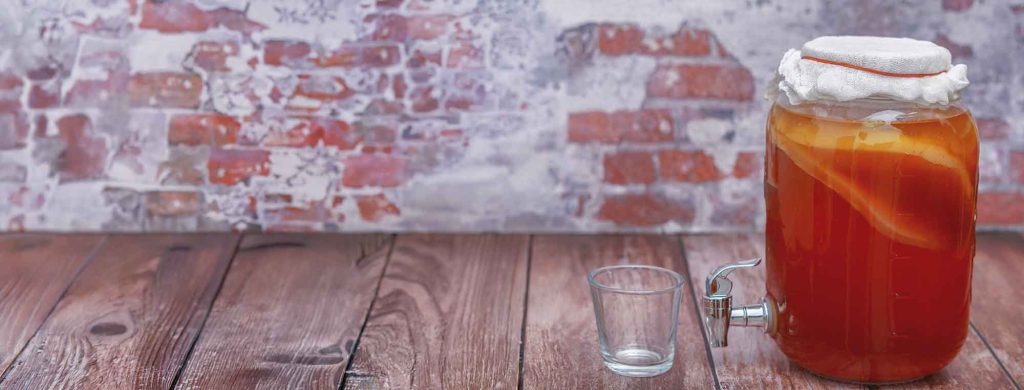
For your first batch, use:
- 1 gallon water
- 8 tea bags of black tea
- 1 cup white sugar
- 1–2 cups mature kombucha
- 1 healthy SCOBY
The process is:
- Clean the equipment.
- Sanitize the equipment.
- Make the tea.
- Remove the tea.
- Add the sugar.
- Stir until the sugar dissolves.
- Cool the tea to room temperature.
- Add the mature kombucha.
- Add the SCOBY.
- Cover the jar with a clean breathable cover.
- Secure the cover.
- Ferment at about 75–80°F.
- Check the kombucha after about 7 days.
- Measure the pH.
- Taste the kombucha.
- Continue fermentation if it is too sweet.
- Stop fermentation when the flavor is balanced.
- Reserve mature kombucha for the next batch.
- Remove the SCOBY.
- Add fruit or other flavoring if desired.
- Transfer the kombucha to pressure-safe bottles.
- Close the bottles.
- Allow carbonation to develop.
- Check the bottles regularly.
- Refrigerate the bottles when carbonation is sufficient.
- Serve cold.

The Important Safety Rules
Home-made kombucha is a fermented food.
Treat it as a fermentation project, not as a guaranteed health product.
Remember these rules:
- Use clean equipment.
- Sanitize equipment when appropriate.
- Use a healthy starter culture.
- Use enough mature starter tea.
- Start with acidic liquid.
- Monitor the pH.
- Keep insects and debris away from the fermentation.
- Do not use moldy cultures.
- Do not taste a batch that shows mold or obvious spoilage.
- Use pressure-safe bottles.
- Monitor carbonation.
- Refrigerate finished kombucha.
- Do not make medical claims about the finished drink.
Kombucha is interesting because the basic process is simple.
- Make sweet tea.
- Add a healthy culture.
- Allow fermentation to take place.
- Taste the result.
- Bottle it with flavor if you want carbonation.
- Keep it cold.
The fermentation creates the tart flavor and natural carbonation that make kombucha unique. It may also provide useful compounds from tea and fermentation. However, the strongest health claims about kombucha are not supported by strong human evidence.
Make it because you enjoy the drink.
Treat the fermentation with the same care that you would use for any other home-fermented food.