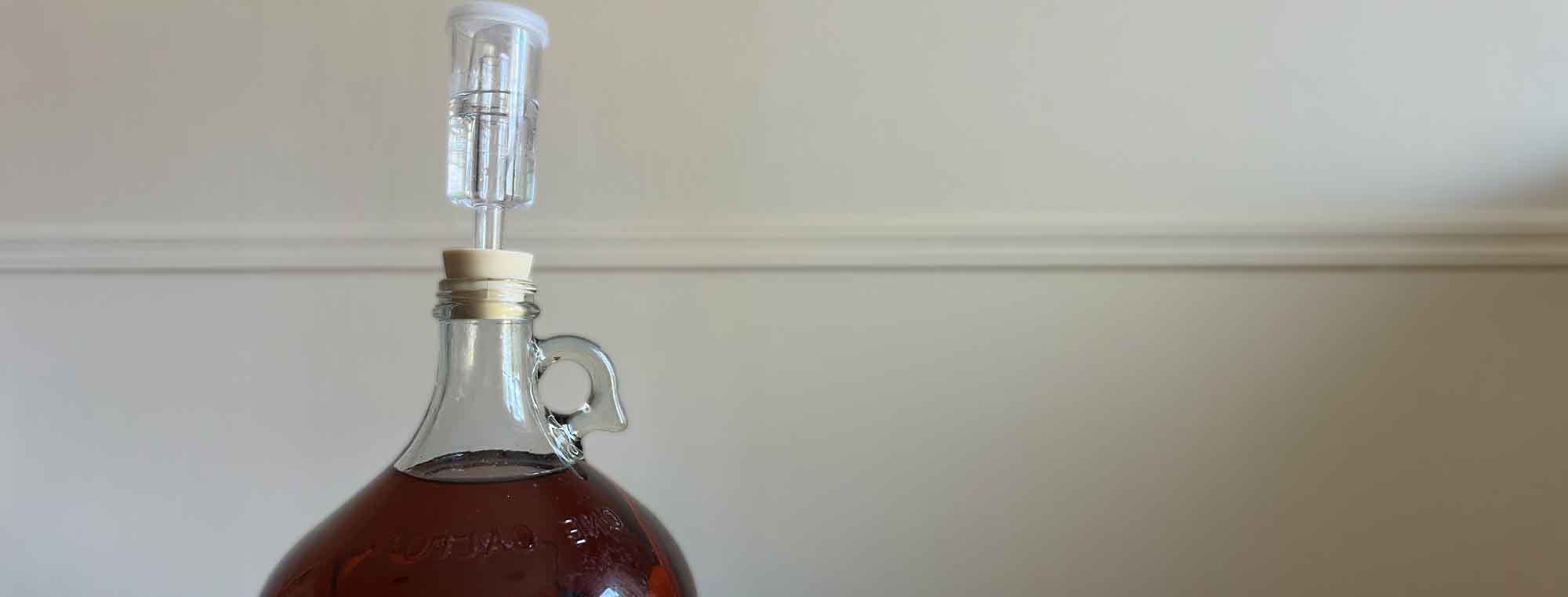
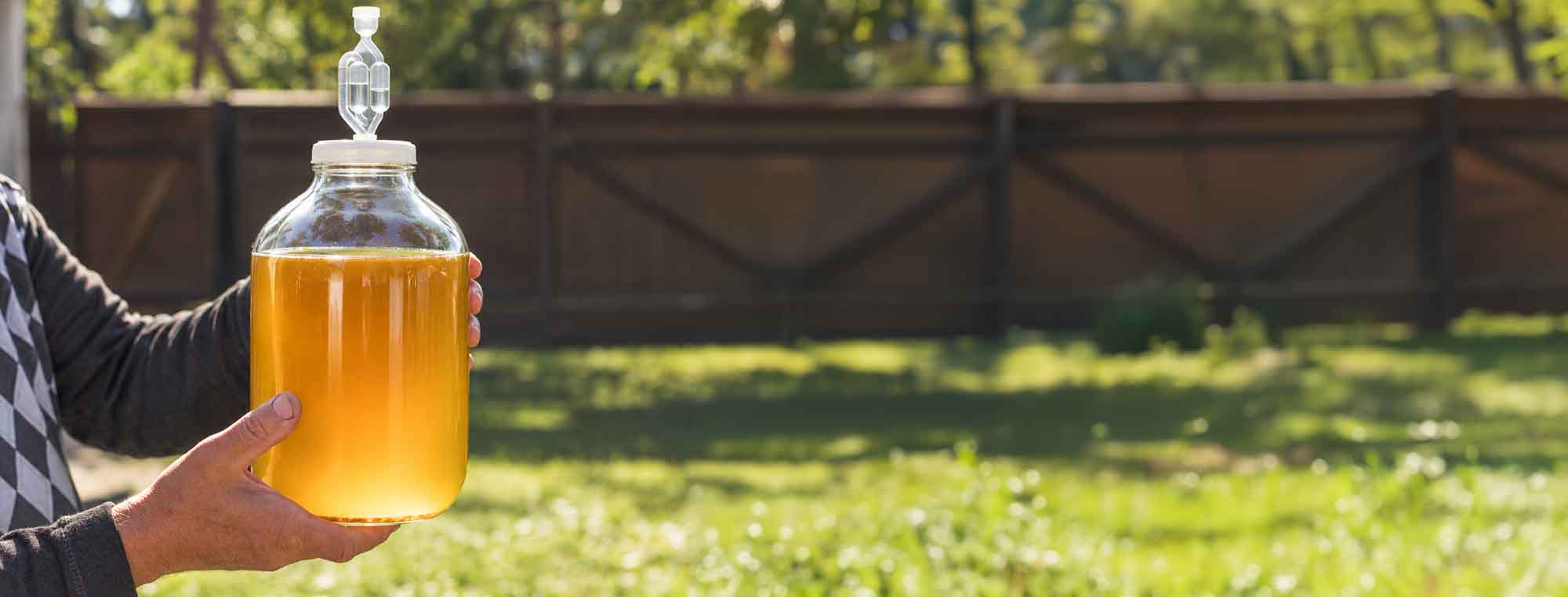
A homebrew airlock that is not bubbling does not always mean that fermentation has stopped.
This is one of the most common concerns for new homebrewers.
But take a breath. The airlock is not a fermentation meter! It is a pressure-release device.
Fermentation produces carbon dioxide (CO₂). The CO₂ can leave the fermenter through the airlock. This can produce bubbles. However, CO₂ can also leave through small gaps in the fermenter, like bucket lids.
Your beer, mead, cider, or wine can be fermenting normally even when the airlock is completely still.
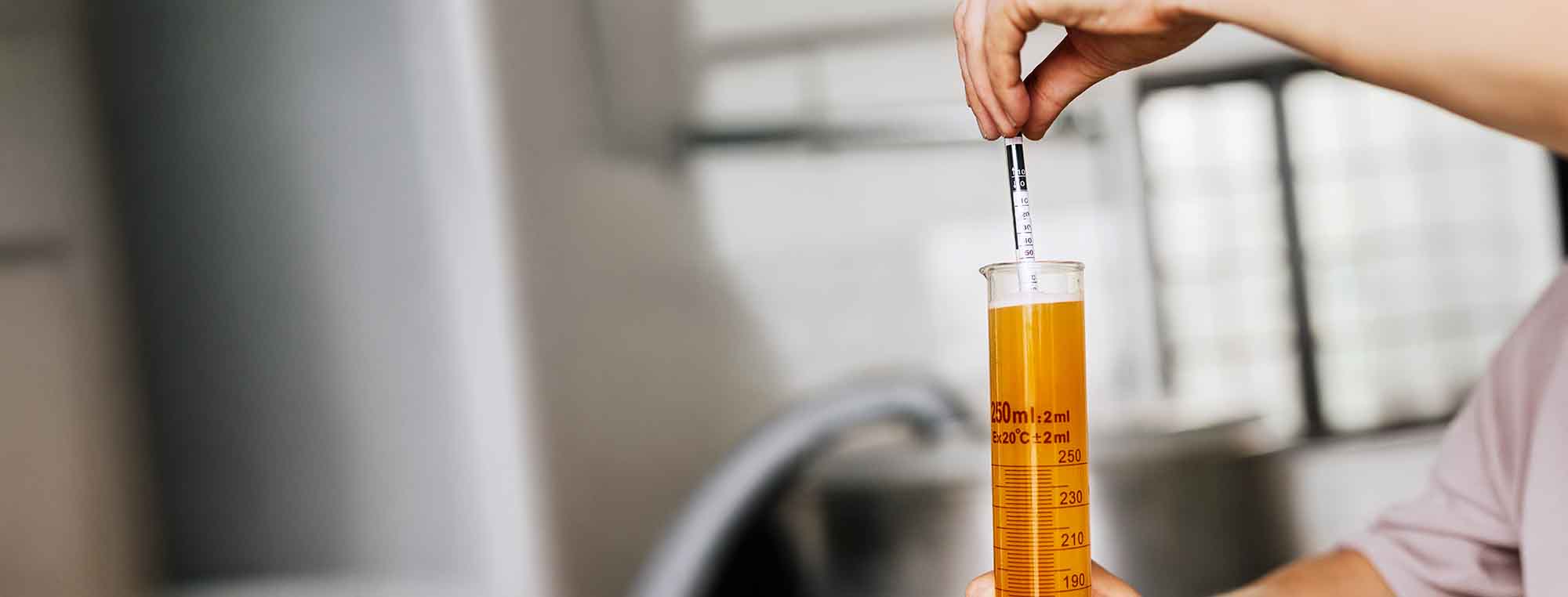
The best way to determine if fermentation is active is to measure the specific gravity with a hydrometer.
What Does an Airlock Do?
An airlock has two main functions.
- It allows gas to leave the fermenter.
- It also helps prevent outside air and contaminants from entering the fermenter.
During fermentation, yeast produces CO₂. The pressure inside the fermenter increases. The CO₂ pushes through the liquid in the airlock.
This creates the familiar: “Blub… blub… blub…” sound.
The sound is useful. It is also not required.

Does No Bubbling Mean Fermentation Has Stopped?
No.
An airlock that is not bubbling does not prove that fermentation has stopped.
There may be a small leak around:
- The fermenter lid
- The stopper
- The airlock
- The grommet
- A spigot
- A loose fitting
CO₂ can escape through the leak instead of the airlock. You may therefore have active fermentation without seeing a single bubble.
This is especially common with plastic fermentation buckets.
The Hydrometer Is the Best Tool
If you want to know whether fermentation is happening, use a hydrometer.
A hydrometer measures specific gravity. Specific gravity tells you how much dissolved material remains in the liquid. At the beginning of fermentation, the liquid contains a large amount of sugar. The specific gravity is relatively high. As yeast consumes the sugar, the specific gravity decreases.
For example:
- Starting gravity: 1.080
- Later reading: 1.050
- Even later reading: 1.020
- Final reading: 1.010
The decreasing numbers show that fermentation is progressing.

How to Check Fermentation
If your airlock is not bubbling:
- Sanitize your hydrometer.
- Sanitize your test jar.
- Take a sample from the fermenter.
- Measure the specific gravity.
- Record the result.
- Take another reading after two or three days.
- Compare the readings.
If the gravity decreases, fermentation is active. If the gravity remains stable, fermentation may be complete or stalled.
Do not return the sample to the fermenter unless you’re very confident about your sanitizing practices. You can always taste the sample instead.
Check the Airlock First
Before taking a gravity reading, check the simple things.
Look at the airlock.
- Is it properly installed?
- Is there liquid in the airlock?
- Is the liquid level equal on both sides?
- Is the stopper seated correctly?
- Is the airlock inserted into the grommet?
A loose airlock can allow CO₂ to escape.
Check the Fermenter Seal
If you use a bucket fermenter, the lid may not form a completely airtight seal.
This is common. Plastic fermentation buckets can flex. The lid can also become slightly loose.
A small leak does not necessarily cause a problem. The fermentation vessel does not need to be perfectly airtight for fermentation to work. The important goal is to keep contaminants and excessive oxygen out.
Check the Stopper
Glass carboys and narrow-neck fermenters usually use a rubber or silicone stopper.
Make sure the stopper is seated properly. Do not force a stopper too far into the opening.
A damaged stopper can also cause a leak, so replace a stopper if it is cracked, brittle, or no longer fits correctly.
Check the Airlock Liquid
Airlocks need liquid to work.
Depending on the design, this may be:
- Water
- Sanitizing solution
- Vodka
- Another liquid specified by the manufacturer
If the airlock is empty, gas can move through it without producing the expected bubbling.
Fill it to the manufacturer’s recommended level. Do not overfill it.
Different Airlocks Behave Differently
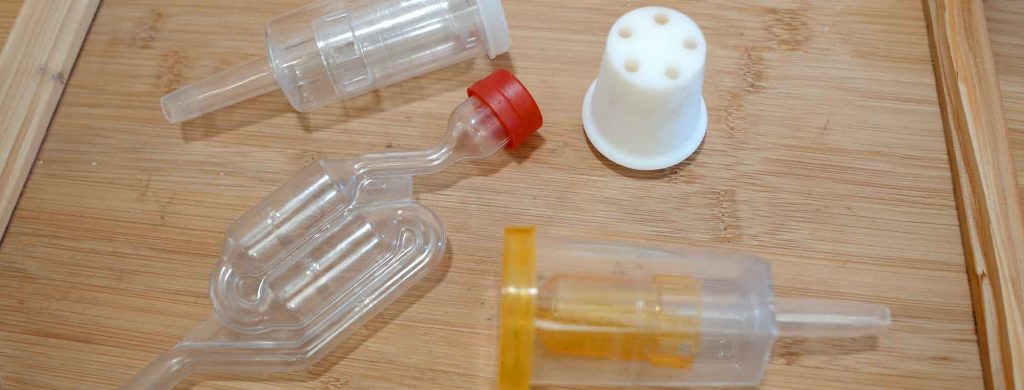
There are several airlock designs.
Common types include:
- Three-piece airlocks
- S-shaped airlocks
- Silicone airlocks
- Blow-off tubes
They do not all produce the same bubbling behavior.
Some may bubble frequently. Some may bubble only occasionally. Some may show almost no activity even when fermentation is vigorous.
Fermentation Can Be Happening Without Much CO₂
Yeast does not produce CO₂ at a constant rate.
Fermentation can slow as the available sugar decreases. Temperature also affects yeast activity.
A batch can therefore produce:
- Rapid bubbling
- Slow bubbling
- Occasional bubbling
- No visible bubbling
All of these conditions can occur during a normal fermentation.
Fermentation May Have Finished
If your airlock was active and then stopped, fermentation may simply be complete.
Check the specific gravity.
For example, suppose your beer started at 1.050.
After fermentation, you measure:
1.010
You measure it again three days later.
It is still:
1.010
Fermentation is probably complete.
The lack of bubbling is not a problem.
Fermentation May Be Stalled
A stalled fermentation is different.
The gravity stops decreasing before the yeast has consumed the expected amount of sugar. Several things can cause this. Common causes include:
- Fermentation temperature is too low
- Yeast was under-pitched
- Yeast is stressed
- Starting gravity was very high
- Nutrients are inadequate
- Alcohol level is too high
- pH is unsuitable (rare)
- The yeast has finished what it can ferment
The correct solution depends on the beverage and the fermentation conditions. Do not immediately add more yeast. First determine what happened.
Check the Temperature
Temperature is one of the most common causes of slow fermentation.
Every yeast strain has a recommended temperature range. If the fermenter becomes too cold, yeast activity can slow significantly. Some yeast strains can become nearly dormant at low temperatures.
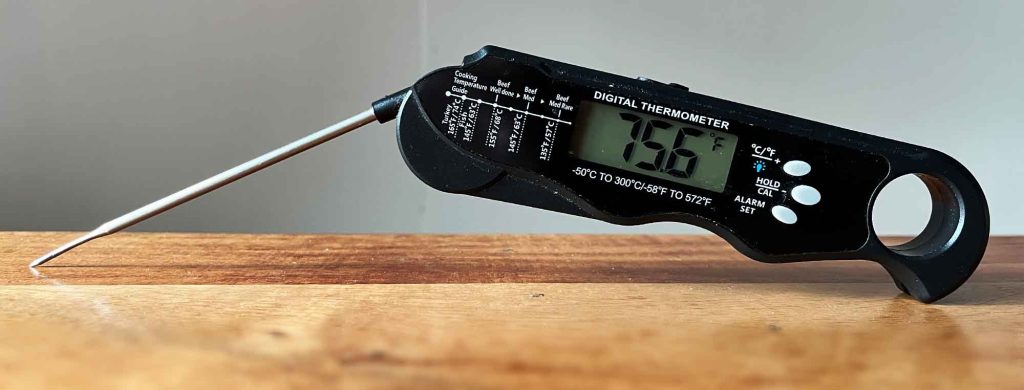
Check the actual temperature of the fermenting liquid if possible. Do not rely only on the room temperature. The temperature inside the fermenter can differ from the surrounding air.
What If the Beer Is Too Cold?
If the fermentation temperature is below the yeast manufacturer’s recommended range, gradually warm the fermenter.
Do not move it directly from a very cold location to a very hot location. A modest temperature increase can wake up sluggish yeast.
Give the yeast time to respond. Then check the gravity again.
What If the Beer Is Too Warm?
High temperatures can also cause problems.
Some yeast strains produce unwanted flavors when they ferment too warm. Other yeast strains tolerate higher temperatures.
Do not automatically increase the temperature because the airlock is not bubbling. Check the recommended temperature range for your yeast.
What About Mead and Cider?
Mead and cider can behave differently from beer.
Mead contains honey. Honey provides fermentable sugar but has relatively low levels of some nutrients required by yeast. A mead can therefore ferment slowly if the yeast does not receive adequate nutrition.
Cider can also ferment differently depending on:
- Juice composition
- Yeast strain
- Sugar content
- Temperature
- Nutrient level
A quiet airlock is not enough information to diagnose either fermentation. Again, always use gravity readings.
What About Wine?
Wine fermentation can also occur without visible airlock activity.
Fruit wine can have:
- Fruit pulp
- Foam
- Sediment
- Variable sugar levels
- Different yeast strains
The airlock can remain quiet even while fermentation continues.
Measure the gravity.

What If Fermentation Has Not Started?
If you added yeast recently and see no airlock activity, do not panic.
The yeast may need time to begin active fermentation – this is called the “lag phase.” Depending on the yeast and conditions, visible activity can take several hours or longer.
Check:
- Yeast temperature
- Fermenter temperature
- Yeast expiration date
- Starting gravity
- Nutrient level
- Fermenter seal
Do not immediately add another packet of yeast. First determine whether fermentation has actually failed. Sometimes the lag phase can go on for a full 48 hours.
Look for Other Signs of Fermentation
The airlock is not the only sign.
You may see:
- Krausen
- Foam
- Bubbles rising through the liquid
- Sediment collecting on the bottom
- Cloudiness
- A change in aroma
- A decrease in specific gravity
Some of these signs can occur without airlock activity. I know I keep saying it, but gravity is still the most useful measurement.
What If the Hydrometer Reading Has Not Changed?
If you take a gravity reading and it has not changed, wait two or three days.
Take another reading.
If the reading is still unchanged, investigate further.
Check:
- Fermentation temperature.
- Starting gravity.
- Yeast strain.
- Yeast health.
- Nutrient additions.
- Alcohol level.
- pH if appropriate.
- Fermentation history.
A stable gravity does not always mean that fermentation is stalled. The yeast may have already completed fermentation.

Do Not Add More Sugar Just Because the Airlock Is Quiet
This is an important mistake to avoid.
Adding sugar to a fermenter because you do not see bubbles can create excessive alcohol or other fermentation problems.
First measure the gravity. Know how much fermentable sugar remains. Then decide whether an adjustment is necessary.
Do Not Bottle Based on Airlock Activity
This is especially important for bottle-conditioned beer, cider, wine, and mead.
Do not bottle because:
- The airlock stopped
- The beer looks clear
- The beer has been fermenting for two weeks
- The calendar says it is time
Bottle only when fermentation is complete.
Use stable hydrometer readings to confirm this. If fermentation continues after bottling, the yeast can produce additional CO₂. This can create excessive pressure. In severe cases, bottles can break.
What If the Airlock Starts Bubbling Again?
This can happen.
Temperature changes can cause CO₂ or air to move in or out of the fermenter.
Moving the fermenter can also release dissolved CO₂. A change in atmospheric pressure can affect airlock activity. A beer can therefore show airlock activity even when very little fermentation is occurring.
Again, use the hydrometer.
Temperature Changes Can Cause False Activity
Suppose your fermenter is at 70°F.
You move it to a room at 75°F.
The liquid warms. CO₂ dissolved in the beer can come out of solution.The gas can escape through the airlock and you may see bubbles.
This does not necessarily mean fermentation has restarted.

Why Is My Airlock Bubbling After Fermentation?
Several things can cause this.
Temperature Change
Warming the beer can release dissolved CO₂.
Movement
Moving or shaking the fermenter can release CO₂.
Atmospheric Pressure
Weather and room pressure can affect gas movement.
Fermentation Restarted
If fermentable sugar remains, yeast may become active again.
A gravity reading can tell you which explanation is most likely.
Should You Open the Fermenter?
Avoid opening the fermenter simply to look at the beer. Every time you open it, you create another opportunity for contamination. You also expose the beverage to oxygen.
If you need to take a gravity reading, open the fermenter carefully and use sanitized equipment. Then close it again.
What If I See Mold?
Mold is a different problem.
If you see fuzzy growth or other obvious signs of mold:
Do not taste the batch.
You are no longer worried about your airlock. Mold creates mycotoxins, which can build up inside your body. By the time you see mold, you cannot reasonably know whether or not mycotoxins are already present throughout the whole batch. Safety first. When in doubt, dump it out.
Clean and sanitize the equipment extensively before using it again.

Airlock Troubleshooting Checklist
If your airlock is not bubbling, work through this list.
1. Is the fermenter sealed?
Check the lid, stopper, and grommet.
2. Is there liquid in the airlock?
Fill it according to the manufacturer’s instructions.
3. Is the fermenter at the correct temperature?
Check the yeast manufacturer’s recommended range.
4. Was yeast added?
Confirm that the correct yeast was used.
5. Is there evidence of fermentation?
Look for foam, sediment, or other changes.
6. What is the specific gravity?
Take a hydrometer reading.
7. Has the gravity changed?
Take another reading after two or three days.
8. Is the gravity stable?
If yes, fermentation may be complete.
9. Is the gravity still high?
If yes, investigate a possible stalled fermentation.
The Most Important Thing to Remember
An airlock is not a fermentation gauge.
It tells you that gas is moving through the airlock.
It does not tell you exactly how much fermentation is occurring. A fermenter with an active fermentation can have a silent airlock. A fermenter with no active fermentation can have an occasional bubbling airlock.
The hydrometer provides much better information. If the specific gravity is decreasing, fermentation is happening. If the specific gravity is stable over several days, fermentation may be complete.
If the gravity is stable but much higher than expected, investigate a possible stalled fermentation.
Do not panic when the airlock stops bubbling.
- Check the temperature.
- Check the fermenter.
- Then check the gravity.
In most cases, the “problem” is simply that the beer is fermenting normally and the CO₂ found an easier way out. Or your fermentation finished already!