
Brew in a Bag, or BIAB, is a method of all-grain brewing.
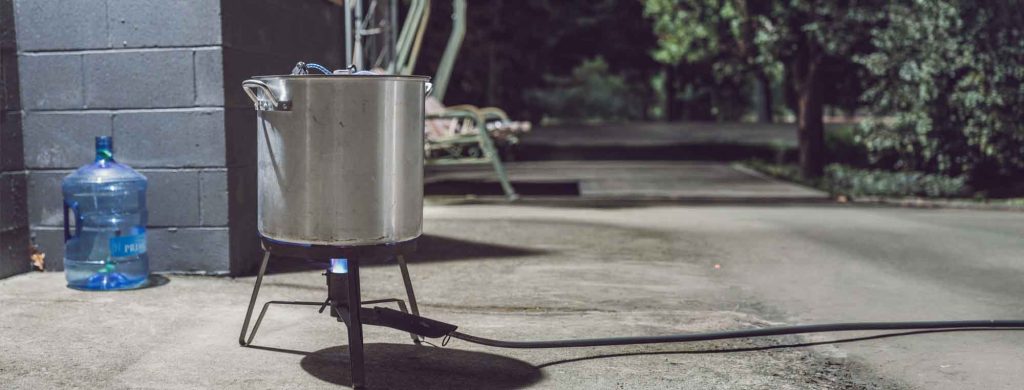
BIAB uses a large mesh bag to hold the brewing grain. The bag sits inside the brewing kettle during the mash. You remove the bag when the mash is complete. You can then boil the wort in the same kettle.
This makes all-grain brewing simpler.
How Does Brew in a Bag Work?
Traditional all-grain brewing often uses a separate mash tun. The mash tun holds the grain and water. The brewer then transfers the wort from the mash tun to a kettle.
BIAB uses the kettle for both steps.
The basic process is:
- Heat the brewing water in the kettle.
- Put the grain bag into the kettle.
- Add the crushed grain.
- Stir the grain into the water.
- Hold the mash at the target temperature.
- Remove the grain bag.
- Let the wort drain from the grain.
- Bring the wort to a boil.
- Add hops according to the recipe.
- Cool the wort.
- Transfer the wort to a fermenter.
- Add yeast.
The same basic process produces the wort as traditional all-grain brewing. The main difference is the equipment.
What Happens During the Mash?
The mash converts starch in the grain into sugars. Malted grain contains enzymes that perform this conversion. The brewer mixes crushed grain with hot water. A common mash temperature is about 150°F (66°C). The exact temperature depends on the recipe.
The brewer holds the mash at the target temperature. The enzymes then convert starch into sugars. The result is sweet wort. The grain bag makes it easy to separate the grain from the wort.
What Equipment Do You Need?
BIAB can require less equipment than traditional all-grain brewing.
A basic BIAB setup includes:
- Large brewing kettle
- Mesh grain bag
- Brewing grain
- Brewing water
- Kettle thermometer
- Heat source
- Brewing spoon or paddle
- Hops
- Yeast
- Fermenter
- Hydrometer
- Sanitizer
- Bottling or kegging equipment
You can also use an electric brewing system. Many electric brewing systems are designed around the BIAB process.
These systems can control the mash temperature and provide a basket or bag for the grain.
How Big Should the Kettle Be?
Your kettle needs enough space for the water and grain. The grain takes up a large amount of space during the mash. You also need room to prevent the wort from boiling over.
A five-gallon batch can require a kettle larger than five gallons.
A 10-gallon kettle is a common size for five-gallon BIAB batches.
The exact size depends on your recipe and brewing method. Always check the total volume before you start.
Do You Need to Sparge With BIAB?
Usually, no.
Traditional all-grain brewing often uses sparging. Sparging rinses the grain with additional hot water, which helps collect more sugar from the grain.
BIAB can use the full amount of brewing water in the mash. This method is called full-volume BIAB.
You then lift the bag and let the wort drain. You can also use a small amount of sparge water with BIAB. This can increase efficiency. It is not required for most BIAB recipes.
What Is Full-Volume BIAB?
Full-volume BIAB uses almost all of the brewing water during the mash. For example, a five-gallon batch may start with several gallons of water in the kettle.
The exact amount depends on:
- Batch size
- Grain weight
- Grain absorption
- Boil-off rate
- Kettle size
- Expected losses
After the mash, you remove the grain bag. The wort is then ready for the boil. This eliminates a separate sparge step.

What Happens When You Remove the Grain Bag?
The grain bag contains the spent grain. The wort remains in the kettle. You can lift the bag above the kettle so the wort drains from the grain and returns to the kettle.
Do not squeeze the bag if your recipe or equipment manufacturer tells you not to. Many BIAB brewers do squeeze the bag. Squeezing can recover additional wort. It can also make the bag harder to handle.
The important point is to avoid burning yourself.
A large grain bag can be heavy. Hot wort can cause serious burns. Use equipment that lets you lift the bag safely, like a pulley system. You can also press the grain bag between two wire baking racks to squeeze out remaining wort.
Is BIAB Really All-Grain Brewing?
Yes. BIAB is an all-grain brewing method. The brewer converts starch from malted grain into sugar. The brewer does not use malt extract as the main sugar source.
The main difference is how the grain is held and separated from the wort. You can make the same types of beer with BIAB that you can make with traditional all-grain brewing.
BIAB vs. Traditional All-Grain Brewing
| Feature | BIAB | Traditional All-Grain |
| Main sugar source | Grain | Grain |
| Mash | In brewing kettle | In mash tun |
| Grain separation | Mesh bag | False bottom or other filter |
| Sparging | Usually optional | Common |
| Number of main vessels | Usually one | Usually two or more |
| Equipment | Simple | More extensive |
| Setup | Quick | More involved |
| Control | High | High |
| Cleaning | Usually easier | Usually more involved |
Both methods can produce excellent beer. BIAB simply combines more of the brewing process into one vessel.
Does BIAB Make Good Beer?
Yes. BIAB can produce excellent beer. The brewing method does not prevent you from making high-quality beer. Good results depend on the same basic factors as other brewing methods.
These factors include:
- Good ingredients
- Correct mash temperature
- Good water
- Proper sanitation
- Healthy yeast
- Correct fermentation temperature
- Accurate measurements
- Proper packaging
BIAB can produce professional-quality wort when the process is controlled correctly. And BIAB is a great method to brew a Single Hop and Single Malt beer.
What Are the Advantages of BIAB?
BIAB has several advantages.
Less Equipment
You can perform the mash and boil in the same kettle.
You do not need a separate mash tun.
Less Space
A BIAB system takes up less room.
This can be important for brewers with small kitchens or limited storage.
Simple Setup
There are fewer vessels and fewer connections.
This makes the brewing process easier to understand.
Easier Cleaning
There are fewer pieces of equipment to clean.
The grain bag can also be rinsed separately from the kettle.
Lower Cost
You can start all-grain brewing without buying a complete traditional three-vessel system.
A large kettle and a suitable grain bag may be enough to get started.
Faster Brew Day
You can skip some traditional all-grain steps.
You may not need to transfer the mash to another vessel.
You may not need to perform a separate sparge.
What Are the Disadvantages of BIAB?
BIAB also has some disadvantages.
Heavy Grain Bags
Wet grain is heavy.
A large grain bill can make the bag difficult to lift.
Hot Equipment
The bag and grain can be extremely hot.
You need a safe way to lift and drain the bag.
Kettle Size
BIAB can require a larger kettle.
The kettle must hold both the brewing water and the grain.
Efficiency Can Vary
BIAB efficiency depends on the recipe and process.
Poor mixing, incorrect water volume, or incomplete conversion can reduce efficiency.
You should measure your results and adjust future recipes.

Do You Need a Grain Bag?
Yes. The grain bag is the main part of the BIAB process. The bag must allow wort to flow through it and must also be strong enough to hold the wet grain.
Use a bag designed for brewing when possible. Avoid bags that can tear or shed material into the wort.
The bag should also fit your kettle. A bag that is too small can make the mash difficult.
Can You Use BIAB for a Five-Gallon Batch?
Yes. BIAB works well for five-gallon batches. You need a kettle that can hold the full mash volume and enough room for the grain and wort. A 10-gallon kettle is often a practical size for five-gallon batches.
Larger batches may require a larger kettle or an electric brewing system.
Can You Brew Small Batches With BIAB?
Yes. BIAB works especially well for small batches. A small kettle and grain bag can produce a one-gallon or two-gallon batch.
Small batches also require less grain. This makes lifting the bag easier. In this way, BIAB can be a good way to try all-grain brewing without buying a large system.
Can You Use Extract With BIAB?
Yes. You can combine BIAB with extract.
For example, you can mash a small amount of grain and add malt extract later. This is a form of partial mash brewing.
BIAB does not require you to use only one brewing method. The bag is simply a way to hold the grain during the mash.
Is BIAB Good for Beginners?
Yes. BIAB is one of the easiest ways to start all-grain brewing. It teaches the basic principles of mashing without requiring a complicated system.
You learn how to:
- Measure brewing water
- Heat the mash
- Control mash temperature
- Convert starch into sugar
- Separate grain from wort
- Calculate brewhouse efficiency
- Boil and hop the wort
These skills apply to other all-grain systems.
Common BIAB Mistakes
Using Too Small a Kettle
Make sure the kettle can hold the water and grain.
Using the Wrong Bag
Use a strong bag that fits the kettle.
Losing Mash Temperature
Keep the kettle covered during the mash.
You can also insulate the kettle or use an electric system with temperature control.
Burning the Bag
Do not allow a synthetic grain bag to sit directly against a heating element.
Follow the instructions for your equipment.
Lifting the Bag Unsafely
Wet grain is heavy and hot.
Use a pulley, basket, rack, or other safe lifting method for large batches.
Forgetting Grain Absorption
Grain holds some of the brewing water.
Your starting water volume must account for this loss.
Ignoring Your Efficiency
Measure your original gravity.
Compare it with the recipe target.
You can then adjust future batches.
Is BIAB Better Than Traditional All-Grain Brewing?
Not necessarily. BIAB is simpler.
Traditional all-grain brewing can provide more flexibility in equipment and process. Both methods can produce excellent beer.
Choose BIAB if you want:
- Less equipment
- Less cleaning
- Less setup
- A smaller footprint
- A simple path to all-grain brewing
Choose a traditional system if you enjoy more complex brewing equipment or want a dedicated mash and lautering setup.
The Simple Answer
Brew in a Bag is an all-grain brewing method that uses a large mesh bag to hold the grain during the mash.
The mash takes place directly in the brewing kettle.
You remove the bag when the mash is complete.
You then boil the wort in the same kettle.
This eliminates the need for a separate mash tun in many setups.
BIAB is simple, inexpensive, and capable of producing excellent beer.
For a brewer who wants to move from extract brewing to all-grain brewing, BIAB is one of the easiest ways to make the switch.