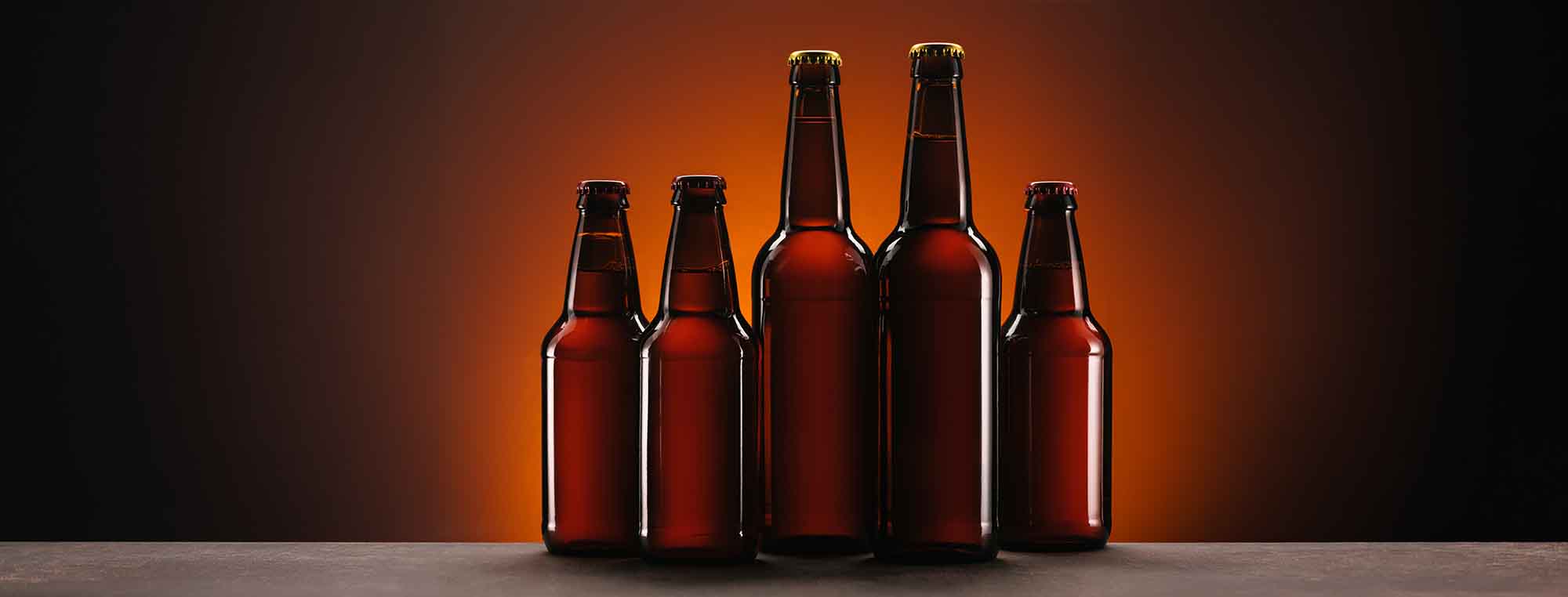
If you are bottling a 5-gallon batch of homebrew, you will usually need about 48 to 54 standard 12-ounce bottles.
The exact number depends on how much beer you have after fermentation and how much beer you lose to:
- Trub
- Yeast sediment
- Hops
- Fruit
- Transfers
- Siphoning
- Bottling equipment
For most beginners, 48 clean 12-ounce bottles is a good minimum. Having a few extra bottles available is even better.
How do I know how many bottles I need?
A U.S. gallon contains 128 fluid ounces.
Five gallons contains: 5 × 128 = 640 ounces
If every drop of beer could be bottled in 12-ounce bottles: 640 ÷ 12 = 53.3 bottles
Therefore, a theoretical 5-gallon batch would fill about 53 twelve-ounce bottles.
In real homebrewing, you will not have 640 ounces of finished beer available for bottling. Some beer remains behind with the sediment. You may also lose some beer during transfers. And you want to leave about 1.5 inches of headspace in each bottle. This is why a 5-gallon batch usually produces fewer than 53 full bottles, and rarely can you predict an exact amount. There are several variables at play.
How Many Bottles Should I Have Ready?
For a typical 5-gallon batch, prepare: 48–54 12-ounce bottles
If you want to avoid running out of bottles, prepare 54 bottles.
You may not fill all of them. That is better than reaching the end of the bottling process and discovering that you need three more bottles. Hey, at least they’re clean for the next bottling day.
Bottle Size Makes a Big Difference
You do not have to use 12-ounce bottles.
Common bottle sizes include:
- 12 oz
- 16 oz
- 22 oz
- 500 mL
- 750 mL
The number of bottles changes with the bottle size.
| Bottle size | Approximate bottles from 5 gallons |
| 12 oz | 53 |
| 16 oz | 40 |
| 22 oz | 29 |
| 500 mL | 38 |
| 750 mL | 25 |
These numbers represent the theoretical volume.
Actual production will be lower because some beer remains in the fermenter and equipment.
What About 22-Ounce Bottles?
Large bottles can make bottling much faster.
A 22-ounce bottle holds almost twice as much beer as a 12-ounce bottle.
Five gallons theoretically requires: 640 ÷ 22 = 29 bottles In practice, you may need about 25–29 bottles.
Large bottles are useful for:
- Strong beers
- Belgian-style beers
- Special occasion beers
- Beers you plan to share
They are less convenient if you usually want one serving at a time.
What About 16-Ounce Bottles?
Sixteen-ounce bottles are another useful option.
Five gallons theoretically requires: 640 ÷ 16 = 40 bottles
You may need approximately 36–40 bottles after normal brewing losses.
A 16-ounce bottle is a good compromise between 12-ounce and larger bottles.
What About 500 mL Bottles?
500 mL is approximately 16.9 U.S. fluid ounces.
Five gallons contains approximately:
18,927 mL
Divide that by 500 mL: 18,927 ÷ 500 = 37.9
So a completely full 5-gallon batch would require about 38 bottles. In practice, plan for approximately 35–38 bottles.
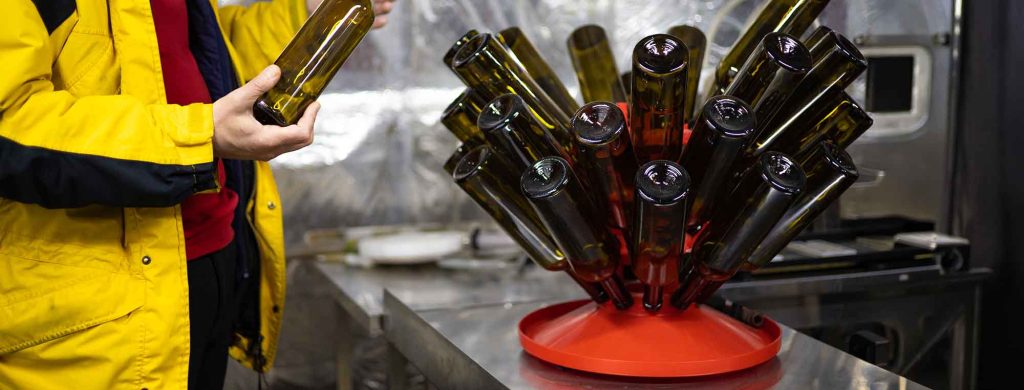
What About 750 mL Wine Bottles?
750 mL is approximately 25.4 fluid ounces.
Five gallons would theoretically require: 18,927 ÷ 750 = 25.2 So you need about 25 bottles for the theoretical volume.
However, not every wine bottle is suitable for carbonated beer. This is an important distinction.
Do Not Use Ordinary Wine Bottles for Carbonated Beer
Standard wine bottles are not designed to contain the pressure produced by bottle-conditioned beer. A carbonated beer can create significant pressure inside the bottle. Use bottles specifically designed for carbonated beverages.
Champagne-style bottles are designed for pressure. Some Belgian beer bottles are also designed for carbonation. Check the bottle manufacturer’s specifications before using a particular bottle.
How Much Beer Do You Really Get From a 5-Gallon Batch?
A recipe may say:
5 gallons
That does not necessarily mean that you will bottle five gallons. The recipe volume can refer to different points in the brewing process.
For example:
5 gallons of wort
may become:
4.5 gallons of finished beer
after fermentation and transfers.
Losses can occur from:
- Trub
- Yeast
- Hops
- Fruit
- Equipment
- Siphon tubing
- Bottling bucket
- Spillage
This is why experienced brewers often plan for packaging losses.
A Typical Example
Imagine you brew 5 gallons of beer. After fermentation, you have approximately: 4.5 gallons ready to package.
Four and a half gallons contains: 576 ounces
Divide that by 12 ounces: 48 bottles
That gives you approximately: 48 twelve-ounce bottles
This is why the common recommendation of 48 bottles for a 5-gallon batch works well.
What Is Trub?
Trub is the material that settles at the bottom of the fermenter.
It can contain:
- Yeast
- Proteins
- Hop material
- Other brewing sediment
You do not want to transfer all of the trub into your bottles. Leave the sediment behind, as this reduces the amount of beer available for packaging.
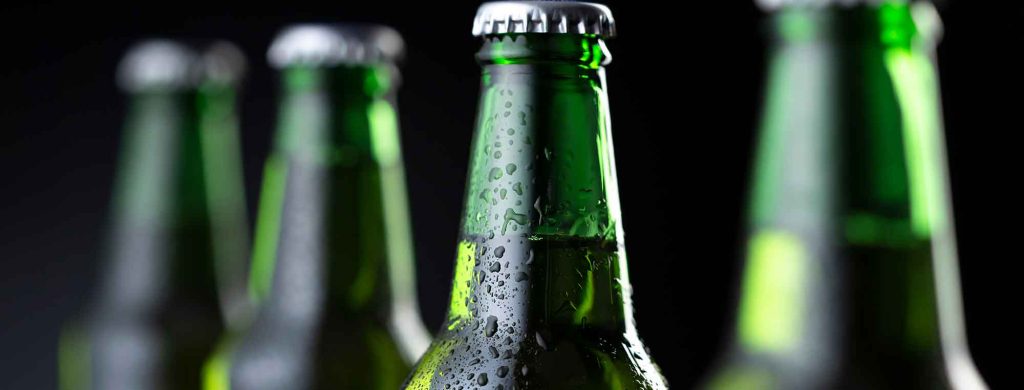
What Is Headspace?
You should not fill beer bottles completely to the top. Rather, you need a small amount of space between the beer and the bottle cap. This is called headspace.
The correct amount depends on the bottle and bottling method. A typical beer bottle has approximately 1 inch of headspace. Do not intentionally fill bottles completely full.
How Many Bottles Should I Clean?
If you expect to fill 48 bottles, clean and sanitize at least:v48 bottles
A better strategy is to prepare: 50–55 bottles
This gives you some flexibility. You may find that you have slightly more beer than expected. You may also discover that one bottle is damaged or dirty. Having extra bottles prevents a last-minute problem.
What Other Bottling Equipment Do I Need?
Bottles are only one part of the bottling system. For bottle-conditioned beer, you will normally need:
- Clean bottles
- Bottle caps
- Bottle capper
- Bottling bucket
- Bottling wand
- Siphon or transfer tubing
- Priming sugar
- Sanitizer
- Measuring equipment
- Bottle brush
- Bottle filler
A bottling bucket with a spigot makes the process easier.
How Many Bottle Caps Do I Need?
Buy more caps than you expect to use. For a 5-gallon batch, a package of 60 caps is useful.
You may only need 48–54. The extra caps provide a safety margin. Bottle caps are inexpensive. Running out of caps during bottling is inconvenient. And every now and then, one will get damaged in the capper.
How Much Priming Sugar Do I Need?
This depends on:
- Beer volume
- Desired carbonation
- Existing dissolved CO₂
- Beer temperature
- Sugar type
Do not use a fixed amount for every beer. A priming-sugar calculator can provide a better result. The goal is to add enough fermentable sugar to produce the desired amount of CO₂.
Why Does Bottle Count Matter for Priming Sugar?
Bottle count itself is not the important measurement. Beer volume is important.
For example, suppose you have: a 5 gallon batch of beer.
You should calculate the priming sugar for the actual volume of beer that you will package. If you only have: 4.5 gallons of beer going into bottles, do not calculate the priming sugar for the 5 gallon original volume. Measure the amount of beer you are actually bottling.
Can I Use Plastic Bottles?
Yes. PET bottles can be useful for homebrewing.
They are:
- Lightweight
- Difficult to break
- Easy to transport
- Suitable for carbonated beverages when designed for that purpose
Purpose-made PET beer bottles can be a good option for beginners. Do not use an ordinary plastic container that is not designed to hold carbonated beverages.
Can I Reuse Beer Bottles?
Yes. Many homebrewers reuse commercial non-screwtop beer bottles.
Choose bottles that are:
- Designed for carbonated beer
- Free of cracks
- Free of chips
- Easy to clean
Avoid bottles with damage around the neck.
Which Bottles Are Easiest to Reuse?
Standard pry-off beer bottles are often convenient. Avoid screw-top bottles unless they are specifically designed to accept the type of cap and sealing method you intend to use. Do not assume that every commercial beer bottle can be capped with a standard homebrew cap.
How Do I Prepare Used Bottles?
The easiest time to clean a beer bottle is immediately after you empty it.
Rinse the bottle several times. Remove all visible beer residue. Turn the bottle upside down and allow it to dry.
When bottling day arrives:
- Inspect the bottle.
- Clean it if necessary.
- Rinse it.
- Sanitize it.
- Drain it.
- Fill it.
A bottle with dried beer residue should be cleaned before it is sanitized.
Do I Need to Remove the Labels?
No. Labels do not affect the beer.
However, removing labels can make reused bottles easier to identify. A long soak in warm water can loosen many paper labels. Some labels are much harder to remove, and a soak in Star San, PBW, or OxiClean Free can help lift them.
You do not need to spend hours removing every label.
What If I Don’t Have Enough Bottles?
You have several options.
Use larger bottles. For example, you could use:
- 40 × 12 oz bottles
- Plus a few larger bottles
Or use 16-ounce bottles. You can also package part of the batch in a keg. You do not need to use identical bottles.
Can I Mix Bottle Sizes?
Yes. There is no problem with using different bottle sizes in the same batch.
For example:
- 30 × 12 oz
- 10 × 16 oz
- 4 × 22 oz
The important consideration is carbonation. All bottles receive beer from the same batch. Each bottle should receive the appropriate amount of priming sugar through your chosen priming method.
What Is the Easiest Bottling Method?
For a beginner, the simplest method is to use a bottling bucket.
The basic process is:
- Confirm fermentation is complete.
- Clean the bottles.
- Sanitize the bottles.
- Prepare the priming sugar.
- Transfer the beer to the bottling bucket.
- Mix in the priming sugar.
- Fill the bottles.
- Leave appropriate headspace.
- Cap the bottles.
- Store them at the appropriate temperature.
- Allow them to carbonate.
Do not splash the beer during transfer. Oxygen exposure after fermentation can cause stale flavors.
What If I Have More Beer Than Expected?
This is why extra bottles are useful.
Suppose you expected 48 bottles. You actually fill 50.
If you prepared 54 bottles, there is no problem. If you prepared exactly 48 bottles, you now need to stop and clean additional bottles. Prepare more bottles than you think you need!
What If I Have Less Beer Than Expected?
You simply fill fewer bottles. Do not dilute the beer to make more bottles. Do not add water to the bottling bucket unless your recipe specifically calls for it. The number of bottles is less important than the quality of the beer.
A Good Rule for 5-Gallon Batches
If you are starting out, use this rule: Have at least 48 clean and sanitized 12-ounce bottles available for a 5-gallon batch.
For less stress, prepare: About 54 bottles.
You will probably not use every bottle and that is fine. Extra bottles are much better than not having enough.
Quick Bottle-Count Chart
| Batch size | 12 oz bottles | 16 oz bottles | 22 oz bottles |
| 1 gallon | ~10 | ~8 | ~5 |
| 2 gallons | ~21 | ~16 | ~11 |
| 3 gallons | ~32 | ~24 | ~17 |
| 4 gallons | ~43 | ~32 | ~23 |
| 5 gallons | ~53 | ~40 | ~29 |
These are theoretical maximums.
Actual bottle counts are normally lower because of fermentation and packaging losses.
The Bottom Line
A 5-gallon batch does not necessarily produce 53 full 12-ounce bottles.
Some beer remains behind in the fermenter. Some beer can be lost during transfers. Some beer remains in the bottling equipment.
For a typical 5-gallon homebrew batch, plan for approximately: 48–54 12-ounce bottles If you are new to homebrewing, having 54 bottles ready is a good strategy.
Clean your bottles before bottling day. Sanitize them before filling. Use bottles designed for carbonated beverages. And remember that the number of bottles is less important than having enough clean, safe containers for the beer you actually produced.
If you have a few bottles left over at the end of bottling, that is a good problem to have.