Krausening is a traditional brewing method which uses actively fermenting beer to improve or restart fermentation in another beer.
It can also provide carbonation.
The method has been used in German brewing for centuries.
Today, homebrewers can use krausening for two main reasons. You can use it to prime beer for natural carbonation. You can also use it to add healthy, active yeast to beer before bottling.
These uses are related. They are not exactly the same.
Where Did Krausening Come From?
Krausening comes from the German brewing tradition.
The word refers to Kräusen, the thick layer of foam that forms on the surface of actively fermenting beer. The foam contains yeast, proteins, hop compounds, and other fermentation material. Traditional German brewers used this actively fermenting beer as part of their brewing process. This was especially important before modern brewing yeast and laboratory fermentation control.
Brewers could take beer from an active fermentation and add it to another beer. The fresh yeast could continue fermentation. The active fermentation could also produce natural carbonation in a sealed container. This became a traditional method for conditioning lager.
Why Did Brewers Use Krausening?
Traditional lager brewing could involve long fermentation and storage periods. The yeast could become less active during this time. The beer could also contain very little remaining fermentable sugar.
This created a problem.
The brewer wanted the finished beer to become naturally carbonated. There needed to be enough healthy yeast and fermentable sugar for another small fermentation. Krausening provided both an active yeast population and fermentable wort.
The fresh yeast fermented the available sugars. The resulting carbon dioxide dissolved into the beer. This created natural carbonation!
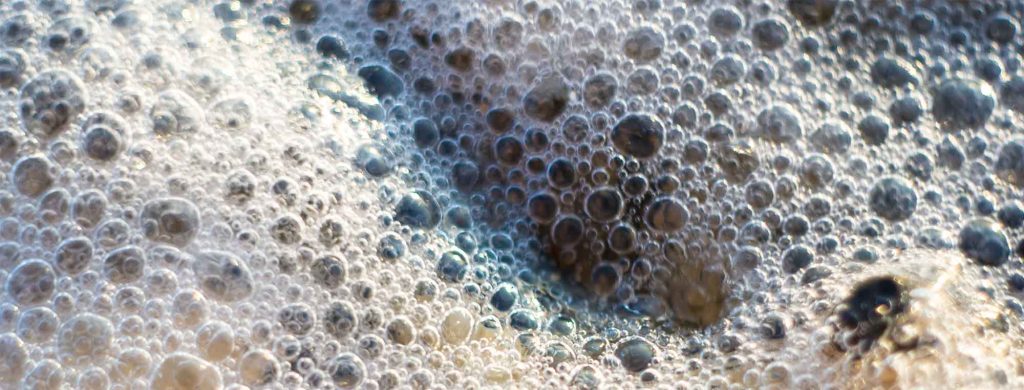
What Is Kräusen?
Kräusen is not a special type of yeast. Rather, it is a stage of fermentation.
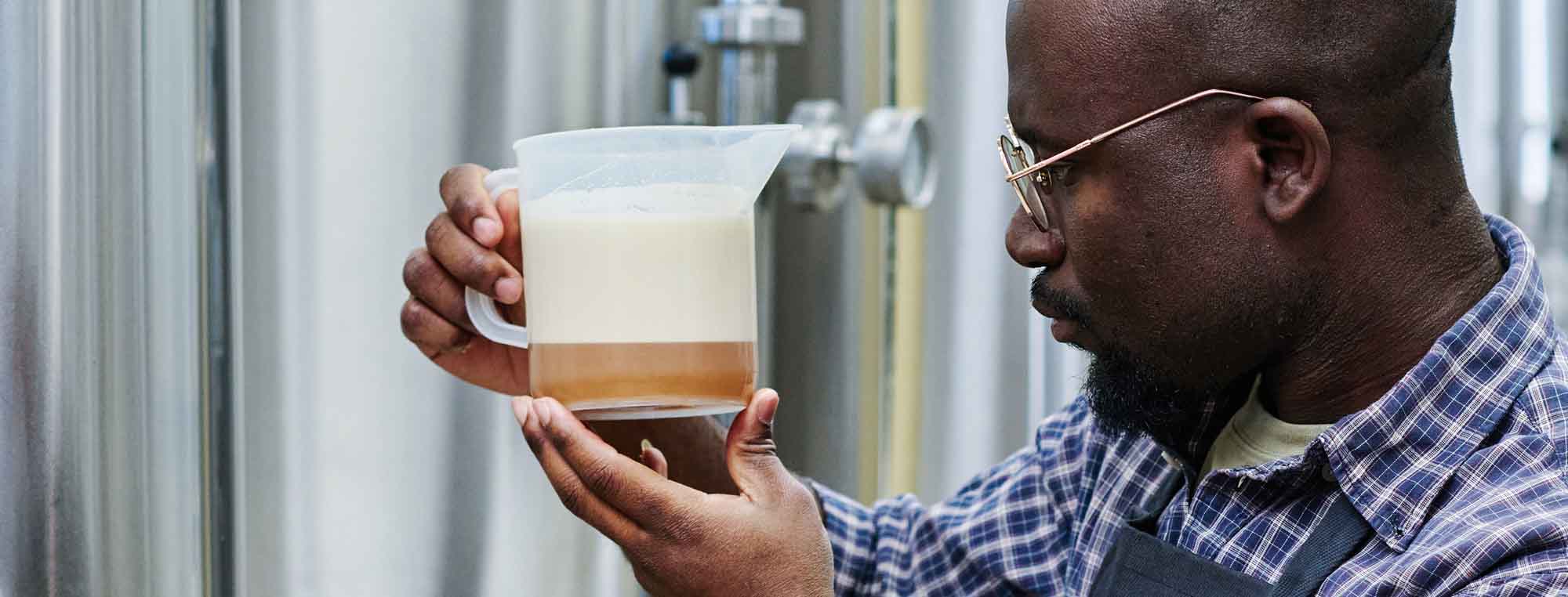
During active fermentation, yeast produces carbon dioxide. The gas carries proteins and other compounds toward the surface. This creates a thick layer of foam. This foam is called Kräusen. The beer you remove the Kräusen from is called gyle.
The exact appearance depends on the yeast, beer, temperature, and fermentation stage. A healthy Kräusen can be a sign of strong fermentation activity. Krausening uses beer from this active stage of fermentation.
Krausening vs. Priming Sugar
Most homebrewers bottle-condition beer with priming sugar.
The brewer adds a measured amount of sugar to finished beer. The remaining yeast consumes the sugar, and the yeast produces carbon dioxide.
The sealed bottle traps the carbon dioxide. The beer becomes carbonated.
Krausening uses a different source of fermentable sugar. Instead of adding a measured amount of priming sugar, you add actively fermenting beer. That beer contains both fermentable sugars and healthy yeast. The yeast consumes the remaining sugars and the result is natural carbonation.
Krausening as a Priming Method
This is the most traditional use of krausening.
You finish your main beer.
- You then add a measured amount of actively fermenting beer (gyle).
- The active beer contains fermentable extract.
- It also contains healthy yeast.
- You bottle the mixture.
- The fresh yeast ferments the added extract.
- The resulting carbon dioxide carbonates the beer.
This is similar to adding priming sugar. The important difference is the source of the sugar and yeast.
How Much Gyle Should I Add?
Krausening requires more calculation than ordinary priming sugar.
The amount of fermentable extract in the active beer can vary. The fermentation stage also matters.
The original gravity and current gravity affect the amount of remaining sugar. The temperature also affects carbonation. For this reason, you should use a brewing calculator or a proven recipe when determining the amount.
Do not simply add a random amount of gyle. Too little can produce flat beer. And too much can create excessive carbonation.
Excessive carbonation can create dangerous bottle pressure.
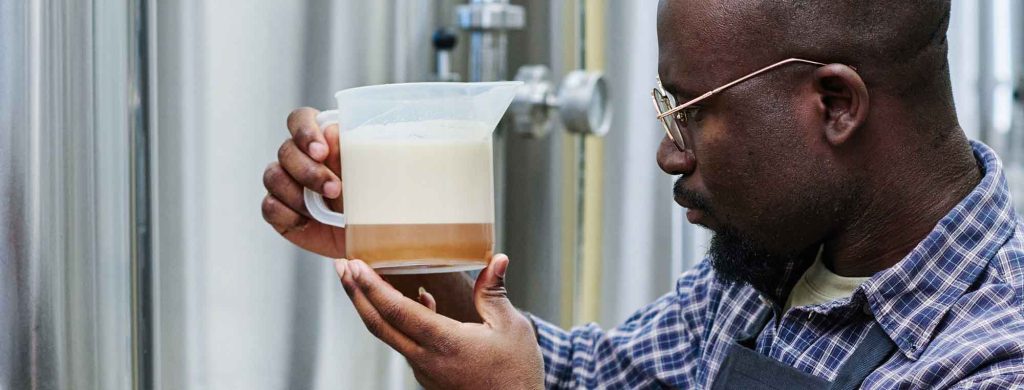
Is There a Formula for Calculating the Amount of Gyle?
Charlie Papazian provides a simple formula in his book, The Complete Joy of Homebrewing. Here is a simplified version in chart form:
| Original Gravity | Gravity Points | 1 Gallon | 5 Gallons | 10 Gallons |
|---|---|---|---|---|
| 1.020 | 20 | 0.60 qt | 3.00 qt | 6.00 qt |
| 1.025 | 25 | 0.48 qt | 2.40 qt | 4.80 qt |
| 1.030 | 30 | 0.40 qt | 2.00 qt | 4.00 qt |
| 1.035 | 35 | 0.34 qt | 1.71 qt | 3.43 qt |
| 1.040 | 40 | 0.30 qt | 1.50 qt | 3.00 qt |
| 1.045 | 45 | 0.27 qt | 1.33 qt | 2.67 qt |
| 1.050 | 50 | 0.24 qt | 1.20 qt | 2.40 qt |
| 1.055 | 55 | 0.22 qt | 1.09 qt | 2.18 qt |
| 1.060 | 60 | 0.20 qt | 1.00 qt | 2.00 qt |
| 1.065 | 65 | 0.18 qt | 0.92 qt | 1.85 qt |
| 1.070 | 70 | 0.17 qt | 0.86 qt | 1.71 qt |
| 1.075 | 75 | 0.16 qt | 0.80 qt | 1.60 qt |
| 1.080 | 80 | 0.15 qt | 0.75 qt | 1.50 qt |
Formula: Quarts of gyle = (12 × gallons of wort) ÷ gravity points.
Example: A 5-gallon batch with an original gravity of 1.040 requires approximately 1.5 quarts of gyle.
This will result in a typical amount of carbonation akin to that of adding approximately one ounce per gallon of dextrose priming sugar.
Krausening Does Not Mean Adding Foam
You do not need to scoop foam from the top of a fermenter. Rather, the term refers to the use of actively fermenting beer.
The beer contains the useful yeast and fermentable material. The foam is simply a visible part of that active fermentation. A brewer can transfer an appropriate amount of actively fermenting wort or beer for use in the process.
Krausening to Add Healthy Yeast
Krausening has another useful application.
You can use it to introduce healthy yeast into a beer before bottling. This can be useful when the original beer contains little active yeast.
This situation can occur after:
- A long lagering period
- Cold storage
- Extended aging
- Filtration
- Very high alcohol fermentation
- A fermentation that has stressed the yeast
The beer may be finished. The beer may taste good.
However, the remaining yeast may not be in good condition for bottle conditioning. Adding a small amount of healthy, active fermentation beer can provide fresh yeast.
This Does Not Require a Full Krausening Priming Process
You can separate the two concepts.
- If your goal is carbonation, the active beer can provide both sugar and yeast.
- If your goal is only to add healthy yeast, you can add a suitable amount of fresh yeast without relying on the active beer as your primary source of fermentable sugar.
This is useful for beers that need bottle conditioning after long aging.
The brewer can use a small amount of fresh yeast during packaging. The beer can then receive a normal measured dose of priming sugar. This gives you more control over carbonation.
Why Add Fresh Yeast Before Bottling?
Yeast can become less active over time.
Cold temperatures can cause yeast to settle. Long aging can reduce the amount of yeast suspended in the beer. Or high alcohol levels can also make fermentation more difficult.
A fresh and healthy yeast population can improve the reliability of bottle conditioning. This is particularly useful for strong beers and long-aged beers.
Krausening Strong Beer
High-gravity beer can be difficult to carbonate naturally. The original yeast may already have experienced significant alcohol stress. The beer may also contain little remaining fermentable sugar.
Adding healthy yeast at bottling can help.
A brewer can select a yeast strain that is appropriate for the beer and its alcohol level. The yeast must also be able to ferment the priming sugar. This is one reason some brewers add fresh bottling yeast instead of relying entirely on the original yeast.
Krausening Lager
Krausening is especially associated with lager brewing.
Traditional German lager brewing often used this method during conditioning. The brewer could add actively fermenting beer from a younger batch to a more mature lager. The fresh yeast could complete fermentation and also produce natural carbonation.
This process could contribute to the clean character associated with traditionally conditioned lager.

Krausening and the German Purity Law
Krausening also has a connection to the history of German brewing regulations.
The Reinheitsgebot restricted the ingredients that could be used in beer. The historical rules are more complicated than the simple modern slogan of “malt, hops, yeast, and water.”
However, krausening allowed brewers to carbonate beer without adding an outside sugar source. The fermentable material came from malt. The yeast also came from beer. This made the process compatible with traditional German brewing practices.
Krausening and Modern Homebrewing
You do not need traditional German equipment to krausen a beer.
A homebrewer can use a small active fermentation as the source of gyle. You can also use a separate starter or fresh yeast when your goal is only to improve bottle conditioning. The important part is controlling the amount of fermentable material and yeast.
A Simple Example
Imagine that you have a lager that has finished fermentation. You want to bottle-condition it. The beer has been cold for several weeks. Most of the yeast has settled.
You could use a traditional priming solution.
You could also add an appropriate amount of actively fermenting lager beer.
The active beer provides fresh yeast. It also provides fermentable extract.
The mixture is then bottled. The fresh yeast ferments the available sugar. Carbon dioxide remains in the sealed bottles so the beer becomes naturally carbonated.
Another Example: Adding Yeast Only
Imagine that you have aged a strong ale for several months.
The beer is ready to bottle. You do not want to rely on the original yeast. You can add a small amount of healthy bottling yeast. You can still use ordinary priming sugar.
In this case, you are using the principle behind krausening. You are introducing healthy yeast before bottle conditioning. You are not necessarily using Kräusen as the source of the priming sugar.
Do I Need to Krausen My Beer?
No.
Krausening is optional.
Modern homebrewers have much easier ways to carbonate beer.
Priming sugar is simple and predictable. Kegging provides even more control. Fresh bottling yeast is also easy to use when needed. Krausening is most useful when you want to explore traditional brewing methods or when you have a specific reason to add fresh yeast.
Advantages of Krausening
Krausening has several advantages.
- It provides healthy yeast.
- It can provide fermentable sugar.
- It can create natural carbonation.
- It uses wort-derived fermentable material.
- It is a traditional lager-conditioning method.
- It can be useful for long-aged beer.
- It can help bottle-condition beer that has very little active yeast.
Disadvantages of Krausening
Krausening also creates additional work.
- The active beer must be available at the correct fermentation stage.
- The amount of fermentable sugar can vary.
- The yeast population can vary.
- Carbonation can be less predictable if the process is not measured carefully.
- The active beer must also be handled safely and hygienically.
- You must prevent contamination.
- You must avoid adding too much fermentable material.

The Biggest Risk: Overcarbonation
Bottle conditioning always requires control.
The yeast does not know how much carbonation you want. It simply consumes available fermentable sugar.
If too much fermentable material is added, the yeast can produce too much carbon dioxide. Pressure can build inside the bottle. The bottle can leak. The cap can fail. The bottle can break.
Use accurate measurements. Make sure the base beer has completed fermentation. Treat bottle conditioning as a controlled fermentation.
Sanitation Still Matters
Krausening does not protect beer from contamination.
The active beer must be healthy and clean. All equipment must be clean. All equipment that touches finished beer must also be sanitized.
Keep exposure to air as low as practical. A contaminated gyle can contaminate the entire batch.
Krausening Is Not the Same as Adding Yeast Nutrient
Yeast nutrient provides nutrients. It does not provide a new population of active yeast.
Krausening adds active fermentation material. That material contains yeast and fermentable compounds. These are different tools.
Krausening Is Not the Same as Using a Yeast Starter
A yeast starter is normally used to grow or prepare yeast before fermentation.
Krausening uses actively fermenting beer as part of the conditioning process.
The two methods can produce healthy yeast. They are used at different stages and for different purposes.
Can I Use Gyle From Another Beer?
Yes.
The beer should be compatible with the beer you are conditioning.
The yeast strain matters.
The active beer also contributes flavor. A strongly flavored beer can change the character of the finished beer. A lager is usually best paired with an appropriate lager fermentation. An ale is usually best paired with an appropriate ale fermentation. Think about the yeast and flavor before combining beers.
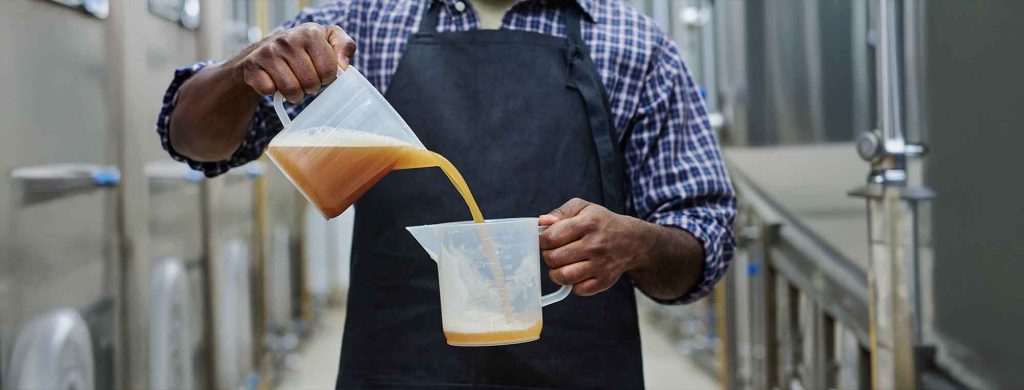
Can I Use Gyle to Start a New Beer Fermentation?
Yes.
This is a traditional approach. You can take actively fermenting beer and introduce it to another batch, provided your timing is right to introduce a healthy yeast colony. The challenge is just timing.
Can I Use Fresh Wort to Prime Another Beer?
Yes, as long as the receiving beer still has active yeast to eat the sugars and turn them into carbon dioxide. Priming a finished beer using non-fermenting, fresh wort is an effective technique.
Can I Save Fresh Wort to Prime My Beer?
Yes, like the previous answer: as long as the receiving beer still has active yeast to eat the sugars and turn them into carbon dioxide. Priming a finished beer using non-fermenting, fresh wort is an effective technique.
Charlie Papazian outlines this technique in The Complete Joy of Homebrewing. Papazian recommends calculating the amount of wort you’ll need and then freezing the measured fresh wort until bottling day. That wort and all its sugars can then be thawed and added to the bottling bucket just as you would a priming sugar solution.
What If I Do Not Have Active Gyle?
You have other options.
- You can use priming sugar.
- You can add fresh yeast.
- You can use a commercial bottling yeast.
- You can keg and carbonate with CO₂.
Krausening is not required for successful bottle conditioning.
The Bottom Line
Krausening is a traditional German brewing technique.
It uses actively fermenting beer to condition another beer. The active beer provides healthy yeast and fermentable material.
Historically, this helped brewers naturally carbonate and condition lager.
Modern homebrewers can use the same technique. You can use fermenting beer as a natural source of priming sugar and yeast.
You can also use the basic idea to reintroduce healthy yeast before bottling a beer that has been aged, lagered, or otherwise lost much of its active yeast. The most important point is to understand what you are trying to accomplish.
- If you want carbonation, krausening can provide both yeast and fermentable sugar.
- If you only need healthy yeast, you can add fresh bottling yeast and use normal priming sugar.
Both approaches can work.
Measure carefully. Use healthy yeast. Make sure fermentation is complete before you krausen and bottle so you are introducing the right amount of sugars for priming.
And remember that bottle conditioning is a controlled fermentation inside a sealed container.