Yeast autolysis happens when yeast cells break down and release their contents into the surrounding liquid.
In homebrewing, autolysis can affect the flavor and stability of beer, wine, cider, and mead. It is one reason brewers sometimes transfer a finished beverage away from its yeast sediment.
But do not panic if your beer has been sitting on a layer of yeast for a few weeks. Yeast autolysis is a real process, but it is usually a VERY slow concern in typical homebrew fermenters.
You do not need to rush every batch into a second fermenter. In fact, transferring too early can create more problems than it solves.
Let’s look at what autolysis is, how time and pressure affect it, and how to manage it in batches as small as one gallon.
What Is Yeast Autolysis?
The word autolysis means self-digestion.
Yeast cells contain proteins, enzymes, fats, carbohydrates, and other compounds. When a yeast cell dies and its internal structures break down, enzymes can help degrade its components. Some of those compounds escape into the surrounding beverage.
This process can release compounds that change the flavor, aroma, and chemistry of your homebrew. Autolysis is not the same as normal fermentation. It is also not the same as yeast simply settling to the bottom of your fermenter.
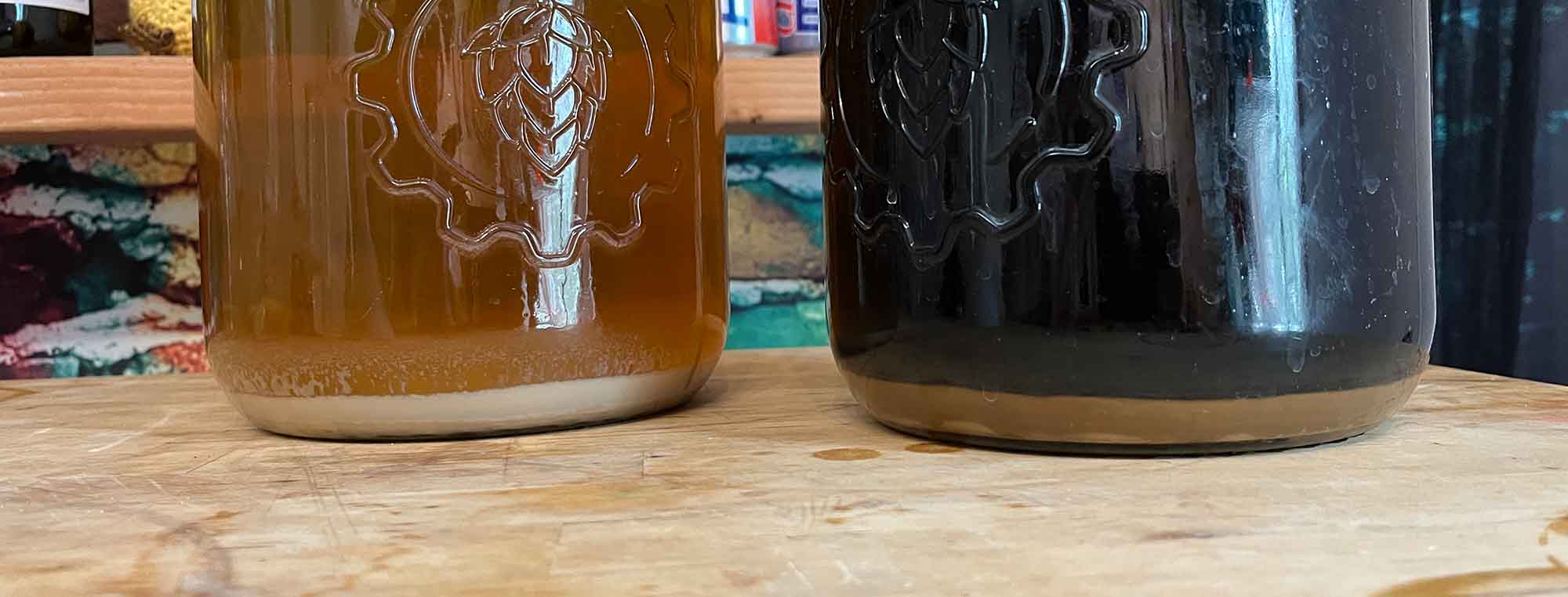
During normal fermentation, yeast consumes sugar and produces alcohol, carbon dioxide, and flavor compounds. When fermentation slows, many yeast cells settle into a layer at the bottom of the fermenter. That layer is often called the yeast cake or lees.
A yeast cake is normal. It does not mean autolysis has started.

What Does Yeast Autolysis Taste and Smell Like?
Autolysis can produce several unwanted flavors and aromas. The exact result depends on the beverage, the yeast, and the conditions.
Common descriptions include:
- Meaty or broth-like flavors.
- Yeasty, savory, or umami notes.
- Sulfur-like aromas.
- Rubber, burnt rubber, or other harsh aromas.
- Bitter or unpleasant flavors.
- A soapy or fatty character in some cases.
These descriptions are not unique to autolysis. Other fermentation problems can produce similar flavors. For example, sulfur aromas can come from yeast metabolism during normal fermentation. A sulfur smell alone does not prove that your yeast is breaking down. Likewise, a strong yeast flavor does not automatically mean autolysis. You may simply have a lot of suspended yeast in the beverage.
Do not diagnose autolysis from one smell or taste. Consider the fermentation history, time on the sediment, temperature, and other signs.
Why Does Yeast Autolysis Happen?
Yeast cells do not remain healthy forever. After fermentation, some cells die and break down. However, this does not mean that all yeast cells die at once when fermentation ends. Yeast populations contain cells in different conditions. Some remain viable for a long time, while others lose viability and break down.
Several factors affect how quickly autolysis becomes a concern.
1. Time
Time matters because the yeast remains in contact with the beverage after fermentation. The longer the beverage sits on a large deposit of spent yeast, the more opportunity there is for dead or damaged cells to break down and release their contents. However, there is no universal deadline.
Autolysis does not reliably begin after exactly two weeks, one month, or three months. The rate depends on the yeast strain, temperature, fermentation conditions, amount of sediment, and other factors. A few extra days or weeks in primary fermentation are not normally a reason to panic.
Leaving a beverage on its sediment for many months deserves more consideration, especially if it is warm or the sediment is substantial.
2. Temperature
Temperature affects yeast metabolism and the rate of many chemical and biological processes. Warm storage can increase the rate at which yeast breaks down. This is one reason long-term storage on a yeast cake is more concerning at elevated temperatures.
If you plan to leave a beverage on its lees for an extended period, appropriate temperature control matters. Do not use temperature as your only protection, though. Refrigeration slows many processes, but it does not make autolysis impossible or guarantee that a beverage will remain unchanged indefinitely.
3. Pressure
Pressure is another important factor, particularly in large commercial fermenters. As yeast settles, it can form a thick layer at the bottom of the tank. The liquid above that layer exerts hydrostatic pressure. The taller the liquid column, the greater the pressure at the bottom.
This matters because a tall commercial fermentation tank may contain a deep column of beer pressing down on the yeast sediment. A typical homebrew fermenter generally has a much shorter liquid column and therefore less hydrostatic pressure.
Pressure can contribute to yeast stress and autolysis, especially when combined with other unfavorable conditions. But pressure is not the only cause, and there is no single pressure value that predicts exactly when autolysis will occur. The key distinction is hydrostatic pressure from the liquid column, not simply the fact that your fermenter is closed. A normal airlock does not create the same conditions as a tall commercial tank full of beer. Nor should you confuse hydrostatic pressure with the carbon dioxide pressure inside a sealed keg.
Pressure, temperature, yeast condition, and time work together. None gives you a universal countdown to autolysis.

Why One-Gallon Batches Are Usually Less Concerning
If you make one-gallon batches of beer, cider, wine, or mead, you generally have less reason to worry about autolysis than a commercial brewer working with a tall fermentation tank. Small homebrew batches usually have a relatively shallow liquid column. That means significantly less hydrostatic pressure on the yeast sediment.
This is one reason homebrewers can often leave a batch in primary fermentation for several weeks without developing obvious autolysis problems. However, batch volume alone does not determine pressure. Liquid depth matters more than the number of gallons.
For example, one gallon in a narrow, tall vessel can create a taller liquid column than one gallon in a wide, shallow vessel. The height of the liquid above the yeast cake determines the hydrostatic pressure at the bottom.
Even so, typical one-gallon fermenters do not create the same conditions as large commercial tanks.
How long can I leave a one-gallon batch on the yeast?
There is no exact cutoff, but this is a useful practical guide:
| Time after fermentation | Practical approach |
| First 1–2 weeks | Usually normal primary fermentation or early settling |
| 2–4 weeks | Usually not a reason to worry in a typical homebrew fermenter |
| 1–2 months | Often manageable, especially if the beverage is cool and the fermenter is undisturbed |
| Several months | Consider the beverage, temperature, sediment, and aging plan |
| Many months at warm temperatures | Greater reason to consider transferring away from the sediment |
These are general guidelines, not guaranteed safe periods. Different yeast strains and fermentation conditions can produce different results.
Do not interpret this table as a requirement to transfer at one month. If your beer is still conditioning or your mead needs more time, an unnecessary transfer may create more risk than leaving it alone. For a typical one-gallon batch, a few weeks in primary fermentation is generally not a reason to rush.
Should I Rack My Homebrew to Avoid Autolysis?
Not necessarily. Racking means transferring the beverage from one vessel to another, usually with a siphon. This can separate the liquid from the yeast sediment. It can be useful when you need to age a beverage for a long time, remove it from a substantial deposit, or prepare it for another stage of production.
But racking also introduces risks. Every transfer creates an opportunity for oxygen exposure and contamination. You may also lose some of your beverage during the process. This matters especially in a one-gallon batch. Losing a few ounces during a transfer can represent a meaningful portion of the finished product.
When should you consider racking?
Racking may make sense when:
- You plan to age the beverage for several months.
- There is a large amount of sediment or fruit material.
- The beverage has finished fermentation and you need to move it for a specific process.
- You are making a style that benefits from aging away from heavy sediment.
- You need to remove the beverage from material that could create unwanted flavors.
When can you leave it alone?
You can often leave the beverage in primary fermentation when:
- Fermentation has only recently finished.
- The batch is one gallon or another small homebrew volume.
- The yeast sediment is normal.
- You plan to package the beverage soon.
- You have no other reason to transfer it.
Do not rack simply because you see yeast at the bottom. That sediment is a normal part of fermentation.
How Does Autolysis Affect Beer?
Beer is particularly sensitive to some of the flavor changes associated with yeast autolysis. Autolysis can contribute meaty, savory, harsh, or otherwise unpleasant flavors. It can also affect the beer’s pH and long-term stability. However, many beers are packaged before prolonged contact with spent yeast becomes a major concern.
For a typical ale, you can often leave the beer in primary fermentation through the main fermentation and conditioning period. Confirm that fermentation is complete before packaging. Lagers and beers intended for extended aging may require more planning. Follow the needs of the style and yeast strain rather than applying one timeline to every beer.
If you are making a beer that will age for months, transferring away from a heavy yeast deposit may be sensible.
Do not confuse normal yeast sediment in a bottle-conditioned beer with autolysis. Bottle-conditioned beer contains yeast by design, and the presence of that yeast does not mean the beer is spoiled.
How Does Autolysis Affect Wine?
Wine is more complicated because winemakers sometimes use yeast contact deliberately. After alcoholic fermentation, wine can remain on the lees. This is called aging on the lees, or sur lie aging. In some wine styles, controlled lees contact can contribute body, texture, and savory or creamy notes. Winemakers may stir the lees as part of a planned process.
This is not the same as ignoring a fermenter full of unwanted sediment. The outcome depends on the yeast, the type of lees, the wine, and the aging conditions. For a simple homemade fruit wine, you usually do not need to stir or age the wine on its lees unless the recipe calls for it. If you plan to age wine for a long time, consider transferring it away from heavy sediment while minimizing oxygen exposure.
How Does Autolysis Affect Cider?
Cider can remain on its yeast sediment for a period after fermentation without automatically developing autolysis flavors. However, long storage on a large yeast deposit can become a concern, especially at warm temperatures.
Cider also has its own challenges. Oxidation can damage fresh apple aromas, and unwanted microorganisms can create changes that resemble other fermentation faults.
For a simple one-gallon cider, allow fermentation to finish, give it time to settle, and package or transfer it when appropriate. Do not rack repeatedly just to remove every trace of yeast. Each transfer has a cost.
How Does Autolysis Affect Mead?
Mead can benefit from time. Some meads improve over months as harsh flavors soften and the honey character develops. That does not mean you should leave every mead on a thick yeast cake indefinitely.
For a typical one-gallon mead, a few weeks in primary fermentation is usually not a reason to panic about autolysis. If you plan to age it for several months, consider transferring it away from heavy sediment after fermentation is complete. Avoid unnecessary transfers. Mead is particularly vulnerable to losing delicate honey aromas through oxidation.
If your mead is cloudy, that does not automatically mean you need to rack it. Yeast and other particles may settle with time, and clarity alone is not proof of fermentation completion.
What About Gross Lees and Fine Lees?
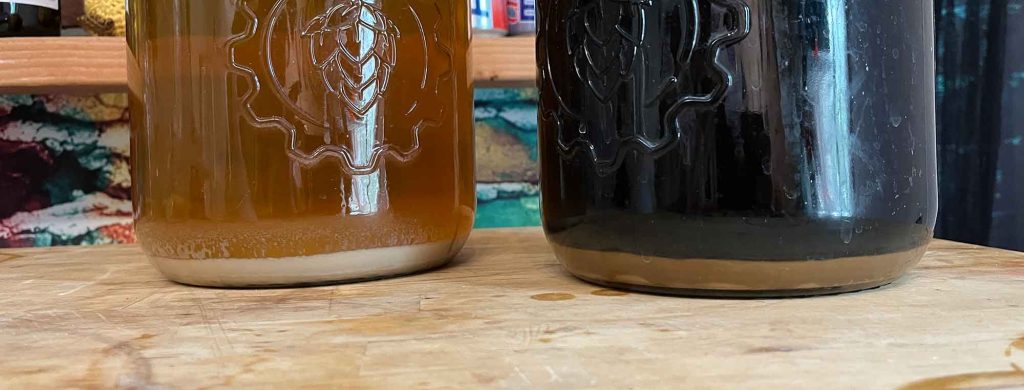
Winemakers often distinguish between gross lees and fine lees.
- Gross lees are the heavier deposits that settle after fermentation. They can contain yeast, fruit solids, proteins, and other material.
- Fine lees are the finer particles that remain suspended longer or settle later. They are often composed largely of yeast and other fine material.
These terms are useful, but the exact composition depends on the beverage and how it was processed. A large deposit containing fruit pulp and other solids is not the same as a thin layer of settled yeast.
If you are making a fruit wine or melomel, removing the fruit and heavy sediment may be useful for reasons beyond autolysis. Fruit solids can trap liquid, make transfers difficult, and affect flavor if left too long. For a simple beer or traditional mead, a normal layer of yeast sediment is usually less urgent.
How Can I Reduce the Risk of Autolysis?
You do not need complicated equipment. Focus on a few practical steps.
1. Control fermentation temperature
Keep the beverage within the yeast’s recommended temperature range. Avoid unnecessarily warm storage after fermentation.
2. Allow fermentation to finish
Do not transfer or package simply because the airlock slows down. Use gravity readings to confirm that fermentation has reached a stable endpoint.
3. Avoid unnecessary delays
If the beverage is finished and you have no reason to leave it on a heavy deposit for months, plan your next step.
4. Transfer when there is a clear reason
If you plan to age the beverage for an extended period, consider racking away from heavy sediment. Use a sanitized siphon and avoid splashing.
5. Minimize oxygen exposure
Keep the receiving vessel clean and sanitized. Use a vessel that fits the volume, leaving as little unnecessary headspace as practical.
A large headspace can increase the amount of oxygen available to the beverage. Do not transfer a small batch into a much larger vessel unless you have a plan to manage that headspace.
6. Do not rush the yeast
Yeast performs useful work after the most visible fermentation activity ends. It can continue to process some fermentation byproducts.
Transferring too early may remove yeast before it has finished this work. Give the fermentation time to complete before deciding what to do next.
Does Cold Crashing Prevent Autolysis?
Cold crashing means cooling the fermenter to help yeast and other particles settle. It can make the beverage clearer and help compact the sediment. It does not guarantee that autolysis will never occur.
Cold temperatures slow many biological and chemical processes, but they do not make yeast immortal or eliminate all risk. Cold crashing also does not prove that fermentation is complete. A beverage can retain fermentable sugar even when the yeast has settled. If you cold crash before packaging, make sure you understand if and how the beverage will be carbonated and whether fermentation could restart.

Can I Prevent Autolysis by Using Less Yeast?
Do not deliberately underpitch yeast just to reduce the yeast sediment. An inadequate pitch can cause a long lag phase, slow fermentation, and increased yeast stress. These problems can be more harmful than having a normal yeast cake.
Use an appropriate pitching rate for the beverage and yeast strain. The goal is healthy fermentation, not the smallest possible layer of sediment.
Common Myths About Yeast Autolysis
| Myth | What is actually true |
| Yeast autolysis starts after two weeks | There is no universal deadline. |
| Any yeast cake means the beverage is spoiled | Settled yeast is normal after fermentation. |
| One-gallon batches must be racked quickly | Small batches generally have lower hydrostatic pressure than tall commercial tanks. |
| A closed fermenter creates dangerous pressure on the yeast | Hydrostatic pressure depends on the liquid column; an airlock does not create the same conditions as a tall tank. |
| Cold crashing prevents autolysis | It slows many processes but does not guarantee prevention. |
| You should always rack after primary fermentation | Unnecessary transfers can introduce oxygen and contaminants. |
| All lees are bad | Some wine styles deliberately use lees to develop texture and flavor. |
| A meaty smell proves autolysis | Several fermentation problems can produce similar aromas. |
Bottom Line
Yeast autolysis is the breakdown of yeast cells and the release of their contents into your beverage. It can cause unwanted flavors and affect stability. Time, temperature, yeast condition, sediment, and pressure all matter. Tall commercial tanks create much more hydrostatic pressure at the bottom than typical homebrew fermenters.
For one-gallon batches, you usually do not need to panic about leaving a normal yeast deposit for a few weeks. You can often complete fermentation and allow the beverage to settle without transferring it immediately.
If you plan to age the beverage for several months, consider removing it from heavy sediment. Use a sanitized siphon and minimize oxygen exposure. Do not rack because the yeast cake looks scary. Rack because you have a reason.