
Sanitizing beer bottles is an important part of homebrewing. A bottle can look clean and still contain microorganisms.
These microorganisms can contaminate your beer.
They can cause:
- Off flavors
- Excessive carbonation
- Sour or acidic flavors
- Haze
- Poor shelf life
- Spoilage
The good news is that sanitizing bottles is simple. For most homebrewers, the easiest method is to clean the bottles first and then use a no-rinse brewing sanitizer.
A basic process is:
Clean → rinse → sanitize → drain → fill
Do not confuse cleaning with sanitizing.
Cleaning removes beer residue. Sanitizing reduces microorganisms.
You need to clean the bottle before you sanitize it.
What Do I Need to Sanitize Beer Bottles?
A basic setup requires:
- Clean beer bottles
- Brewing sanitizer
- Sanitizer container
- Bottle rinser or bottle washer
- Bottle drying rack or clean place to drain bottles
Useful additional equipment includes:
- Bottle brush
- Bottle washer
- Bottling bucket
- Protective gloves
- Bottle tree
You do not need all of this equipment. A clean bottle and a suitable brewing sanitizer are enough.
What Is the Difference Between Cleaning and Sanitizing?
This is one of the most important concepts in homebrewing.
- Cleaning removes physical material.
- Sanitizing reduces microorganisms.
Imagine a bottle with dried beer stuck to the bottom. If you fill it with sanitizer, the sanitizer does not magically remove the dried beer. The material can protect microorganisms from the sanitizer.
Clean the bottle first. Then sanitize it.
Do I Need to Sanitize Beer Bottles?
Yes. Any bottle that will come into contact with finished beer should be properly sanitized.
This includes:
- Bottles
- Bottle caps
- Bottling wand
- Tubing
- Bottling bucket
- Other equipment that contacts the beer
Sanitizing is especially important after fermentation. At this point, the beer has fewer protections against contamination.
When Should I Sanitize Beer Bottles?
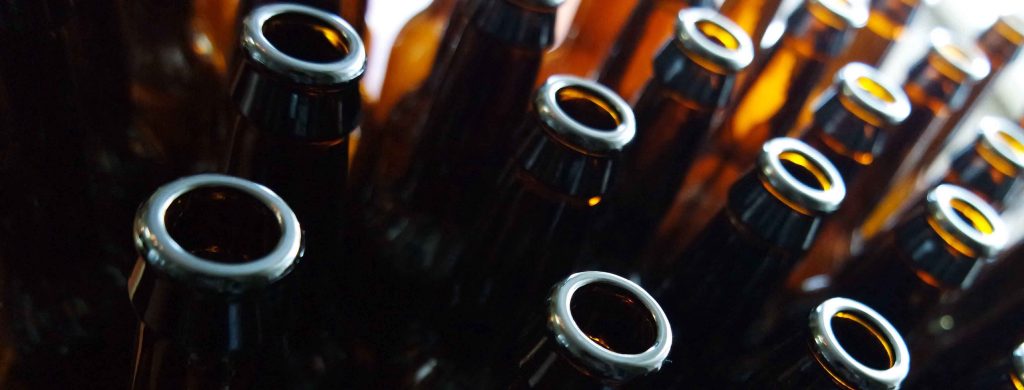
Sanitize bottles immediately before bottling. Do not sanitize bottles several days in advance and assume they will remain sanitized.
Dust and microorganisms can enter the bottles during storage.
A good routine is:
Clean bottles after use → store them → sanitize them on bottling day.
Do I Need to Clean Bottles Before Sanitizing Them?
Yes. This is critical.
A bottle should be free of:
- Dried beer
- Yeast
- Fruit
- Dust
- Dirt
- Cleaning residue
Sanitizer works best on a clean surface.
What Is the Best Sanitizer for Beer Bottles?
A no-rinse brewing sanitizer is usually the simplest option.
Common homebrewing sanitizers include:
- Star San
- Iodophor
- Other products specifically designed for brewing
Follow the manufacturer’s instructions for concentration, contact time, and use.
How Does Star San Work?
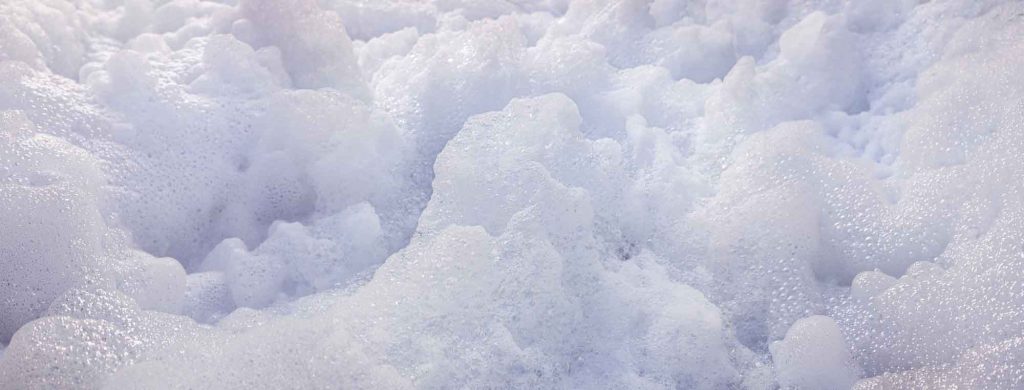
Star San is an acid-based brewing sanitizer. It is designed for use on clean brewing equipment.
It is commonly used as a no-rinse sanitizer. Follow the manufacturer’s instructions for dilution and contact time.
Do not use a stronger solution than recommended. More sanitizer does not automatically mean better sanitization.
What About Iodophor?
Iodophor is another commonly used brewing sanitizer.
It is an iodine-based sanitizer. It can be effective when used at the manufacturer’s recommended concentration and contact time. It is often used as a no-rinse sanitizer when used correctly. Follow the product instructions.
Can I Use Bleach?
Bleach can be used for sanitation in some brewing situations.
However, it requires more care. Chlorine can react with organic material and create undesirable compounds. Bleach also requires appropriate rinsing and handling.
For most beginners, a purpose-made brewing sanitizer is easier and safer.
Can I Use Dish Soap?
Dish soap is a cleaner. It is not a substitute for brewing sanitizer.
Soap can also leave residues and scents that affect your homebrew. Use brewing cleaner to clean bottles. Use brewing sanitizer to sanitize them.
Can I Use Vinegar?
Vinegar is not a replacement for a properly formulated brewing sanitizer. Do not rely on vinegar to sanitize beer bottles.
Use a product designed and tested for brewing or food-contact sanitation.
Can I Use Vodka?
No. Alcohol in a spirit is not a reliable substitute for a brewing sanitizer.
Use a proper brewing sanitizer.
Can I Boil Beer Bottles?
You can expose glass to heat, but boiling is not a recommended bottle-sanitizing method for most homebrewers.
Glass can break because of thermal shock. A cold bottle placed into boiling water can crack. A hot bottle exposed to cold water can also crack.
Does it work in a pinch? Yes. But a chemical brewing sanitizer is easier and safer.
Can I Bake Beer Bottles?
Heat can sanitize glass bottles if a suitable validated process is used. However, it is not necessary for normal homebrewing.
Heating glass bottles also creates a risk of thermal shock. A no-rinse brewing sanitizer is much simpler.
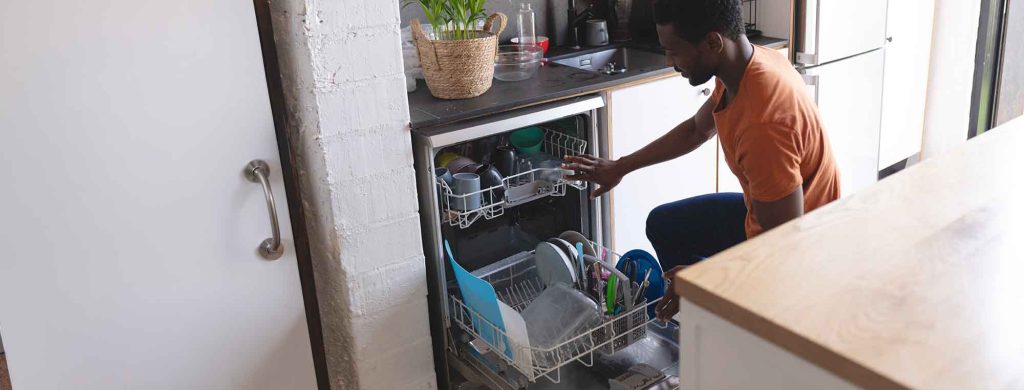
Can I Use a Dishwasher?
A dishwasher can clean bottles. Some dishwasher cycles, like the sanitize cycle, can also provide significant heat treatment which sanitizes bottles.
However, a dishwasher does not guarantee that every bottle has received the required sanitation treatment. The inside of a narrow beer bottle can be difficult for dishwasher spray to reach.
Many homebrewers use a brewing sanitizer after cleaning.
Does the Dishwasher Need Detergent?
If you are using the dishwasher for cleaning, follow the dishwasher and detergent instructions. If using it for sanitizing, run a detergent-free sanitize cycle.
This can work fine if your dishwasher is clean enough to support the practice. If you have a dishwasher filter, clean it before using the dishwasher to sanitize your bottles.
Can I Sanitize Bottles With Steam?
Steam can sanitize equipment when used with an appropriate validated process.
For normal homebrewing, it is usually unnecessary.
A brewing sanitizer is simpler.
How Do I Sanitize Beer Bottles With Star San?
A basic process is:
- Clean the bottles.
- Rinse the bottles.
- Prepare Star San according to its instructions.
- Put the solution into the bottle.
- Make sure the entire inside surface contacts the sanitizer.
- Allow the required contact time.
- Drain the bottle.
- Fill the bottle with beer.
You do not need to dry the bottle. If the product is being used as a no-rinse sanitizer, follow its instructions.
How Do I Get Sanitizer Into the Bottle?
You have several options.
Method 1: Pour Sanitizer Into the Bottle
Pour enough sanitizer into the bottle to contact the interior.
Swirl the sanitizer.
Drain it.
Method 2: Use a Bottle Rinser
A bottle rinser can spray sanitizer into the bottle.
This is faster when you have many bottles.
Method 3: Submerge the Bottle
You can fill the bottle with sanitizer while it is submerged in a container.
This method uses more sanitizer.
Does the Sanitizer Need to Fill the Entire Bottle?
The sanitizer needs to contact the surfaces that will contact the beer. For a bottle, this means the interior. Swirl or otherwise ensure complete contact.
Follow the sanitizer manufacturer’s contact-time instructions.
How Long Should I Leave Sanitizer in the Bottle?
Use the contact time specified by the sanitizer manufacturer. Do not assume that longer is always better.
For many brewing sanitizers, only a short contact time is required. Follow the product label.
Do I Need to Rinse the Bottle After Sanitizing?
If you use a no-rinse sanitizer according to its instructions, do not rinse it with untreated water.
Allow the bottle to drain. Rinsing with tap water can introduce microorganisms again.
What Does “No-Rinse” Mean?
“No-rinse” means that the sanitizer can remain on the surface in the small amount left after draining. You do not need to rinse the surface with water.
This is different from saying that you should leave the bottle full of sanitizer. Drain the excess.
Should I Let the Bottles Dry?
Not necessarily.
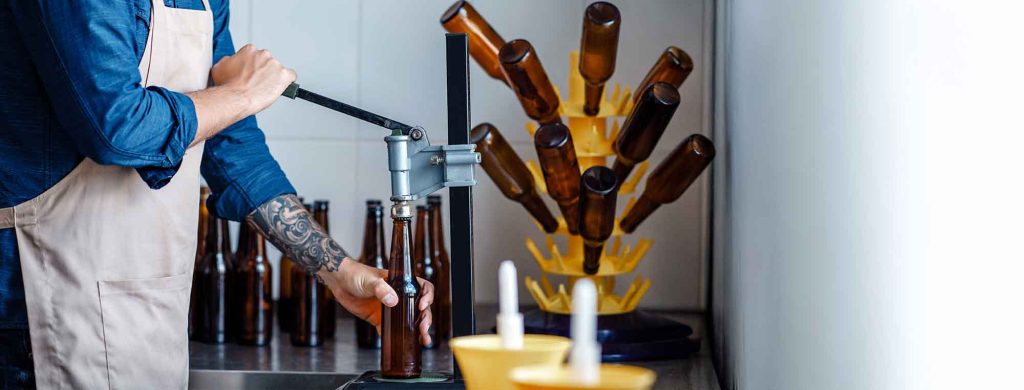
A sanitized bottle can be drained and filled while it is still wet with a small amount of sanitizer. Do not dry the inside with a towel as the towel can introduce contamination.
Can I Sanitize Bottles the Night Before?
It is better to sanitize them immediately before use.
The longer a sanitized bottle sits exposed to the environment, the more opportunity there is for contamination. If you sanitize bottles early, protect them from dust and other contamination.
For a simple process, sanitize immediately before bottling.
What If I Sanitize Bottles and Then Touch the Inside?
Do not touch the inside. Your hands can contaminate the sanitized surface.
Hold the bottle by the outside. If you touch the inside, sanitize it again.
What If the Bottle Falls on the Floor?
Clean it again. Then sanitize it again.
Do not assume that a quick rinse is enough.
What If a Sanitized Bottle Gets Dust Inside?
Sanitize it again.
It is easier to repeat the sanitation step than to risk contaminating the beer.
How Do I Sanitize Bottle Caps?
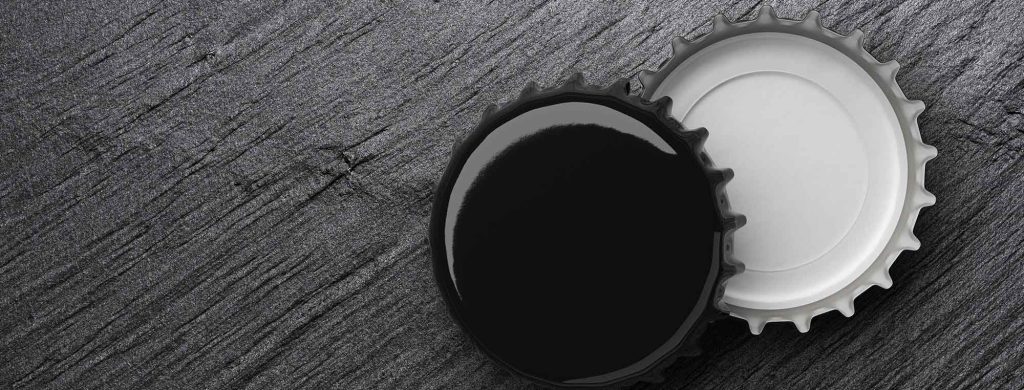
Bottle caps can also contact the beer, and some homebrewers treat them as a contamination vector. However, many of us do not.
You can sanitize bottle caps, though. Place the caps in a suitable sanitizer according to the manufacturer’s instructions. Do not boil modern crown caps unless the cap manufacturer specifically recommends it. Heat can damage some cap liners.
Do not touch the inside of the caps after sanitizing them.
Can I Reuse Bottle Caps?
No. Use a new crown cap for each bottle.
A used cap may not create a reliable seal. New caps are inexpensive.
What About Swing-Top Bottles?
Swing-top bottles can be sanitized.
Pay attention to:
- Rubber gasket
- Ceramic or plastic stopper
- Bottle opening
- Closure mechanism
Clean the gasket. Inspect it. Replace it if it is cracked or damaged.
Sanitize all parts that contact the beer.
Do I Need to Sanitize the Bottle Opening?
Yes. The bottle opening is an important contact surface.
Sanitizer should contact:
- Inside of the neck
- Lip
- Opening
- Other surfaces that contact the beer
The bottle cap also seals this area.
Do I Need to Sanitize the Outside of the Bottle?
The outside does not normally contact the beer.
It does not need the same sanitation process as the interior. However, keeping the outside clean helps keep your bottling area clean.
Can I Sanitize a Dirty Bottle?
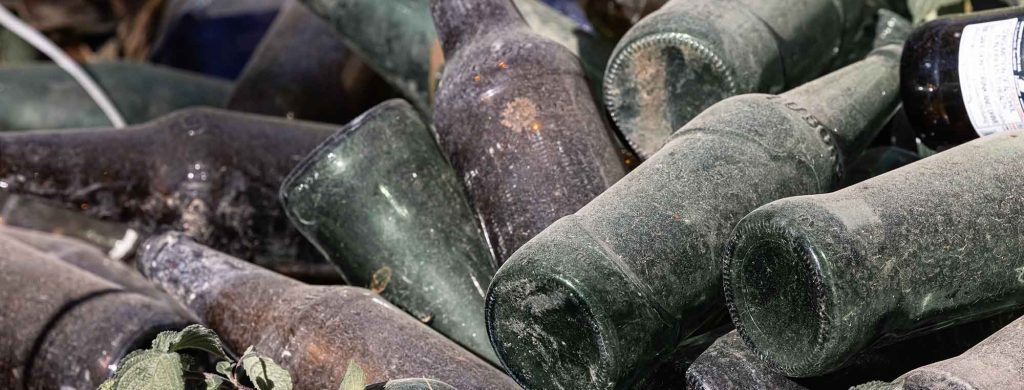
No. Clean it first. Sanitizer is not a replacement for cleaning.
If you see:
- Yeast
- Dried beer
- Fruit
- Mold
- Dirt
…clean the bottle before sanitizing it.
What If I See Mold?
Clean the bottle thoroughly. If you cannot remove all of the material, discard the bottle.
There is no reason to take a risk with a questionable glass bottle.
What If the Bottle Smells?
A persistent smell indicates that the bottle may not be clean.
Clean it again. If the smell remains, discard it.
Do not rely on sanitizer to remove an odor.
What If the Bottle Contains Dried Yeast?
Soak the bottle with an appropriate brewing cleaner. Use a bottle brush if needed.
Rinse thoroughly. Then sanitize the bottle.
What If the Bottle Held Fruit Beer?
Clean it particularly well.
Fruit can leave:
- Sugar
- Pulp
- Yeast
- Organic material
These materials can remain in the bottle. Do not sanitize a bottle until it is clean.
What If the Bottle Held Sour Beer?
Clean it thoroughly.
Sour beer can contain microorganisms that you may not want in another beer.vA properly cleaned and sanitized glass bottle can be reused.
Some brewers choose to keep separate bottles and equipment for sour beer.
How Many Bottles Can I Sanitize at Once?
As many as you can manage without allowing them to become contaminated. For a typical 5-gallon batch, you may need approximately 48 to 54 12-ounce bottles. Prepare enough sanitizer for the entire batch.
Do I Need to Sanitize the Bottling Bucket?
Yes. The bottling bucket contacts the finished beer.
Clean it first. Then sanitize it.
Pay special attention to the:
- Spigot
- Seals
- Threads
- Interior
- Tubing connection

Do I Need to Sanitize the Bottling Wand?
Yes. The bottling wand contacts the beer.
Clean and sanitize it before use.
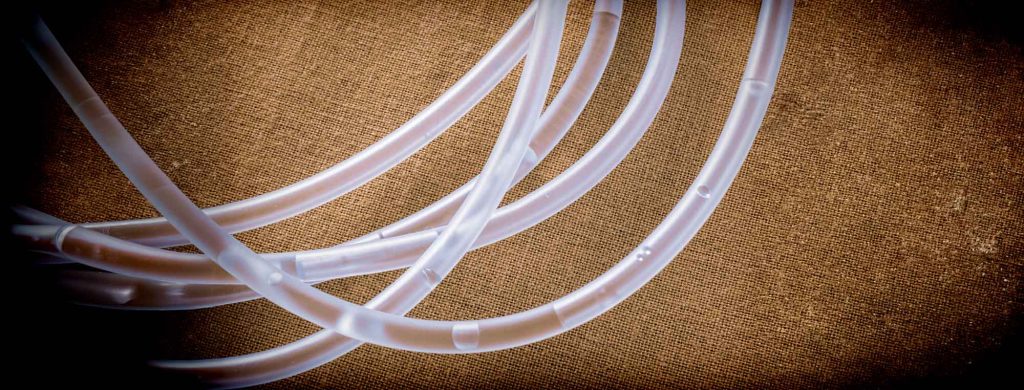
Do I Need to Sanitize the Tubing?
Yes. Tubing can contain microorganisms and residue.
Clean it after use. Sanitize it before the next batch.
What About the Hydrometer?
If you take a hydrometer reading immediately before bottling, sanitize the hydrometer and test jar.
Do not put dirty equipment into finished beer. If you take a sample, do not return the sample to the fermenter.
Can I Use the Same Sanitizer for Bottles and Other Equipment?
Usually, yes, if the product is approved for the intended use.
Follow the manufacturer’s instructions. Do not assume that every chemical sanitizer is appropriate for every surface.
Does Sanitizer Expire?
Some sanitizer solutions have limited effective life after dilution unless made with distilled water and kept sealed.
Follow the manufacturer’s instructions for:
- Mixing
- Storage
- pH
- Contact time
- Shelf life
Do not assume that an old bucket of sanitizer is still effective.
Can I Store Sanitizer?
This depends on the sanitizer. Follow the manufacturer’s instructions.
Some diluted sanitizers can be stored for a period of time under appropriate conditions. Others should be mixed fresh.
If you are unsure, make a fresh solution.
Does Cloudy Star San Still Work?
Cloudiness alone is not the best way to determine whether a sanitizer is effective. For acid-based sanitizers, pH is a more useful measurement when the manufacturer provides a target. Remember, there is incentive for sanitizer manufacturers to encourage you to dump out your sanitizer.
Follow the product instructions.
When in doubt, make a fresh solution.
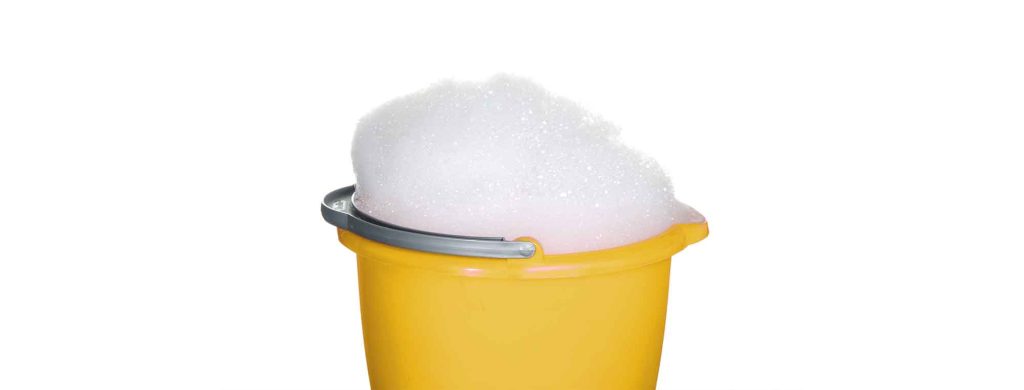
How Much Star San Do I Need?
Use the concentration specified by the manufacturer.
Do not estimate the amount. For example, if the product instructions specify a particular volume of concentrate per gallon of water, measure that amount accurately. A small measuring syringe or graduated container can make this easy.
What Water Should I Use?
Follow the sanitizer manufacturer’s instructions. Clean water is generally appropriate. If your water is very hard or contains high levels of minerals, the sanitizer may behave differently.
Use the manufacturer’s recommendations if water quality is a concern.
Can I Use Distilled Water?
Distilled water can be used for many sanitizer applications. However, use the sanitizer according to its instructions.
The water used for sanitizer is different from brewing water. You do not need to build a mineral profile for sanitizer.
What Is the Simplest Sanitizing Method?
For most beginners:
- Clean the bottles.
- Rinse them.
- Mix a no-rinse brewing sanitizer.
- Use a bottle rinser or pour sanitizer into each bottle.
- Make sure the sanitizer contacts the inside.
- Allow the required contact time.
- Drain the bottles.
- Fill them with beer.
This process is fast and reliable.
A Simple Bottling-Day Process
Prepare your bottles before the beer is ready.
Step 1: Inspect the Bottles
Look for:
- Cracks
- Chips
- Deep scratches
- Damage
Discard damaged bottles.
Step 2: Clean the Bottles
Remove any:
- Beer
- Yeast
- Dust
- Fruit
- Other residue
Step 3: Rinse the Bottles
Remove cleaning solution.
Step 4: Prepare Sanitizer
Follow the manufacturer’s instructions.
Step 5: Sanitize the Bottles
Make sure the sanitizer contacts the entire interior.
Step 6: Drain the Bottles
Do not dry the inside with a towel.
Step 7: Sanitize the Caps
Use a new cap for each bottle.
Step 8: Fill the Bottles
Use a sanitized bottling wand.
Step 9: Cap the Bottles
Use a sanitized or clean bottle capper as appropriate.
Step 10: Store the Bottles
Keep them at an appropriate temperature for bottle conditioning.
How to Sanitize 50 Bottles Efficiently
If you are bottling a 5-gallon batch, doing each bottle individually can feel tedious. A bottle rinser can make the process much faster.
A practical workflow is:
- Put all clean bottles in one area.
- Prepare sanitizer.
- Sanitize each bottle with a bottle rinser.
- Place the sanitized bottles on a clean surface.
- Sanitize the bottle caps.
- Fill the bottles.
- Cap each bottle immediately.
Keep the sanitized bottles protected from dust.

Common Bottle-Sanitizing Mistakes
Sanitizing a Dirty Bottle
Problem: Organic material remains inside.
Solution: Clean the bottle first.
Using Too Little Sanitizer
Problem: Some surfaces may not receive adequate contact.
Solution: Follow the sanitizer instructions.
Using Too Much Sanitizer
Problem: Stronger does not necessarily mean better.
Solution: Use the recommended concentration.
Rinsing No-Rinse Sanitizer With Tap Water
Problem: You can reintroduce microorganisms.
Solution: Drain the sanitizer and follow the no-rinse instructions.
Touching the Inside
Problem: You can contaminate the sanitized surface.
Solution: Handle the bottle by the outside.
Sanitizing Too Early
Problem: The bottle can become contaminated again.
Solution: Sanitize shortly before bottling.
Using a Dirty Bottle Rinser
Problem: The rinser can contaminate your clean bottles.
Solution: Clean and sanitize the rinser.

Bottle-Sanitizing Checklist
Before filling each bottle:
- Bottle is designed for carbonated beverages.
- Bottle is free of cracks.
- Bottle is free of chips.
- Bottle is clean.
- Bottle is free of visible residue.
- Bottle has been sanitized.
- Sanitizer received the required contact time.
- Bottle has drained.
- Inside has not been touched.
- New bottle cap is ready.
Do I Need to Sanitize Bottles if I Use New Bottles?
Yes. New bottles may still contain dust or manufacturing residue.
Clean them according to the manufacturer’s recommendations.
Sanitize them before filling.
Do I Need to Sanitize Bottles That Were Already Clean?
Yes. A clean bottle is not necessarily sanitized.
A bottle stored in your basement or garage can collect dust and microorganisms.
Sanitize it before filling.
Do I Need to Sanitize Bottles if I Use a Dishwasher?
It is still good practice to use a brewing sanitizer before bottling. A dishwasher is primarily a cleaning tool.
Unless you are using a validated heat-sanitizing process, do not assume that the dishwasher has completely sanitized the bottle.
The Bottom Line
Sanitizing beer bottles is simple when you follow the correct order:
- Clean the bottle.
- Rinse the bottle.
- Sanitize the bottle.
- Drain the bottle.
- Fill the bottle.
For most homebrewers, a no-rinse brewing sanitizer such as Star San or iodophor is the easiest option.
You do not need to boil your bottles. You do not need to bake your bottles. You do not need an elaborate sanitation system.
The most important rule is to clean before you sanitize. A bottle that looks clean is not necessarily sanitary.
A properly cleaned and sanitized bottle gives your beer a much better chance of fermenting, conditioning, and storing without contamination.
Clean bottles protect your beer. Sanitized bottles protect your fermentation. And a simple sanitation routine makes bottling day much easier.