Clean bottles are essential for good homebrew.
A bottle can look clean and still contain:
- Dried beer
- Yeast
- Sugar
- Fruit residue
- Microorganisms
- Dust
These materials can affect the flavor and safety of your beer.
Cleaning and sanitizing are also different processes.
- Cleaning removes dirt and organic material.
- Sanitizing reduces microorganisms after the bottle is clean.
You need to do both. The good news is that bottle cleaning is simple. If you clean your bottles immediately after you drink the beer, most bottles require very little work.
What Do I Need to Clean Homebrew Bottles?
You do not need a large amount of equipment.
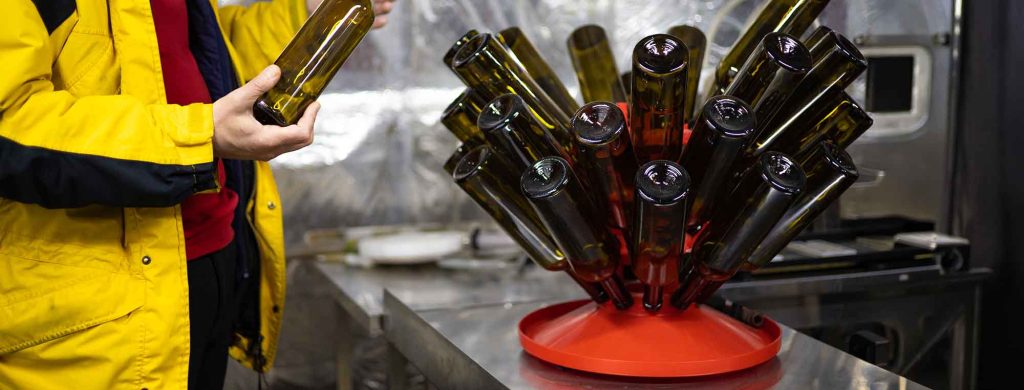
A basic bottle-cleaning setup includes:
- Beer bottles
- Warm water
- Brewing cleaner
- Bottle brush
- Bottle rinser or bottle washer
- Bottle drying tree or clean drying area
- Brewing sanitizer
Useful additional equipment includes:
- Bottle washer
- Bottle brush with a long handle
- Soaking container
- Protective gloves
- Bottle inspection light
You do not need all of these items.
A bucket, cleaner, bottle brush, and water are enough for basic bottle cleaning.
What Is the Difference Between Cleaning and Sanitizing?
This distinction is important.
- Cleaning removes material from the bottle.
- Sanitizing reduces microorganisms on the clean surface.
A sanitizer works best on a clean surface. For example, imagine a bottle containing dried yeast. Spraying sanitizer into the bottle does not remove the yeast. The yeast and other organic material can protect microorganisms from the sanitizer.
Clean the bottle first. Sanitize it afterward.
Do I Need to Clean Bottles Immediately?
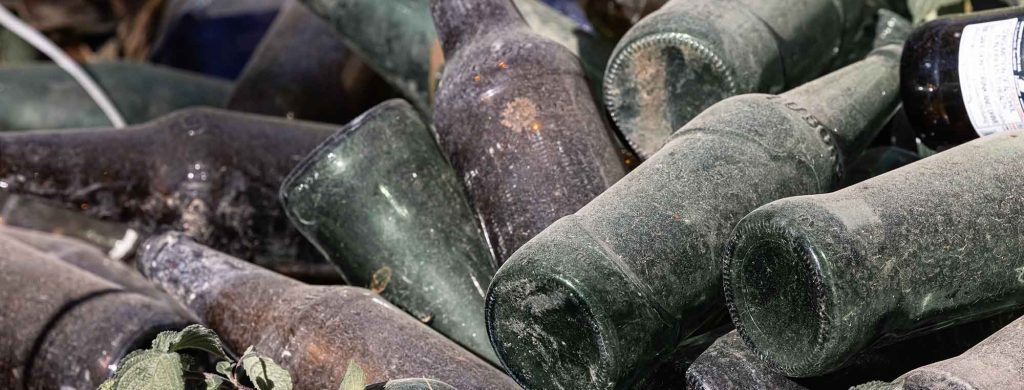
No. But it is much easier if you do.
The easiest bottle-cleaning routine is: Drink beer/wine → rinse bottle → store bottle.
Rinsing immediately removes most of the beer before it can dry. This can turn a difficult cleaning job into a simple rinse.
Why Should I Rinse Bottles After Drinking?
Beer contains:
- Sugar
- Proteins
- Yeast
- Hops
- Other organic material
If this material dries inside the bottle, it becomes much harder to remove. A quick rinse prevents most of this material from drying.
How Many Times Should I Rinse a Bottle?
Rinse until the water coming out of the bottle is clear.
A simple process is:
- Empty the bottle.
- Fill it with water.
- Shake it.
- Empty it.
- Repeat.
You do not need to count the exact number of rinses.
The goal is to remove visible beer residue.
Should I Rinse the Bottle With Hot Water?
Warm water can help remove beer residue. Do not use extremely hot water on a cold glass bottle. Rapid temperature changes can cause glass to crack. Use warm water and avoid thermal shock.
What If I Forgot to Rinse the Bottle?
This is common.
The beer may have dried inside the bottle. The solution is to soak the bottle. Fill the bottle with warm water. Add an appropriate brewing cleaner. Allow the cleaner time to work, then rinse the bottle thoroughly.
What Is Brewing Cleaner?
Brewing cleaners are designed to remove organic material from brewing equipment.
Common products include:
- Powdered Brewery Wash (PBW)
- Oxygen-based brewing cleaners like OxiClean Free
- Other products designed for brewing equipment
Follow the manufacturer’s instructions for concentration and temperature.
Can I Use Dish Soap?
You can use dish soap to clean some brewing equipment, but it is usually not the best choice for beer bottles.
Dish soap can leave residues. Those residues can interfere with beer head retention and flavor. A brewing cleaner is a better choice.
Can I Use Baking Soda?
Baking soda can help with general cleaning. However, a purpose-made brewing cleaner is usually more effective for dried beer residue. For difficult bottles, if possible, use a brewing cleaner like PBW according to its instructions.
Can I Use Bleach?
Bleach can clean and sanitize under appropriate conditions.
However, it requires careful handling and thorough rinsing. Residual chlorine can create undesirable compounds in beer. For most homebrewers, a modern brewing cleaner and no-rinse sanitizer are simpler choices.
How Do I Clean a Bottle With Dried Beer?
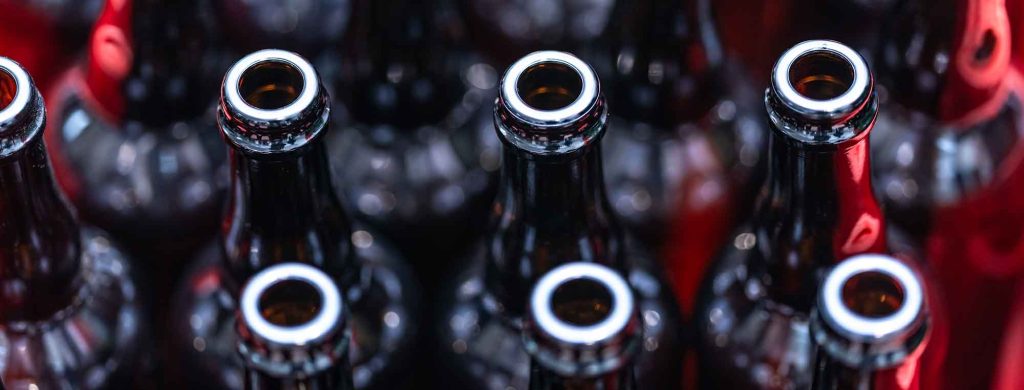
Use a soak.
A basic process is:
- Fill a container with warm water.
- Add brewing cleaner.
- Put the bottles in the solution.
- Fill each bottle with the solution.
- Allow the bottles to soak.
- Remove the labels if needed.
- Scrub the inside if necessary.
- Rinse thoroughly.
- Inspect the bottle.
The soaking time depends on the cleaner and the amount of residue. Follow the product instructions.
How Long Should I Soak Bottles?
There is no single required soaking time. Light residue may loosen quickly. Heavy dried residue may require a longer soak.
Follow the cleaner manufacturer’s instructions.
For very dirty bottles, soaking overnight can be convenient when the cleaner allows it.
Do I Need a Bottle Brush?
A bottle brush is useful for stubborn residue. It has a long handle and narrow head. The brush can reach the bottom of the bottle.
Use it when soaking alone does not remove the residue.
Can I Clean Bottles Without a Bottle Brush?
Yes.
If you rinse bottles immediately after use, a soak may remove most of the residue. A bottle brush is still useful for difficult bottles.
Should I Scrub the Bottle Opening?
Yes.
The bottle opening can collect:
- Dried beer
- Yeast
- Dust
- Sticky residue
Clean the lip and threads carefully. The bottle opening is also where the bottle cap creates its seal.
What About the Bottle Neck?
Clean the entire neck. Residue can remain above the normal liquid level.
A bottle can look clean when the bottom is clean but the neck contains dried beer. Inspect the entire bottle.
What About the Bottom of the Bottle?
The bottom can collect yeast and other sediment. Use a bottle brush if soaking does not remove it. You should be able to see through a clean bottle.
What If the Bottle Has Mold?
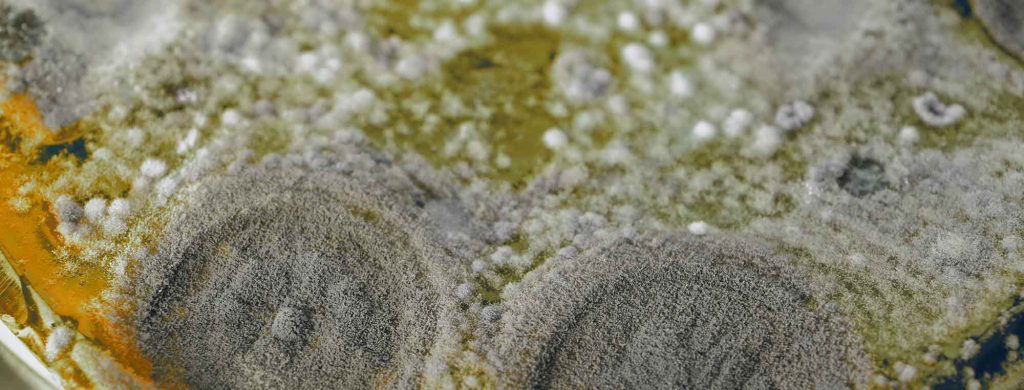
Clean it thoroughly with an appropriate brewing cleaner. Use a bottle brush if necessary. Rinse the bottle. Inspect it again.
If you cannot completely clean the bottle, discard it.
Glass bottles are inexpensive. There is little reason to keep a questionable bottle.
What If the Bottle Smells?
A persistent smell can indicate that organic material remains inside the bottle.
Soak the bottle with brewing cleaner. Rinse it thoroughly. If the smell remains, clean it again.
If the bottle still smells after proper cleaning, discard it.
What If the Bottle Contains Fruit Residue?
Fruit can create difficult residue. Fruit pulp and sugars can stick to the glass.
Use a brewing cleaner and a longer soak if necessary. A bottle brush can remove material that remains. Inspect the bottle carefully before sanitizing it.
What If the Bottle Held Sour Beer?
Clean the bottle thoroughly.
Sour beer can contain microorganisms that you do not want to transfer to another beer. A properly cleaned and sanitized glass bottle can be reused. However, some brewers keep separate bottles for sour and non-sour beers.
This reduces the risk of cross-contamination.
What If the Bottle Held Commercial Beer?
This is one of the best sources of reusable bottles.
After drinking the beer:
- Rinse the bottle.
- Inspect it.
- Remove the label if desired.
- Clean it.
- Store it.
- Sanitize it before use.
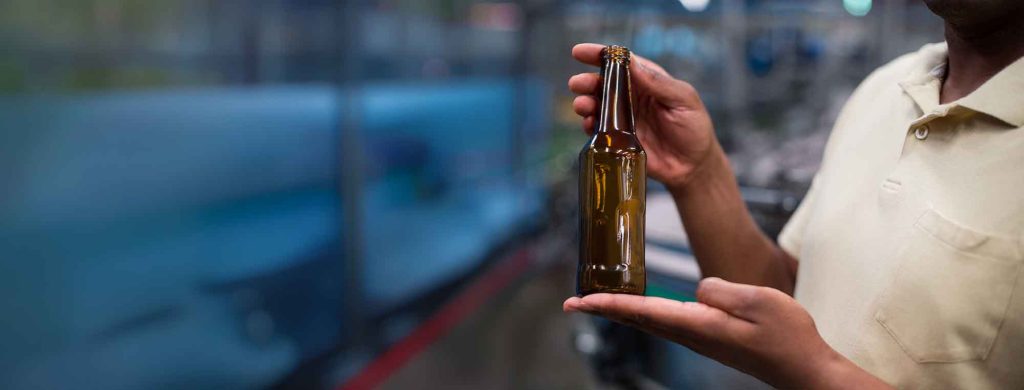
How Do I Remove Beer Labels?
Label removal depends on the adhesive.
A simple method is:
- Fill a container with warm water.
- Add brewing cleaner like PBW or OxiClean Free.
- Submerge the bottles.
- Allow the labels to soften.
- Peel the labels away.
- Scrub remaining adhesive.
- Rinse the bottles.
Some labels will come off easily. Others may require more work.
Do I Have to Remove the Labels?
No.
You can reuse a bottle with the original label.
Removing the label makes the bottle easier to inspect.
It also gives you a clean surface for your own label.
How Do I Remove Sticky Label Glue?
Soaking often removes most of the adhesive.
For stubborn glue, use an appropriate adhesive remover. If you use a chemical product, rinse the bottle thoroughly afterward.
Do not allow an adhesive remover to remain inside the bottle.
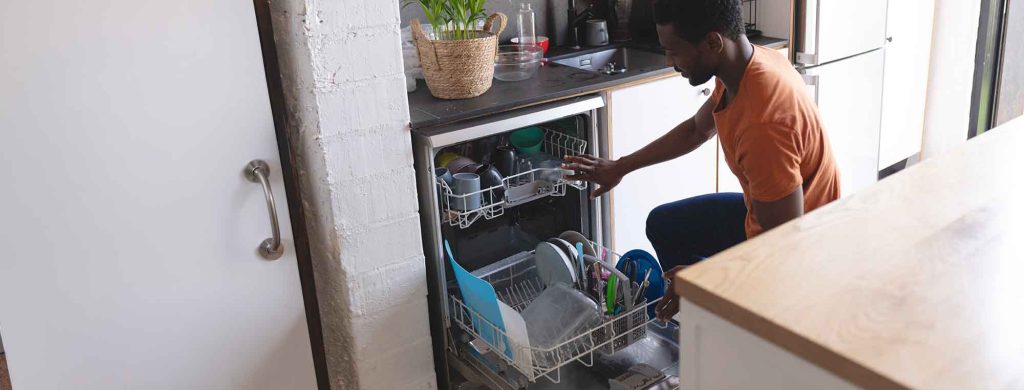
Can I Put Bottles in the Dishwasher to clean them?
Yes, with some limitations.
A dishwasher can help clean bottles.
However:
- Bottle openings may not receive enough spray.
- Labels can come loose.
- Label adhesive can collect in the dishwasher.
- Detergent residue can remain.
- Some bottles may not fit properly.
A dishwasher can be useful, but it is not required.
Can a Dishwasher Sanitize Bottles?
Dishwasher sanitize cycles work using heat, not liquid contact. A sufficiently hot dishwasher cycle can sanitize for microorganisms.
However, do not assume that every dishwasher cycle produces a validated sanitization process. Many homebrewers use a brewing sanitizer immediately before bottling.
This provides a simple and controlled process. But a proper dishwasher sanitize cycle can work just fine!
Can I Use a Bottle Washer?
Yes.
A bottle washer can make cleaning bottles much easier. Some models attach to a sink. Others use a pump or reservoir.
A bottle washer can help flush water or cleaning solution through the inside of the bottle. This is especially useful when cleaning many bottles.
What Is a Bottle Rinser?
A bottle rinser is a device designed to rinse or sanitize bottles.
You place the bottle over the nozzle and press down. The device sprays liquid into the bottle. A bottle rinser can be used with a suitable sanitizer. Just follow the sanitizer and rinser manufacturer’s instructions.
Do I Need to Dry Bottles After Cleaning?
Yes, if you are storing them after cleaning.
After cleaning:
- Rinse the bottle.
- Allow it to drain.
- Place it upside down in a clean location.
- Allow it to dry.
- Store it somewhere clean.
Before bottling, sanitize the bottle again.
Should I Dry Bottles With a Towel?
No. A towel can introduce:
- Dust
- Fibers
- Microorganisms
Allow the bottles to drain and air-dry.

Can I Store Bottles Wet?
You can, but it is better to store clean bottles dry. Standing water can become a place for microorganisms to grow. Allow bottles to drain completely before long-term storage.
How Should I Store Clean Bottles?
Store clean bottles:
- Upright
- In a clean area
- Away from dust
- Away from chemicals
- Away from insects
- Where they will not be damaged
Keep them covered if the storage area is dusty.
Do I Need to Clean Bottles Again Before Bottling?
Inspect them first. Even a clean bottle can collect dust during storage.
Before bottling:
- Inspect the bottle.
- Clean it if necessary.
- Sanitize it.
- Allow it to drain.
- Fill it.
Never assume that an old clean bottle is still sanitized.
How Do I Sanitize a Clean Bottle?
After cleaning, use a brewing sanitizer according to the product instructions. Make sure the sanitizer contacts the inside of the bottle. Drain the bottle. Do not touch the inside of the bottle after sanitizing it. Keep those fingers to yourself.
Is Star San Good for Bottles?
Yes.
Star San is a common no-rinse sanitizer used by homebrewers. Use it according to the manufacturer’s instructions. The bottle must still be clean before you sanitize it.
Do I Need to Rinse After Sanitizing?
If you use a no-rinse brewing sanitizer according to its instructions, do not rinse it with untreated water. Allow the excess sanitizer to drain.
Follow the instructions for your specific sanitizer.
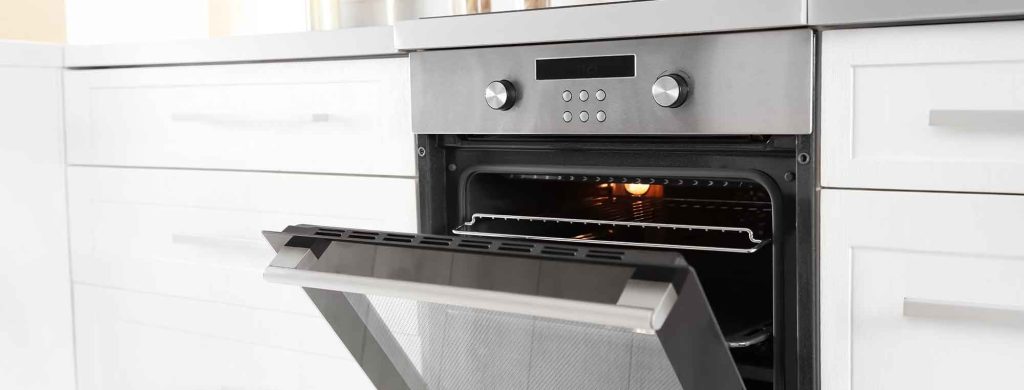
Can I Use an Oven to Sanitize Bottles?
Heat can be used to sanitize glass.
However, it is not the simplest method for most homebrewers. Glass can break when exposed to rapid temperature changes. A no-rinse brewing sanitizer is easier and avoids unnecessary thermal stress.
Can I Boil Bottles?
It is not recommended as a simple homebrewing method.
Boiling creates a thermal shock risk. The bottles can crack or break. Chemical sanitization is usually easier.
What If My Bottle Has a Crack?
Discard it.
Do not use a cracked bottle for homebrew. Bottle-conditioned drinks create pressure, and a damaged bottle can fail.
What If My Bottle Has a Chip?
Discard it.
This is especially important if the chip is on:
- The bottle opening
- The neck
- The base
Do not take a risk with a pressurized glass bottle.
What If My Bottle Has Scratches?
Small surface marks may not be a problem. Deep scratches are different.
If a bottle has significant scratches or other damage, discard it. A bottle is cheap compared with the consequences of a failed bottle.
How Often Can I Reuse a Bottle?
There is no fixed number. A bottle can be reused many times if it remains in good condition. Inspect it each time. Clean it properly.
Discard it if it becomes damaged.
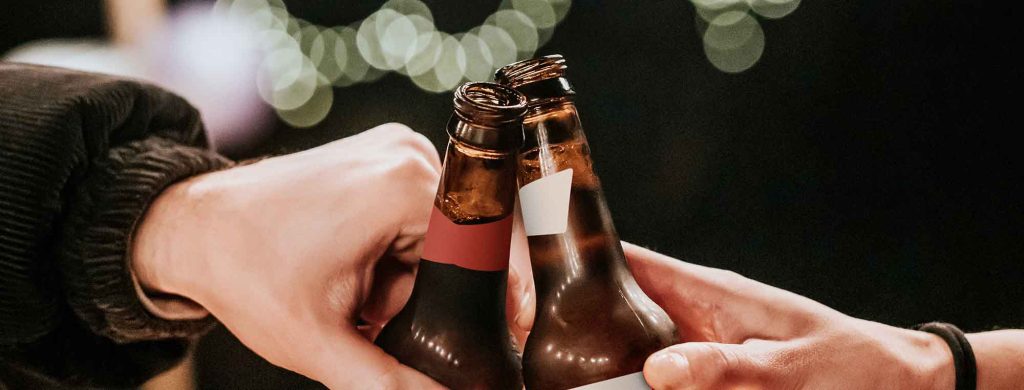
Can I Reuse Twist-off Bottles?
No. The lip of the bottle can crack and flake under the pressure of the capper.
Can I Reuse Wine Bottles?
Do not use standard wine bottles for bottle-conditioned beer. Most are designed for still wine. They are not intended for the internal pressure created by carbonated beer.
What Is the Best Bottle for Homebrew?
A standard brown pry-off beer bottle is an excellent choice.
It is:
- Designed for carbonated beverages
- Easy to clean
- Easy to sanitize
- Easy to cap
- Resistant to light
You can often get these bottles for free by saving commercial beer bottles.
A Simple Bottle-Cleaning Routine
The easiest system is to clean bottles as soon as you empty them.
After Drinking
- Empty the bottle.
- Rinse it with water.
- Shake the water inside the bottle.
- Empty it.
- Repeat until the bottle is clean.
- Inspect the bottle.
- Store it upside down or upright in a clean area.
Before Bottling
- Inspect the bottle.
- Clean it if necessary.
- Rinse it.
- Sanitize it.
- Drain it.
- Fill it with beer.
- Cap it with a new cap.
This routine prevents most bottle-cleaning problems.
Cleaning a Very Dirty Bottle
If you have a bottle that contains dried beer, use this process:
- Rinse the bottle.
- Fill a container with warm water.
- Add brewing cleaner like PBW or OxiClean Free according to its instructions.
- Submerge the bottle.
- Fill the bottle with cleaning solution.
- Allow it to soak.
- Remove the label.
- Scrub the bottle if necessary.
- Rinse thoroughly.
- Inspect the bottle.
- Allow it to dry.
- Sanitize it before bottling.
Bottle-Cleaning Checklist
Before storing a bottle:
- Beer residue is removed.
- Yeast residue is removed.
- Bottle has been rinsed.
- Bottle is free of odors.
- Bottle has been inspected.
- Bottle has no cracks.
- Bottle has no chips.
- Bottle has no serious scratches.
- Bottle is dry.
- Bottle is stored in a clean location.
Before bottling:
- Bottle is clean.
- Bottle is sanitized.
- Bottle opening is clean.
- Bottle is free of damage.
- Bottle is ready for filling.
The Bottom Line
The easiest way to clean homebrew bottles is to rinse them immediately after you drink the beer.
A quick rinse prevents beer and yeast from drying inside the bottle.
For bottles that need more work, soak them in an appropriate brewing cleaner. Use a bottle brush for stubborn residue. Inspect every bottle before use. Discard bottles with cracks, chips, or significant damage.
Most importantly, remember the difference:
Clean first. Sanitize second.
Cleaning removes beer residue. Sanitizing reduces microorganisms. You need both steps before putting homebrew into a bottle.
If you build the habit of rinsing every bottle immediately after use, bottle cleaning becomes one of the easiest parts of homebrewing.
A clean bottle today makes an easy bottling day later.