A thermometer is one of the most useful tools in homebrewing.
You use it to measure the temperature of your water, mash, wort, yeast, and fermentation.
You do not need an expensive thermometer to make good beer, wine, mead, or cider. However, you do need a thermometer that is accurate enough for the job. The best thermometer for you depends on what you brew and how you brew it.
Why Is Temperature Important in Brewing?
Temperature affects many parts of the brewing process. For beer, temperature is important during the mash. It also affects yeast during fermentation. For wine, mead, and cider, temperature affects yeast activity and fermentation speed.
A thermometer helps you know what is happening. Without one, you are guessing.
For many brewing tasks, being off by a few degrees is not a major problem. For some tasks, accurate temperature measurement is more important. This is why the thermometer you choose should match your brewing process.

What Temperature Range Do I Need?
A brewing thermometer should cover a useful range.
For most homebrewers, a thermometer that measures about 0°F to 220°F is enough. This range covers most common brewing tasks. You can also buy thermometers with a wider range.
A wider range is not always better. You should focus on accuracy, durability, and ease of use.
If you make beer, a thermometer should be able to measure:
- Cold water.
- Mash temperatures.
- Wort during the boil.
- Wort during chilling.
- Fermentation temperatures.
If you make wine, mead, or cider, you will usually need to measure:
- Must or juice.
- Fermentation temperature.
- Water used for brewing or mixing.
- Finished product before packaging.
If you’re new to mead, our FREE 120-page book on all things mead-making is a great practical start to your adventure. It’s helpful for wine and cider makers as well!
Digital vs. Analog Thermometers
There are two main types of brewing thermometers.
- Digital thermometers use an electronic sensor.
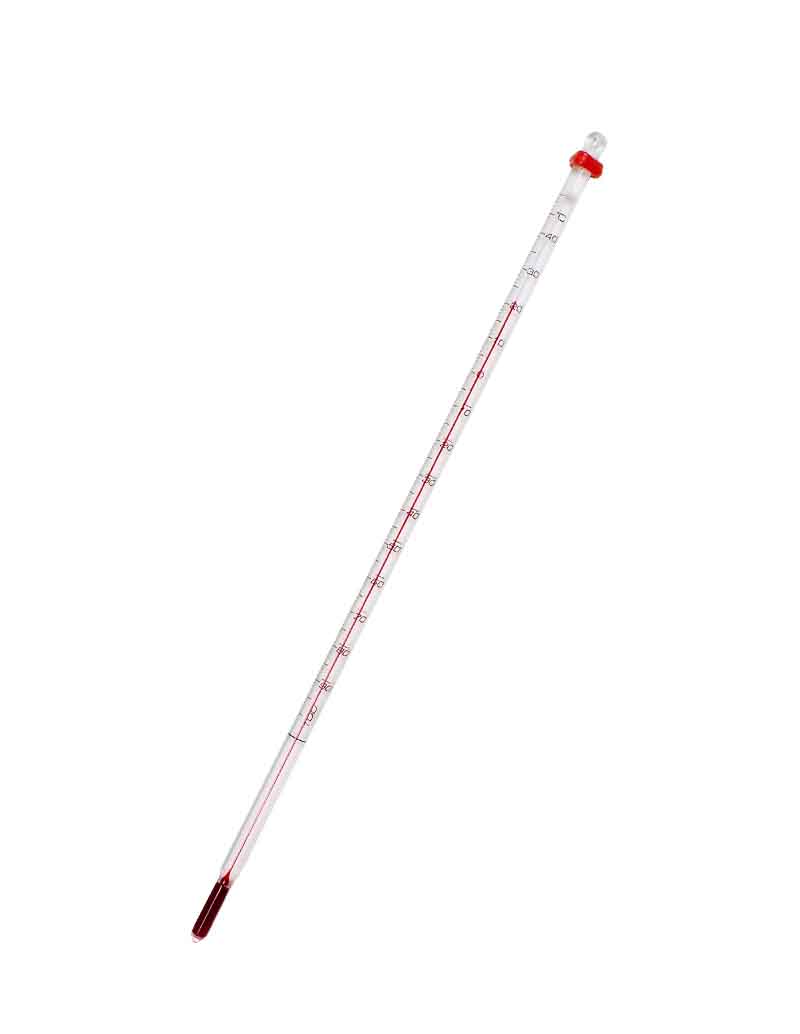
- Analog thermometers use a mechanical temperature sensor.
Both can work. Digital thermometers are usually easier to read. They can also provide fast temperature readings.
Analog thermometers do not require batteries. They can also be left in a kettle during the brewing process.
For most beginners, a digital thermometer is the best general-purpose choice.
What Is an Instant-Read Thermometer?
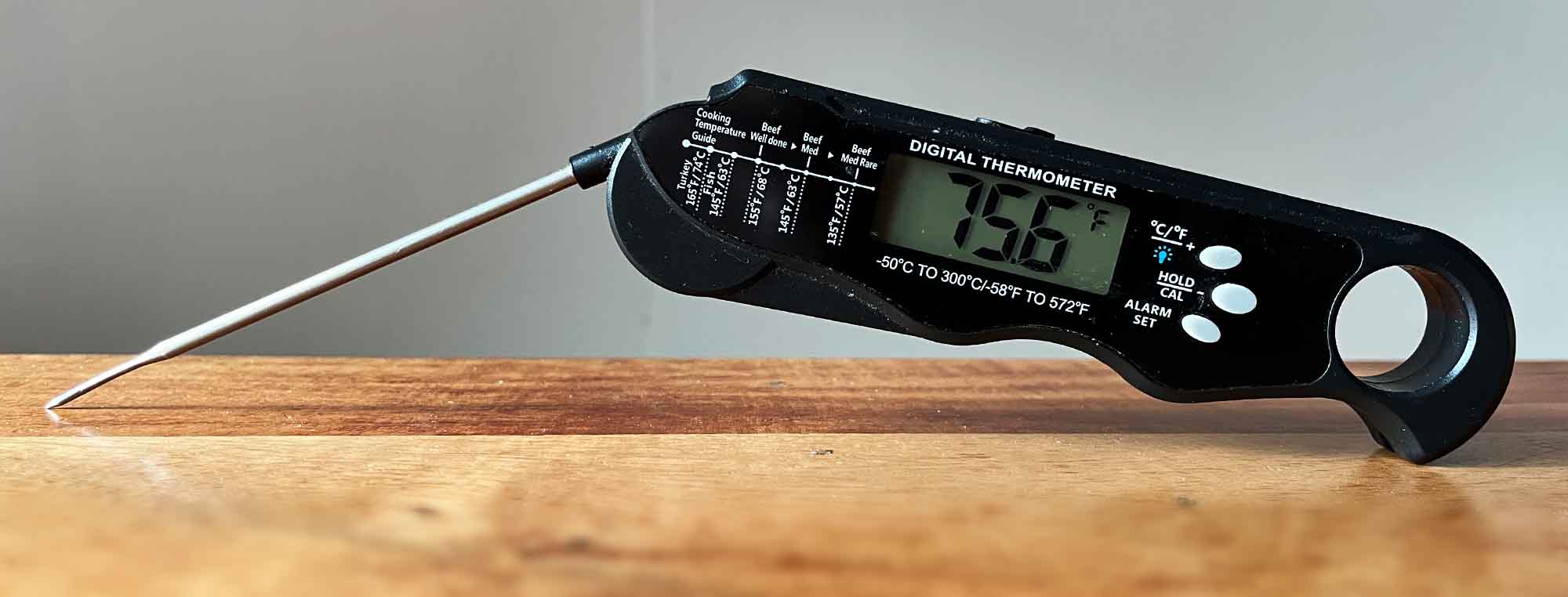
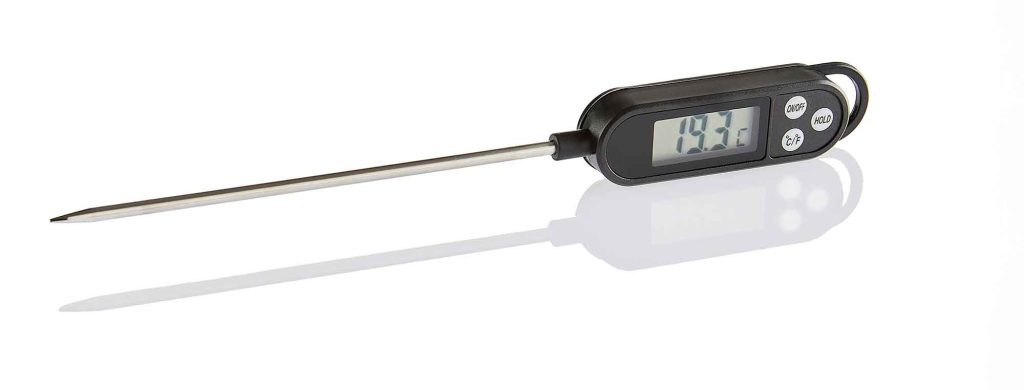
An instant-read thermometer has a probe that you place into the liquid. The thermometer gives you a temperature reading within a few seconds. This is useful for many brewing tasks.
You can use an instant-read thermometer to:
- Check mash temperature.
- Check wort temperature.
- Check cooling progress.
- Check water temperature.
- Check fermentation temperature.
A long probe is useful for brewing because it lets you reach into a deep kettle or fermenter. A waterproof model is also a good choice.
What Is a Probe Thermometer?
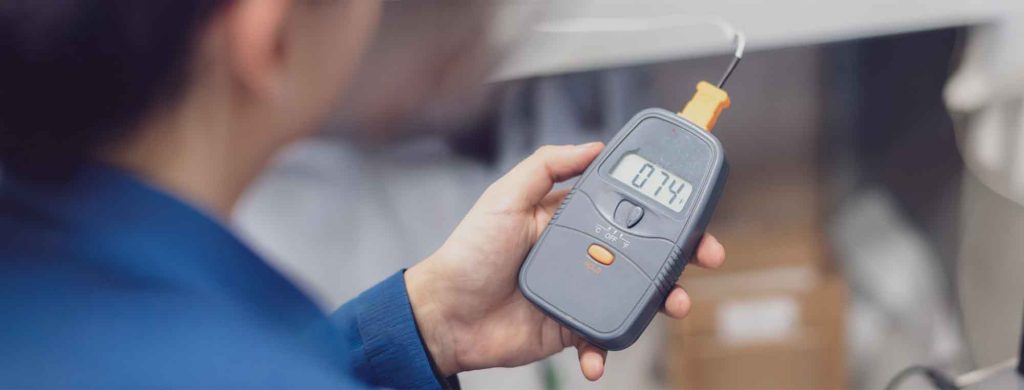
A probe thermometer has a separate temperature probe connected to the display. Some probes use a cable. This design can be useful when you want to monitor temperature without holding the thermometer.
For example, you can place the probe into a mash tun and keep the display outside the vessel. Some brewing systems also use permanently installed temperature probes. These can connect to controllers that regulate heating or cooling.
A basic probe thermometer is enough for most beginners.
What Is a Clip-On Brewing Thermometer?
A clip-on thermometer attaches to the side of a kettle or mash tun. The probe stays in the liquid. This lets you monitor temperature while you work.
A clip-on thermometer can be useful during mashing. It can also be useful when heating water. One disadvantage is that the thermometer measures the temperature near the side of the vessel.
The temperature may not be the same throughout the entire vessel. Stir the liquid before taking a temperature reading when appropriate.
Can I Use a Kitchen Thermometer?
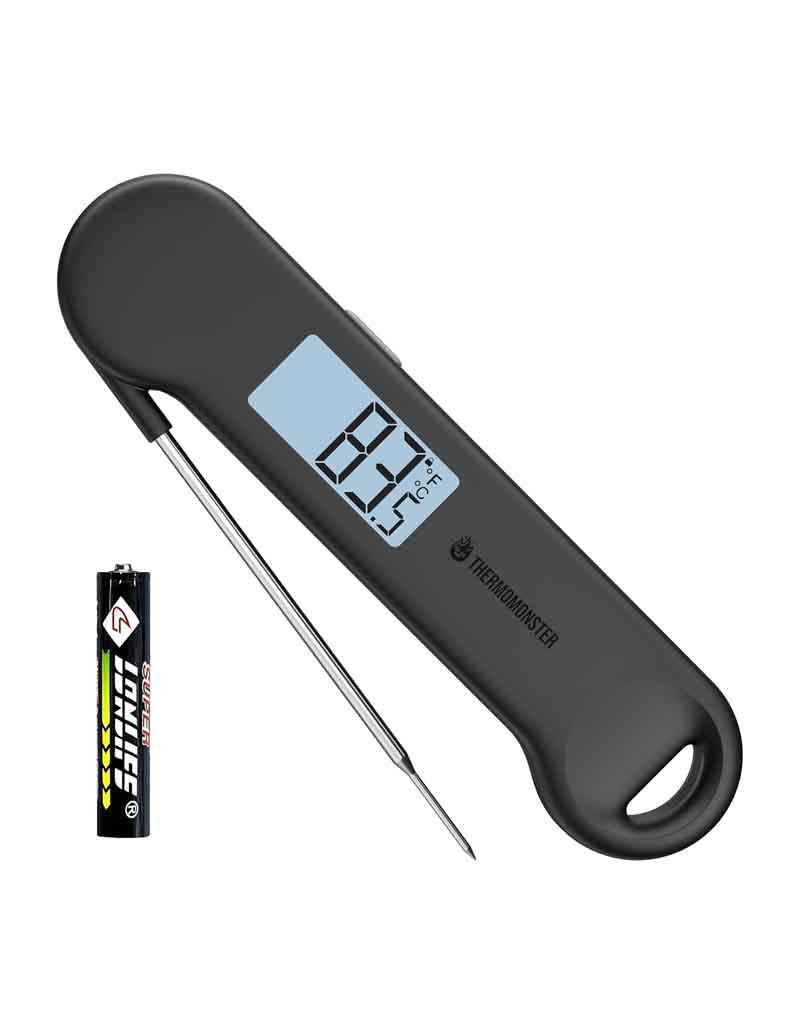
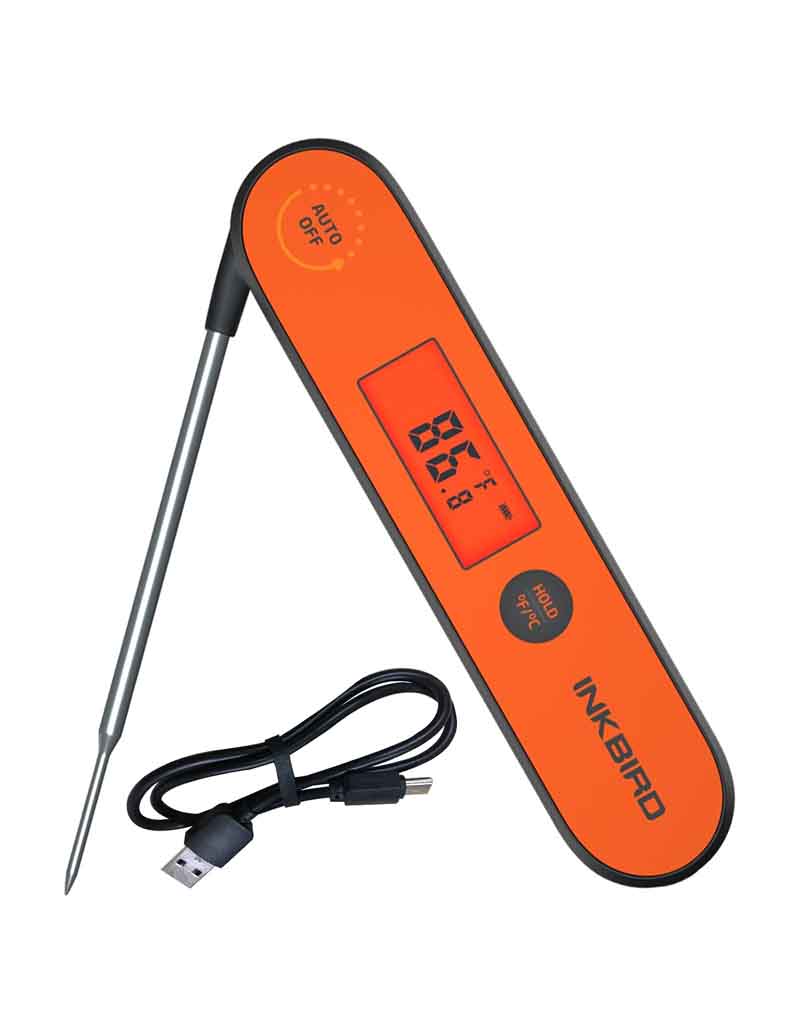
Yes. A good kitchen thermometer can work very well for homebrewing. You do not need a thermometer labeled specifically for brewing.
What matters is the thermometer’s:
- Temperature range.
- Accuracy.
- Response time.
- Probe length.
- Durability.
- Water resistance.
A kitchen thermometer that meets these needs can be an excellent brewing thermometer. This can be a good way to save money when you are starting.
Do I Need a Special Thermometer for Mashing?
You do not need a special type of thermometer. You do need a thermometer that is accurate in the mash temperature range.
Most beer mashes occur around 145°F to 160°F. A thermometer should give consistent readings in this range.
A long probe is useful for a mash tun. You should also stir the mash before checking the temperature, as the top and bottom of a mash can have different temperatures. Take several readings if you are not sure that the mash is at an even temperature.
Do I Need a Thermometer for Extract Brewing?
Yes, but you may not need it as often. Extract brewing does not require you to control mash temperature. Learn more about extract versus all-grain brewing.
However, temperature is still useful when you:
- Heat brewing water.
- Cool wort.
- Add yeast.
- Monitor fermentation.
A basic digital thermometer can handle these tasks.

Do I Need a Thermometer for Wine, Mead, or Cider?
Yes. A thermometer is useful for any type of fermentation. For mead, wine, and cider, temperature can affect yeast performance.
You should know the temperature of your must or juice before you add yeast. You should also monitor fermentation temperature when possible. A thermometer is especially useful when you are trying to keep fermentation within a specific temperature range.
Can I Use a Thermometer to Know When Fermentation Is Finished?
No. Temperature and fermentation are related, but temperature does not tell you when fermentation is complete.
An airlock also does not tell you when fermentation is complete. Use a hydrometer to measure specific gravity.
Take a reading. Wait a few days. Take another reading.
If the readings remain stable over the appropriate period, you have much better evidence that fermentation is finished.
A thermometer tells you the temperature. A hydrometer tells you about the progress of fermentation. These tools do different jobs.
How Accurate Does a Brewing Thermometer Need to Be?
For most homebrewing, an accuracy of about ±1°F is very good. A thermometer that is accurate to about ±2°F can also work for many brewing tasks. The important thing is consistency.
If your thermometer always reads two degrees high, you can account for the difference. If the reading changes by several degrees when the actual temperature has not changed, the thermometer is not useful.
Cheap thermometers can sometimes be surprisingly good. Expensive thermometers are not automatically more accurate.
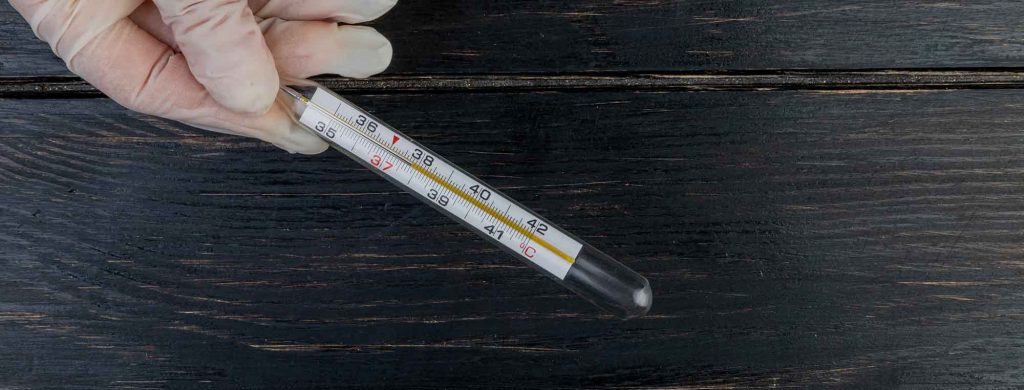
How Can I Check My Thermometer?
You can test a thermometer with an ice-water mixture.
- Fill a container with ice.
- Add enough water to fill the spaces between the ice.
- Stir the mixture.
- The temperature should be close to 32°F at normal atmospheric pressure.
You can also test a thermometer with boiling water.
Water boils at about 212°F at sea level. However, boiling temperature changes with altitude and atmospheric pressure.
For this reason, an ice-water test is often easier for a basic home test. If your thermometer does not read close to the expected temperature, check whether it can be calibrated.
Do I Need a Waterproof Thermometer?
A waterproof thermometer is a very good idea.
Brewing involves liquid. Accidents happen. A thermometer can fall into a kettle or get covered with wort. A waterproof design is easier to clean and sanitize.
Look for a thermometer that can safely handle the conditions where you plan to use it. Do not assume that a thermometer is waterproof just because it is sold as a kitchen or brewing thermometer. Check its specifications.
How Long Should the Probe Be?
A longer probe is useful for large brewing vessels. A short probe can work well for small batches. If you brew five gallons of beer, a probe that can reach well into the liquid is useful. If you make one-gallon batches, a shorter probe may be easier to use.
Do not buy a very long probe simply because it is longer. The probe should be long enough to measure the liquid safely and easily.
Do I Need a Thermometer for Fermentation?
A thermometer is useful during fermentation. However, placing a thermometer directly into the fermenter is not always the best method. Opening the fermenter can expose the drink to oxygen and contaminants.
A better option can be a temperature strip attached to the outside of the fermenter. A separate temperature probe can also measure the temperature of the fermenter. Keep in mind that the outside of the vessel may not have exactly the same temperature as the liquid inside.
For more precise temperature control, some brewers use a temperature probe inside a thermowell.
What Is a Thermowell?
A thermowell is a small tube that holds a temperature probe. The thermowell is installed in the fermenter. The probe sits inside the thermowell without directly touching the beer, wine, mead, or cider.
This allows you to measure the temperature of the fermentation vessel while keeping the probe separated from the liquid. Thermowells are useful when using an electronic temperature controller.
They are not required for basic homebrewing.
Do I Need an Expensive Brewing Thermometer?
Probably not. A beginner can usually start with a basic digital thermometer. You do not need laboratory equipment to brew good beer or fermented beverages at home.
Spend more money if you need features such as:
- Very high accuracy.
- Fast response.
- Long-term temperature logging.
- Remote monitoring.
- Multiple probes.
- Temperature control.
- High-temperature durability.
For basic brewing, accuracy and reliability are more important than a long list of features.
What Should a Beginner Buy?
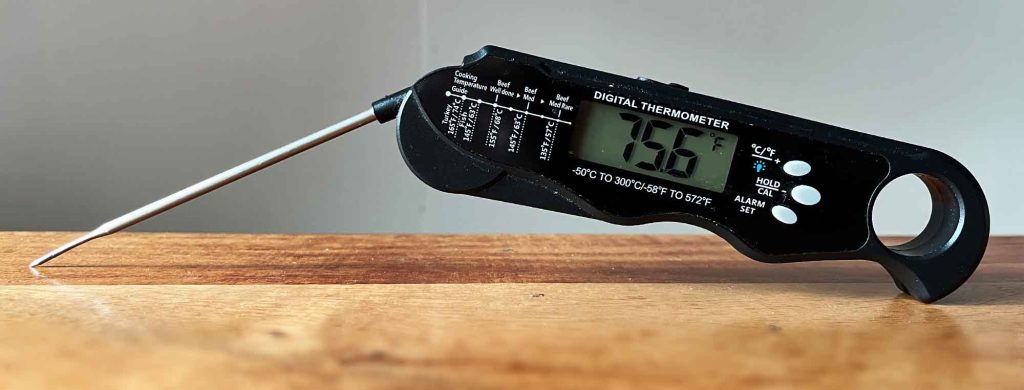
For most beginners, a digital instant-read thermometer with a long probe is a good choice.
Look for these features:
- A temperature range of at least 0°F to 220°F.
- Accuracy of about ±1°F or better.
- A waterproof or water-resistant design.
- A stainless-steel probe.
- A clear digital display.
- A probe long enough for your brewing vessel.
- A calibration function if possible.
This thermometer can handle most basic brewing tasks. You can add specialized equipment later if your brewing process requires it.
The Bottom Line
You do not need a thermometer made specifically for brewing. You need a thermometer that is accurate, durable, and suitable for your brewing process.
For most homebrewers, a digital instant-read thermometer is the best place to start. Use it to check mash temperature, water temperature, wort temperature, and fermentation temperature.
If you make beer with all-grain methods, accurate temperature measurement becomes more important.
If you make wine, mead, or cider, a thermometer is still useful for controlling fermentation conditions.
You do not need the most expensive thermometer on the market. A simple, reliable thermometer is one of the first tools every new homebrewer should buy.