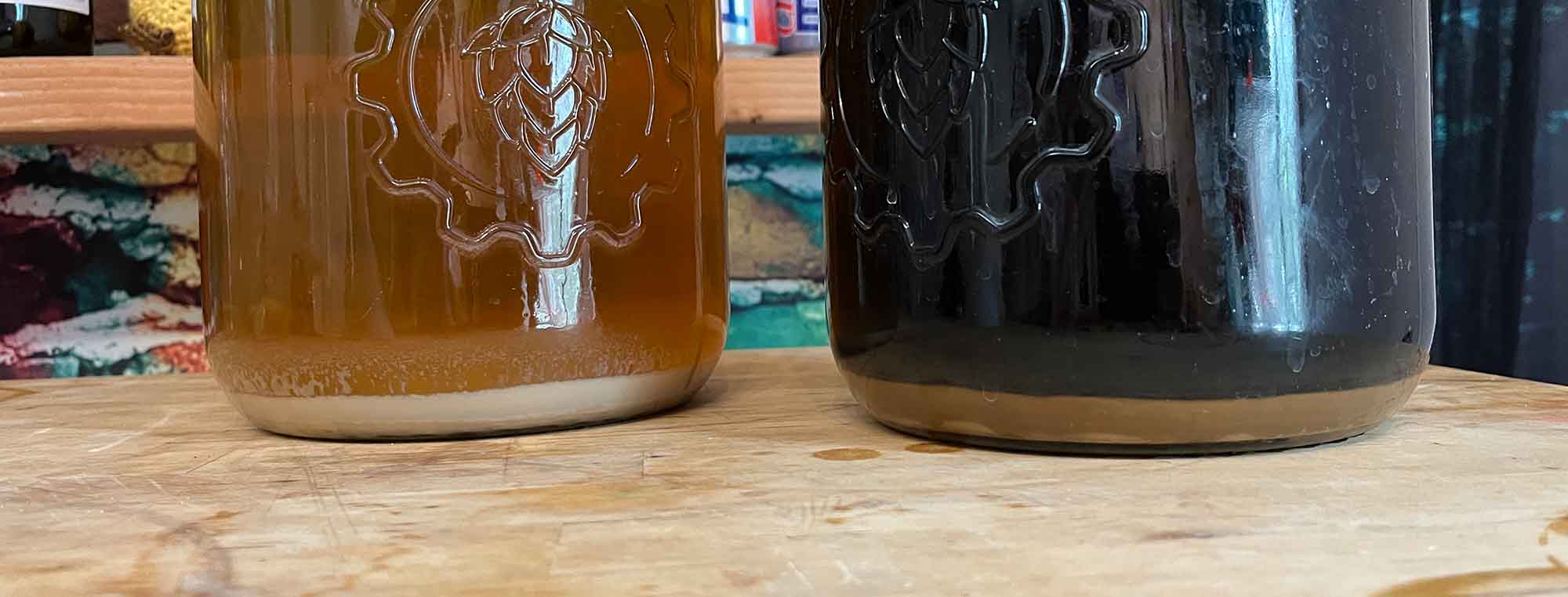

Oxidation is one of the most common explanations for a mead, beer, wine, or cider that tastes old, dull, or strange.
It is also one of the most misdiagnosed. Not every stale beer is oxidized. Not every dark mead has oxidation. A cider that tastes like sherry is not automatically ruined.
Oxidation can produce several recognizable changes:
- Cardboard or paper flavors
- Stale or flat flavors
- Loss of fresh fruit character
- Darker color
- Dull hop aroma
- Sherry-like flavors
- Honey character that tastes old or cooked
- Nutty or caramel-like flavors
- A general loss of brightness
- Some even say it can taste like corn chips
The exact result depends on the beverage. Beer, mead, cider, and wine do not all show oxidation in the same way.
What Is Oxidation?
Oxidation occurs when oxygen reacts with compounds in your beverage.
Oxygen can change:
- Flavor compounds
- Aroma compounds
- Color compounds
- Hop compounds
- Polyphenols
- Alcohol-derived compounds
- Other organic compounds
The important point for homebrewers is simple:
Oxygen is most dangerous when it gets into finished beer, mead, cider, or wine.
During active fermentation, yeast consumes oxygen and the fermenting beverage produces carbon dioxide. After fermentation, that protection decreases. A finished beverage can therefore be much more sensitive to oxygen than an actively fermenting one.

What Does Oxidized Beer Taste Like?
Beer oxidation is often easiest to recognize in hop-forward beer.
An oxidized beer can taste:
- Like cardboard
- Like paper
- Stale
- Dull
- Muted
- Sweet in an unpleasant way
- Honey-like
- Sherry-like
- Wine-like
Hop aroma can disappear quickly. A beer that once smelled strongly of citrus, pine, tropical fruit, or flowers can become much less aromatic.
The bitterness can also seem different.
It may feel:
- Duller
- Rougher
- Less fresh
- Less integrated
Dark beers can develop different flavors. Depending on the beer and how far the oxidation has progressed, you may notice:
- Caramel
- Toffee
- Raisin
- Sherry
- Port-like flavors
- Nutty flavors
These flavors are not automatically bad. Some traditional aged beers intentionally develop similar flavors. The problem is when those flavors appear in a beer that was supposed to taste fresh.
What Does Oxidized Mead Taste Like?
Mead can be more complicated. Some oxidation-related flavors in mead can resemble intentional aging.
An oxidized mead may develop:
- Sherry-like flavors
- Raisin
- Prune
- Caramel
- Nutty flavors
- Brown sugar
- Cooked honey
- Dried fruit
- A dull or flat honey character
Fresh floral honey aromas may disappear. Fruit meads can lose their fresh fruit character.
A strawberry mead may stop tasting like fresh strawberries. A citrus mead may lose its bright citrus aroma. A melomel can become darker and more dried-fruit-like.
This does not always mean the mead is bad.
Some meads benefit from controlled aging and slow oxygen exposure. The problem is uncontrolled oxygen exposure.
There is a major difference between: “This mead has aged” and “This mead was exposed to too much oxygen.”

What Does Oxidized Cider Taste Like?
Cider can show oxidation in several ways.
You may notice:
- Dull apple flavor
- Loss of fresh apple aroma
- Brown or darker color
- Sherry-like flavors
- Caramel
- Nutty flavors
- A stale finish
Some cider can develop flavors that resemble traditional aged cider. That makes diagnosis difficult. If the cider was intentionally aged, some of these changes may be desirable. If a fresh cider suddenly tastes flat and lifeless after racking or bottling, oxygen exposure is a reasonable suspect.
What Does Oxidized Wine Taste Like?
Wine is a special case because controlled oxidation is part of the production of some wines, so some wines are intentionally exposed to oxygen. Others are made to minimize oxygen exposure.
An oxidized wine can show:
- Brown or amber color
- Dried fruit
- Nuts
- Caramel
- Sherry-like aromas
- Loss of fresh fruit
- Flat or stale aromas
White wines often show color changes very clearly. Red wines can become more brown or brick-colored as they age. Again, an aged flavor is not automatically an oxidation fault. A wine designed for long aging may develop oxidative character as part of its normal development.
The Most Recognizable Oxidation Flavor: Cardboard
When brewers talk about oxidation, “cardboard” is one of the most common descriptions. It is useful, but do not take it too literally. Your beer does not need to taste exactly like a cardboard box to be oxidized.
Think of cardboard as shorthand for a collection of stale flavors.
You may instead notice:
- Paper
- Old crackers
- Stale grain
- Dull malt
- Muted aroma
- A generally “old” flavor
If a beer has lost its fresh character and developed a stale character at the same time, oxidation is worth considering.
Oxidation Can Be Hard to Taste at First
Oxidation is not always dramatic. In fact, a small amount of oxygen exposure may not produce an obvious “off-flavor.” Instead, the beverage may simply taste less vibrant. Compare two glasses side by side.
The fresh beer may have:
- More hop aroma
- Brighter fruit
- Cleaner malt
- More distinct flavors
The older or oxidized beer may taste:
- Flat
- Muted
- Less aromatic
- More generic
This is one reason oxidation can be difficult to diagnose. You are often noticing the loss of good flavors, not the appearance of one terrible flavor.

How Does Oxygen Get Into Homebrew?
Oxygen can enter your beer, mead, cider, or wine at many points.
Common sources include:
- Splashing during transfers
- Excessive headspace
- Poorly purged kegs
- Bottling
- Poorly sealed bottles
- Opening a fermenter repeatedly
- Racking
- Siphoning
- Leaking equipment
- Air entering during cold crashing
- Transferring with an autosiphon incorrectly
- Stirring finished beer
- Pouring finished beer aggressively
The key question is not “Did oxygen touch my beer?” – The answer is almost certainly yes.
The better question is: “How much oxygen reached the finished beverage, and when?”
Splashing Is the Enemy
Moving finished beer through a hose is not automatically a problem. Splashing is.
A smooth transfer with the liquid moving through a full hose is very different from pouring the beer into a bucket from several inches above the surface.
Avoid:
- Pouring finished beer
- Dropping the hose into the vessel
- Letting the transfer stream fall through air
- Stirring finished beer
- Shaking a finished beer
- Pumping air into the beverage
During fermentation, oxygen can sometimes be useful. After fermentation, treat oxygen as something to minimize.
Headspace Matters
A full fermenter has less oxygen available above the beverage than a partially filled fermenter.
This is one reason unnecessary headspace becomes more important after fermentation. A large headspace gives oxygen more room to contact the beverage. This is especially important during long aging.
For example:
- A five-gallon batch in a five-gallon carboy has very little room above the liquid.
- A three-gallon batch in a five-gallon carboy has much more headspace.
The second setup gives you more opportunity for oxidation during storage.
Important distinction
Headspace is not automatically a problem. A normal primary fermenter needs headspace for krausen and foam. The concern is unnecessary oxygen exposure after fermentation.

Cold Crashing Can Pull Oxygen Into the Fermenter
Cold crashing creates a common problem. As the temperature of the beer drops, the gas inside the fermenter contracts. If your fermenter has an airlock, the pressure inside can drop. The fermenter may pull air or sanitizer solution inward, called “suck-back.”
The problem becomes more serious when:
- You cold crash in a vessel that cannot handle vacuum
- You use a loose-fitting lid
- You have a large headspace
- Your airlock contains liquid
- You do not have a way to prevent air from entering
You can reduce this risk with appropriate equipment and a controlled gas source.
A closed, pressure-capable fermentation system can make this much easier.
Racking Can Cause Oxidation
Racking is not automatically bad. The problem is the way you rack. A good transfer keeps the beer moving through the tubing without unnecessary contact with air.
A poor transfer can:
- Splash
- Pull air through the tubing
- Empty the tubing
- Spray the beverage into the receiving vessel
- Leave a large amount of headspace
Keep the transfer hose below the surface of the receiving liquid when possible. Do not let the beer fall through the air.
Bottling Can Add Oxygen
Bottling is one of the most common places for finished beer to encounter oxygen.
The risk comes from:
- Air already inside the bottle
- Turbulent filling
- Excessive headspace
- Beer splashing during filling
- Slow or poor bottle-capping technique
You do not need to make bottling complicated.
- Fill the bottle from the bottom using a bottle filler.
- Avoid splashing.
- Leave the normal amount of headspace required for bottle conditioning.
- Cap the bottle promptly.
Do not pour finished beer into bottles from a pitcher.

Kegging Does Not Automatically Prevent Oxidation
Kegs make low-oxygen transfers much easier.
They do not make oxidation impossible.
A keg can still contain air. If you transfer finished beer into an air-filled keg, the beer can absorb oxygen.
A better process is:
- Clean the keg.
- Sanitize the keg.
- Purge the keg with carbon dioxide.
- Transfer the beer with minimal splashing.
- Keep the system closed when possible.
- Purge the headspace again if needed.
- Carbonate.
Closed transfers can reduce oxygen exposure even further.
RELATED: How to Build a Kegerator or Keezer
Purging With CO₂
Carbon dioxide is heavier than air, but simply filling a keg with CO₂ does not magically guarantee that every molecule of oxygen is gone. The goal is to replace the air in the keg with CO₂. Repeated purge cycles can reduce the remaining oxygen.
A closed transfer can then move the beer from one vessel to another without exposing it to open air. For very oxygen-sensitive beer, this is worth the effort.
Oxidation and Fermentation Are Different Problems
A beer can have a stale flavor without being oxidized.
A mead can taste strange because of:
- Nutrient problems
- Yeast stress
- Excessive fermentation temperature
- Sulfur
- Acidity
- Tannin
- Alcohol heat
- Infection
- Aging
- Oxidation
Do not use “oxidation” as a catch-all diagnosis.
For example:
- Wet cardboard: oxidation is a strong possibility.
- Sulfur or rotten egg: look at hydrogen sulfide and fermentation conditions.
- Solvent or hot alcohol: look at fermentation temperature and yeast stress.
- Vinegar: look for acetic acid bacteria and oxygen exposure.
- Medicinal or plastic-like flavors: look at phenols, sanitation, water, and fermentation.
The flavor tells you where to investigate.
Oxidation Can Happen Without Obvious Oxygen Contact
You do not need to see an obvious splash to have oxidation.
Oxygen can enter through:
- Seals
- Tubing connections
- Loose lids
- Poorly sealed bottles
- Repeated opening
- Headspace
- Transfer equipment
Small oxygen exposures can add up. This is why a beer can taste excellent immediately after packaging and then taste noticeably worse weeks later. The packaging event may have introduced enough oxygen to start the process.

Does Oxygen During Primary Fermentation Matter?
Usually, oxygen exposure during the early part of fermentation is less concerning. Yeast can use oxygen during growth. In fact, brewers sometimes intentionally oxygenate wort before pitching yeast.
That is very different from oxygenating finished beer. Once fermentation is well underway, yeast activity and carbon dioxide production also provide some protection. The most important time to minimize oxygen is generally after fermentation, especially during packaging and storage.
Can Oxidized Homebrew Be Fixed?
Usually, not really. Once oxidation has changed the flavor compounds in your beverage, you cannot reliably reverse the process at home.
You can sometimes improve the perception by:
- Blending
- Adjusting sweetness
- Adjusting acidity
- Changing carbonation
- Serving the beverage differently
But these methods do not remove the oxidation.
Do not try to “fix” oxidized beer by aggressively stirring it. That adds more oxygen. If the beverage is already oxidized, more oxygen is not the solution.
Prevention Is Much Easier
The best oxidation treatment is prevention.
Use a simple rule:
- Before fermentation: oxygen can be useful.
- During active fermentation: oxygen is usually not a major concern.
- After fermentation: minimize oxygen.
That means:
During transfers
- Use tubing.
- Avoid splashing.
- Keep the receiving vessel closed when possible.
- Keep the tubing outlet below the liquid surface.
- Do not let the siphon suck air.
During aging
- Minimize headspace.
- Use an appropriate vessel.
- Keep seals tight.
- Avoid unnecessary transfers.
- Do not repeatedly open the vessel.
During bottling
- Use a bottle filler.
- Avoid splashing.
- Fill consistently.
- Cap promptly.
During kegging
- Purge the keg.
- Use closed transfers when practical.
- Keep the system sealed.
- Purge the headspace.

Oxygen Is Especially Important for Hoppy Beer
Hop-forward beer is often much less forgiving of oxygen exposure than many malt-forward beers. Fresh hop aroma is part of the point. Oxygen can cause that fresh character to disappear.
This is why low-oxygen practices are especially important for:
- IPA
- Double IPA
- Hazy IPA
- Pale ale
- Other highly hopped beers
A traditional strong ale may tolerate aging very differently. Do not apply exactly the same oxygen-management strategy to every beer.
Mead and Wine Can Be More Forgiving
Mead and wine often undergo longer aging than beer. Some styles also benefit from controlled oxygen exposure.
That does not mean oxygen is harmless.
- A fruit mead can lose fresh fruit aroma.
- A delicate white wine can lose freshness.
- A light cider can become dull.
The difference is between controlled maturation and uncontrolled oxygen exposure. If you want an intentionally oxidative style, use a deliberate process. Do not accidentally create one through sloppy transfers.
A Simple Oxidation Checklist
If you think your homebrew is oxidized, ask these questions:
1. Did the color change?
A significant darkening can support an oxidation diagnosis.
2. Did fresh aroma disappear?
This is particularly useful with hops, fruit, and delicate honey aromas.
3. Does it taste stale?
Look for cardboard, paper, old crackers, or a general stale character.
4. Does it taste like dried fruit or sherry?
This can occur with oxidation, particularly in stronger beers, meads, ciders, and wines.
5. Did the flavor change after packaging?
If the beverage tasted fresh before packaging and became dull afterward, investigate the packaging process.
6. Did you splash it?
If finished beer was poured, shaken, sprayed, or transferred with significant turbulence, oxygen exposure is likely.
7. Did you leave a large headspace?
This matters more during storage and aging.
8. Did the fermenter suck air during cold crashing?
Check for this if the flavor changed after cold crashing.
9. Is there another obvious off-flavor?
Do not blame oxidation if sulfur, solvent, vinegar, phenol, infection, or another cause fits better.
The Bottom Line
Oxidation does not always taste like cardboard.
It can appear as:
- Stale flavors
- Paper
- Dull malt
- Lost hop aroma
- Lost fruit aroma
- Sherry
- Raisin
- Caramel
- Nuts
- Cooked or old honey
- Darker color
The most important question is when the flavor appeared.
If your beer, mead, cider, or wine tasted fresh and then became dull after transfer, aging, or packaging, oxidation is worth investigating.
The solution is usually not a special treatment. It is better oxygen control. So avoid splashing. Keep finished beverages away from unnecessary air. Reduce unnecessary headspace. And bottle without splashing.
Purge kegs. Use closed transfers when practical.
And remember:
You cannot easily remove oxidation after it happens. You can prevent most of the damage by keeping oxygen away from finished homebrew.