Shipping homemade alcoholic beverages is more complicated than shipping most homebrew equipment.
The beverage is liquid. It may be under pressure. Glass bottles can break. Fermentation can restart. Alcohol shipping is also subject to carrier rules and state and federal laws.
Before you ship anything, confirm that the shipment is legal for both the origin and destination.
This article focuses on packaging and shipping within the United States. It is not a substitute for checking current carrier rules or applicable laws.
The First Rule: Check the Carrier Rules
Do not assume that a normal parcel label makes an alcohol shipment necessarily legal. USPS does not accept alcoholic beverages in domestic mail. Alcoholic beverages are listed as prohibited domestic mail.
UPS and FedEx have separate alcohol-shipping rules. Their normal consumer shipping services are not the same as their alcohol shipping programs. A person who wants to ship alcohol through a carrier’s alcohol program may need an approved account, agreement, license, or permit.
This creates an important distinction:
A package can be physically capable of being shipped without being legally or contractually eligible for shipment.
Always check the current rules before you ship.

What About Pirate Ship?
Pirate Ship is a third-party shipping-label service. It can provide discounted USPS and UPS labels. It does not change the rules of the carrier.
There is also an important distinction.
Pirate Ship currently does not allow alcohol shipments through its UPS contract. Its current prohibited-items guidance specifically includes beer, wine, and spirits.
Therefore, do not assume that buying a UPS label through Pirate Ship makes a homebrew alcohol shipment authorized. However, for shipping to competitions, Pirate Ship is the preferred option for many homebrewers since it offers a sort of quiet “don’t ask, don’t tell” option for avoiding questions at the carrier counter. Homebrew competition entrants often pack, print, and label at home then use the automated scanning option at UPS to avoid questions about the package contents. Do not use USPS for this purpose.
If you use a third-party label service, read that service’s current alcohol policy before you create the label. Ship at your own risk.
The Simplest Legal Option
For many homebrewers, the simplest option is not to ship alcohol. Transport the beverage yourself when practical, which is why many competitions allow for in-person drop-offs.
If you need to send it to another person, check whether the recipient can legally receive the beverage. If the shipment must go through a carrier, use a service that specifically supports the type of alcohol shipment you are making.
Before You Package the Bottle
Do not package a bottle until you know that the beverage is ready to ship.
This is especially important for homebrew.

Make Sure Fermentation Is Complete
A wine, mead, cider, or beer can continue to ferment after you bottle it. This is dangerous during shipping. A bottle under pressure can leak, break, or explode.
Before you ship a still beverage, confirm that fermentation is complete. Use a hydrometer. Take multiple readings over time. A stable gravity is more useful than a calendar date.
Do not ship a beverage simply because it has been fermenting for a certain number of days. Make sure you know how to use your hydrometer!
Carbonated Beverages
Beer and carbonated cider or mead are already under pressure. Use containers that are designed to hold the pressure. Beer bottles should be suitable for carbonated beer, cider, and mead.
Do not ship carbonated beverages in containers that are not pressure-rated. And do not assume that a glass bottle is safe for carbonation simply because it looks strong.
Choose the Right Bottle
The bottle is the first layer of protection.
Common choices include:
- Beer bottles
- Champagne bottles
- Wine bottles
- PET beer bottles
- Commercial beverage bottles designed for carbonation
Use bottles that match the pressure and beverage. Inspect glass bottles before use.
Do not ship bottles with:
- Cracks
- Chips
- Deep scratches
- Damaged necks
- Damaged closures
- Or bottles that have been reused many times.
A damaged bottle can fail during handling.

Protect the Closure
The closure should be secure.
For wine and mead, this may be:
- Cork
- Synthetic cork
- Screw cap
For beer, this may be:
- Crown cap
- Swing-top closure
Make sure the closure is fully seated.
A secondary seal can help contain a small leak, but it does not make an unsafe bottle safe.
The Best Packaging Principle
The package should protect the bottle even if the outer box is dropped.
Do not rely on a box marked “Fragile.” In fact, sometimes these markings are intentionally ignored.
Carriers move packages through sorting systems and trucks. Packages can be dropped, stacked, tilted, and placed under other packages. The packaging must provide physical protection.
Use a Dedicated Bottle Shipper
A dedicated bottle shipper is one of the best choices. These packages are designed specifically for glass bottles.
Commercial bottle shippers can use:
- Molded pulp inserts
- Molded foam inserts
- Corrugated dividers
- Foam liners
- Heavy-duty corrugated cartons
Some commercial wine shippers are available for one, two, three, four, six, nine, or twelve bottles.
The insert keeps the bottles separated. This is important. Bottles should not touch each other.
Do Not Use One Layer of Bubble Wrap
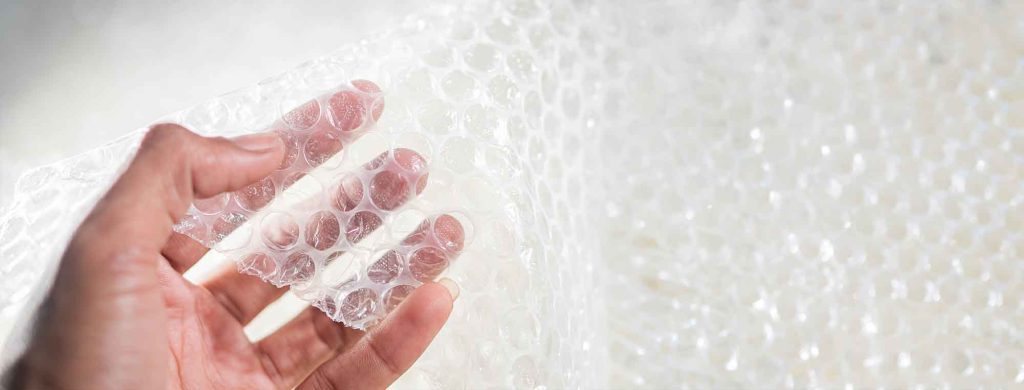
Bubble wrap can provide some protection. It should not be the only protection around a glass bottle. A bottle can still hit another bottle or the wall of the box.
A dedicated insert is better because it holds the bottle in a fixed position.
Bubble wrap can be useful as an additional layer around an individual bottle when the shipper design allows it.
Double Boxing
Double boxing can provide an additional layer of protection.
The basic design is:
Bottle → protective insert → inner carton → cushioning → outer carton
The inner package protects the bottle. The outer package protects the inner package.
Leave enough space between the inner and outer cartons for cushioning. Do not allow the inner carton to move freely inside the outer carton.
Prevent Bottle Movement
Movement inside the package is a warning sign. Shake the closed package gently. You should not hear bottles moving against each other.
If the contents move, add appropriate cushioning. The goal is not to fill the box with as much material as possible, but rather to prevent movement while maintaining protection around the bottle.
Protect the Bottle Neck
The neck and shoulder of a glass bottle can be vulnerable to impact. A good bottle shipper supports the bottle around these areas.
Molded-pulp and foam inserts can cradle the bottle and keep it away from the outside of the box. This is one reason a dedicated bottle shipper is better than simply wrapping a bottle in clothing or towels.
Contain a Leak
Even good packaging can fail.
A bottle can break.
If it does, you want the liquid to remain inside the package as long as possible. Place each bottle inside a leak-resistant plastic bag or other suitable containment layer when appropriate. Vacuum-packing bags are the optimal solution if available.
However, do not use the bag as the primary protection. The bag contains liquid. The insert protects the bottle.
These are different functions.
Do Not Create a Packaging Nightmare
There is a second problem with excessive containment.
A recipient should not need a knife, scissors, three garbage bags, and ten minutes of work to open one bottle.
Homebrewers sometimes wrap every bottle in:
- Multiple plastic bags
- Several layers of bubble wrap
- Tape around every layer
- Tape around the bottle neck
- Tape around the cap
- Tape around the entire package
This may reduce leakage. But it also creates a terrible unpacking experience.
Use a packaging system that provides protection without requiring excessive tape. Rubber bands are ideal.
Make the Package Easy to Open
A good package should be secure during shipping and simple to open.
Use:
- One outer carton
- A dedicated bottle insert
- A reasonable containment bag when needed
- A normal amount of packing tape
Do not tape directly around the bottle. Do not tape bottle caps or corks. Do not wrap every layer of protective material in tape.
If you use a plastic containment bag, use a closure that the recipient can open without cutting into the bottle.
Use a Strong Outer Carton
The outer box should be designed for the weight of the shipment. A box containing several glass bottles can be heavy.
Use a new or structurally sound corrugated carton.
Do not use a box that has:
- Water damage
- Crushed corners
- Torn flaps
- Soft cardboard
- Previous shipping damage
A reused box can work if it is still strong.
Seal the Box Correctly
Use quality packing tape.
Apply tape to the main center seam. Reinforce the bottom seams.
For heavy packages, use the H-taping method. This means sealing the center seam and the two edges of the flaps.
Do not cover the entire box in tape. The goal is to make the carton secure, not waterproof.

Label the Package Clearly
Use the carrier’s required shipping label. Place the label on the largest flat surface.
- Do not put the label over a seam.
- Do not cover the barcode with tape that can create reflections or wrinkles.
- Remove old shipping labels and barcodes from reused boxes.
- Do not put misleading descriptions on customs or shipping documents.
For international shipments, accurate descriptions and additional documentation are required.
What About “Fragile” Labels?
A fragile label can provide information to people handling the package.
It should not be treated as a substitute for packaging. Carriers do not normally provide special handling simply because you mark a package “Fragile.” Pirate Ship’s own current guidance also notes that UPS does not offer special handling for fragile packages.
Build the package so it can survive normal parcel handling.
Keep the Package Upright When Possible
Wine bottles are usually stored horizontally for long-term storage when corks are involved. That does not mean a shipping carton must depend on a horizontal bottle position.
A dedicated shipper can hold bottles in the orientation intended by the packaging.
If the package contains a carbonated beverage, use a package designed for that bottle and closure.
Do not depend on an external “THIS SIDE UP” label to keep the package upright.
Temperature Matters
Alcohol can survive normal shipping temperatures better than many foods.
The quality of the beverage may still suffer from extreme temperatures.
High temperatures can:
- Accelerate oxidation
- Change flavor
- Damage some closures
- Increase pressure in carbonated beverages
Freezing can also damage liquid-filled bottles. Avoid shipping during periods of extreme heat or cold when possible.
For expensive beverages, consider temperature-controlled packaging, like freezer-packs.
Insulated Shipping
Insulated shippers can reduce temperature changes.
Commercial options include:
- EPS foam inserts
- Foam-lined cartons
- Reflective insulation
- Gel packs
- Thermal liners
Commercial wine packaging suppliers offer foam shippers that provide both bottle protection and thermal insulation. Do not add frozen gel packs without considering the destination temperature. A frozen package can still freeze the beverage.
Shipping Speed
Faster shipping is usually better for temperature-sensitive beverages. It also reduces the amount of time that a package spends in the carrier system.
Avoid shipping immediately before a weekend when the package may spend additional time in transit.
Plan around:
- Holidays
- Weekends
- Extreme weather
- Carrier delays
A package that should take two days can sometimes take longer.
Choose a Tracking Service
Use a shipping service with tracking. Give the tracking number to the recipient if possible. This allows the recipient to monitor the package and prepare to receive it. Note: this doesn’t necessarily apply to competitions, who likely will not see or track your tracking number due to the sheer volume of shipments.
For temperature-sensitive shipments, tracking also lets you identify delays.

Tell the Recipient What to Expect
A good shipment includes simple instructions.
Tell the recipient:
- When the package should arrive.
- Whether the beverage is carbonated.
- Whether the bottle should be chilled.
- Whether the beverage should rest before opening.
- Whether sediment is expected.
- How to open the package safely.
This can prevent unnecessary problems.
Let Carbonated Beverages Rest
Carbonated beer, cider, and mead can become agitated during shipping. The recipient may get more foam if they open the bottle immediately.
Tell the recipient to chill the beverage thoroughly. Allow it to settle before opening. This is especially useful for highly carbonated beverages.
How to ship Beer
Beer has several additional concerns.
- Beer bottles can break.
- Carbonated beer can build pressure.
- Hop-forward beer can lose aroma when exposed to heat and oxygen.
For a highly hopped beer:
- Use fresh beer.
- Use pressure-safe bottles.
- Minimize oxygen exposure.
- Keep the beer cold when practical.
- Use strong bottle protection.
- Ship quickly.
A keg is not normally a practical parcel-shipping container for homebrew.
How to ship Wine
Still wine is usually easier to package than carbonated beer.
The main concerns are:
- Glass breakage
- Leakage
- Temperature
- Closure failure
- Oxidation
A dedicated wine bottle shipper is a good choice. Commercial suppliers sell molded-pulp and foam systems designed for wine bottles.
How to ship Mead
Mead can be shipped using the same basic approach as wine.
Determine whether the mead is:
- Still
- Naturally carbonated
- Force carbonated
- Sweet
- Dry
A sweet mead must be completely stable before bottling. A carbonated mead needs pressure-rated bottles. And a still mead needs protection from oxygen and breakage.
How to ship Cider
Cider has the same basic concerns.
Still cider is easier to package.
Carbonated cider requires pressure-safe bottles and stable carbonation. If the cider contains residual fermentable sugar, confirm that fermentation cannot restart before you package it.
Commercial Shipping Options
Homebrewers who ship frequently may want a professional packaging system.
These systems cost more than ordinary boxes, but they can reduce breakage and make packing faster.
Molded Pulp Shippers
Molded pulp inserts hold bottles in separate compartments.
Advantages include:
- Good bottle protection
- Recyclable material
- Compact storage
- Multiple bottle configurations
They are useful when you ship repeatedly.
Foam Shippers
Foam inserts provide strong protection. They can also provide some thermal insulation.
Foam shippers are useful when breakage protection is the main concern or when temperature protection is important.
Corrugated Cell Dividers
Corrugated dividers separate bottles inside a carton. They are common in commercial bottle cases.
They work well when combined with a strong outer carton.

Specialized Shippers
Some companies sell complete bottle shipping systems.
These systems can include:
- Outer carton
- Molded insert
- Bottle cradle
- Leak containment
- Thermal protection
Some commercial packaging suppliers offer carrier-approved or ISTA-tested packaging systems.
ISTA-Tested Packaging
ISTA is the International Safe Transit Association. Packaging that has been tested under an appropriate ISTA procedure has undergone controlled transportation testing.
For a business that ships beverages regularly, tested packaging can provide more confidence than a homemade box. Some commercial wine shippers are marketed as ISTA-certified or carrier-approved.
Certification does not make an illegal alcohol shipment legal. It addresses packaging performance.
Commercial Packaging Can Be Worth the Cost
A homebrewer shipping one bottle to a friend may not want to spend several dollars on a specialized shipper.
A small meadery or brewery shipping dozens of bottles every week has a different calculation.
Commercial packaging can:
- Reduce breakage
- Reduce packing time
- Provide consistent protection
- Improve the customer experience
- Make packing easier for employees
- Reduce the amount of tape and loose material
For a business, the cost of a good package can be lower than the cost of replacing a damaged shipment.
A Good Package From the Receiver’s Perspective
Think about the package from the recipient’s point of view.
The ideal package looks like this:
Outer carton → protective insert → bottle → simple containment layer
The recipient opens the carton.
- The insert comes out.
- The bottle comes out.
- There is no giant ball of tape.
- There are no ten plastic bags.
- There is no mystery about which end to open.
The package is secure but not frustrating.
A Practical Single-Bottle Setup
For one 750 mL bottle, a good setup can include:
- Appropriate bottle
- Secure closure
- Leak-resistant containment bag
- Dedicated bottle insert
- Strong corrugated outer carton
- Packing tape
- Shipping label
- Tracking
- Insurance when appropriate
The bottle should fit tightly in the insert. The bottle should not contact the outer carton. The bottle should not contact another bottle.
A Practical Multi-Bottle Setup
For several bottles:
- Appropriate bottles
- Secure closures
- Individual bottle protection
- Molded-pulp or foam insert
- Strong outer carton
- Packing tape
- Shipping label
- Tracking
- Insurance when appropriate
Use an insert designed for the number and shape of bottles. Do not simply place several individually wrapped bottles into a large box.
Shipping Insurance
Insurance can help with some losses.
Read the insurance terms before you rely on it. Carrier liability and third-party shipping insurance can have exclusions for prohibited or restricted goods. If the shipment violates the carrier’s rules, insurance may not protect you.
This is another reason to verify the shipping method before you send the package.

What to Do If a Bottle Breaks
If the recipient receives a wet or damaged package, they should handle it carefully. Do not reach blindly into a box that may contain broken glass. Open the package carefully. And use gloves when appropriate.
Keep children and pets away from broken glass.
If the package is damaged, photograph:
- The outside of the box
- The shipping label
- The internal packaging
- The broken bottle
- Any leaking liquid
Keep the packaging until the carrier or insurer tells you to discard it.
The Best Shipping Process
A good process looks like this:
- Confirm that the shipment is legal.
- Confirm that the carrier accepts the shipment.
- Confirm that you meet the carrier’s requirements.
- Confirm that the destination permits the shipment.
- Make sure fermentation is complete.
- Use pressure-safe bottles for carbonated beverages.
- Choose a strong bottle.
- Use a dedicated bottle shipper when possible.
- Prevent bottle-to-bottle contact.
- Add leak containment.
- Use a strong outer carton.
- Seal the carton correctly.
- Apply the shipping label.
- Purchase tracking.
- Purchase insurance when appropriate.
- Tell the recipient when to expect the package.
- Avoid extreme weather when possible.
- Keep the recipient informed if the shipment is delayed.
The Main Rule
Good alcohol shipping has two separate requirements. The first is legal compliance.
The second is physical protection. A perfectly packaged bottle can still be an unauthorized shipment. An authorized shipment can still fail if the bottle is poorly packaged.
For the homebrewer, the best approach is to verify the carrier rules first, then use packaging designed for glass bottles and liquid.
Make the shipment legal. Make the bottle secure. Make the package easy to open.