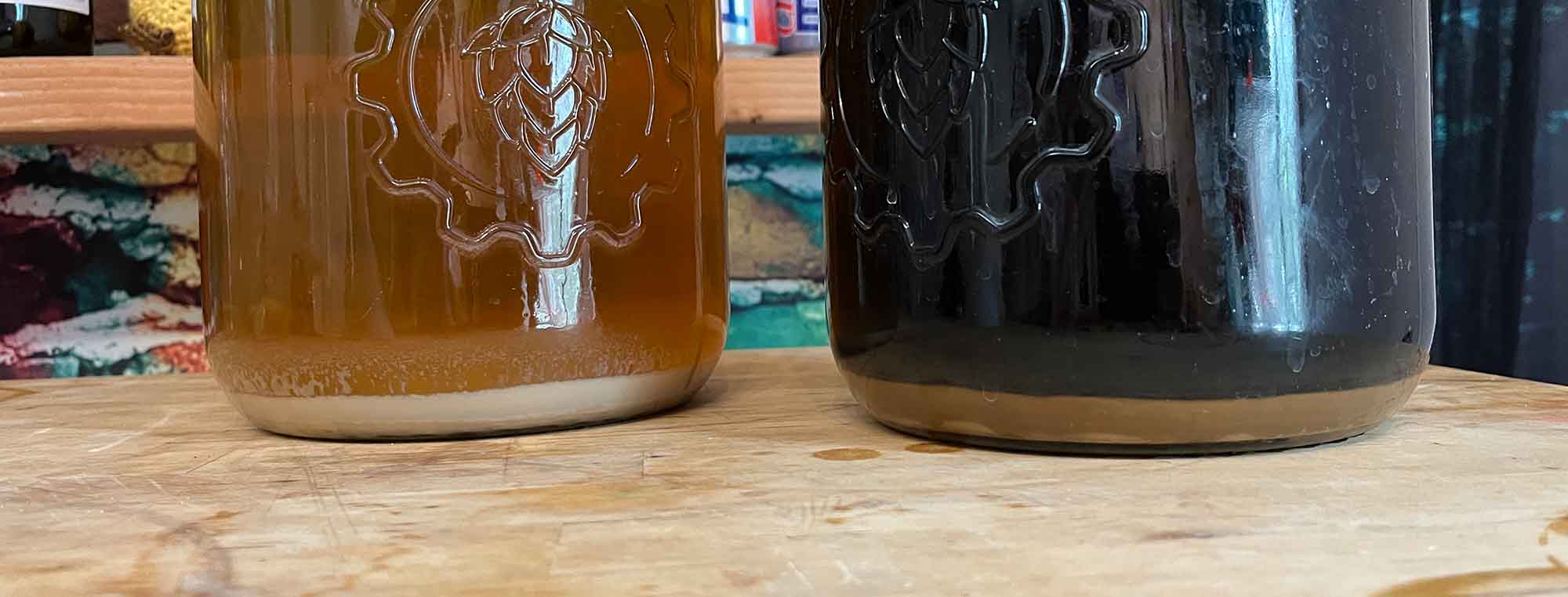
If you make beer, wine, mead, or cider at home, you need a way to measure what is happening during fermentation.
Two common tools can do this:
- A hydrometer.
- A refractometer.
Both tools measure properties of a liquid. Both can help you measure sugar levels before fermentation.
However, they do not work in exactly the same way. For most new homebrewers, a hydrometer is the better first choice. A refractometer can be a useful second tool.

What Does a Hydrometer Do?
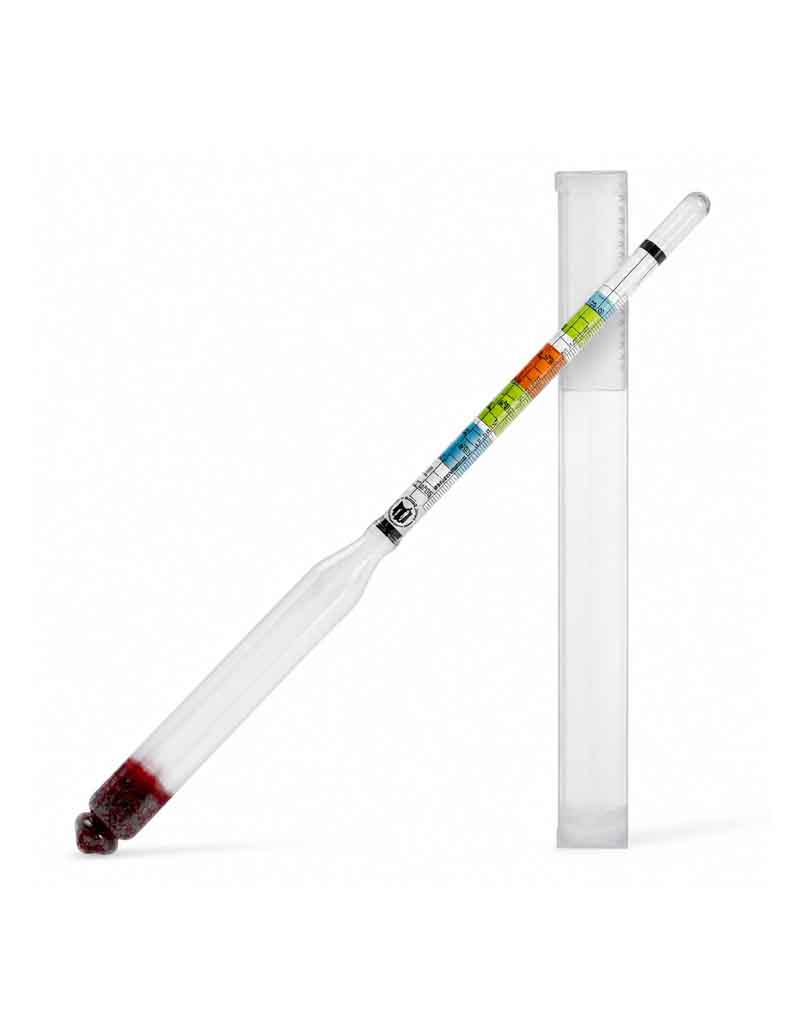
A hydrometer measures the specific gravity of a liquid. Specific gravity tells you how dense the liquid is compared with water.
Before fermentation, dissolved sugar makes wort, must, or juice denser than water. As yeast converts sugar into alcohol and carbon dioxide, the liquid becomes less dense. The specific gravity therefore usually decreases during fermentation.
This makes a hydrometer useful for tracking fermentation.
What Does a Refractometer Do?
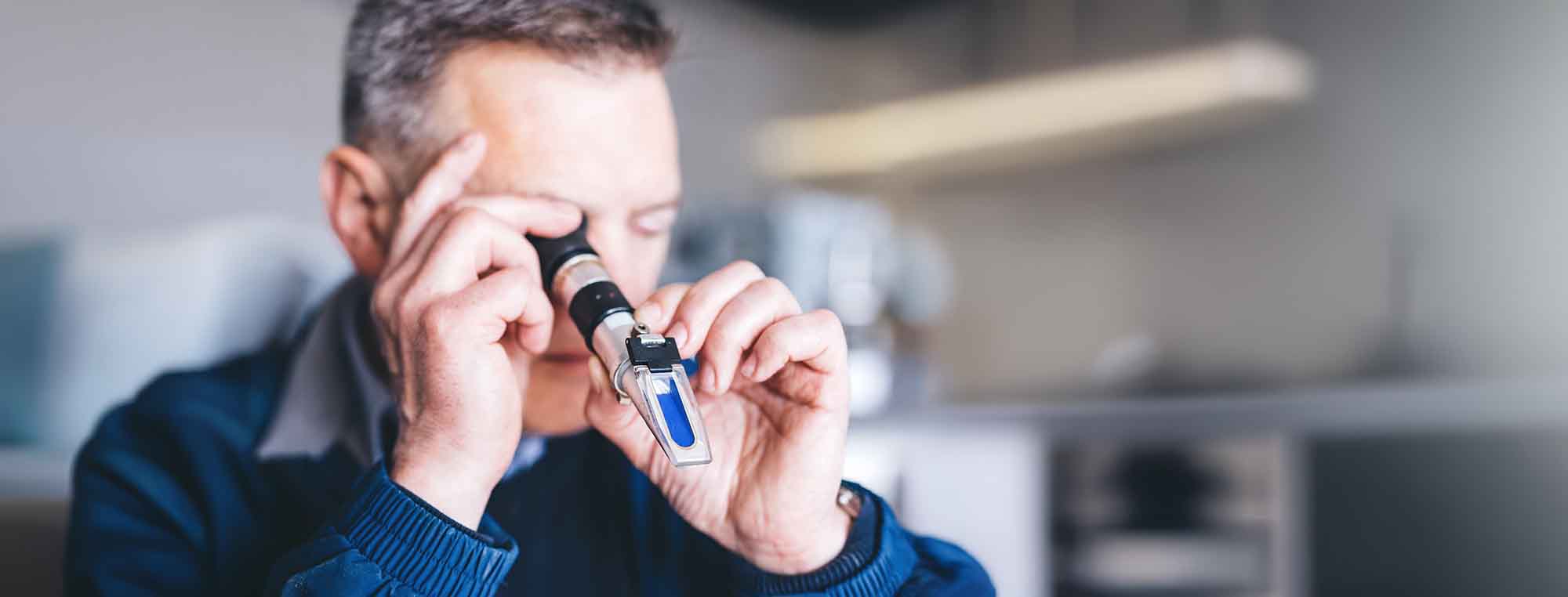
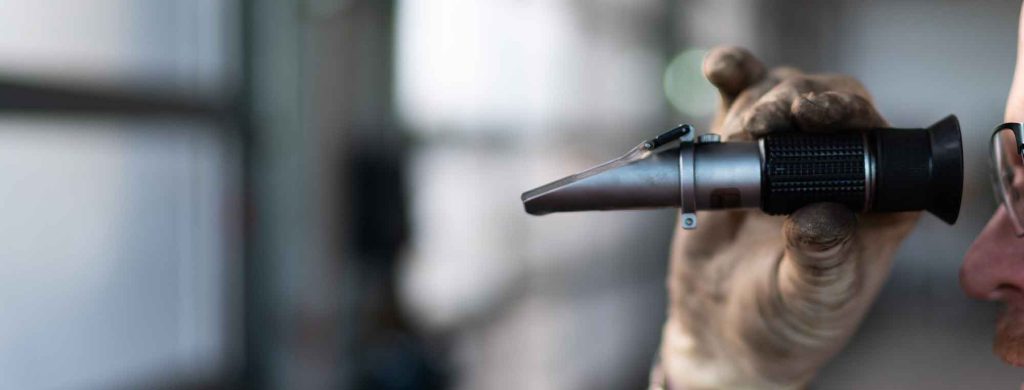
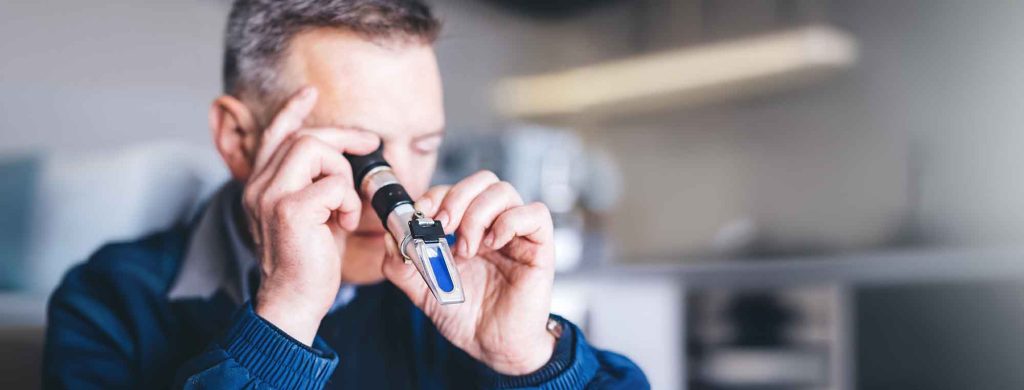
A refractometer measures how light bends when it passes through a liquid. This measurement is called the refractive index.
Brewers use this measurement to estimate the sugar concentration of wort or juice. A refractometer often displays the result as Gravity or Brix. One degree Brix is approximately equal to one percent sugar by weight in a simple sugar-water solution. Wort and juice contain more than sugar. For this reason, Brix is an estimate when used with brewing liquids.
Which One Is Easier to Use?
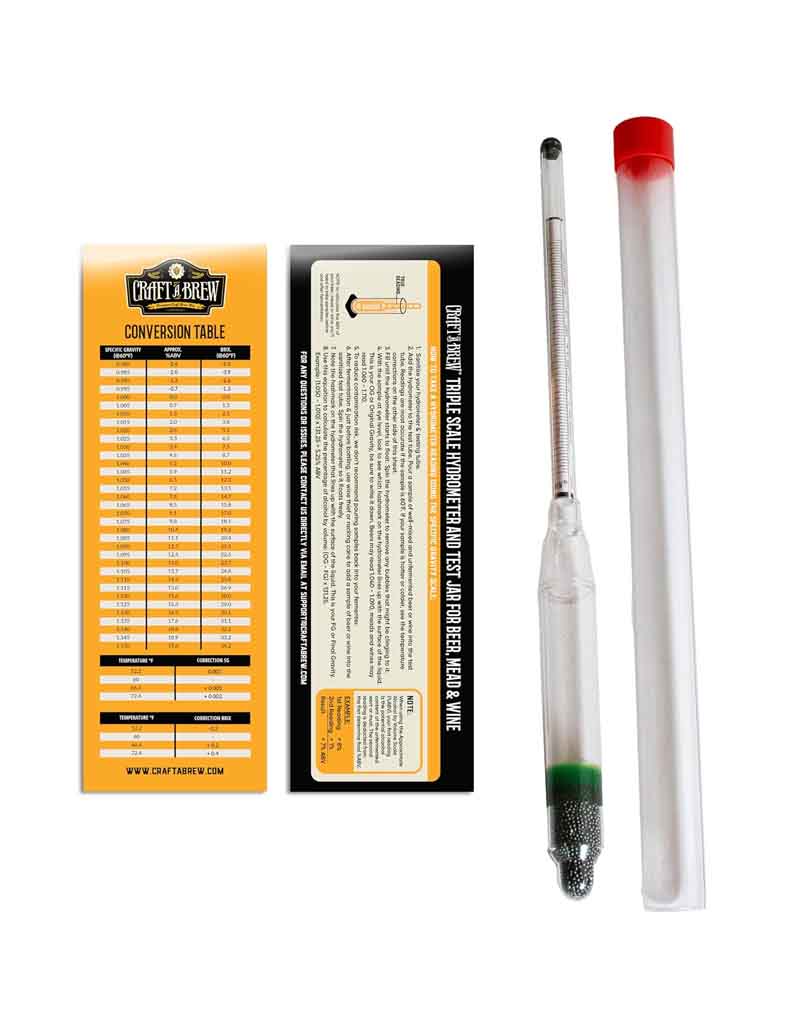
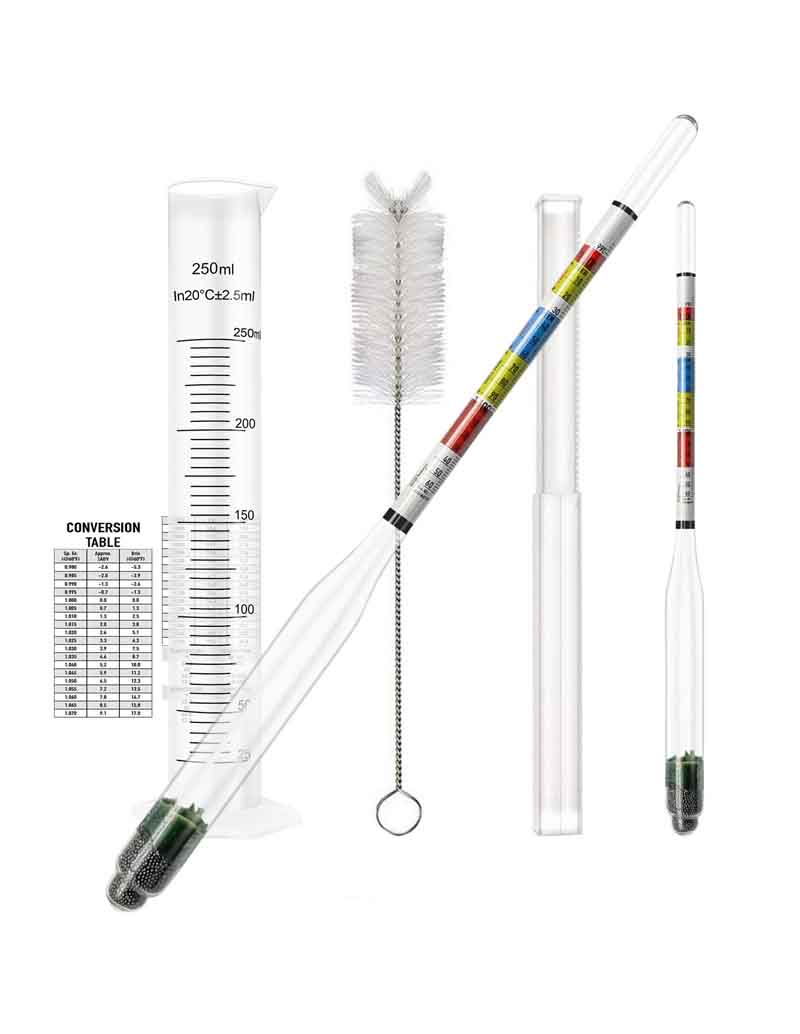
A hydrometer is usually easier for beginners. You put a sample into a test jar. You place the hydrometer into the sample. You read the scale.
A refractometer requires only a few drops. However, the calculations become more complicated after fermentation begins.
For a first brewing tool, the hydrometer is usually simpler.
Why Is a Hydrometer So Useful?
A hydrometer can tell you:
- Original gravity.
- Current specific gravity.
- Final gravity.
- Whether fermentation is progressing.
- Whether fermentation is stable.
- An estimate of alcohol content.
This makes it one of the most useful tools in homebrewing. It is especially important before bottling.
A quiet airlock does not prove that fermentation is complete. Stable hydrometer readings provide much better evidence.
What Is Original Gravity?
Original gravity, or OG, is the specific gravity before fermentation begins. For example, a beer might have an original gravity of 1.050. The yeast then consumes fermentable sugars. As a result, the specific gravity decreases.
The final gravity may be 1.010. The difference between the readings can be used to estimate alcohol content. More on the specifics of Original Gravity in our guide here.
What Is Final Gravity?
Final gravity, or FG, is the specific gravity after fermentation is complete.
A stable final gravity tells you that the yeast is no longer significantly changing the density of the liquid. You should not decide that fermentation is finished because the airlock stopped bubbling.
Take a hydrometer reading. Take another reading days later. If the readings remain stable, you have much better evidence that fermentation is complete.
Can a Refractometer Measure Original Gravity?
Yes. This is one of the best uses for a refractometer. Before fermentation, there is little or no alcohol. The Brix reading can therefore give you a useful estimate of the sugar concentration. You can use the reading to calculate or estimate original gravity.
This is useful for:
- Beer wort.
- Mead must.
- Wine must.
- Cider.
Can a Refractometer Measure Final Gravity?
Yes, but there is an important problem.
Alcohol changes the way light passes through the liquid. This affects the refractometer reading.
A normal Brix reading after fermentation cannot be treated as if the beverage were unfermented. You need a correction calculation.
This is the biggest reason that beginners often find hydrometers easier.
Why Does Alcohol Affect a Refractometer?
A refractometer measures how the liquid affects light. Sugar changes this measurement. Alcohol also changes it.
Before fermentation, sugar is the main factor that matters. After fermentation, alcohol is present. The refractometer cannot automatically know how much of the reading comes from sugar and how much comes from alcohol.
A correction formula uses the original reading and the current reading to estimate the true specific gravity.
Can I Use a Refractometer Without a Correction?
Not reliably after fermentation begins.
A fermented beer, wine, mead, or cider can produce an incorrect result if you simply read the Brix scale. The reading may look reasonable. It may still be wrong.
Use a calculator or brewing software that supports fermented refractometer readings. Enter the original gravity and the current refractometer reading. The software can estimate the current specific gravity.

Is a Hydrometer More Accurate?
Not automatically.
A good hydrometer can be very accurate. A good refractometer can also be very accurate. The tools measure different properties.
The main difference is how the readings work with fermented liquids. A hydrometer directly measures density, while a refractometer measures refractive index.
Alcohol complicates the refractometer calculation.
Which Tool Uses Less Sample?
The refractometer wins easily. A refractometer may need only a few drops. A hydrometer needs enough liquid to float.
This can require a sample of several ounces.
For a five-gallon batch, this is not usually a major problem. For a one-gallon batch, it can be more noticeable, especially if you’re discarding your hydrometer sample. A refractometer can save a lot of sample volume.
Which Tool Is Faster?
A refractometer is usually faster.
Place a few drops on the prism. Close the cover. Look through the eyepiece or read the display.
The result can take only a few seconds. A hydrometer requires enough sample to float the instrument. You also need to account for temperature and wait for the hydrometer to settle.
For frequent measurements, a refractometer can be very convenient.
Which Tool Is Easier to Clean?
A refractometer is usually easier. It uses only a small sample. You can rinse the prism and wipe it clean.
A hydrometer needs a larger sample container. The test jar and hydrometer both need to be cleaned and sanitized.
Neither tool is difficult to clean. The refractometer simply uses less liquid.
Does a Refractometer Need Calibration?
Yes. Many refractometers should be checked with distilled water. Follow the manufacturer’s calibration instructions.
The reading should normally be close to the expected value for water. If it is not, calibrate the instrument before use. Temperature can also affect readings.
Some refractometers have automatic temperature compensation. This does not eliminate the need to follow the manufacturer’s instructions.
Does a Hydrometer Need Calibration?
A hydrometer should also be checked. The scale is normally designed for a particular temperature. This temperature is printed on the hydrometer or listed by the manufacturer.
If the sample is warmer or colder, you may need to apply a temperature correction. Some hydrometers are designed to reduce the need for correction. Always check the specifications for your hydrometer.
What Is Temperature Correction?
Hydrometers are calibrated at a specific temperature.
Liquid density changes with temperature.
A sample that is warmer or colder than the calibration temperature can produce a different reading.
Brewing software and hydrometer correction tables can help.
For the most useful readings, measure the sample temperature and account for it when needed.
Can I Use a Refractometer for Mash and Boil?
Yes. A refractometer can be very useful during brewing.
You can use it to check:
- Mash runoff.
- Pre-boil wort.
- Post-boil wort.
- Original gravity.
Because the wort does not contain significant alcohol before fermentation, the reading is straightforward.
A refractometer is especially useful for all-grain brewers who want to monitor extraction during the mash.
Can I Use a Hydrometer for Mash and Boil?
Yes. However, the sample needs to be cooled to a suitable temperature before you use a typical brewing hydrometer.
A hot wort sample can damage the hydrometer or produce an incorrect reading. This is one area where the refractometer has a major convenience advantage. You can use a refractometer with a small cooled sample.
Do not put hot wort directly onto a refractometer unless the instrument is designed for that temperature.
Which Is Better for Beer?
For a new beer brewer, choose a hydrometer first.
- It is simple.
- It works before fermentation.
- It works after fermentation.
- It can help you determine when fermentation is complete.
A refractometer is an excellent additional tool for brewers who want fast readings during the brewing process.
Many experienced brewers use both.
Which Is Better for Mead?
A hydrometer is usually the better first tool for mead.
Mead can have high starting gravity. It can also have long fermentation times. You will want to monitor specific gravity throughout fermentation.
A refractometer can still be useful. However, the alcohol correction becomes important once fermentation begins.
Which Is Better for Wine?
A hydrometer is also a good first choice for wine. It can measure the starting gravity and fermentation progress.
A refractometer can be useful for measuring grape juice or other must before fermentation. For most home wine makers, a hydrometer provides the simplest method for tracking fermentation.
Which Is Better for Cider?
Both tools can work.
A hydrometer is usually easier for beginners. A refractometer is useful for checking the sugar concentration of fresh juice.
Once fermentation begins, use the appropriate correction method if you use a refractometer.
Can I Calculate Alcohol With a Refractometer?
Yes. You need the original reading and the post-fermentation reading. You then use an appropriate correction formula.
The result is an estimate. Different formulas can produce slightly different results.
For simple homebrewing, a hydrometer is usually easier for alcohol calculations.
Can I Use a Refractometer for a Stuck Fermentation?
Yes, if you use the correct calculation. Read more on whether or not your fermentation is stalled.
A refractometer can help you monitor changes in a fermentation. However, you must account for alcohol. A raw Brix reading is not enough.
If you want the simplest way to determine whether fermentation is stuck, use a hydrometer. Take two readings and compare them. If the specific gravity is changing, fermentation is still active.
Which One Should I Buy First?
For most new homebrewers: buy a hydrometer first.
A basic brewing hydrometer is inexpensive. It can be used for beer, wine, mead, and cider. You can use it throughout fermentation without needing an alcohol correction.
If you later want faster measurements and smaller samples, add a refractometer.

What Equipment Should I Have?
A basic gravity-measuring setup can include:
- A brewing hydrometer.
- A hydrometer test jar.
- A wine thief or sampling tool.
- A refractometer.
- Distilled water for refractometer calibration.
- A thermometer.
- Brewing software or a gravity calculator.
You do not need every item immediately. A hydrometer and test jar are enough for most beginners.
Hydrometer vs. Refractometer
| Feature | Hydrometer | Refractometer |
| Measures | Specific gravity | Refractive index |
| Sample size | Larger | Very small |
| Pre-fermentation | Excellent | Excellent |
| Post-fermentation | Easy | Requires correction |
| Speed | Moderate | Fast |
| Mash monitoring | Good | Excellent |
| Beginner friendly | Excellent | Good |
| Calibration | Temperature dependent | Usually simple |
| Best first tool | Yes | Usually no |
The Bottom Line
A hydrometer and refractometer are both useful brewing tools.
They simply have different strengths.
A hydrometer is the better first choice for most beginners. It is simple to use and works well for measuring fermentation progress.
A refractometer is faster and uses only a few drops. It is especially useful before fermentation and during the brewing process. The main limitation is that alcohol affects refractometer readings.
Once fermentation begins, you need to correct the reading.
If you only want to buy one tool, buy a hydrometer.
If you brew often and want faster measurements, add a refractometer later.
For many serious homebrewers, the best answer is not hydrometer versus refractometer. It is hydrometer and refractometer. Use the refractometer for fast measurements during brewing. Use the hydrometer for simple, reliable fermentation measurements. That gives you the strengths of both tools without making your brewing process more complicated than it needs to be.