Pasteurization can kill yeast and some other microorganisms. It can also make a sweet mead, cider, or wine stable.
However, home pasteurization has serious risks.
For most homebrewers, it is not the best way to stabilize a finished beverage. Commercial producers use controlled equipment for pasteurization, like tunnel pasteurizers.
Homebrewers often use pots, bottles, thermometers, and guesswork. That difference matters.
What Is Pasteurization?
Pasteurization uses heat to reduce microorganisms.
The goal is not to sterilize the beverage. Rather, the goal is to expose the beverage to enough heat for enough time to reduce the target microorganisms.
Heat can also stop yeast from continuing to ferment. This makes pasteurization useful for some sweet beverages. It can seem like a simple solution.
- Ferment the mead or cider.
- Add sugar.
- Bottle it.
- Heat the bottles.
- The yeast dies.
- The beverage stays sweet.
The problem is that every step has variables that can make this process unsafe.
Why Do Homebrewers Pasteurize?
The most common reason is residual sugar.
Suppose you make a cider and want it sweet. The yeast can continue to ferment that sugar. This can create carbonation in a bottle, which can also create excessive pressure.
A brewer may try to solve this problem by pasteurizing the bottles after the yeast has produced some carbonation. This is where the process becomes especially risky.
The Biggest Risk: Exploding Bottles
A sealed bottle can contain a large amount of pressure.
Heating the bottle increases the pressure. If the yeast is still active, fermentation can also increase the pressure. The bottle can fail if the pressure becomes too high.
Glass can break suddenly and violently, which can create sharp pieces of glass.
Hot liquid can also spray from the failed bottle. This is one of the most serious risks of home bottle pasteurization.
Carbonated bottles are especially dangerous
Never assume that a carbonated bottle is safe to heat.
The carbonation already creates pressure. Heating increases that pressure. Residual fermentable sugar can create additional pressure. The result can be a dangerous combination.
This is one reason bottle pasteurization is not a good beginner technique.
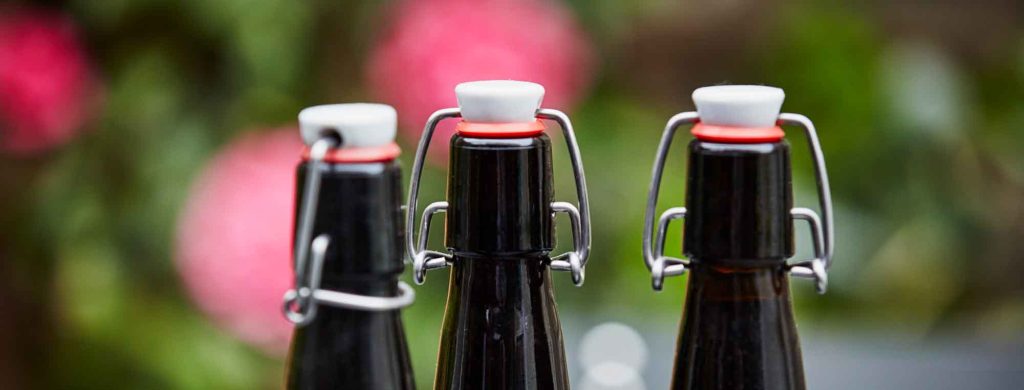
A Bottle Can Fail Without Warning
A bottle does not need to look damaged before it fails.
Small scratches and defects can weaken glass. Different bottles can also have different pressure ratings. A bottle that survives one batch may fail during another batch.
You may not know the exact internal pressure. You may not know the exact temperature of every bottle. Or you may not know how much fermentation is still possible.
These unknowns make the process difficult to control.
Water Temperature Is Not Bottle Temperature
This is another common problem.
A brewer may measure the temperature of the water around the bottles. That does not mean the beverage inside the bottles has reached the same temperature. The beverage takes time to heat, and the center of the bottle can be cooler than the water. For this reason, many people who pasteurize will use an open bottle of cold water in their water bath to get a better gauge of the internal temperature.
Bottle size also affects heating. Starting temperature affects heating. The number of bottles affects heating. The equipment affects heating.
This makes home pasteurization much less precise than it may appear.
Heating Can Cause Thermal Shock
Glass does not always tolerate rapid temperature changes.
A cold bottle placed into very hot water can break. A hot bottle placed into cold water can also break. The risk increases when the glass has scratches or other defects.
A broken bottle in a pot of hot water creates a dangerous situation. You can also lose an entire batch.

Pasteurization Can Damage Flavor
Heat does more than kill microorganisms. It can change the character of the beverage.
This can be especially noticeable in delicate mead, cider, and wine.
Heat can affect:
- Aroma
- Fruit character
- Fresh flavors
- Color
- Oxidation-sensitive compounds
- Volatile aroma compounds
The exact effect depends on the beverage.
A delicate fruit wine may not respond to heat in the same way as a heavily flavored cider. A floral mead can lose some of the aromas that make the honey special. The beverage may remain safe and drinkable.
It may simply taste different.
Heat Can Increase Oxidation Problems
Oxygen is another concern. Heating an open vessel can cause dissolved gases to move out of solution. The beverage can also experience changes in the headspace.
If the bottle contains oxygen, heat does not remove the oxidation risk. Instead, the combination of oxygen and heat can accelerate some unwanted reactions. This can produce stale or dull flavors.
Good packaging and low oxygen exposure are still important after pasteurization.
Pasteurization Does Not Make a Beverage Sterile
Pasteurization is not sterilization.
It reduces microorganisms. It does not guarantee that every microorganism has been destroyed. It also does not protect the beverage from contamination after treatment.
- You still need good sanitation.
- You still need clean bottles.
- You still need clean equipment.
- You still need good packaging practices.
Pasteurization is not a substitute for sanitation.
Pasteurization Does Not Fix an Unfinished Fermentation
This is an important distinction. If your fermentation is still active, you have a stability problem.
Pasteurization may stop the yeast. But it does not tell you how much fermentation has already occurred.
- It does not remove excess pressure that is already in a bottle.
- It does not correct a bottling mistake.
- It does not make an unstable recipe stable.
It also does not replace good fermentation practices.
Bottle Conditioning Makes the Problem Worse
Bottle conditioning uses yeast to produce carbonation. This creates a useful amount of pressure inside the bottle.
The brewer controls the amount of fermentable sugar added for carbonation. If you later heat those bottles, you are heating a pressurized container. That creates additional risk.
A bottle that is safe at room temperature may not be safe when heated. For this reason, homebrewers should be very cautious about heating carbonated bottles.

Do Not Guess When Fermentation Is Finished
A hydrometer is one of the most useful tools for preventing this problem.
Do not decide that fermentation is finished because:
- The airlock stopped bubbling.
- The mead looks clear.
- The cider tastes dry.
- The wine has been fermenting for a certain number of days.
- The yeast has dropped out.
Take gravity readings. A stable gravity reading is much more useful. Two or more matching readings over several days provide much better evidence that fermentation has stopped.
There Are Safer Ways to Make a Sweet Beverage
Pasteurization is not the only way to produce a sweet mead, cider, or wine.
You can allow fermentation to finish and then stabilize the beverage when appropriate.
You can use sulfite and sorbate according to the requirements of the beverage and the product instructions and then sweeten the finished beverage.
You can also use non-fermentable sweeteners when appropriate.
Sorbate and Sulfite Are Not the Same as Pasteurization
Potassium sorbate and sulfite are often called stabilizers. They do not work in the same way as heat.
- Sorbate helps prevent yeast from reproducing.
- Sulfite provides antimicrobial and antioxidant effects.
Neither one should be treated as a magic solution.
They do not remove all microorganisms. They do not make an actively fermenting beverage safe to bottle. And they also must be used correctly.
Follow the product instructions and use appropriate measurements.
Refrigeration Is Not a Permanent Solution
Cold temperatures slow yeast activity. They do not necessarily stop it.
A sweet cider that is stable in the refrigerator can begin fermenting again if it warms. Do not rely on refrigeration to make a fermenting beverage safe for long-term storage at room temperature.
What About Flash Pasteurization?
Commercial producers can use highly controlled pasteurization systems.
These systems can control:
- Temperature
- Heating rate
- Holding time
- Cooling rate
- Product flow
- Packaging conditions
This is very different from putting bottles into a pot of hot water. Commercial processes are designed around the characteristics of the beverage and the packaging. They can also use specialized equipment to monitor the process.
A homebrew pot does not provide the same level of control.
What About Pasteurizing Before Bottling?
This sounds safer because the beverage is not yet sealed. And certainly, it can reduce the risk of exploding bottles during the heating step.
However, another problem appears.
The beverage must still be packaged after heating. That means you must prevent contamination during bottling. You also need to consider oxygen exposure.
If you add fermentable sugar after pasteurization -especially something like raw honey- the yeast may become active again. If you package a sweet beverage without removing or controlling the yeast, fermentation can restart.
The process therefore becomes more complicated than simply heating the finished beverage.

When Does Pasteurization Make Sense?
There are situations where pasteurization can be a useful production method.
It is used by commercial beverage producers. It can be useful when a producer has validated equipment and a controlled process.
It can also be appropriate for experienced homebrewers who understand the risks and have equipment designed for the process. That does not make it the best choice for most homebrewers.
The Better Homebrewing Approach
For most homebrewers, the better process is simpler.
First, make sure fermentation is complete.
Use gravity readings. Do not rely on airlock activity.
Second, decide how you want the finished beverage to taste.
If you want it dry, allow fermentation to finish. If you want it sweet, choose an appropriate stabilization and sweetening method.
Third, package the beverage only when it is stable.
This is especially important for bottles.
Fourth, avoid creating unnecessary pressure.
Do not put fermentable sugar into a bottle unless you understand exactly what the yeast will do with it.
Common Home Pasteurization Mistakes
Heating carbonated bottles
This creates a pressurized container that is also being heated.
It is one of the biggest risks.
Using the wrong bottles
Not all bottles are designed for pressure.
Some bottles are intended only for still beverages.
Using boiling water
Higher temperatures do not automatically make the process better.
They can increase the risk of glass failure and flavor damage.
Heating cold bottles too quickly
Rapid temperature changes can cause thermal shock.
Trusting the water temperature
The temperature of the surrounding water does not prove that the beverage reached the same temperature.
Guessing the fermentation status
An apparently finished fermentation may still have fermentable sugar.
Assuming pasteurization makes poor sanitation acceptable
It does not.
Ignoring oxygen
Heat does not eliminate oxidation problems.
Backsweetening after pasteurizing
Sugars can introduce environmental microbes. Honey is a potentially potent source of wild yeasts.
Treating pasteurization as a shortcut
Pasteurization does not remove the need for proper fermentation and packaging practices.
So, Should You Pasteurize Your Homebrew?
For most homebrewers, no.
Pasteurization can work. The problem is that home pasteurization introduces several risks that can be avoided with better process control. The biggest concern is bottle failure.
Other concerns include thermal shock, hot liquid, flavor damage, oxidation, uneven heating, and incomplete microbial control.
A sweet beverage does not need to be pasteurized simply because it contains sugar. The better solution is to control the fermentation and stabilize the beverage correctly.
The Most Important Rule
Do not use heat to solve a fermentation problem that you can prevent with proper fermentation control.
- Take gravity readings.
- Allow fermentation to finish.
- Use appropriate stabilization methods when needed.
- Package carefully.
If you want carbonated mead, cider, or wine, use a process designed to safely produce carbonation. If you want a sweet still beverage, stabilize it before sweetening. And if you are considering heating sealed bottles to stop fermentation, understand the risks before you start.
For most homebrewers, the safest answer is simple: Skip the pasteurization.