
A bottle capper is a simple piece of equipment, but it has an important job.
It must press a crown cap onto a beer bottle and create a reliable seal.
A good capper should:
- Fit your bottles.
- Fit your crown caps.
- Create an even seal.
- Be easy to use.
- Not damage the bottle.
- Not damage the cap.
- Last for many batches.
For most beginners, there are two main choices: a wing capper or a bench capper.
Both can work very well.
The best choice depends on how often you bottle, what bottles you use, and how much you want to spend.
Check out our article on how to bottle your homebrew if you’re unsure.
The Short Answer
For a beginner who bottles a few batches per year:
Buy a good wing capper.
It is inexpensive, compact, and easy to store.
For someone who bottles frequently or who has mobility issues: buy a bench capper. A bench capper is easier to operate and can provide more consistent results when you cap many bottles.
For most homebrewers, I would choose a bench capper if the additional cost is acceptable. It becomes especially useful when you use different bottle sizes.
Current homebrew suppliers commonly sell both inexpensive wing cappers and adjustable bench cappers.
What Does a Bottle Capper Do?
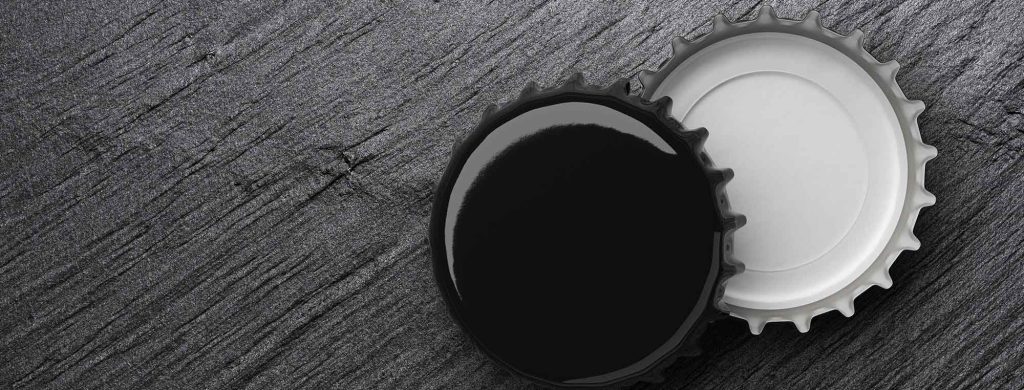
A bottle capper crimps a crown cap around the lip of a beer bottle.
The cap contains a liner. The capper presses the cap down and crimps the metal around the bottle opening. The result should be an airtight seal.
This is important for bottle-conditioned beer. The yeast produces carbon dioxide inside the sealed bottle, so the bottle needs to hold that pressure.
The cap also needs to prevent the carbon dioxide from escaping. A poor seal can produce flat beer.

Wing Cappers vs. Bench Cappers
The two most common types are:
- Wing capper
- Bench capper
The basic difference is how they hold the bottle during capping.
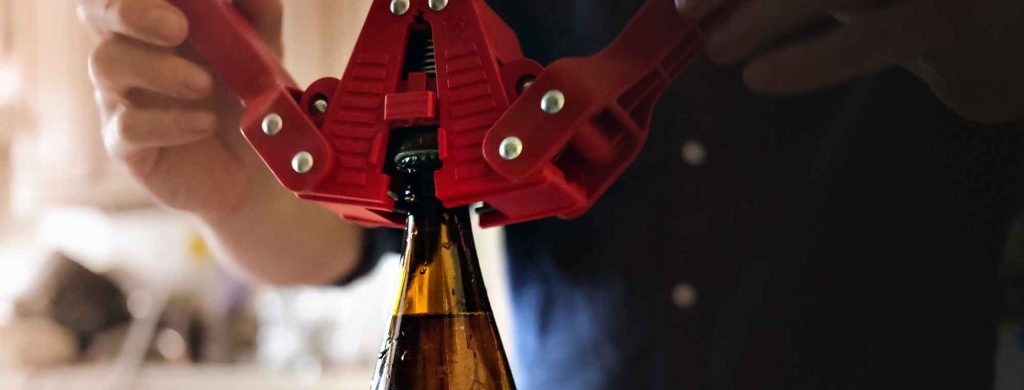
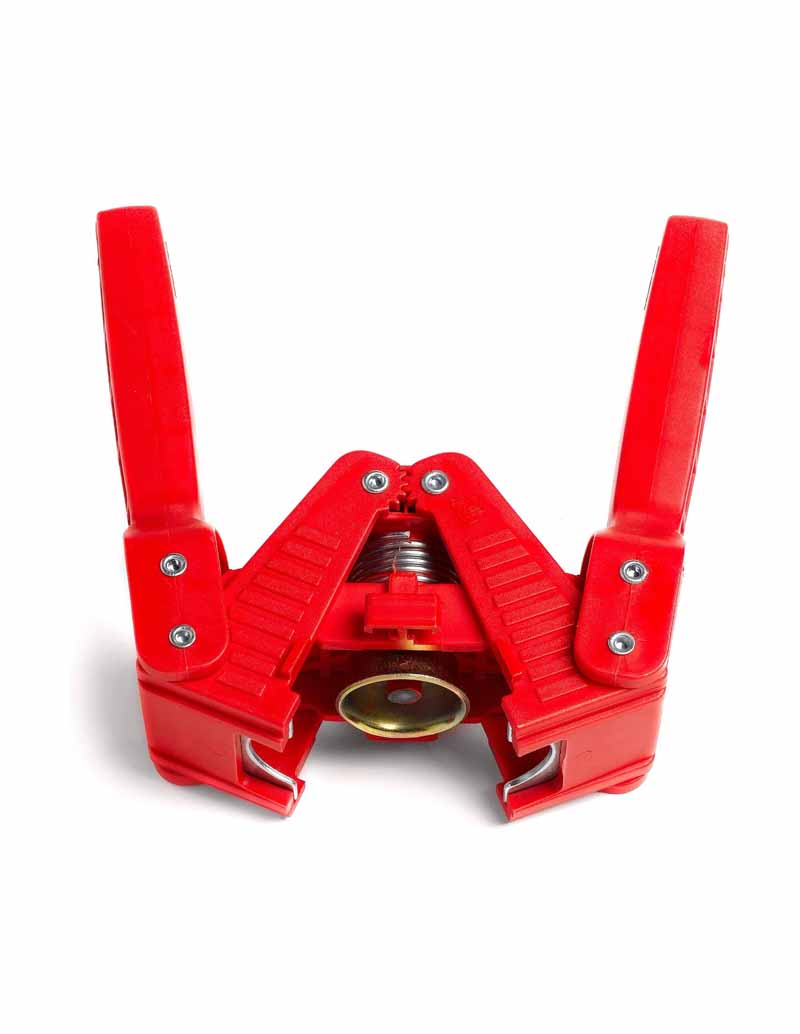
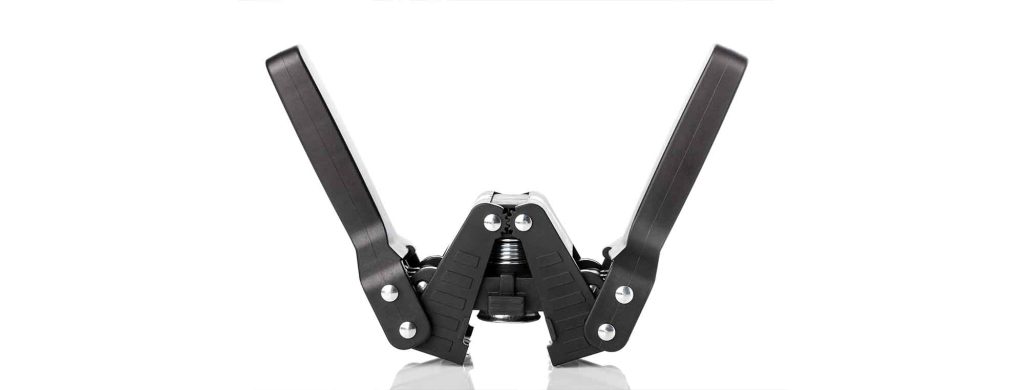
A wing capper uses two arms that grip the bottle neck.
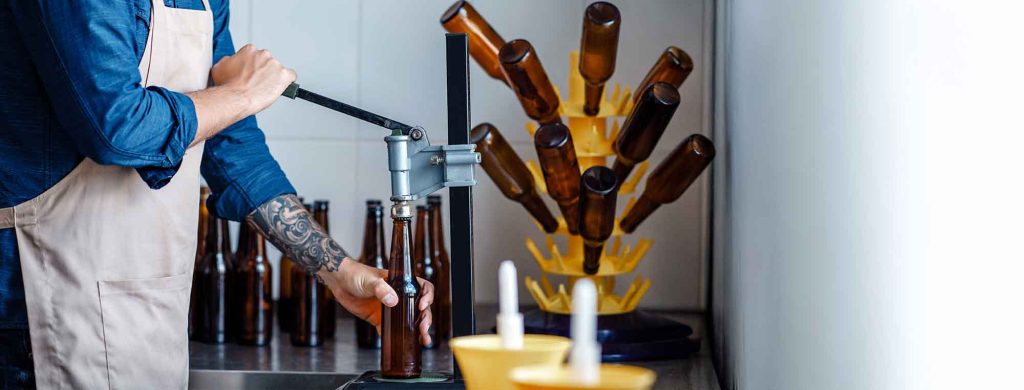
A bench capper holds the bottle on a base while a lever presses the cap down from above.
This makes bench cappers less dependent on the shape and position of the bottle neck.
| Feature | Wing Capper | Bench Capper |
| Price | Low | Moderate to high |
| Storage | Excellent | Requires more space |
| Portability | Excellent | Good |
| Ease of use | Good | Excellent |
| Speed | Good | Excellent |
| Mixed bottle sizes | Limited | Excellent |
| Hand fatigue | Moderate | Low |
| Best for beginners | Yes | Yes |
| Best for frequent bottling | Good | Excellent |
Best Wing Capper for Beginners
A wing capper is the classic homebrew bottle capper.
It has two handles.
You place a crown cap on the bottle and position the capper over the bottle. You press down on the handles. The capper crimps the crown around the bottle. A good wing capper is inexpensive and can last for many batches.
The Emily-style wing capper is a common example. Current homebrew retailers sell versions for around the 15–20 range, depending on the model and retailer.
The Kelly is a current wing-style option with a magnetic cap holder. A magnet is useful because it holds the crown cap in the capping head while you position it on the bottle.
What Is a Magnetic Bottle Capper?
Many wing and bench cappers have a magnet inside the capping bell.
The magnet holds the crown cap in position, which is convenient. You can put the cap into the capper before positioning the capper over the bottle. It is not necessary for a good seal – it is simply a useful feature.
Advantages of a Wing Capper
Wing cappers have several advantages.
They Are Cheap
A basic wing capper can cost considerably less than a good bench capper.
They Are Small
You can keep one in a drawer or brewing equipment box.
They Are Portable
You can use one almost anywhere.
They Are Simple
There are few parts to understand.
They Are Good for Occasional Bottling
If you make five gallons every few months, a wing capper may be all you ever need.
Disadvantages of a Wing Capper
Wing cappers also have limitations.
The biggest limitation is the way they grip the bottle. The metal jaws need to contact the correct part of the bottle neck. Some bottle shapes work better than others.
A standard long-neck beer bottle is usually an easy match. Some short, wide, or unusual bottles can be more difficult.
This is one reason bench cappers are more versatile.
What Is a Bench Bottle Capper?
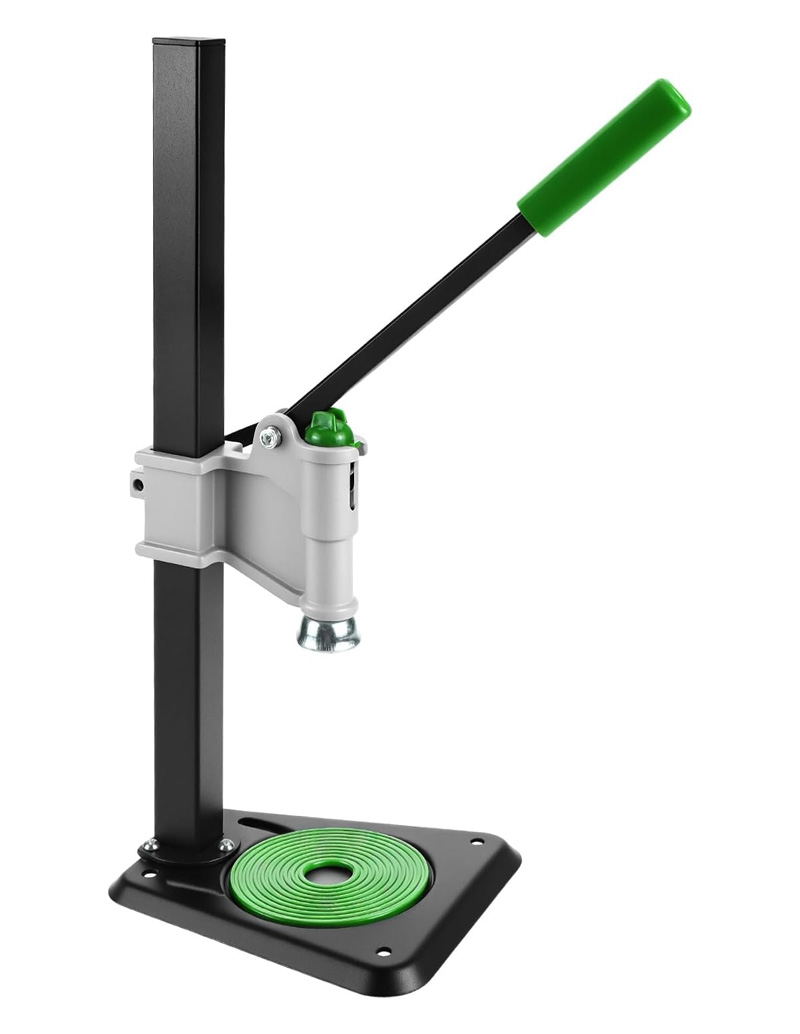
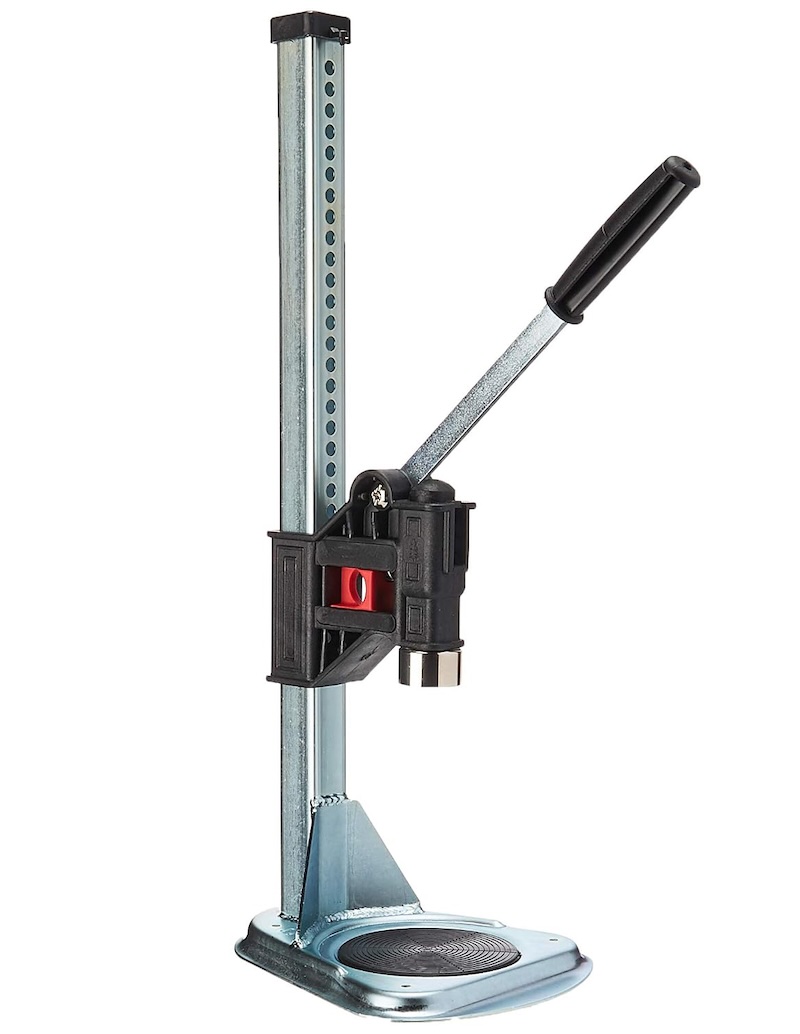
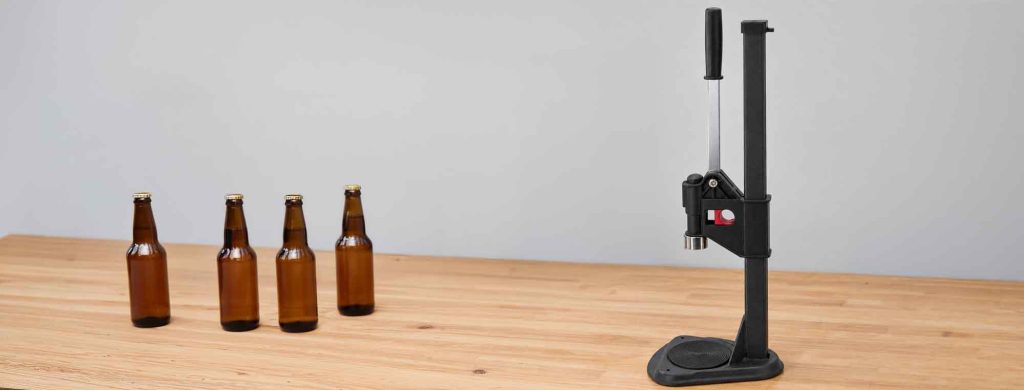
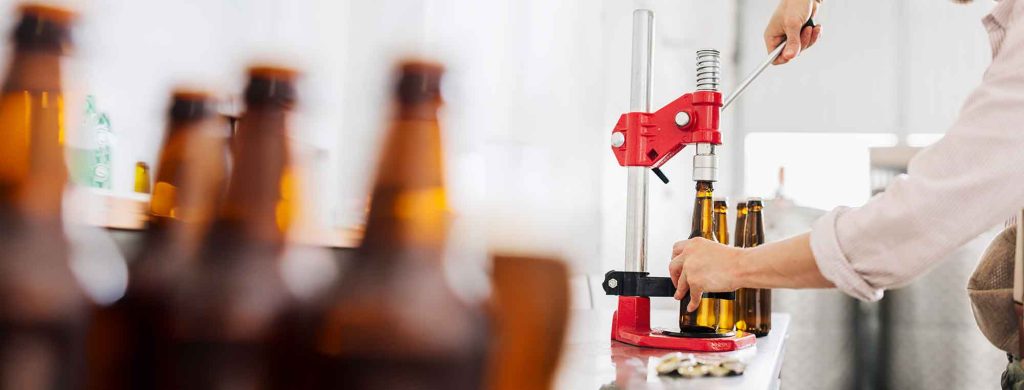
A bench capper has a base, vertical support, adjustable capping head, and lever.
You put the bottle on the base. You put the crown cap on the bottle (or in the bell if it is magnetic). You pull the lever. The capping head crimps the cap. The process is very simple.
The head can often be adjusted for different bottle heights.
Why Are Bench Cappers Better for Different Bottles?
A wing capper needs to grip the bottle neck.
A bench capper does not use the same neck-gripping system. Instead, the bottle sits underneath the capping head.
This makes bench cappers useful for:
- 12-ounce bottles
- 16-ounce bottles
- 22-ounce bottles
- 750-mL bottles
- Many European-style bottles
- Other compatible bottle shapes
The exact range depends on the capper.
Many adjustable bench models are designed to accommodate a wide range of bottle heights.
Best Bench Capper for Homebrewers
If you bottle frequently, a bench capper is usually the better investment.
One good example is the Colt Strong. It has a reinforced construction and an adjustable head. The adjustment mechanism makes it easier to accommodate different bottle sizes.
Another option is the Kegland Bench Bottle Capper. The Kegland model uses a lever mechanism and is designed for repeatable capping.
What Is the Ferrari Super Agata?
The Ferrari Super Agata is another well-known style of bench capper.
It uses a spring-mounted capping head. The head can be adjusted for different bottle heights. A magnet holds the crown cap in place.
Homebrew retailers continue to sell this style of capper, and long-time homebrewers commonly recommend the Super Agata for its adjustability and ease of use.
Wing Capper vs. Bench Capper: Which Should You Buy?
The answer depends on your brewing habits.
Buy a Wing Capper If:
- You are new to homebrewing.
- You bottle a few times per year.
- You use standard long-neck beer bottles.
- You have limited storage space.
- You want to spend as little as possible.
Buy a Bench Capper If:
- You bottle several batches per year.
- You bottle large batches.
- You use different bottle sizes.
- You want faster bottling.
- You want to reduce hand fatigue.
- You want an easier one-handed operation.
What Is the Best Cheap Bottle Capper?
A basic wing capper is the best choice for a low-cost setup. There is little reason for a beginner to spend $100 or more on a capper. A basic wing capper can perform the same fundamental job. The difference is convenience, versatility, and construction.
Current homebrew retailers list basic wing cappers at roughly $13–23, while common bench cappers are often around $40–60. Prices change, so compare current prices before buying.
What Is the Best Bottle Capper for a 5-Gallon Batch?
For one 5-gallon batch at a time: wing capper.
A typical 5-gallon batch may require about 50–55 12-ounce bottles. That is a manageable number of bottles for a wing capper.
If you bottle several 5-gallon batches each month, a bench capper becomes much more attractive.
What Is the Best Bottle Capper for Frequent Bottling?
Bench capper.
The biggest advantage is not necessarily the quality of the seal. A good wing capper can create a perfectly good seal.
The advantage is convenience.
You can place the bottle under the capping head, pull the lever, and move to the next bottle. This can reduce hand fatigue during a large bottling session. Bench cappers are also generally more stable and faster to use than traditional double-handle cappers.
Does a Bench Capper Make Better Beer?
No. A $50 bench capper does not make better beer than a $17 wing capper.
Both can create a proper seal.
The important factors are:
- Correct bottle
- Correct crown cap
- Correct capper
- Proper cap placement
- Even crimp
- Good bottle condition
The capper is a packaging tool. It does not improve the beer itself.
Can a Bottle Capper Break Bottles?
Yes. Glass can break if you apply excessive force or use a bottle that does not work correctly with the capper.
Inspect bottles before use. Do not use bottles with:
- Cracks
- Chips
- Damaged rims
- Severe scratches
- Other visible damage
Do not force a bottle into a capper. If the capper does not fit the bottle correctly, stop and find out why.
Can a Wing Capper Break a Bottle?
It can.
The problem is usually not that wing cappers inherently break bottles. The problem is incorrect positioning, incompatible bottles, excessive force, or damaged glass.
A wing capper needs its jaws to contact the bottle neck correctly. If they do not, the force can be applied in the wrong place.
Are Bench Cappers Safer?
A good bench capper can make the capping process more controlled.
The bottle sits on a stable base. The capping head moves vertically. This can reduce some of the positioning problems associated with wing cappers.
However, a bench capper can still break a bottle if you use the wrong bottle, wrong cap, or incorrect adjustment.
How Do I Use a Wing Capper?
The process is simple.
Step 1: Put the Crown Cap on the Bottle
Place a new crown cap on the bottle opening.
Step 2: Position the Capper
Place the capper over the crown.
Make sure it is centered.
Step 3: Check the Bottle
Make sure the jaws are contacting the correct part of the bottle neck.
Step 4: Press the Handles
Apply even pressure to both sides.
Do not jerk the handles.
Step 5: Release the Capper
Lift the capper away.
Step 6: Inspect the Cap
The cap should sit evenly around the bottle.
If it is crooked, loose, or badly deformed, do not assume it is good.
Replace the cap.
How Do I Use a Bench Capper?
Step 1: Adjust the Height
Set the capping head for your bottle.
Step 2: Place the Crown Cap
Put a new crown cap on the bottle.
Step 3: Place the Bottle
Put the bottle directly underneath the capping head.
Step 4: Lower the Lever
Pull the lever down smoothly.
Step 5: Release
Raise the lever.
Step 6: Inspect the Cap
Make sure the cap is evenly crimped.
The entire process takes only a few seconds.
What Size Crown Caps Do I Need?
The most common crown cap size for homebrew in the United States is 26 mm.
Some bottles use 29 mm crowns. These larger crowns are common on some European-style and Belgian bottles.
Do not buy a capper without checking which crown caps your bottles require. And some cappers can be converted between sizes, though some cannot.
Can One Capper Use 26-mm and 29-mm Caps?
Some can.
This is a useful feature if you use different bottles. For example, some wing cappers can be converted by changing or reversing parts. Some bench cappers accept interchangeable capping bells.
However, do not assume that every model supports both sizes. Check the manufacturer’s specifications before buying.
What Is a Capping Bell?
The capping bell is the part of the capper that presses against the crown cap. It determines the crown size the capper can use.
Some cappers have replaceable bells. This is useful if you want to use more than one crown size.
Does the Capper Need a Magnet?
No. A magnet is a convenience feature.
It holds the cap in place before you put it on the bottle. It does not create the seal.
If two otherwise similar cappers are available, I would choose the magnetic version. But do not pay a large premium just for a magnet.
Should I Buy a Metal or Plastic Wing Capper?
Either can work.
A quality nylon wing capper can be durable and inexpensive. The important components are the capping jaws and bell. A cheap capper with poor alignment is not a bargain.
A good wing capper can last for years. Homebrewers report using quality wing cappers for hundreds or even thousands of bottles.
How Important Is the Bottle Capper Material?
For an occasional brewer, not very important.
For someone who bottles frequently, construction becomes more important.
Look for:
- Strong jaws
- Good alignment
- Smooth operation
- Durable springs
- Replaceable parts when available
- A stable base for bench models
Do not assume that heavier automatically means better.
Should I Bolt a Bench Capper to a Table?
You can.
Some bench cappers can be used free-standing. Others work better when secured to a work surface. Bolting or clamping the capper can improve stability.
If you do not want a permanent installation, mount it to a small board. You can then clamp or hold the board when bottling and store it when finished. Homebrewers commonly use this approach with bench cappers.
Do I Need an Electric Bottle Capper?
No. For homebrewing, manual cappers are normally sufficient.
Electric capping machines exist, but they are designed for much higher packaging volumes. There is little reason for a typical homebrewer to spend hundreds of dollars on one.
What About Pneumatic Cappers?
The same principle applies.
Pneumatic cappers are useful for commercial or high-volume packaging. They are unnecessary for a typical 5-gallon homebrew batch.
What About a Counter-Pressure Bottle Filler?
A counter-pressure bottle filler is not a bottle capper. It fills bottles with already-carbonated beer.
You still need an appropriate closure system. For normal bottle-conditioned homebrew, you do not need a counter-pressure filler.
Do I Need a Special Capper for Cider or Mead?
Not if you are using standard beer bottles and crown caps.
The capper does not care whether the bottle contains:
- Beer
- Cider
- Mead
- Kombucha
- Carbonated fruit wine
It cares about the bottle and crown cap. However, the bottle itself must be appropriate for the pressure created by the beverage.

What About Belgian Bottles?
Belgian-style bottles can use different crown sizes and closure systems.
Some use:
- 26-mm crowns
- 29-mm crowns
- Corks
- Wire cages
Check the bottle before buying your capper. A standard 26-mm crown capper is not automatically compatible with a 29-mm crown.
Can I Cap Wine Bottles With a Beer Bottle Capper?
Normally, no.
Traditional wine bottles use corks or screw closures. A beer bottle capper is designed for crown caps.
Some specialized bottles can accept crown caps, but the bottle must be designed for that closure.
What Is the Best Bottle Capper for Mead?
It depends on the mead.
For standard beer bottles:
Wing capper or bench capper.
For 29-mm crown-cap bottles:
A compatible capper with a 29-mm bell.
For corked Champagne-style bottles:
Use the appropriate corking and wire-hood equipment.
Do not try to force a beer crown onto a bottle designed for a cork.
What Is the Best Bottle Capper for Cider?
For bottle-conditioned cider:
A standard beer bottle capper is an excellent choice. A wing capper works well for standard pry-off beer bottles. A bench capper is better if you use many different bottles.
What Is the Best Bottle Capper for Kombucha?
If you use crown-cap bottles:
Use a crown-cap bottle capper.
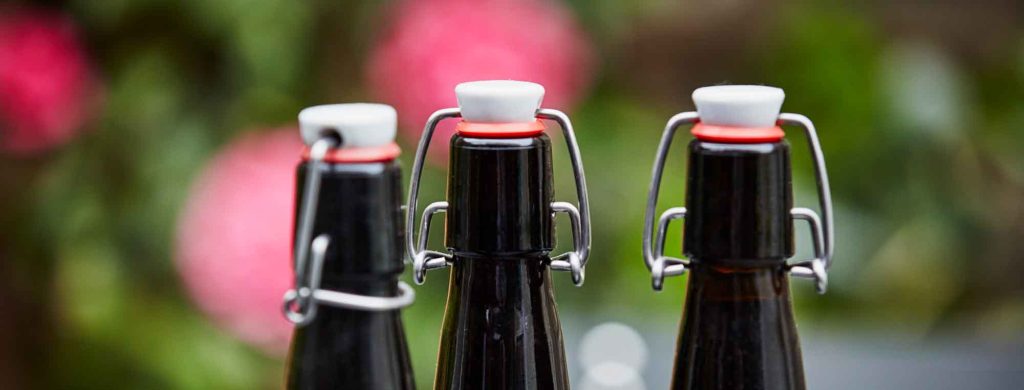
If you use swing-top bottles:
You do not need a capper.
The important issue with kombucha is not the capper. It is managing carbonation. Kombucha can continue fermenting after packaging. Use appropriate bottles and do not allow pressure to build to unsafe levels. It’s up to you to decide which bottles are best for your homebrew.
How Do I Know if a Cap Is Properly Sealed?
Look at the crimp around the bottle.
It should be:
- Even
- Tight
- Centered
- Free of major dents
- Firmly attached
A cap that rocks easily is suspicious. If you see an obvious uneven crimp, replace it.
What Causes Leaking Bottle Caps?
Possible causes include:
- Incorrect bottle
- Incorrect crown size
- Damaged cap
- Incorrect capper adjustment
- Crooked cap
- Uneven crimp
- Damaged bottle rim
- Poor-quality cap
Do not automatically blame the capper. The bottle and crown cap are part of the sealing system.
Can I Reuse Bottle Caps?
No. Use a new crown cap each time.
A used cap has already been crimped. It may not form a reliable seal when reused.
Do I Need to Sanitize the Bottle Capper?
The capper itself normally does not need the same level of sanitation as equipment that contacts the beer.
The capper should be clean. Do not allow dirty equipment to contact the inside of the cap or bottle opening.
Clean the capping bell when necessary. The crown cap and bottle are the parts that directly affect the finished beer.

Common Bottle Capper Mistakes
Buying the Wrong Crown Size
Check whether you need 26-mm or 29-mm caps.
Using a Twist-Off Bottle
A standard crown capper is not designed to convert every twist-off bottle into a reliable homebrew bottle.
Use pry-off bottles.
Using Damaged Bottles
Discard chipped or cracked bottles.
Capping Crooked
Center the cap before crimping.
Applying Excessive Force
If the capper requires extreme force, stop.
Check the bottle, cap, and capper adjustment.
Using the Wrong Bench Height
Adjust the capping head before starting.
Ignoring an Uneven Crimp
Remove the cap and replace it.
Buying a Huge Capper for Occasional Bottling
A large bench capper is unnecessary if you bottle two batches per year.
Best Bottle Capper by Situation
First-Time Homebrewer
Wing capper
Low cost and simple.
Apartment Brewer
Wing capper
It takes almost no storage space.
Five-Gallon Brewer
Wing capper or bench capper
Both are good choices.
Frequent Brewer
Bench capper
The convenience becomes worthwhile.
Brewer With Many Bottle Sizes
Adjustable bench capper
The adjustable head is a major advantage.
Brewer Using 29-mm Crowns
Capper with a compatible 29-mm bell
Check the specifications before purchasing.
Brewer Who Hates Bottling
Bench capper
It will not make bottling fun, but it can make the repetitive part much easier.
My Recommended Setup for a Beginner
If you are starting from scratch, I would buy:
A magnetic wing capper + 26-mm crown caps + standard brown pry-off bottles.
That gives you everything you need without spending much money. If you already know you will bottle frequently, skip the wing capper and buy a bench model.
My Recommended Upgrade
If you start with a wing capper and later decide that you hate bottling, do not immediately buy a more expensive wing capper.
Move to a bench capper.
That is where the larger improvement occurs.
The advantage is that you can:
- Cap faster.
- Use less hand force.
- Handle more bottle shapes.
- Adjust for different bottle heights.
- Keep the bottle stable.
- Produce consistent crimps.
Do You Really Need an Expensive Bottle Capper?
No. A $15–20 wing capper can be enough for years. A $40–60 bench capper can be a worthwhile upgrade.
A $100+ professional-style capper is difficult to justify for someone who bottles only a few 5-gallon batches per year.
The best capper is the one that matches your bottling volume.
The Bottom Line
Best for most beginners: a magnetic wing capper.
It is inexpensive, compact, and works very well with standard pry-off beer bottles.
Best for frequent bottlers: an adjustable bench capper.
It is faster, easier to operate, and more versatile with different bottle sizes.
Best premium choice: a heavy-duty bench capper.
This makes sense for a brewer who bottles often and wants equipment that will tolerate years of use. The most important thing is not the brand printed on the capper. Make sure the capper matches your bottles and crown caps.
For standard American beer bottles, that usually means a 26-mm crown cap and a compatible capper. If you use Belgian or European-style bottles, check whether you need 29-mm crowns or another closure system.
And remember: the capper does not make the seal by itself. The bottle, crown cap, and capper must work together. Use undamaged pressure-rated bottles, new crown caps, and a capper that fits the bottle correctly.
For someone starting homebrewing today, I would spend the extra money on a good magnetic wing capper and put the savings toward better bottles, sanitizer, and a good hydrometer. If you eventually find yourself capping dozens of bottles every few weeks, that is the time to upgrade to a bench capper.