
One of the most important things a new homebrewer can learn is how to tell when fermentation is finished.
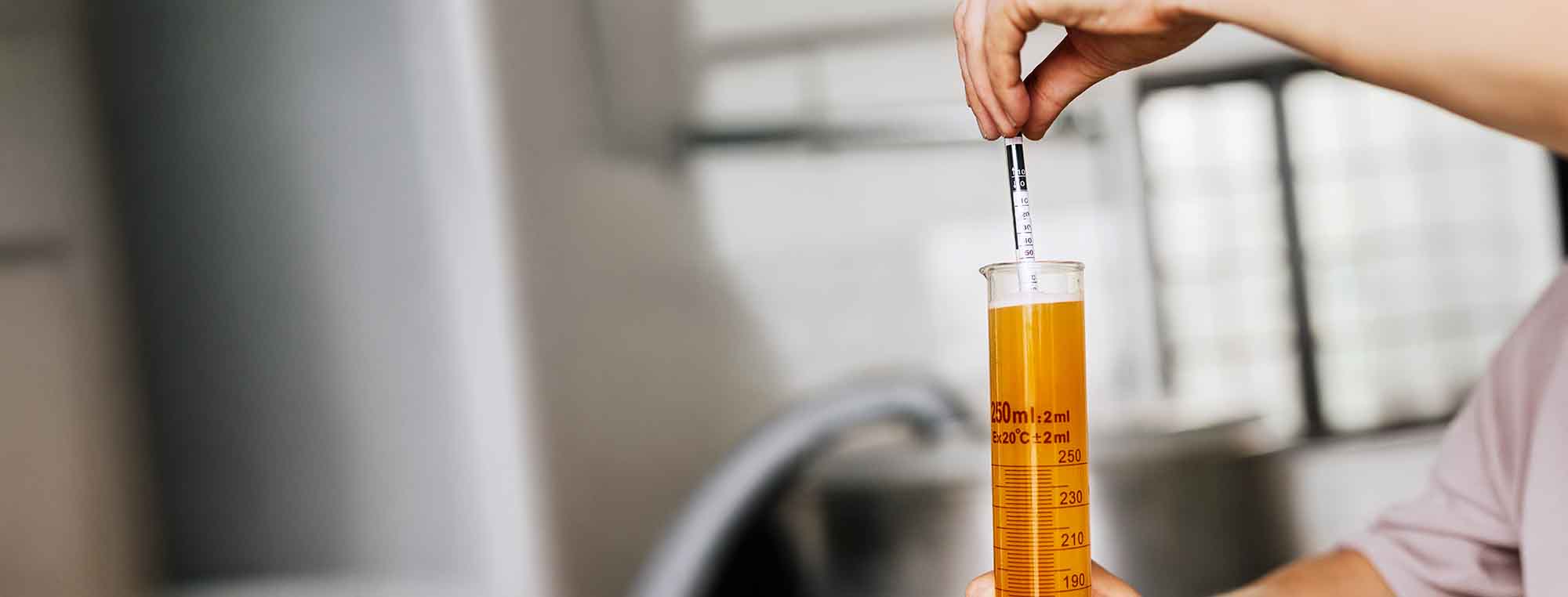
The short answer is: Use a hydrometer.
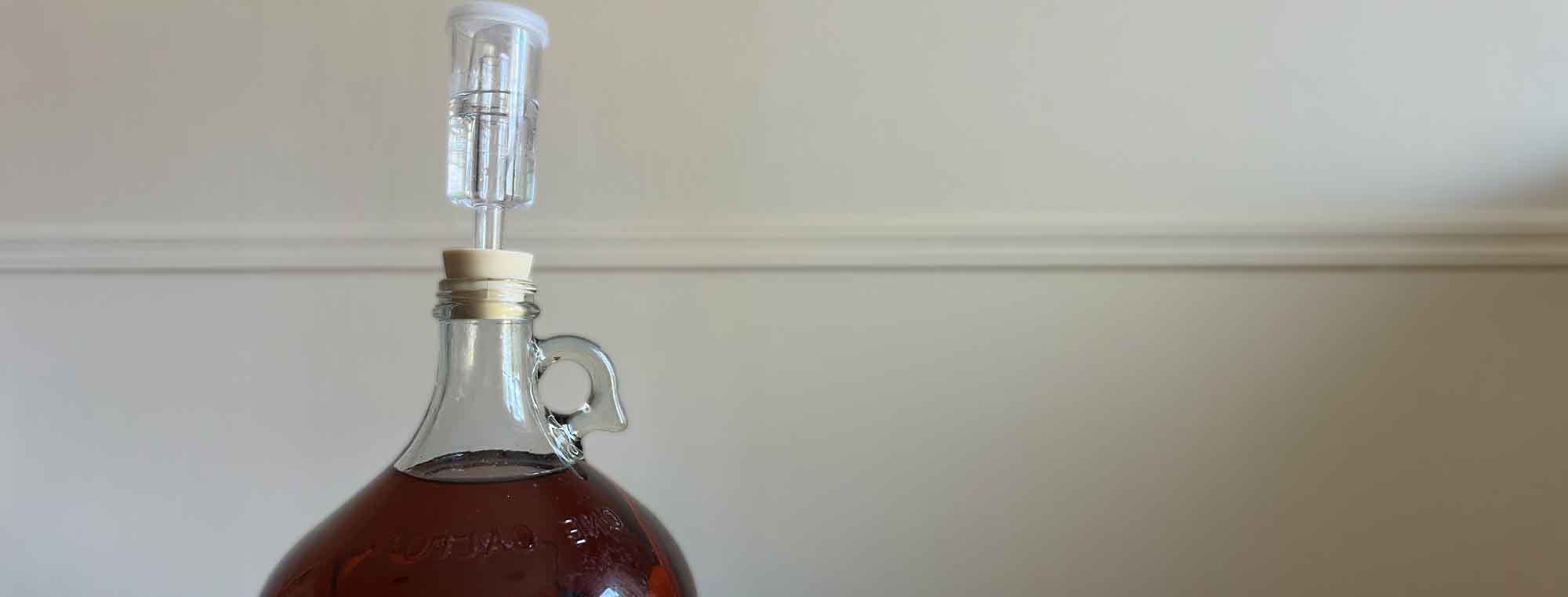
Do not use the airlock. Do not use the number of days since you added the yeast. Do not use the appearance of the brew.
A hydrometer gives you a measurement of the specific gravity of the beer. When the specific gravity remains the same over multiple measurements, fermentation is usually finished. This matters because packaging beer before fermentation is complete can cause serious problems.
What Happens During Fermentation?
Yeast consumes fermentable sugar in the wort.
The yeast produces:
- Alcohol
- Carbon dioxide
- Heat
- Other fermentation compounds
As the yeast consumes sugar, the specific gravity of the beer decreases.
For example: Original gravity: 1.050
A few days later: Specific gravity: 1.025
Later: Specific gravity: 1.010
The decreasing gravity shows that fermentation is progressing. Eventually, the gravity stops changing. That is the important measurement.

What Is Specific Gravity?
Specific gravity measures the density of the liquid compared with water.
Water has a specific gravity of approximately: 1.000
Unfermented wort contains dissolved sugar. This makes it denser than water.
A beer might begin at: 1.050
After fermentation, much of the sugar has been consumed.
The beer may finish at: 1.010
The change in gravity provides useful information about fermentation.
What Is Original Gravity?
Original gravity is usually abbreviated OG. It is the specific gravity of the wort before fermentation. Take an OG reading after the wort is prepared and before fermentation begins.
For example: OG: 1.060
This number gives you the starting point for tracking fermentation. Read our full article on Original Gravity.
What Is Final Gravity?
Final gravity is usually abbreviated FG. It is the specific gravity after fermentation has finished.
For example:
OG: 1.060
FG: 1.010
The difference between these numbers shows how much the gravity changed during fermentation. It can also be used to estimate alcohol content. We also have a complete article on Final Gravity.

How Do I Know Fermentation Is Finished?
The most reliable simple method is:
- Take a hydrometer reading.
- Wait two or three days.
- Take another hydrometer reading.
- Compare the readings.
If the readings are the same, fermentation is probably finished.
For example:
Monday: 1.010
Thursday: 1.010
The stable reading indicates that fermentation has likely finished.
If the readings are:
Monday: 1.015
Thursday: 1.010
Fermentation was still occurring.
Wait and measure again.
Why Can’t I Use the Airlock?
An airlock is useful, but it is not a fermentation meter. Airlock activity can stop for many reasons.
For example:
- Fermentation may be finished.
- The fermenter may not be airtight.
- CO₂ may be escaping somewhere else.
- The temperature may have changed.
- The airlock may not be installed correctly.
A bubbling airlock also does not prove that fermentation is active. Gas can escape for reasons unrelated to current yeast activity. Use a hydrometer for fermentation measurements.
What If My Airlock Has Stopped Bubbling?
Do not automatically assume fermentation is finished.
Take a gravity reading. Wait two or three days. Take another reading.
If the gravity is stable, fermentation is likely finished. If the gravity continues to decrease, fermentation is still occurring.
What If My Airlock Is Still Bubbling?
Do not assume that fermentation is unfinished simply because the airlock is bubbling. Some CO₂ can remain dissolved in the beer. Changes in temperature can also cause CO₂ to leave the beer.
A small amount of bubbling does not necessarily indicate active fermentation. Check the gravity.

How Many Days Does Fermentation Take?
There is no universal fermentation time. A typical ale may reach its final gravity within several days. However, the beer may need additional time for the yeast to clean up fermentation byproducts. Some beers take much longer.
Fermentation time depends on:
- Yeast strain
- Yeast health
- Original gravity
- Fermentation temperature
- Yeast quantity
- Wort composition
- Nutrient availability
- Beer style
Do not package beer based only on a calendar.
Is Seven Days Enough?
Sometimes.
Sometimes it is not.
A beer can finish fermenting in less than seven days. Another beer may require several weeks. Seven days is not proof of completion. The hydrometer determines whether the gravity is stable.
What About the Two-Week Rule?
Some homebrewers leave beer in the primary fermenter for approximately two weeks before packaging. This can work for many beers.
However, two weeks is not a measurement. A beer can finish sooner. A beer can also need more time. Use the two-week period as a general schedule, not as proof that fermentation is complete.
What Is a Normal Final Gravity?
There is no single final gravity that applies to every beer.
For example, one beer may finish at: 1.006
Another may finish at: 1.012
Still another may finish at: 1.020
The expected final gravity depends on the recipe and yeast. A beer with many unfermentable sugars may naturally finish at a higher gravity.
What If My Final Gravity Is Higher Than Expected?
A high final gravity does not automatically mean that fermentation has failed.
Possible causes include:
- Recipe composition
- Yeast strain
- High mash temperature
- Low yeast attenuation
- High original gravity
- Fermentation temperature
- Yeast health
The important question is whether the gravity is stable. If the beer has remained at the same gravity for several days, fermentation may be finished.
What If My Gravity Is Still Decreasing?
If the gravity is decreasing, fermentation is not finished. Wait.
Take another reading later. Do not bottle beer while the gravity is still falling. This is particularly important for bottle-conditioned beer.

Why Is Bottling Too Early Dangerous?
Yeast produces CO₂ when it consumes fermentable sugar. A beer that is still fermenting contains fermentable sugar. If you bottle it, the yeast can continue fermenting inside the sealed bottle. This creates additional CO₂.
Too much pressure can cause:
- Excessive carbonation
- Beer spraying from the bottle
- Leaking caps
- Broken bottles
In severe cases, bottles can fail under pressure. Always confirm that fermentation is complete before bottling.
What Is Bottle Conditioning?
Bottle conditioning is a method of carbonating beer. The brewer adds a measured amount of fermentable sugar before bottling. The yeast consumes the sugar inside the sealed bottle. The yeast produces CO₂. The CO₂ dissolves into the beer. This creates carbonation.
Because the beer is intentionally given additional fermentable sugar, it is especially important to confirm that primary fermentation is complete first.
Can I Take a Hydrometer Reading Without Wasting Beer?
You need to remove enough beer to float the hydrometer. That sample can be discarded. You can also taste it.
Do not return the sample to the fermenter unless you’re confident in your sanitizing practices. The sample has been exposed to the environment and brewing equipment. Returning it can create an unnecessary contamination risk if everything wasn’t sanitized well. This is more likely in beer than in mead, wine, or cider.
How Much Beer Does a Hydrometer Sample Use?
The exact amount depends on the hydrometer and test jar. Most standard brewing hydrometers require several ounces. This is a small amount compared with a full batch – especially if making five gallons or more.
The information gained is much more valuable than the small amount of beer used for the sample, which is why many beer brewers don’t return the sample to the fermenter.
How Do I Take a Hydrometer Reading?
A basic process is:
- Clean the hydrometer.
- Sanitize the hydrometer.
- Clean and sanitize the test jar.
- Take a beer sample.
- Fill the test jar.
- Place the hydrometer into the liquid.
- Spin it gently.
- Allow it to settle.
- Make sure it does not touch the container.
- Read the scale at eye level.
- Record the result.

Why Should I Spin the Hydrometer?
Small bubbles can attach to the hydrometer. These bubbles can affect the reading. A gentle spin can help remove them.
Do not spin the hydrometer aggressively. Most brewing hydrometers are made of glass and they can break.
What About Temperature?
Hydrometers are calibrated at a specific temperature.
Common calibration temperatures include:
- 60°F
- 68°F
Check your hydrometer. A sample that is significantly warmer or colder than the calibration temperature can produce an inaccurate reading. Cool a hot sample before measuring it. Never put a glass hydrometer into boiling wort.
What If I Use a Refractometer?
A refractometer can measure sugar concentration with only a few drops of liquid. This is convenient. However, alcohol changes refractometer readings.
Once fermentation has started, you need an appropriate correction calculation. A hydrometer is simpler for most beginners because it can directly measure the specific gravity of fermented beer.
Can I Tell by Looking at the Beer?
Appearance can provide clues. You may see:
- Krausen falling
- Yeast settling
- Clearer beer
- Less foam
- Less activity
These signs can indicate that fermentation is slowing. They do not prove that fermentation is finished. A beer can look finished while the gravity continues to decrease.
Use a hydrometer.
Does Clear Beer Mean Fermentation Is Finished?
No. Clear beer can still contain fermentable sugar. Some beers naturally remain cloudy even after fermentation is complete.
Clarity and fermentation completion are different measurements.
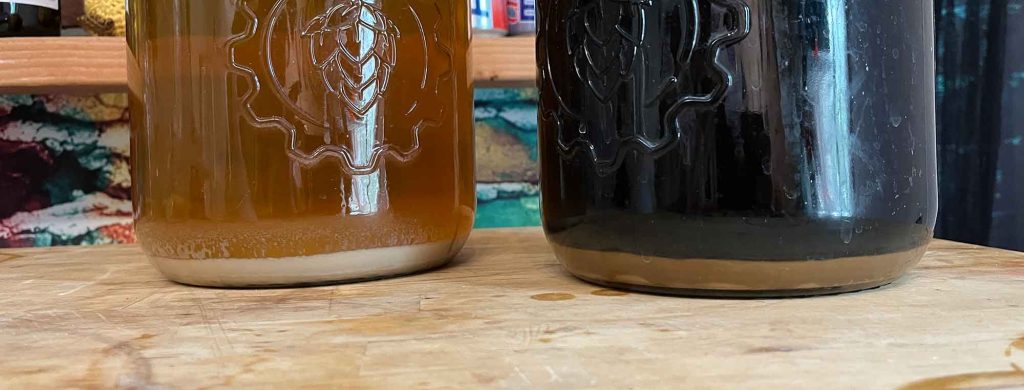
Does Sediment Mean Fermentation Is Finished?
No. Yeast settling to the bottom is normal. It does not prove that the yeast has stopped working.
There can still be active yeast in the beer. Check the gravity.
What If There Is No Krausen?
Not every fermentation produces a large krausen. Some yeast strains produce little visible foam. Fermentation can still be active.
Do not use krausen as your primary fermentation indicator.
What If My Fermenter Is Completely Quiet?
A quiet fermenter can mean that fermentation is complete.
It can also mean:
- The fermenter is leaking CO₂.
- The temperature changed.
- Fermentation stalled.
- The airlock is installed incorrectly.
Take a gravity reading.
What Is a Stalled Fermentation?
A stalled fermentation occurs when yeast stops fermenting before reaching the expected final gravity.
For example: OG: 1.070
The beer falls to: 1.035
Then remains at: 1.035 for several days.
If this is significantly higher than the expected final gravity, fermentation may have stalled. Do not bottle the beer simply because the gravity stopped changing. Investigate the cause first.
What Can Cause a Stalled Fermentation?
Possible causes include:
- Fermentation temperature is too low.
- Yeast health is poor.
- Yeast quantity was insufficient.
- Original gravity was very high.
- Yeast has reached its alcohol tolerance.
- The wort does not contain enough nutrients.
- The recipe contains many unfermentable sugars.
The correct solution depends on the cause.

Should I Add More Yeast?
Not automatically. First, confirm the gravity.
Then evaluate:
- Fermentation temperature
- Yeast strain
- Original gravity
- Recipe composition
- Fermentation history
Adding more yeast is not always necessary.
Should I Shake the Fermenter?
Avoid shaking a beer that is near the end of fermentation. Introducing oxygen after fermentation can cause oxidation. Oxidized beer can develop stale or cardboard-like flavors. Use appropriate fermentation practices instead.
Should I Stir the Beer?
Usually not. If fermentation appears stalled, do not immediately stir the beer. First determine why fermentation stopped. Unnecessary stirring can introduce oxygen.
Can I Move the Fermenter?
You can move it if necessary. However, avoid unnecessary movement.
Moving the fermenter can disturb the yeast and sediment. If you need to move it before taking a gravity reading, move it carefully and allow the beer to settle before taking the sample.
How Often Should I Check Gravity?
You do not need to check gravity every day. A practical approach is:
First reading: Near the expected end of fermentation.
Second reading: Two or three days later.
If the readings are identical, fermentation is probably finished. If they differ, wait and measure again.
How Long Should the Readings Be Stable?
There is no universal requirement. A common homebrewing practice is to confirm that the gravity remains unchanged for two or three days. The exact interval can depend on the beer and fermentation.
The key concept is: The gravity must be stable.
What If My Gravity Changes by 0.001?
Small differences can result from:
- Temperature
- Reading technique
- Hydrometer accuracy
- Bubbles
- Sampling differences
A change of 0.001 does not always mean that fermentation is actively continuing. Use consistent measurement methods. If you see a clear downward trend, continue waiting.
Can I Bottle If the Gravity Is Stable but Higher Than Expected?
This requires more caution. A stable gravity may mean fermentation is complete. It may also mean fermentation has stalled.
Compare the gravity with:
- The recipe’s expected final gravity
- The yeast manufacturer’s attenuation range
- The original gravity
- The ingredients used
If the final gravity is unexpectedly high, investigate before bottling.
What About Beer With Lactose?
Lactose is a milk sugar that most brewing yeast cannot ferment. A beer containing lactose can therefore finish at a higher gravity.
This does not automatically indicate a problem. Recipe ingredients affect final gravity.
What About Extract Beer?
Extract beers can sometimes finish differently from all-grain beers. The type of malt extract and recipe affect the final gravity. Do not assume that an extract beer must reach a particular number. Measure it.
What About High-Gravity Beer?
High-gravity beer can take longer to ferment. Do not rush it. Measure the gravity.
If it is still decreasing, allow fermentation to continue. If it becomes stable but remains much higher than expected, investigate for a possible stalled fermentation.
What About Mead, Cider, and Wine?
The same basic principle applies. Use gravity measurements to monitor fermentation.
For example:
Mead
OG: 1.100
FG: 1.010
Cider
OG: 1.050
FG: 1.000
Fruit wine
OG: 1.090
FG: 0.995
The exact values vary widely. The important measurement is the change in gravity and whether the gravity has stabilized.
What If I Am Making a Sweet Beer?
A sweet beer may intentionally finish at a higher gravity. Do not assume that a high final gravity means the beer is unfinished.
The recipe may contain:
- Unfermentable sugars
- Lactose
- Specialty malts
- Other ingredients that increase final gravity
A stable gravity is still important.

What If I Want to Add Fruit After Primary Fermentation?
If you plan to add fruit during secondary fermentation, take a gravity reading before the addition. Fruit contains fermentable sugar. The gravity may decrease again after fruit is added.
Do not assume that the original fermentation is the final fermentation. Wait until the gravity is stable again before packaging.
What If I Add Sugar?
Adding fermentable sugar can restart fermentation.
This can happen with:
- Fruit
- Honey
- Table sugar
- Fruit juice
- Priming sugar
Any time you add fermentable sugar, consider whether additional fermentation will occur.
What If I Add Priming Sugar?
Priming sugar is intentionally fermentable. You add it immediately before bottling to create carbonation.
Primary fermentation must be complete first. Do not use priming sugar to compensate for an unfinished fermentation.
How Do I Know When Bottle Conditioning Is Finished?
Bottle conditioning is different from primary fermentation.
After bottling:
- Store the bottles according to the recipe and yeast requirements.
- Allow time for carbonation to develop.
- Chill a bottle.
- Open it carefully.
- Check the carbonation.
Bottle conditioning often takes approximately one to two weeks, but it can take longer. Temperature affects carbonation.
Can I Bottle Beer Without Taking a Gravity Reading?
You can. However, you are taking an unnecessary risk.
The beer may look finished. The airlock may be quiet. But the yeast may still be fermenting.
A hydrometer reading provides useful information. For the cost of a hydrometer, it is one of the easiest safety checks in homebrewing.

A Simple Fermentation Checklist
Before packaging:
- Fermentation has been active.
- Krausen has fallen.
- The beer has reached the expected fermentation stage.
- A hydrometer reading has been taken.
- A second reading was taken two or three days later.
- The readings are stable.
- The final gravity is reasonable for the recipe.
- No additional fermentable ingredients were recently added.
If these conditions are met, fermentation is likely complete.
What If I Am Not Sure?
Wait.
There is very little benefit to rushing fermentation. A few additional days in the fermenter is usually less risky than bottling too early. If you are uncertain, take another gravity reading later. Do not bottle based on a guess.
The Bottom Line
The best way to know when fermentation is finished is to measure the specific gravity with a hydrometer.
The basic process is:
Take a reading → wait two or three days → take another reading.
If the gravity remains the same, fermentation is probably finished.
- The airlock can stop bubbling before fermentation is complete.
- The beer can look clear while fermentation continues.
- Krausen can disappear while yeast is still active.
- A calendar cannot tell you whether fermentation is finished.
A stable gravity reading gives you much better information. This is especially important before bottling.
When in doubt, wait and measure again. A few extra days in the fermenter are much better than exploding bottles.