A hydrometer is one of the most useful tools you can own as a homebrewer.
It helps you measure the amount of dissolved sugar in beer, cider, mead, and wine.
This lets you answer important questions:
- How much sugar is in the wort?
- How much alcohol might the finished beer contain?
- Is fermentation finished?
- Did the yeast reach the expected final gravity?
- How much alcohol does the finished beverage contain?
For most homebrewers, the best choice is a standard brewing hydrometer with a specific-gravity scale.
A traditional glass brewing hydrometer is accurate and inexpensive.
A polycarbonate hydrometer is a better choice if you are concerned about breaking glass.
A refractometer is an excellent alternative for measuring wort before fermentation. However, a refractometer requires correction after fermentation because alcohol changes the reading.
One important warning:
Do not confuse a brewing hydrometer with a proofing or alcohol hydrometer. They measure different things.
The Short Answer
For a beginner, buy a:
0.990–1.170 specific-gravity brewing hydrometer.
Look for a model that has:
- Specific gravity scale
- 0.001 graduations
- Temperature information
- Food-safe construction
- Easy-to-read markings
If you want maximum durability, choose polycarbonate.
If you want the traditional and often least expensive option, choose glass.
If you want a compact instrument that needs only a small sample, consider a refractometer.
For a beginner who wants one simple tool, however, a standard brewing hydrometer remains the best choice.
What Is a Brewing Hydrometer?
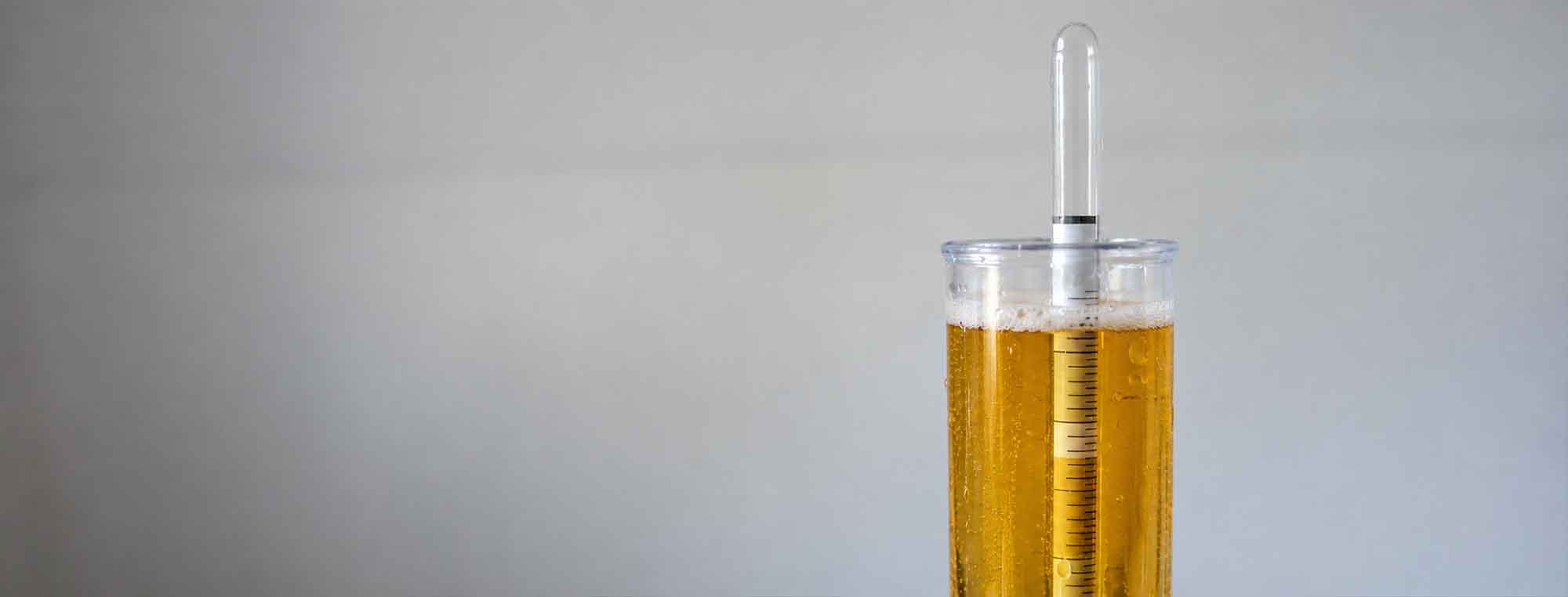
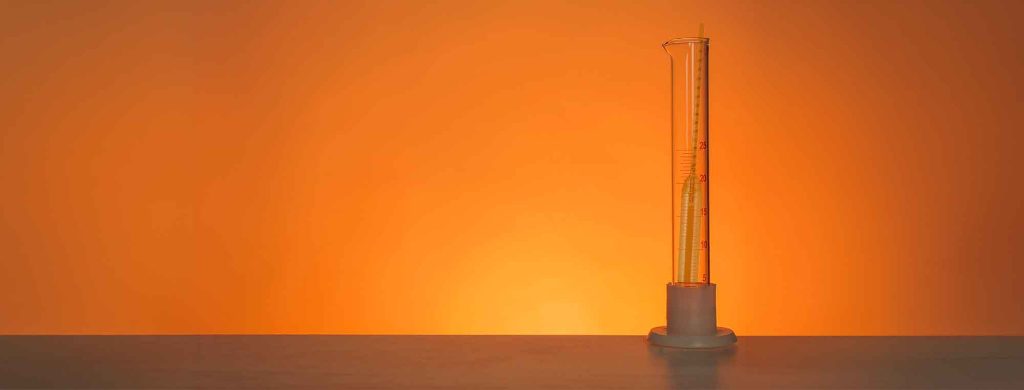
A hydrometer is a floating instrument that measures the density of a liquid. A brewing hydrometer normally measures specific gravity, or SG.
Water has a specific gravity of approximately:
1.000
A sugary wort is denser than water.
For example, a beer wort might have an original gravity of:
1.050
As yeast consumes the sugar, the liquid becomes less dense.
The finished beer might have a final gravity of:
1.010
The difference between the original and final gravity can be used to estimate alcohol content.
Why Do Homebrewers Need a Hydrometer?
A hydrometer gives you information that you cannot get from looking at the fermenter.
You may see bubbles in the airlock. You may see yeast at the bottom. You may see the beer becoming clearer. None of these observations tells you exactly how much sugar remains.
A hydrometer can.
This makes it one of the best tools for understanding fermentation.
What Is Original Gravity?
Original gravity, or OG, is the specific gravity of the wort or must before fermentation.
For example:
OG = 1.050
This tells you how dense the liquid was before yeast converted sugar into alcohol. Your recipe may give you an expected OG. Measuring it lets you compare your actual result with the recipe. See our full article on Original Gravity.
What Is Final Gravity?
Final gravity, or FG, is the specific gravity after fermentation.
For example:
FG = 1.010
The yeast has consumed much of the fermentable sugar. The difference between OG and FG provides useful information about fermentation. We have a comprehensive article on Final Gravity as well.
How Do You Calculate ABV With a Hydrometer?
A simple approximation is:
ABV = (OG − FG) × 131.25
For example:
OG = 1.050
FG = 1.010
The calculation is:
(1.050 − 1.010) × 131.25 = 5.25% ABV
This is an estimate.
More advanced alcohol calculations can account for additional factors.
What Is the Best Hydrometer Range for Beer?
For most beer brewing, a hydrometer covering approximately: 0.990–1.170 SG is a useful range.
This covers most beers a beginner is likely to make. Some high-gravity beers can exceed this range.
If you regularly make very strong beer, check the specifications before buying.
What Is the Difference Between a Brewing Hydrometer and a Proofing Hydrometer?
This is extremely important.
A brewing hydrometer is designed to measure specific gravity.
A proofing hydrometer is designed to measure alcohol concentration in a distilled spirit.
They are not interchangeable.
A proofing hydrometer is sometimes called an:
- Alcoholmeter
- Proof and Tralle hydrometer
- Spirit hydrometer
It is designed for a liquid that is primarily a mixture of ethanol and water. Beer, wine, cider, and mead contain much more than ethanol and water.
They contain:
- Sugars
- Acids
- Proteins
- Minerals
- Flavor compounds
- Other dissolved substances
These compounds affect density.
A proofing hydrometer therefore does not provide a useful direct alcohol reading for fermented beverages.
Why Can’t I Use a Proofing Hydrometer for Beer, Mead, Cider, or Wine?
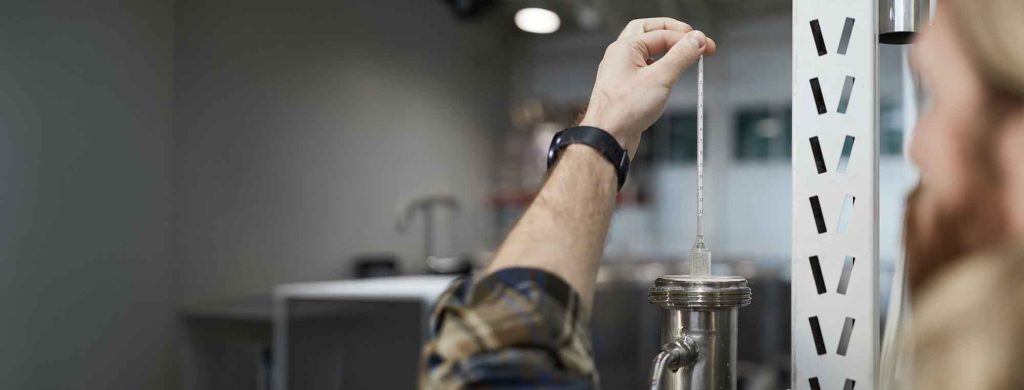
A proofing hydrometer assumes a relatively simple ethanol-and-water mixture. Beer is much more complicated.
For example, a beer can have:
5% ABV
and a specific gravity of:
1.010
A proofing hydrometer is not designed to interpret that mixture. It may show a value near zero or another misleading result. That does not mean the beer contains no alcohol. Rather, it means you are using the wrong instrument.
When Should I Use a Proofing Hydrometer?
A proofing hydrometer is useful for measuring the alcohol concentration of distilled spirits after distillation.
Examples include:
- Vodka
- Whiskey
- Rum
- Brandy
The spirit must generally be free of significant sugar and other dissolved materials for the alcoholmeter scale to provide a meaningful reading.
For beer, cider, mead, and wine:
Use a brewing hydrometer.
Brewing Hydrometer vs. Proofing Hydrometer
| Feature | Brewing Hydrometer | Proofing Hydrometer |
| Primary use | Beer, wine, cider, mead | Distilled spirits |
| Typical scale | Specific gravity | Alcohol % / proof |
| Measures SG | Yes | Usually no |
| Measures finished beer ABV directly | No | No |
| Useful for beer | Yes | No |
| Useful for distilled spirits | Not ideal | Yes |
Do not buy an alcoholmeter because you see “alcohol” on the package.
If you are brewing beer, you want a specific-gravity hydrometer.

Glass vs. Polycarbonate Hydrometers
The traditional brewing hydrometer is made from glass.
Modern alternatives are available in polycarbonate and other durable materials.
Both can work well.
The main difference is durability.
Glass Hydrometers
Glass hydrometers are common because glass provides excellent transparency and chemical resistance.
Advantages include:
- Easy to see through
- Easy to clean
- Traditional design
- Good accuracy
- Usually inexpensive
The biggest disadvantage is obvious:
Glass breaks.
A hydrometer is thin and fragile. Dropping one into a sink can easily end your brewing day.
Polycarbonate Hydrometers
Polycarbonate hydrometers are designed to be much more resistant to breakage.
Advantages include:
- Very durable
- Lightweight
- Safer around children and pets
- Less likely to break during sampling
- Good choice for frequent use
The disadvantage is that polycarbonate can become scratched over time. Deep scratches can make cleaning more difficult.
Is Polycarbonate Less Accurate Than Glass?
Not automatically.
Accuracy depends on the design and calibration of the specific hydrometer.
Do not assume that glass is always more accurate simply because it is glass.
Look at:
- Calibration
- Graduation size
- Manufacturer specifications
- Temperature range
A quality polycarbonate brewing hydrometer can be an excellent choice.
Which Is Better: Glass or Polycarbonate?
For most homebrewers:
Glass = excellent traditional choice
Polycarbonate = excellent durable choice
If you are careful with equipment, glass is perfectly reasonable.
If you have ever broken a hydrometer, polycarbonate may be worth the extra cost.
What Is a Triple-Scale Hydrometer?
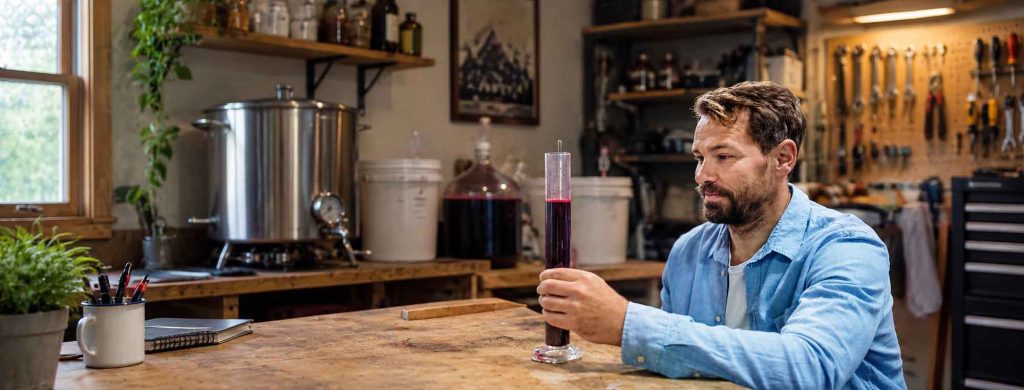
A triple-scale hydrometer can contain several scales on the same instrument.
A common brewing model may show:
- Specific gravity
- Brix or Balling
- Potential alcohol
The additional scales can be convenient. However, they are not necessary. For beginners, a clear specific-gravity scale is often easier to read.
Do I Need a Triple-Scale Hydrometer?
No.
A single specific-gravity scale is enough for most homebrewing. In fact, a simple scale can be easier to read.
If you buy a triple-scale model, make sure you understand which scale you are reading. Do not accidentally record a potential-alcohol value as specific gravity.
What Is a Refractometer?
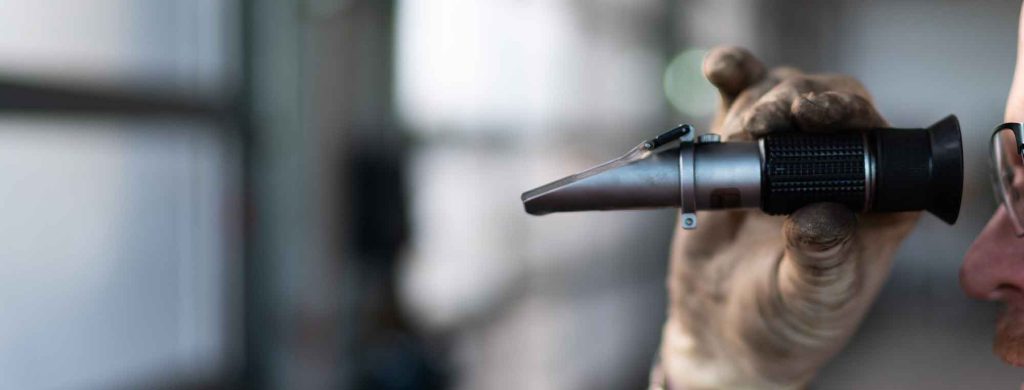
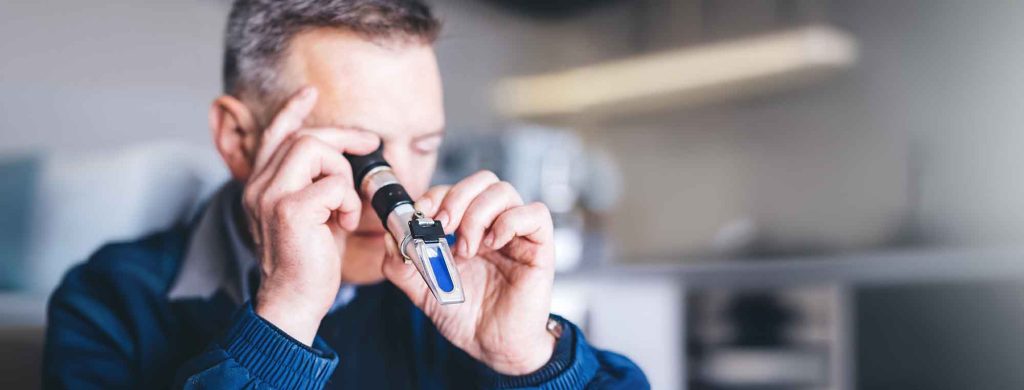
A refractometer is another instrument for measuring dissolved material in a liquid.
Instead of floating in a sample, it uses light to determine the refractive index of the liquid. A brewing refractometer typically displays both Gravity and Brix.
A small drop of wort or must is placed on the instrument. This is one of the biggest advantages of a refractometer. You need only a very small sample.
Refractometer vs. Hydrometer
Both tools have advantages.
| Feature | Hydrometer | Refractometer |
| Sample size | Larger | Very small |
| Typical scale | Specific gravity | Brix |
| Easy to use | Yes | Yes |
| Pre-fermentation | Excellent | Excellent |
| Post-fermentation | Excellent | Requires correction |
| Fragility | Glass models can break | Usually durable |
| Temperature effects | Important | Usually less of a problem |
| Cost | Low | Moderate |
Why Is a Refractometer Difficult to Use After Fermentation?
Alcohol changes the refractive index of the liquid.
A refractometer reading from finished beer therefore does not directly correspond to the actual Brix or specific gravity. For example, you cannot simply put finished beer on a refractometer and assume the displayed Brix value is the final gravity.
You need a correction calculation that uses:
- Original gravity
- Current refractometer reading
There are online calculators and brewing software that can perform this correction.
Can I Use a Refractometer for Original Gravity?
Yes.
This is one of its best applications. You can measure wort or must before fermentation.
For example, take a small sample of wort. Place a few drops on the refractometer. Take the reading.
You’re only discarding a minuscule amount of wort or must.
Can I Use a Refractometer for Final Gravity?
Yes, but you must correct the reading for alcohol.
This is a common source of mistakes.
A refractometer is excellent for:
Pre-fermentation measurements
It is more complicated for:
Post-fermentation measurements
Is a Refractometer Better Than a Hydrometer?
Not necessarily. They are different tools.
A refractometer is particularly useful when:
- You want tiny samples.
- You brew frequently.
- You make small batches.
- You want to check wort during the brewing process.
- You want fast measurements.
A hydrometer is particularly useful when:
- You want a direct specific-gravity reading.
- You are checking fermentation.
- You want simple measurements.
- You do not want to perform alcohol corrections.
Should a Beginner Buy Both?
If your budget allows it, having both is useful.
A very practical setup is:
- Refractometer for brew day
- Hydrometer for fermentation
This gives you the advantages of both instruments. However, you do not need both.
If you are buying your first measuring instrument: Buy a brewing hydrometer.
Can I Use a Refractometer Instead of a Hydrometer?
Yes, if you understand the correction required after fermentation.
For a beginner, a hydrometer is simpler. You can take a reading directly from the beer and compare it with your original gravity. No alcohol correction is necessary for a normal hydrometer reading.
What Is a Digital Refractometer?
Digital refractometers use an electronic sensor to measure refractive index.
They can provide:
- Easy-to-read digital results
- Small sample requirements
- Fast measurements
- Automatic temperature compensation on some models
They can be convenient. They are also much more expensive than a basic brewing hydrometer. A beginner does not need one.
What Temperature Is a Hydrometer Calibrated For?
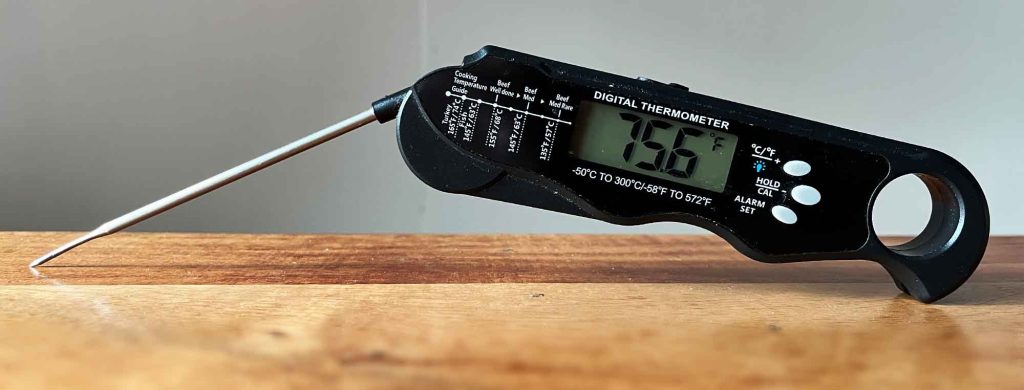
Hydrometers are calibrated to a specific reference temperature.
Common calibration temperatures include:
- 60°F
- 68°F
- 20°C
The exact temperature depends on the instrument. Read the information supplied with your hydrometer.
Why Does Temperature Matter?
Liquid density changes with temperature.
A sample that is too warm or too cold can produce a reading that is slightly different from the true specific gravity at the hydrometer’s calibration temperature. For accurate readings, measure the sample near the calibration temperature or apply an appropriate temperature correction.
Do I Need a Hydrometer Temperature Correction?
For precise brewing, yes.
For casual brewing, a small temperature difference may not matter much. However, you should understand that a hydrometer reading is tied to temperature. If your hydrometer is calibrated at 60°F and your sample is 80°F, the displayed number is not the same as the corrected value.
Use a temperature-correction calculator or brewing software when necessary.
How Do I Take a Hydrometer Reading?
The basic process is:
- Sanitize your sampling equipment.
- Remove a sample of wort or beer.
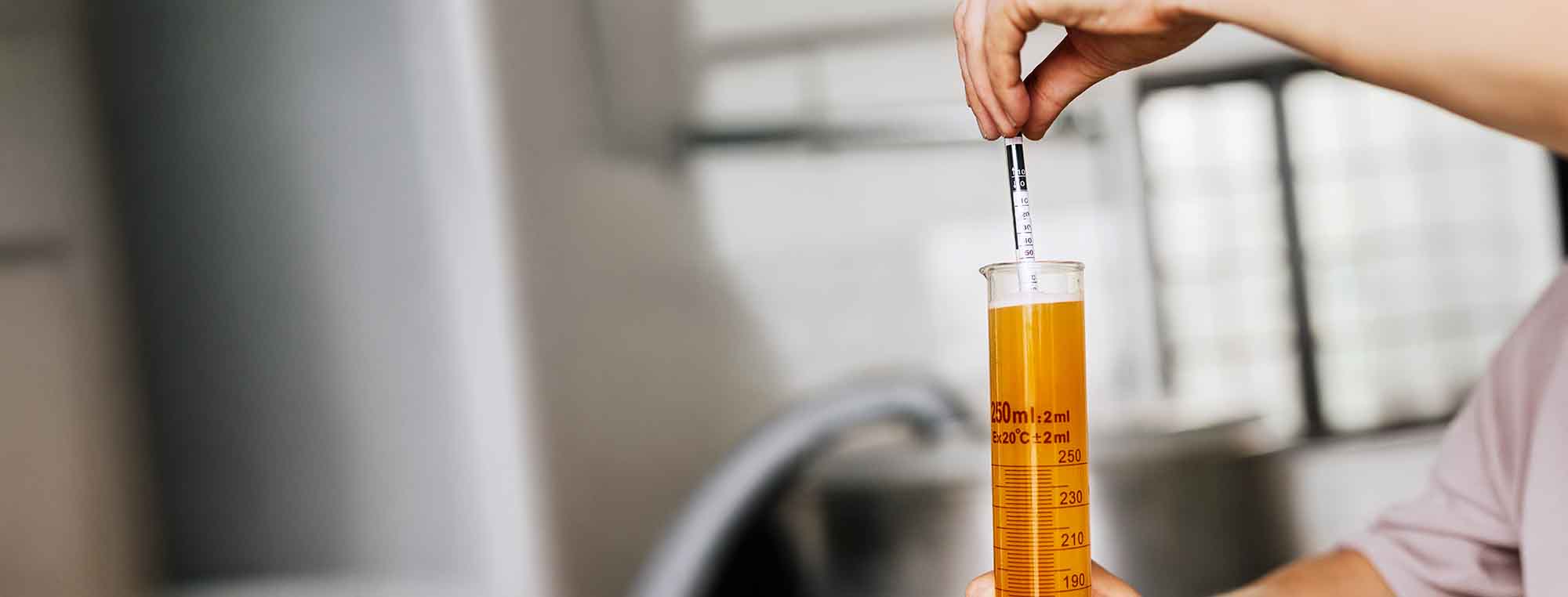
- Put the sample into a hydrometer jar.
- Place the hydrometer into the liquid.
- Make sure it floats freely.
- Spin the hydrometer gently.
- Wait for the liquid to become still.
- Read the scale at the correct point.
- Record the result.
- Clean and sanitize the equipment.
Why Should I Spin the Hydrometer?
A gentle spin helps remove bubbles that may cling to the hydrometer.
Bubbles can make the hydrometer float slightly higher. That can produce an incorrect reading. Do not spin it aggressively.
How Do I Read a Hydrometer?
Look at the surface of the liquid.
This curved surface is called the meniscus. For most brewing hydrometers, read the specific gravity at the bottom of the meniscus. Follow the instructions supplied with your particular hydrometer.
Do I Need a Hydrometer Jar?
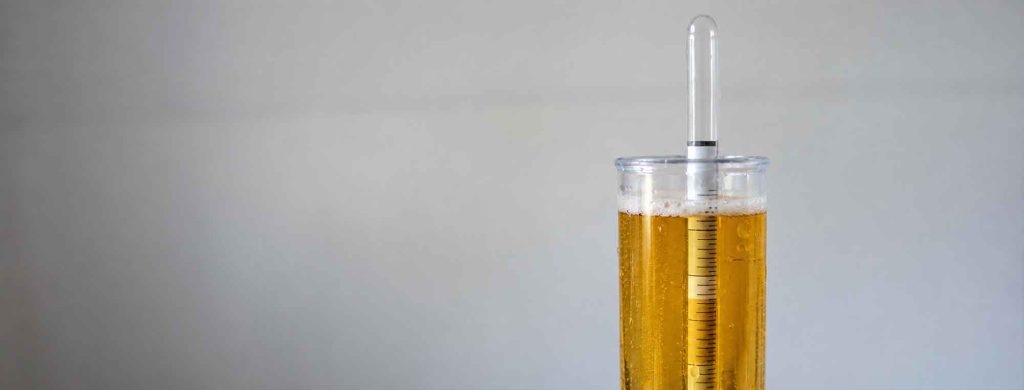
A hydrometer jar makes sampling easier.
It is a tall, narrow container designed to hold enough liquid for the hydrometer to float. A properly-sized graduated cylinder is a perfect choice.
You can use another suitable container if it is tall enough. However, a dedicated hydrometer test jar is inexpensive and convenient.
How Much Beer Do I Lose When Taking a Hydrometer Reading?
A traditional hydrometer requires a fairly large sample.
Depending on the test jar and hydrometer, you may need approximately 4–6 ounces. This is one reason some brewers prefer a refractometer. A refractometer can require only a few drops.
Do not return a sample to the fermenter after it has been exposed to the environment, unless you’re confident in your sanitizing practices. You can drink it or discard it.
Why Shouldn’t I Return a Hydrometer Sample to the Fermenter?
Once the sample leaves the fermenter, it can become contaminated.
Returning it can introduce:
- Bacteria
- Wild yeast
- Oxygen
- Other contaminants
The sample is sometimes not worth risking the entire batch. But again, if everything was well-sanitized, the risk is minimized.
How Often Should I Take Hydrometer Readings?
Do not take a reading every day.
Every time you open the fermenter, you create an opportunity for contamination and oxygen exposure. Take a reading when you have a reason.
For example:
- Before fermentation
- Near the expected end of fermentation
- Again several days later to confirm stability
- Before packaging if needed
How Do I Know When Fermentation Is Finished?
A hydrometer is one of the best tools for determining this.
- Take a reading.
- Wait several days.
- Take another reading.
- If the gravity remains the same, fermentation is likely finished.
For example:
Day 10: 1.010
Day 13: 1.010
The stable readings indicate that fermentation has likely stopped. The exact timing depends on the recipe and yeast.
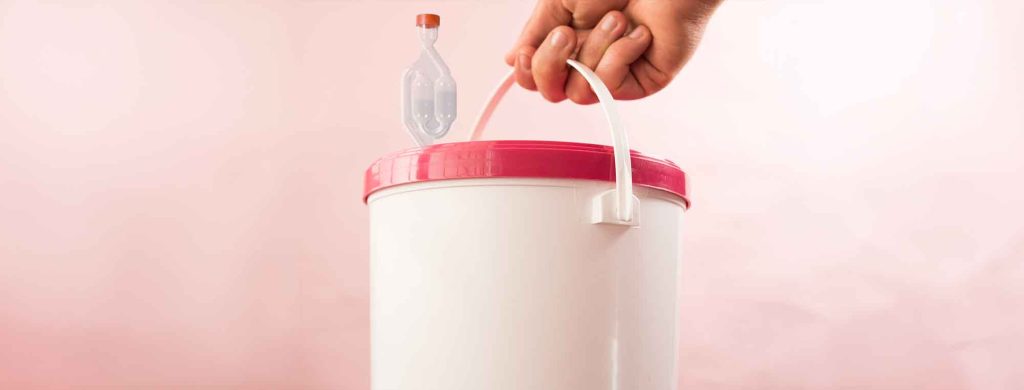
Does Airlock Activity Tell Me When Fermentation Is Finished?
No. An airlock is not a fermentation meter.
It can bubble because of:
- Fermentation
- Temperature changes
- Changes in atmospheric pressure
- Movement of the fermenter
A lack of bubbling does not prove fermentation is finished.
A hydrometer provides much better information.
What Is the Best Hydrometer for Mead?
A standard brewing hydrometer works well.
A range around 0.990–1.170 SG is useful for most meads. High-gravity meads can begin above the range of some standard hydrometers.
Check the expected original gravity before purchasing.
What Is the Best Hydrometer for Wine?
A brewing or winemaking hydrometer with an appropriate specific-gravity range is a good choice.
Wine must can have a higher original gravity than typical beer wort. If you make high-sugar fruit wines, choose a hydrometer that covers the expected range.
What Is the Best Hydrometer for Cider?
A standard brewing hydrometer works well for most cider.
Cider often starts at a relatively moderate specific gravity. A hydrometer covering approximately 0.990–1.170 SG provides plenty of range.
What Is the Best Hydrometer for High-Gravity Beer?
Check the original-gravity range before buying.
A standard hydrometer may work for many strong beers. However, extremely high-gravity recipes can exceed the upper end of a common brewing hydrometer. If you regularly brew imperial-strength beer, consider a hydrometer designed for a higher range.
What Is the Best Hydrometer for a Beginner?
Look for:
Specific gravity: approximately 0.990–1.170
Graduations: 0.001 SG
Material: glass or polycarbonate
Calibration temperature: clearly listed
Scale: easy to read
A simple hydrometer is usually better than a complicated one.

Glass vs. Polycarbonate: Which Should You Buy?
Choose glass if:
- You want a traditional hydrometer.
- You handle equipment carefully.
- You want a simple, inexpensive instrument.
Choose polycarbonate if:
- You want better impact resistance.
- You have children around your brewing equipment.
- You frequently move your equipment.
- You have broken glass hydrometers before.
Both can be good choices.
Should I Buy a Refractometer Instead?
If you are making your first batch:
Buy the hydrometer.
Once you become more experienced, consider adding a refractometer.
A combination of the two is particularly useful:
- Hydrometer → fermentation
- Refractometer → quick wort measurements
Can I Use a Hydrometer for Distilling?
A standard brewing hydrometer is not the best tool for measuring distilled spirits.
After distillation, use a proofing hydrometer or alcoholmeter designed for ethanol and water mixtures.
Do not confuse the two instruments.
Can I Use a Proofing Hydrometer for Moonshine?
For a distilled spirit, an alcoholmeter or proof-and-tralle hydrometer is the appropriate type of instrument.
The sample should be suitable for the instrument’s scale.
If the spirit contains substantial sugar or other dissolved material, the reading can become inaccurate.
What Is a Proof and Tralle Hydrometer?
A proof-and-tralle hydrometer is an alcoholmeter designed for measuring the alcohol content of distilled spirits.
It normally has scales related to:
- Alcohol by volume
- Proof
It is not intended to measure the original or final gravity of beer, mead, cider, or wine.

Brewing Hydrometer Shopping Checklist
Before buying, check:
- Specific-gravity scale
- Suitable SG range
- 0.001 graduations
- Calibration temperature
- Glass or polycarbonate construction
- Clear markings
- Suitable test jar
- Protective storage container
If you are buying a refractometer instead:
- Brix scale
- Suitable brewing range
- Calibration instructions
- Temperature compensation
- Correction method for fermented beverages
Common Hydrometer Mistakes
Buying an Alcoholmeter
An alcoholmeter is not a brewing hydrometer.
Reading a Refractometer After Fermentation Without Correction
Alcohol changes the reading.
Use a correction calculation.
Forgetting Temperature
Hydrometers are temperature dependent.
Reading the Wrong Part of the Meniscus
Read the hydrometer according to its instructions.
Leaving Bubbles on the Hydrometer
Gently spin the hydrometer to release bubbles.
Taking Samples Too Often
Do not repeatedly open the fermenter just to check gravity.
Returning the Sample
Do not return a sample to the fermenter.
Dropping a Glass Hydrometer
Glass is fragile.
Handle it carefully or choose polycarbonate.
A Simple Hydrometer Routine
For a 5-gallon batch of beer:
Brew Day
Take an original-gravity reading.
Record it.
During Fermentation
Allow the yeast time to work.
Do not take daily samples.
Near the End
Take a gravity reading.
Several Days Later
Take another reading.
If the readings are identical, fermentation is likely complete.
Before Packaging
Confirm that the gravity is stable and appropriate for the recipe.
Then package the beer.
The Bottom Line
For most homebrewers, the best hydrometer is a standard brewing hydrometer that measures specific gravity.
A model covering approximately 0.990–1.170 SG with 0.001 graduations is a good general-purpose choice.
- Choose glass if you want the traditional, inexpensive option.
- Choose polycarbonate if durability is more important to you.
- Consider adding a refractometer if you want to take very small samples and make fast measurements during brewing. A refractometer is especially useful before fermentation. After fermentation begins, alcohol affects the reading, so you must use a correction calculation.
And remember the most important distinction:
A brewing hydrometer measures specific gravity.
A proofing hydrometer measures alcohol concentration in suitable distilled spirits.
They are not interchangeable.
For beer, cider, mead, and wine, buy the brewing hydrometer. For distilled spirits, use the appropriate proofing hydrometer or alcoholmeter.
For a beginner, one inexpensive brewing hydrometer can provide some of the most useful information you will get about your fermentation. It can tell you far more than an airlock ever can.