Yes. You can use bread yeast to make beer, wine, cider, and mead.
Bread yeast contains living yeast cells that consume sugars and produce carbon dioxide and alcohol. That is the same basic process used in brewing and winemaking. But there is an important distinction.
Bread yeast can ferment an alcoholic beverage. That does not mean it is the best yeast -or even a good yeast- for the beverage you want to make.
Modern brewing and winemaking yeasts are selected for specific fermentation conditions and flavor profiles. Bread yeast is selected primarily for its ability to make dough rise. Those different goals affect how the yeasts perform.
If you want to experiment with a cheap ingredient, bread yeast can be useful. If you want predictable fermentation, a specific flavor profile, or a high-alcohol beverage, dedicated brewing or winemaking yeast is usually worth the extra cost.
Let’s look at what actually changes when you use bread yeast.
Is Bread Yeast the Same as Brewing Yeast?
Bread yeast and many brewing and winemaking yeasts belong to the same species: Saccharomyces cerevisiae. This species has been used for thousands of years to make bread, beer, and wine. But a species is not the same thing as a strain. Think of a yeast species as a broad family. Individual strains within that family can have different characteristics.
Two strains of S. cerevisiae can differ in:
- Fermentation speed
- Alcohol tolerance
- Temperature tolerance
- Nutrient requirements
- Sugar utilization
- Flocculation, or how well the yeast settles
- Aroma and flavor production
- Resistance to fermentation stress
Bread yeast and ale yeast can both produce alcohol, but they do not necessarily behave the same way in wort, grape juice, apple juice, or honey must. The same is true of two different brewing yeast strains. They can produce noticeably different beers even when you use them in the same recipe.
Why Are Brewing and Winemaking Yeasts Different?
Modern commercial yeasts are not simply interchangeable packets of S. cerevisiae. Brewers and winemakers select strains for particular jobs. Yeast manufacturers evaluate strains for fermentation performance, flavor production, temperature range, alcohol tolerance, and other characteristics. The goal is to make fermentation more predictable and to help the finished beverage achieve a particular style.
Brewing yeast
Brewing yeast is selected for performance in beer wort.
Depending on the strain, important characteristics can include:
- Fermentation at a particular temperature
- Production of fruity esters or spicy phenols
- Clean flavor
- Appropriate attenuation
- Reliable flocculation
- Performance in different beer styles
For example, a clean American ale strain is generally selected to produce a different flavor profile from a traditional English ale strain. Some English strains produce noticeable fruity esters and settle quickly. Some Belgian strains produce characteristic fruity and spicy compounds. Some strains are selected to ferment very cleanly. These differences are intentional.
Winemaking yeast
Winemaking yeast is selected for the conditions found in grape must and other fruit musts.
Important characteristics can include:
- Reliable fermentation at high sugar concentrations
- Alcohol tolerance
- Performance at low pH
- Temperature tolerance
- Resistance to sulfur dioxide
- Low production of undesirable volatile acidity
- Production or preservation of desirable aromas
Different wine yeasts can emphasize different fruit aromas, alter mouthfeel, or behave differently during fermentation. Some strains are selected for aromatic white wines. Others are used for red wines, sparkling wines, or challenging fermentations.
Cider and mead yeast
Cider and mead makers can also choose strains based on the finished beverage they want. For cider, you might want a yeast that preserves apple character, produces a clean fermentation, or emphasizes certain fruity aromas. For mead, you might prioritize reliable fermentation in a high-sugar must, a suitable alcohol tolerance, or a flavor profile that works with honey.
Wine yeast is often a practical option for both cider and mead because many strains perform well in fruit musts and high-sugar fermentations. Bread yeast has not necessarily been selected for these specific goals. That does not make it incapable of doing the job. It means you have less control over the result.
How Does Yeast Selection Affect Flavor?
Yeast does more than turn sugar into alcohol. During fermentation, yeast produces many other compounds. These compounds can have a major effect on the aroma and flavor of the finished beverage.
Some important examples include:
| Compound | Possible sensory effect |
| Esters | Fruity aromas, such as apple, pear, banana, or other fruit |
| Higher alcohols | Alcoholic, solvent-like, floral, or complex aromas, depending on concentration |
| Phenols | Spicy, clove-like, smoky, or medicinal notes, depending on the compound |
| Acetaldehyde | Green apple or raw, unfinished character |
| Diacetyl | Buttery or butterscotch character |
| Sulfur compounds | Sulfur, struck-match, cabbage, or other aromas, depending on the compound |
Not every yeast produces the same amounts of these compounds. The final flavor also depends on fermentation temperature, oxygen availability, nutrients, sugar concentration, and other conditions. This is why a yeast strain selected for a particular beer style can produce a different result from bread yeast in the same wort.
Does bread yeast taste like bread?
Not necessarily. Bread yeast does not automatically make beer taste like bread or make mead taste like dough. The flavor of the finished beverage depends on the strain, the fermentation conditions, and the recipe.
However, bread yeast can produce a flavor profile that differs from what you would get with a dedicated brewing or winemaking strain. You might get a result you enjoy. You might get a result that tastes rough, overly yeasty, fruity in an unexpected way, or otherwise different from what you wanted. There is no single flavor profile that applies to every bread yeast.
The main disadvantage is reduced predictability, not a guarantee of bad flavor.

How Does Bread Yeast Affect Fermentation Speed?
Bread yeast is designed to produce carbon dioxide efficiently in dough. Brewing and winemaking yeasts are selected for fermentation performance in liquid environments with different sugar concentrations, nutrient levels, acidity, alcohol levels, and temperatures.
These differences matter.
A bread yeast that performs well in dough may behave differently in a sugary liquid. It may start quickly and ferment vigorously. It may ferment more slowly than expected. It may struggle as the alcohol concentration increases. Its performance will depend on the particular strain and the fermentation conditions.
A fast start does not guarantee a fast finish. A ferment can begin vigorously and then slow down or stop before reaching the expected final gravity.
Why might fermentation stall?
Several factors can cause a fermentation to slow or stop:
- Alcohol concentration exceeds the yeast’s tolerance.
- The must has too much sugar at the start.
- The yeast lacks sufficient nutrients.
- The fermentation temperature is too low or too high.
- The pH is unsuitable.
- The yeast population is too small or unhealthy.
These problems can affect brewing yeast too. The difference is that a suitable commercial strain often has documented performance characteristics that help you plan around them.
If a wine yeast is selected for reliable fermentation at high sugar concentrations, you have more useful information than you would have from a generic packet of bread yeast.
Related: Is my Homebrew Fermentation Stuck or Stalled?
How Much Alcohol Can Bread Yeast Produce?
There is no single alcohol-tolerance number for all bread yeast. Some bread yeasts can produce surprisingly alcoholic beverages under suitable conditions. Others may struggle as alcohol concentration rises. Do not assume that every bread yeast stops at 5%, 8%, or 10% ABV. Alcohol tolerance depends on the strain and the conditions.
The sugar concentration, temperature, nutrient availability, and health of the yeast population also matter. For a low-alcohol cider or a modest-strength experimental ferment, bread yeast may work perfectly well. For a high-gravity beer or a mead intended to reach 14–16% ABV, a suitable brewing or wine yeast is a more predictable choice.
More sugar does not guarantee more alcohol
Adding more sugar increases the potential alcohol, but it also increases the stress on the yeast. A very sugary must can make it difficult for yeast to begin or complete fermentation. As alcohol accumulates, the yeast faces additional stress.
If your goal is a high-alcohol mead, choose a yeast with suitable alcohol tolerance and provide the nutrients and conditions needed for a healthy fermentation. Do not rely on bread yeast to reach a particular ABV without testing its performance.
Will Bread Yeast Ferment All the Sugar?
Not necessarily. The amount of sugar that yeast consumes depends on which sugars are present and whether the yeast can ferment them. It also depends on whether the yeast remains healthy enough to finish fermentation.
Bread yeast can ferment many of the simple sugars found in fruit juice and honey must. However, its performance in a particular recipe is not guaranteed. Some residual sugar may remain because the yeast reaches its alcohol tolerance or encounters another fermentation problem.
That can leave you with a sweeter beverage and a higher final gravity than expected. Do not assume fermentation is finished because bubbling stops. Use a hydrometer to measure gravity. Take another reading after two or three days. Stable gravity is evidence that fermentation has stopped changing, although it does not prove that the beverage can never ferment again.
This matters especially if you plan to bottle the beverage with residual fermentable sugar.
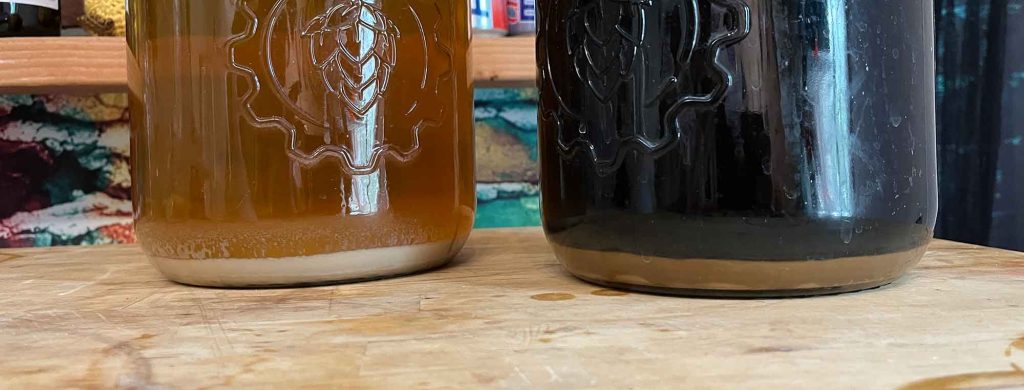
Does Bread Yeast Settle Out of the Beverage?
It depends on the strain. Flocculation is the tendency of yeast cells to clump together and settle out of the liquid. Brewing yeasts are often selected partly for their flocculation characteristics.
Some strains settle rapidly and leave relatively clear beer. Others remain suspended longer.
Bread yeast is selected for baking performance, not necessarily for clear beer or wine. A bread-yeast ferment may take longer to clear, or it may leave more yeast suspended in the beverage. This is not a universal rule. Bread yeast can settle, and brewing yeast does not always settle quickly.
If your beverage remains cloudy, give it time to settle. You can also use cold crashing or an appropriate fining agent if the recipe and process allow it. Do not assume that cloudiness means fermentation is still active.
Can Bread Yeast Make Beer?
Yes, but the results depend on the beer.
Bread yeast can ferment the sugars in malt extract or all-grain wort. It can produce alcohol and carbon dioxide. The challenge is that beer wort is a specific fermentation environment, and bread yeast is not selected to produce a particular beer style.
Potential drawbacks include:
- An unexpected flavor profile
- Different fermentation speed
- Unpredictable attenuation
- Different settling behavior
- Less predictable performance at higher alcohol levels
If you want to make a simple experimental beer, bread yeast can be an interesting option. If you want a clean pale ale, a particular English ale profile, or a reliable lager, use a yeast strain selected for that style.
Important: Ordinary bread yeast is not a substitute for lager yeast. Most bread yeast is not selected to ferment cleanly at traditional lager temperatures.
Can Bread Yeast Make Mead?
Yes. Honey contains fermentable sugars, and bread yeast can ferment those sugars into alcohol. The main challenge is that honey must is naturally low in several nutrients that yeast needs for healthy growth. A yeast that performs well in bread dough does not automatically have everything it needs for a healthy mead fermentation.
If you use bread yeast for mead, pay attention to:
- Starting gravity
- Yeast quantity
- Fermentation temperature
- Nutrient availability
- pH
- Gravity over time
A simple, lower-gravity mead is a more forgiving experiment than a high-gravity traditional mead. If you want to make a high-alcohol mead, use a suitable wine or mead yeast and follow a nutrient plan appropriate for the recipe.
Bread yeast can also be useful as a source of yeast biomass for homemade nutrient preparations, because dead yeast cells can provide nutrients to other yeast. That is a separate use from relying on bread yeast to conduct the entire fermentation.
Can Bread Yeast Make Cider or Fruit Wine?
Yes. Apple juice, grape juice, and many other fruit juices contain sugars that bread yeast can ferment. For a simple cider or fruit wine, bread yeast may produce a drinkable result.
But fruit must can be challenging. Acidity, nutrient availability, sugar concentration, and fruit composition vary considerably. Commercial wine yeasts are selected to handle particular fermentation conditions and to produce desired sensory characteristics. For example, some strains are chosen to preserve fresh fruit aromas. Others are selected for reliable fermentation in high-sugar musts or for their performance at lower temperatures.
Bread yeast may work, but you will have less information about how it will behave.
Also, check the juice ingredients before fermenting. Preservatives such as potassium sorbate or sodium benzoate can inhibit yeast and prevent a normal fermentation.
Does Bread Yeast Need Nutrients?
Yes. Yeast needs nutrients regardless of whether it comes from a bakery or a brewing supplier. Yeast needs nitrogen, vitamins, minerals, and other compounds to grow and ferment efficiently. The amount available depends on the must.
Beer wort generally provides nutrients from malt. Fruit juice varies in its nutrient content. Honey must is particularly poor in yeast-assimilable nitrogen. Bread yeast does not eliminate these requirements.
For mead and many fruit wines, appropriate yeast nutrients can help prevent sluggish fermentation and reduce the risk of undesirable fermentation characteristics. Follow the nutrient product’s instructions. Do not assume that adding more nutrient is always better.
How Much Bread Yeast Should I Use?
There is no universal conversion between a packet of bread yeast and a packet of brewing yeast. The right amount depends on the volume, starting gravity, yeast condition, and fermentation environment.
For a small experimental batch, use enough fresh yeast to establish a healthy fermentation. Avoid treating a tiny pinch as equivalent to a measured brewing pitch. Do not assume that adding excessive bread yeast will compensate for poor nutrients, unsuitable temperature, or excessive starting gravity.
A healthy pitch matters, but it is only one part of fermentation management.
Is Bread Yeast Safe for Homebrew?
Commercial bread yeast is intended for food use and can be used to ferment an alcoholic beverage. Using bread yeast does not make a beverage unsafe. However, the yeast packet does not make the finished beverage safe by itself. Sanitation, ingredient quality, fermentation management, and packaging still matter. And for bread yeast stored in jars, the risk of outside infection is higher.
Use clean, sanitized equipment. Do not consume a beverage with suspicious mold or other signs of contamination. Do not rely on smell or appearance alone to determine whether a questionable batch is safe.
If you bottle a beverage with residual fermentable sugar, continued fermentation can create dangerous pressure. Confirm that fermentation is complete before packaging still beverages, and use a controlled priming process when making carbonated beverages.
Bread Yeast vs. Brewing or Wine Yeast
| Factor | Bread yeast | Brewing or wine yeast |
| Can produce alcohol? | Yes | Yes |
| Purchase cost | Usually low | Usually modest |
| Flavor profile | Less predictable for beverages | Often selected for a target profile |
| Fermentation speed | Depends on strain and conditions | Often documented for the intended use |
| Alcohol tolerance | Varies; not always documented for beverage use | Often documented or characterized |
| Attenuation | Less predictable for a particular recipe | Often characterized for brewing strains |
| Settling behavior | Varies | Often characterized for brewing strains |
| High-gravity fermentation | More uncertain | Easier to select a suitable strain |
| Reproducibility | Can vary with product and process | Generally easier with a known strain |
| Best use | Experiments and budget batches | Repeatable, style-specific fermentation |
These are general comparisons, not guarantees. Commercial brewing and wine yeasts also vary widely, and a poorly chosen brewing strain can perform worse than bread yeast in a particular recipe.

Is Bread Yeast Worth the Savings?
This is the practical question.
Bread yeast may cost less per packet than brewing or wine yeast. But the yeast itself is only a small part of the total cost of a homebrew batch.
Consider a one-gallon mead. You have already purchased honey, nutrients, sanitizer, and bottles. You have spent time preparing the must and waiting for fermentation. Saving a small amount on yeast may not be worthwhile if the fermentation stalls or the flavor is not what you wanted. On the other hand, if you are making a low-cost experimental batch and do not mind an unpredictable result, bread yeast can be a reasonable choice.
Use bread yeast when:
- You want to experiment.
- You are making a small, low-cost batch.
- You are curious about the flavor it produces.
- You are willing to accept a less predictable result.
- You do not need a specific fermentation profile.
Use brewing or wine yeast when:
- You want a particular beer style.
- You want predictable fermentation.
- You are making a high-gravity mead or wine.
- You want a known flavor profile.
- You need reliable performance at a particular temperature.
- You want to repeat a successful recipe.
Can You Run a Side-by-Side Test?
Absolutely. This is one of the best ways to find out whether the difference matters to you. Make two small batches from the same must or wort. Use bread yeast in one and a suitable brewing or wine yeast in the other.
Keep the following as similar as possible:
- Starting gravity
- Batch volume
- Nutrient additions
- Fermentation temperature
- Fermenter size and headspace
- Sanitation
- Packaging method
Record the original gravity and take regular gravity readings. When both batches have finished fermenting, let them settle and condition under comparable conditions.
Then taste them side by side.
Look for differences in aroma, flavor, body, clarity, and fermentation character. Do not assume the faster ferment is automatically better. Also, do not assume the batch with the more unusual flavor is worse. You may prefer it. For a fair comparison, repeat the experiment if possible. Small batches can differ because of measurement error and normal variation.
The Bottom Line
Yes, you can use bread yeast for homebrew. It can ferment beer wort, cider, fruit juice, and honey must. The important difference is that bread yeast is selected for baking, while brewing and winemaking yeasts are selected for performance in alcoholic beverages.
Those selection goals affect fermentation kinetics, flavor production, alcohol tolerance, attenuation, and settling behavior.
Bread yeast is a reasonable option for inexpensive experiments. It is not automatically bad, and it does not automatically produce bread-flavored beer or wine. But when a packet of purpose-selected brewing or wine yeast costs only a little more than bread yeast, the added predictability is often worth the difference.
Choose bread yeast when experimentation is the goal. Choose a suitable brewing or wine yeast when the finished beverage matters more than saving a small amount on yeast.