For a typical one-gallon batch of mead, start with about 2.5–3 pounds of honey.
That is not a hard rule. The amount of honey depends on the style of mead you want to make.
- A light hydromel may use around 1–1.5 pounds of honey per gallon.
- A standard-strength mead often uses around 2.5–3 pounds.
- A strong sack mead may use 3.5–4.5 pounds or more.
The more honey you use, the more sugar the yeast has available.
That can mean:
- More potential alcohol
- Higher starting gravity
- More honey character
- More fermentation stress
- Longer fermentation
- A greater chance of residual sweetness
The important part is not simply adding a certain number of pounds. Choose the honey amount based on the mead you want to make.
How Much Honey Is in a Gallon of Mead?
Here is a useful starting guide:
| Mead style | Honey per gallon | Approx. potential ABV* |
| Hydromel | 1–1.5 lb | 4–7% |
| Standard mead | 2.5–3 lb | 10–14% |
| Sack mead | 3.5–4.5+ lb | 14–18%+ |
*Actual ABV depends on the starting gravity, final gravity, yeast, fermentation conditions, and whether anything else is added.
These are starting ranges, not official boundaries. There is no rule that says a mead with 2.9 pounds of honey must be one style while a mead with 3.1 pounds must be another. The style names describe the general strength and character of the mead.
What Does One Pound of Honey Do?
Honey contains a large amount of fermentable sugar. A rough homebrewing estimate is that one pound of honey contributes about 35 gravity points to one gallon of must. That gives you a useful mental shortcut.
If one pound contributes about 35 points:
- 1 lb → about 1.035
- 2 lb → about 1.070
- 2.5 lb → about 1.088
- 3 lb → about 1.105
- 3.5 lb → about 1.123
- 4 lb → about 1.140
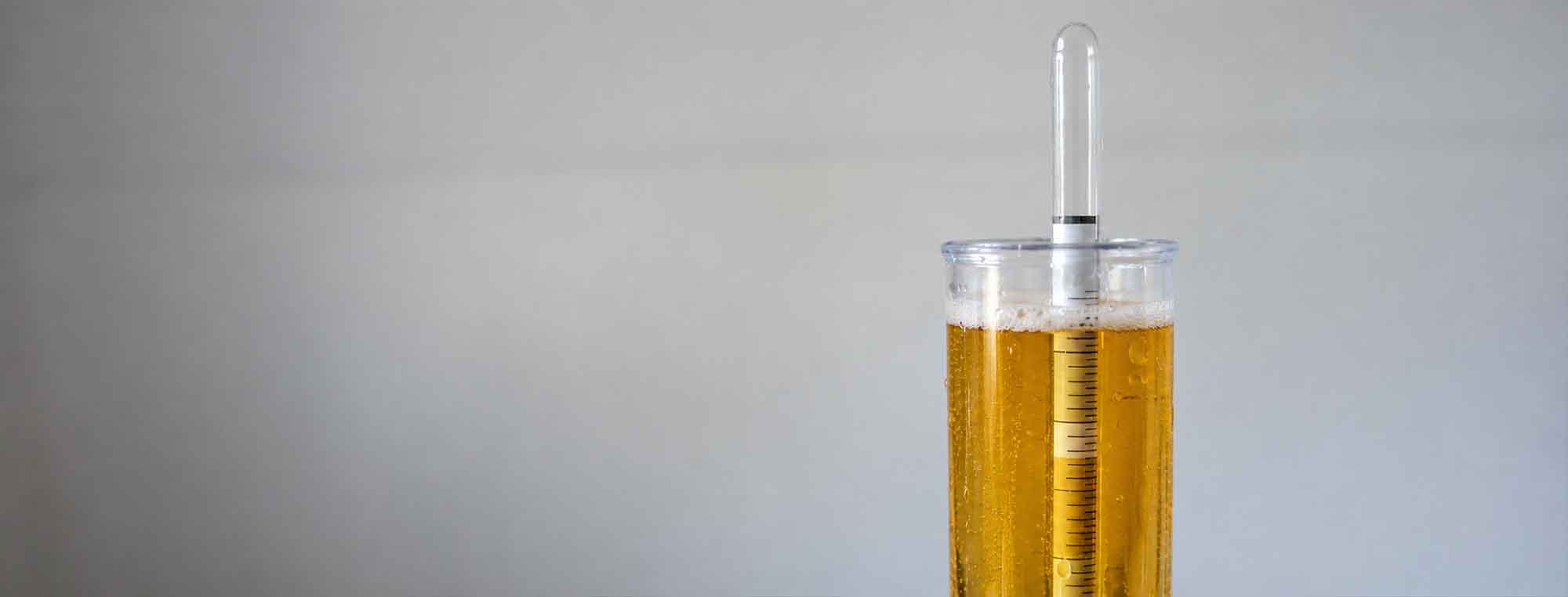
These are estimates, as honey varies in water content and composition, and your final volume matters. Your hydrometer is more useful than the estimate.
If you make a one-gallon batch with 3 pounds of honey and measure an OG of 1.100, use 1.100 for your fermentation calculations. Do not change the recipe just because an online calculator predicted 1.105.
What Is a Hydromel?
A hydromel is a lower-alcohol mead – often called a “session mead.” For a one-gallon batch, around 1–1.5 pounds of honey is a useful starting point. This gives you a lighter must and a lower potential alcohol level.
Hydromels are useful when you want something that drinks more like a light table beverage than a strong dessert-style mead.
Advantages include:
- Faster fermentation
- Lower alcohol
- Less yeast stress
- Easier drinking
- Shorter aging requirements in many cases
Because there is less honey, the honey character can also be more subtle. That can be useful if you are adding fruit, herbs, spices, tea, hops, or other strong flavors.
A Simple One-Gallon Hydromel
Try:
- 1.25 pounds honey
- Water to 1 gallon
- Appropriate yeast nutrient
- Suitable brewing or wine yeast
A starting gravity around 1.040–1.050 is a reasonable target. If the yeast ferments most of the sugar, the finished mead may land around 5–7% ABV. Measure the gravity instead of relying on the recipe estimate.
Related: Crispy Session Mead hydromel recipe
What Is a Standard-Strength Mead?
When most homebrewers say “mead,” they are often thinking about a traditional mead in the general range of 10–14% ABV. For a one-gallon batch, 2.5–3 pounds of honey is a useful starting range. Around 3 pounds of honey will often produce a starting gravity near 1.100, depending on the honey and final volume.
If fermentation takes that gravity down near 1.000, you could end up around 13% ABV.
For example: OG 1.100 → FG 1.000
ABV: (1.100 − 1.000) × 131.25 = 13.1%
That is a strong beverage, but it is not an extreme fermentation for a suitable wine or mead yeast. A standard-strength traditional mead is a good place to start if you want to taste the honey without making a very high-alcohol beverage.
What Is a Sack Mead?
A sack mead is a high-strength mead. The term is old and does not have one universally enforced modern gravity cutoff. In modern homebrewing, “sack” usually means a mead with a high starting gravity and high potential alcohol. It is often balanced by a higher final sweetness as well.
For a one-gallon batch, 3.5–4.5 pounds of honey is a useful starting range. Some recipes go higher. At these honey levels, yeast has a much harder job.
The must starts with a large amount of sugar. And as fermentation progresses, alcohol increases.
The yeast must continue working while dealing with:
- High osmotic pressure
- Increasing alcohol
- Nutrient demand
- Changing pH
- Rising fermentation stress
This is why a sack mead should not simply be treated as a normal mead with extra honey.
More Honey Does Not Always Mean More Alcohol
This is one of the most important things to understand. If you add more honey, you increase the potential alcohol. You do not guarantee that the yeast will produce that alcohol.
For example, suppose you create a must with an OG of 1.140. You might calculate a theoretical alcohol level of more than 18% if it fermented all the way to 1.000. But the yeast may stop at 1.030.
That would produce:
(1.140 − 1.030) × 131.25 = 14.4% ABV
You now have a strong, sweet mead rather than an 18% dry mead. That can be intentional. It can also be a stuck fermentation.
Do not decide which one you have based only on taste. Measure gravity.
Honey Amount vs. Mead Style
Think of honey amount as one of the tools you use to build the beverage.
Hydromel
About 1–1.5 lb/gallon
Good when you want:
- Lower alcohol
- A lighter body
- Faster fermentation
- A refreshing drink
Standard Strength
About 2.5–3 lb/gallon
Good when you want:
- Noticeable honey character
- Moderate to high alcohol
- A traditional mead profile
- A balance between fermentation difficulty and strength
Sack
About 3.5–4.5+ lb/gallon
Good when you want:
- High alcohol
- Richer body
- Intense honey character
- A strong, slow-aging mead
These are not rigid categories. You can make a 2-pound mead. You can make a 3.25-pound mead. You can make a 5-pound mead if you’re experienced and have a good grasp of fermentation kinetics. The important part is understanding what the additional honey does.
How Does Honey Affect Body?
Honey is mostly sugar and water. If the yeast ferments most of that sugar, the honey itself does not leave behind a huge amount of body. A dry mead can be surprisingly light even when you started with several pounds of honey.
Body comes from several factors, including:
- Residual sugar
- Alcohol
- Glycerol and other fermentation products
- Honey composition
- Fruit
- Tannin
- Acidity
- Yeast strain
- Fermentation conditions
This is why a 3-pound dry mead does not necessarily taste thick or syrupy. A sweet mead with residual sugar can have much more body.
How Does Honey Affect Sweetness?
The amount of honey determines how much sugar enters the ferment. It does not determine the final sweetness by itself.
Yeast consumes fermentable sugar. If you add 3 pounds of honey and the yeast ferments nearly all of it, the mead can finish dry. If the fermentation stops with significant sugar remaining, the mead can finish sweet.
This is why:
Honey amount ≠ final sweetness
The final gravity tells you much more.
Should I Add All the Honey at Once?
Usually, yes. For a straightforward mead, add your calculated amount of honey to the must, mix thoroughly, measure your starting gravity, and pitch an appropriate yeast.
There are advanced techniques that add honey later, but you do not need them for a basic mead. The important thing is to know how much fermentable sugar is present. If you add more honey later, your original gravity no longer represents the total amount of fermentable sugar that entered the batch. Keep good notes and estimate ABV using Mead Tools.

What If I Want a Sweet Mead?
Do not simply add enough honey to make the starting gravity extremely high and hope it finishes sweet. That can create an unnecessarily difficult fermentation.
A better approach is often:
- Ferment a reasonable starting gravity.
- Let fermentation finish.
- Confirm stable gravity.
- Stabilize when appropriate.
- Add honey to backsweeten.
- Mix gently.
- Measure and taste.
- Package safely.
This gives you much more control over the final sweetness. Honey added after fermentation is also a good way to preserve some fresh honey character.
If you plan to bottle, understand that honey is fermentable. Adding honey to a finished mead does not make it safe to bottle immediately. Residual honey can restart fermentation and create dangerous pressure.
How Does Honey Type Affect the Amount I Need?
Different honeys can have slightly different water content and sugar composition. The difference is usually not large enough to make you abandon the normal pound-per-gallon estimates. But it is another reason to use your hydrometer.
A recipe might say: 3 pounds honey → 1.100 OG
Your batch might measure: 3 pounds honey → 1.096 OG
That is not a disaster. Your hydrometer measured what actually happened. Use the measurement.
Advanced Technique: Blending Honeys
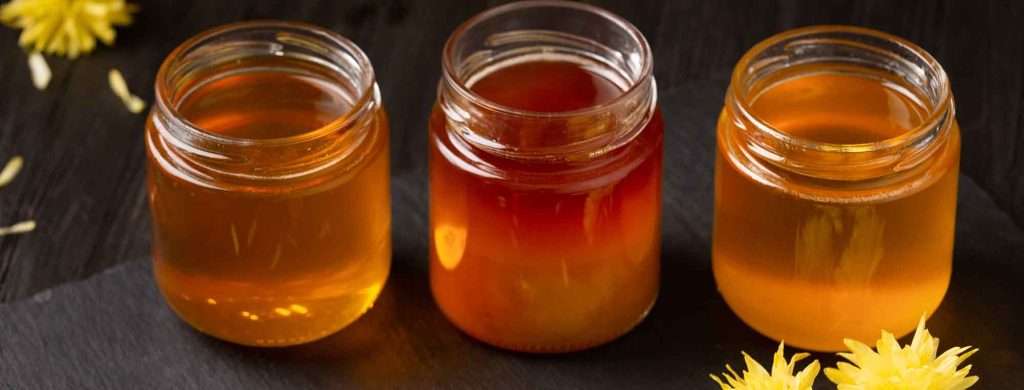
You do not have to use only one honey in a mead. Blending honeys can give you a more complex flavor profile. This is especially useful when one honey has a strong character that you like but does not provide everything you want in the finished mead.
For example, imagine you have:
- Orange blossom honey
- Buckwheat honey
Orange blossom can provide a recognizable floral and citrus character. Buckwheat honey can provide a deeper, more complex, and earthy honey profile. Instead of choosing one, you could blend them.
Start With a Small Test
Do not immediately mix your entire honey supply. Make small samples.
For example:
- 100% orange blossom
- 75% orange blossom / 25% buckwheat
- 50% orange blossom / 50% buckwheat
- 25% orange blossom / 75% buckwheat
- 100% buckwheat
Taste the samples side by side. This is called a bench trial. You can do the same thing with other honeys.
Try combinations such as:
- Orange blossom + alfalfa
- Clover + orange blossom
- Tupelo + alfalfa
- Acacia + sunflower
- Sunflower + buckwheat
The goal is not to make the most complicated blend, but rather to find a combination where the honeys improve each other.
Blend by Weight
When testing honey blends, use weight rather than volume.
For example, if your winning blend is:
70% orange blossom + 30% wildflower
…and you need 3 pounds total:
- 2.1 lb orange blossom
- 0.9 lb wildflower
Total: 3 lb
This makes the blend repeatable.
Blend Before or After Fermentation?
Both approaches can work. Blending the honey before fermentation gives the yeast one combined must. This is the simplest method. But blending finished meads gives you more control.
For example, you could ferment:
- A dry orange blossom mead
- A dry wildflower mead
Then blend portions of the finished meads. This lets you taste the result before committing the entire batch. It also lets you adjust the blend after fermentation instead of guessing how fermentation will change the honey character.
Keep Honey Character in Mind
Fermentation changes honey. Some volatile aromas are reduced during fermentation. Some aromas become more noticeable.
Yeast metabolism also creates its own flavor compounds. A honey that tastes dramatically different in the jar may taste much more similar to another honey after fermentation. This is another reason bench trials with finished mead can be useful.

Can I Use Cheap Honey?
Yes. There is no requirement that mead use expensive specialty honey. Basic clover or wildflower honey can make excellent mead. The difference is primarily in flavor.
A distinctive varietal honey can contribute a recognizable character to the finished beverage. A cheaper honey may provide a neutral base that allows fruit, spices, hops, or other ingredients to stand out.
You do not need expensive honey to make good mead. You need honey that gives you the flavor you want!
Should I Use Raw Honey?
Raw honey can be used for mead. Heating honey can change its aroma and flavor. Importantly, you do not need to boil honey to make mead. Boiling can drive off volatile aromatic compounds and change the character of the honey.
For most home meadmaking, gently mixing honey into the must is preferable to aggressively boiling it. The fermentation process itself provides substantial microbial control, assuming you use clean ingredients and good sanitation.
How Much Honey Should I Buy?
If you are making a single gallon, buy slightly more than your recipe requires. Honey sticks to containers. Some may remain in the measuring container. Some may remain in the bottle.
You may also decide that you need a little more to reach your target gravity. For a standard 3-pound recipe, having a little extra honey available is useful. If your goal is to make several gallons, calculate your total honey requirement before starting.
For example:
5 gallons × 3 lb/gallon = 15 lb honey
If you are making a sack mead at 4 lb/gallon:
5 gallons × 4 lb/gallon = 20 lb honey
Remember that these calculations assume your target is based on finished must volume.
A Simple One-Gallon Mead
If you want a reliable starting point, try:
- 3 pounds honey
- Water to 1 gallon
- Appropriate wine or mead yeast
- Yeast nutrient according to the nutrient schedule
- Optional acid, tannin, fruit, or spices
Mix the honey thoroughly. Take an original gravity reading. Pitch the yeast and ferment at the yeast’s recommended temperature.
Add nutrients according to your chosen nutrient schedule.
Track gravity. When gravity becomes stable, fermentation is complete. Then decide whether you want the mead dry, sweetened, still, or carbonated.
What If My Gravity Is Too High?
If you mixed your must and the gravity is much higher than you wanted, you have two basic options.
Add Water
Dilute the must until you reach your target gravity.
Mix thoroughly and measure again.
Make a Bigger Batch
You can add enough water to increase the batch volume. This reduces the honey concentration and lowers the starting gravity.
Do not simply add water based on the original recipe volume. Measure the new gravity, as that is what matters.
What If My Gravity Is Too Low?
If you wanted a stronger mead and your gravity is lower than expected, add more honey.
Dissolve the additional honey thoroughly. Mix the must. Take another gravity reading.
Record how much honey you added. This is another reason to measure rather than blindly follow a recipe.
Honey Amount Cheat Sheet
For one gallon:
Hydromel: 1–1.5 lb honey
Light and lower alcohol.
Standard mead: 2.5–3 lb honey
A good general-purpose starting point.
Sack mead: 3.5–4.5+ lb honey
High gravity and high potential alcohol.
And remember: These are starting points, not rules.
Bottom Line
For a one-gallon batch, 3 pounds of honey is an excellent starting point for a standard-strength mead. Use less honey for a lighter hydromel. Use more honey for a strong sack mead.
The honey amount determines your starting sugar concentration and potential alcohol. It does not guarantee your final alcohol level or sweetness.
Your yeast, nutrients, temperature, pH, and fermentation conditions determine how much of that sugar actually gets fermented. Use your hydrometer to measure what happened.
And if you want to get more advanced, blend different honeys. Test small combinations before committing an entire batch. Blending by weight gives you a repeatable recipe and lets you build a honey profile that is more interesting than any single honey may provide.
The best amount of honey is not an indiscernible magic number. It is the amount that gives your yeast the starting gravity and your mead the character you actually want.