
TOSNA stands for Tailored Organic Staggered Nutrient Addition.
It is a nutrient management method for mead. Instead of adding all of your yeast nutrient at the beginning of fermentation, you divide the nutrient into several additions. The goal is to give yeast access to nutrients during the part of fermentation when it can use them.
TOSNA is especially useful for mead because honey provides plenty of sugar but does not provide a complete nutrient supply for yeast.
A good TOSNA schedule can help support:
- Healthy yeast growth
- Strong fermentation
- Lower fermentation stress
- More predictable fermentation
- Cleaner mead character
But TOSNA is not magic. It does not replace healthy yeast, nor does it fix an extreme fermentation temperature. It also does not make a poorly formulated mead ferment correctly.
And importantly, TOSNA does not mean that every mead needs the same nutrient schedule.
Related: What is the Best Nutrient for Mead?
Why does mead need nutrient?
Honey is mostly sugar and water. That makes honey excellent fermentation fuel. It does not make honey an ideal yeast growth medium.
Yeast also needs nutrients such as:
- Nitrogen
- Vitamins
- Minerals
- Other compounds required for growth and metabolism
If these nutrients are limited, yeast can struggle.
This can contribute to:
- Slow fermentation
- Stalled fermentation
- Sulfur odors
- Poor yeast growth
- Long fermentation times
- Harsh fermentation character
This is one reason mead has a different nutrient strategy from many beers. Malt provides beer yeast with a much richer nutrient environment. Honey does not.
What does TOSNA actually mean?
Break the name apart.
Tailored
The nutrient amount is calculated for the specific fermentation. The same nutrient dose is not automatically appropriate for every mead.
Important variables include:
- Original gravity
- Batch size
- Yeast
- Nutrient source
- Fermentable ingredients
- Desired fermentation
Organic
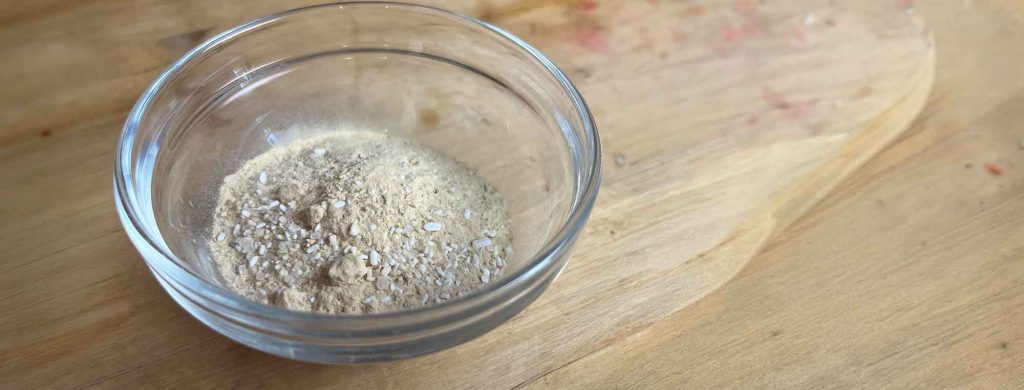
TOSNA commonly uses an organic yeast nutrient such as Fermaid O as its primary nutrient source. Organic nutrient sources provide yeast-assimilable nitrogen without relying on large amounts of inorganic nitrogen.
Staggered
You divide the nutrient into multiple additions. You do not add the entire dose at pitch.
Nutrient Addition
The process is about managing yeast nutrients during fermentation. That is the entire idea.
TOSNA is not a yeast starter
This distinction is important. A yeast starter prepares yeast before it enters the main fermentation. TOSNA manages nutrients during the main fermentation. You can, and often should, use both.
For example:
- Rehydrate your yeast properly.
- Pitch the yeast into the must.
- Follow a TOSNA nutrient schedule during fermentation.
The starter and nutrient schedule solve different problems.
TOSNA is not the same as yeast rehydration
Yeast rehydration happens before or around the time you pitch dry yeast. A product such as Go-Ferm can be used during this process.
TOSNA happens during fermentation.
A simplified sequence looks like this:
Rehydrate yeast → pitch yeast → add staggered nutrients → monitor gravity → finish fermentation
Do not treat Go-Ferm as your TOSNA nutrient. Go-Ferm and Fermaid products have different purposes.
Fermaid O and TOSNA
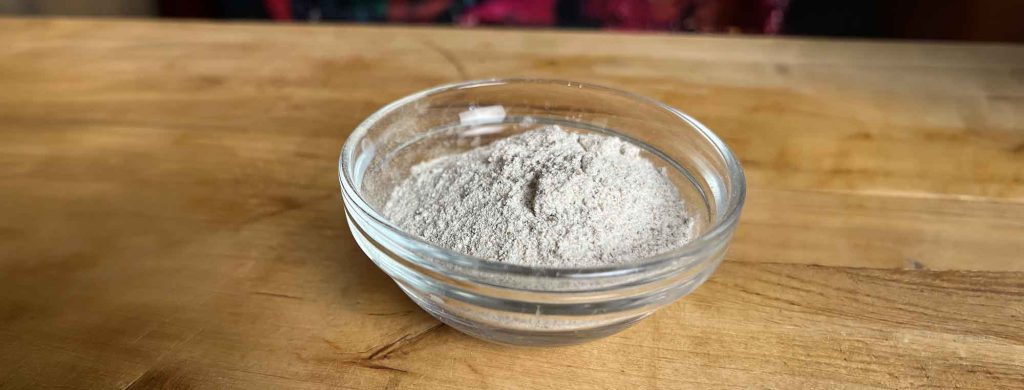
Fermaid O is commonly associated with TOSNA. It provides organic nitrogen and other nutrients that support yeast fermentation. The exact amount depends on the TOSNA version and the fermentation conditions.
Do not assume that a scoop of Fermaid O is a universal dose. Use a calculator or the current nutrient manufacturer’s guidance.
TOSNA 2.0
TOSNA has changed over time. You may see different versions of TOSNA in older mead recipes, calculators, and forum posts. One common modern approach is referred to as TOSNA 2.0.
The important lesson is not to combine pieces of different versions.
For example, do not take:
- The nutrient dose from one version
- The timing from another version
- The yeast assumptions from a third version
…and call the result TOSNA. Use one consistent method.

What is the basic TOSNA schedule?
The basic concept is simple. You divide the total nutrient amount into several additions during early fermentation.
A common schedule uses additions at:
- Pitch
- 24 hours
- 48 hours
- 72 hours
Some implementations adjust the schedule based on fermentation progress. The exact schedule depends on the specific TOSNA method you are using. The important cutoff is the one-third sugar break.
What is the one-third sugar break?
The one-third sugar break, often abbreviated 1/3 SB, is the point where approximately one-third of the fermentable sugar has been consumed. You determine this using specific gravity.
For example, suppose your mead starts at:
1.120
and you expect it to finish around:
1.000
The total gravity drop is:
1.120 − 1.000 = 0.120
One-third of that drop is:
0.040
So the one-third sugar break is approximately:
1.080
This is a simplified example. Your actual expected final gravity may be different. The important point is that the one-third sugar break is based on fermentation progress, not simply the number of days since pitching.
Why stop nutrient additions at the one-third sugar break?
Yeast needs nutrients most during growth and early fermentation.
Later in fermentation, the yeast shifts toward finishing the fermentation. Adding large amounts of certain nutrients late in fermentation can be less useful and can create problems.
The TOSNA approach therefore concentrates nutrient additions during early fermentation. Once the one-third sugar break is reached, the nutrient additions stop. This is one of the key concepts behind staggered nutrient addition.

Do not use the airlock to find the sugar break
An airlock tells you that gas is moving. It does not tell you how much sugar the yeast has consumed.
A fermentation can produce little visible airlock activity while still fermenting. It can also bubble because of temperature changes or dissolved CO₂ escaping. Use a hydrometer.
How to calculate the one-third sugar break
Use your original gravity and your expected final gravity.
Example
Original gravity:
1.100
Expected final gravity:
1.000
Total gravity drop:
0.100
One-third:
0.033
Subtract that from the original gravity:
1.100 − 0.033 = 1.067
Your approximate one-third sugar break is:
1.067
Once the actual gravity reaches that point, the early fermentation nutrient schedule is complete.
What if the final gravity will not be 1.000?
Then do not automatically use 1.000 in your calculation. A high-original gravity mead may finish above 1.000.
For example:
Original gravity:
1.120
Expected final gravity:
1.020
Total gravity drop:
0.100
One-third:
0.033
Approximate one-third sugar break:
1.087
The exact calculation depends on your expected fermentation endpoint.
TOSNA calculators
A TOSNA calculator can make this much easier.
You enter information such as:
- Batch volume
- Original gravity
- Yeast
- Nutrient type
The calculator then determines the nutrient requirement and schedule. This is usually better than trying to memorize a nutrient dose.
If you use a calculator, make sure you know which TOSNA version it uses. Different calculators can use different assumptions.
Why not just add all the nutrient at the beginning?
Because yeast does not need the same nutrient environment throughout fermentation.
Early fermentation is when yeast is growing and reproducing. Staggered additions provide nutrients during this active growth period. A single large nutrient addition at the beginning can also leave some nutrients unused or create an unnecessarily high nutrient concentration.
TOSNA tries to match nutrient availability with yeast activity.
What happens if you add nutrient too late?
The main concern is that the yeast may no longer be able to use the nutrients in the same way.
This is why TOSNA focuses on early fermentation.
Do not look at a stalled mead and think:
“It needs nutrients, so I should dump in a bunch of nutrient.”
Late nutrient additions are not automatically the solution to a stalled fermentation. Once fermentation has slowed dramatically, you need to diagnose the problem.
Possible causes include:
- Nutrient deficiency
- Temperature
- pH
- Alcohol toxicity
- Osmotic stress
- Yeast health
- Poor pitch rate
- Excessive sugar concentration
TOSNA and Go-Ferm
Go-Ferm and Fermaid O are often used together in mead fermentation, but they have different jobs.
Go-Ferm: Used during yeast rehydration.
Fermaid O: Used as the main nutrient in many TOSNA schedules.
A typical process may look like:
- Prepare Go-Ferm according to its instructions.
- Rehydrate the yeast.
- Pitch the yeast.
- Begin the TOSNA schedule.
- Add Fermaid O at the scheduled times.
- Stop nutrient additions at the one-third sugar break.
Do not simply combine all of the products into the rehydration water. Use each product for its intended purpose.
TOSNA and Fermaid K
Fermaid K is different from Fermaid O. Fermaid K provides a broader nutrient package and includes inorganic nitrogen. You may see older mead recipes that use Fermaid K in staggered nutrient schedules.
That does not mean you should automatically substitute Fermaid K for Fermaid O at the same dose. Different nutrients have different compositions. Use a nutrient schedule designed for the nutrient you are actually using.
What about DAP?
DAP stands for diammonium phosphate.
It provides yeast-assimilable nitrogen. DAP can be useful in fermentation. But DAP is not interchangeable with Fermaid O.
One important reason is that yeast’s ability to use inorganic nitrogen changes during fermentation. This is one reason nutrient schedules often place DAP additions early. Do not assume that adding a large amount of DAP late in fermentation will fix a stalled mead.
What about TOSNA with Fermaid K?
If you are following a specific TOSNA method that calls for Fermaid K, use the exact nutrient and dosage specified by that method. Do not mix nutrient recipes.
If a recipe says:
Fermaid O
do not automatically replace it with:
Fermaid K + DAP
…and assume the result is equivalent. Nutrient composition matters.
What about TOSNA 3.0?
You may also see newer TOSNA formulas or modified TOSNA methods. This is where online mead advice can become confusing. The name TOSNA does not mean that every recipe using the word follows exactly the same calculation.
When you use a modern nutrient calculator or published schedule, check:
- Which TOSNA version it uses
- Which nutrient it expects
- How it calculates nitrogen
- Whether it uses Go-Ferm separately
- How it handles the one-third sugar break
Follow one complete system.
Aeration and TOSNA
Nutrients are only one part of early fermentation. Yeast also needs oxygen during the early growth phase. For mead, controlled oxygen exposure can support healthy yeast growth.
This is especially useful during the early stages of fermentation. As fermentation progresses, reduce oxygen exposure. You do not want to aggressively aerate a nearly finished mead.
Degassing and oxygen
Mead makers sometimes degas during early fermentation. This can help release dissolved carbon dioxide and make it easier for yeast to remain active. It can also help mix nutrients into the must.
But aggressive agitation can introduce oxygen.
Early in fermentation, some oxygen exposure can be useful. Later, it becomes a bigger oxidation risk. This is another reason to stop treating fermentation as one continuous process.

TOSNA does not eliminate the need for temperature control
Yeast still needs an appropriate temperature.
If your yeast prefers 65°F and you ferment it at 80°F, adding the correct amount of Fermaid O does not make the temperature irrelevant. Likewise, a cold fermentation can become slow even when nutrient levels are appropriate.
Use the temperature range recommended for your yeast.
TOSNA does not eliminate the need for a healthy pitch
You cannot compensate for a tiny amount of badly stressed yeast simply by adding nutrient.
Start with healthy yeast and use the appropriate pitch rate – generally 3-5 grams per gallon.
Rehydrate dry yeast correctly when recommended. Then use TOSNA to manage nutrients.
TOSNA for high-gravity mead
TOSNA is particularly useful when fermentation conditions are difficult. High-gravity meads create several forms of stress.
The yeast must deal with:
- High sugar concentration
- Increasing alcohol
- Nutrient demand
- Increasing osmotic pressure
- Lowering pH
A good nutrient schedule can help.
But high-gravity mead may also require:
- More yeast
- Careful rehydration
- Temperature control
- Oxygen during early fermentation
- Step feeding
- Longer fermentation time
Do not expect TOSNA alone to turn a 1.160 must into an easy fermentation.
TOSNA for hydromel or session mead
A hydromel has less sugar and a lower potential alcohol level than a strong mead. The fermentation is generally less stressful.
That does not mean nutrients are irrelevant. It means the yeast may have an easier job.
Use a nutrient calculator or appropriate recipe rather than automatically applying the same nutrient dose you would use for a high-gravity mead. Usually a hydromel will benefit from front-loaded, rather than staggered, nutrients.
TOSNA for fruit mead
Fruit changes the nutrient situation.
Fruit can provide:
- Nitrogen
- Vitamins
- Minerals
- Acids
- Additional sugars
The amount varies greatly. Do not assume that adding fruit automatically provides everything your yeast needs.
The fruit may also change:
- Original gravity
- pH
- Fermentation rate
- Final gravity
Measure the actual fermentation rather than relying on a generic recipe.

TOSNA for cysers and pyments
A cyser contains apple juice. A pyment contains grapes or grape juice.
These ingredients can provide more nutrients than honey alone.
This can change the nutrient requirement. A TOSNA calculator, like Mead Tools, designed around a specific mead formulation may not perfectly represent every fruit or juice addition.
Use the nutrient guidance appropriate to the actual must.
How to physically add Fermaid O
Measure the required nutrient amount. Add it at the scheduled time. And mix it into the fermentation carefully.
During early fermentation, gentle stirring or degassing can help distribute the nutrient. Avoid splashing once fermentation has progressed far enough that oxygen becomes undesirable.
If the mead is actively producing a lot of CO₂, add nutrients carefully. Adding dry powder to a highly carbonated fermentation can cause rapid foaming.
The foaming problem
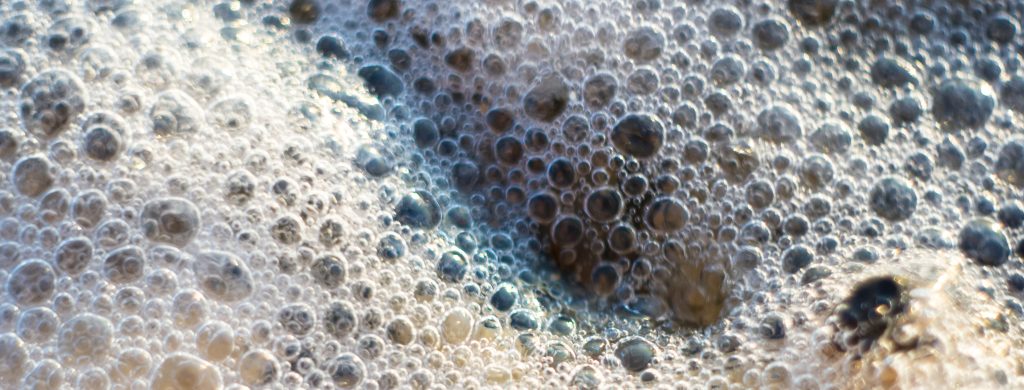
A nutrient addition can cause a sudden release of dissolved CO₂. This is called nucleation. The powder provides surfaces where dissolved CO₂ can come out of solution. The result can be a sudden foam eruption! This is especially dangerous in a narrow-neck fermenter.
Before adding nutrient:
- Make sure you have enough headspace.
- Open the vessel carefully.
- Add the nutrient slowly.
- Be prepared for foaming.
Do not add a large amount of dry nutrient to a full carboy and walk away.
What if you miss an addition?
Do not panic. TOSNA is a management system, not a timer that must be followed to the second. If you miss an addition, do not automatically double the next addition.
Check the current gravity. If you are still early in fermentation, adjust the schedule according to your chosen nutrient method. If you are already near or past the one-third sugar break, adding a large amount of nutrient may not be appropriate.
What if fermentation is already past the one-third sugar break?
Stop the normal TOSNA additions. The purpose of the schedule is to provide nutrients during early fermentation. Do not continue adding nutrient simply because the fermentation has not finished.
At this point, troubleshoot the fermentation if it is progressing slowly.
What if the mead stalls before the one-third sugar break?
This is different. If fermentation slows or stops early, do not simply continue the TOSNA schedule without checking the fermentation.
Check:
- Gravity
- Temperature
- Yeast health
- Nutrient additions
- Alcohol level
- Original gravity
If the yeast is stressed, the solution may involve more than nutrients.
TOSNA and stalled fermentation
A stalled mead can be difficult to restart.
Possible causes include:
Excessive original gravity
The yeast may be under severe osmotic stress.
Alcohol toxicity
The yeast may have reached its practical alcohol limit.
Poor yeast health
The initial yeast population may have been too small or damaged.
Temperature
The fermentation may be too cold or too hot.
Nutrient deficiency
The yeast may lack an essential nutrient. TOSNA can prevent some nutrient-related problems.
It cannot reverse every problem after it happens.
Do you need to degas at every nutrient addition?
Not necessarily.
Early degassing can be useful. But do not turn it into a ritual. If the mead is fermenting well, you do not need to aggressively whip it every time you add nutrient.
As fermentation progresses, reduce oxygen exposure. The goal is healthy fermentation, not maximum agitation.
TOSNA and oxidation
Early oxygen exposure and late oxygen exposure are different.
During early fermentation: Oxygen can help yeast grow.
After fermentation: Oxygen can damage the finished mead.
This is why your handling should change during fermentation.
Early:
- Aeration can be useful.
- Degassing can be useful.
- Nutrient additions are useful.
Later:
- Minimize splashing.
- Minimize headspace.
- Stop aggressive aeration.
- Protect the finished mead from oxygen.
Common TOSNA mistakes
Treating TOSNA as a magic recipe
TOSNA is a nutrient management method.
It is not a guarantee of fermentation success.
Using the wrong nutrient
Fermaid O, Fermaid K, DAP, and Go-Ferm are not identical.
Use the nutrient specified by your method.
Mixing different TOSNA versions
Do not combine formulas from different sources without understanding the calculations.
Adding all the nutrient at pitch
That defeats the staggered part of TOSNA.
Continuing nutrient additions after the sugar break
The main nutrient schedule is intended for early fermentation.
Using the airlock instead of a hydrometer
Bubble rate is not a gravity measurement.
Ignoring temperature
Healthy nutrients do not make an inappropriate temperature appropriate.
Adding nutrient to a nearly full fermenter
The resulting foam can overflow.
Adding large amounts of nutrient to a stalled mead
A stalled fermentation needs diagnosis.
More nutrient is not automatically the answer.
A simple TOSNA workflow
For a typical dry mead:
Before fermentation
- Calculate the original gravity.
- Choose an appropriate yeast.
- Calculate the nutrient requirement.
- Prepare the yeast according to the manufacturer’s instructions.
- Use Go-Ferm or another rehydration product if appropriate.
At pitch
- Pitch the healthy yeast.
- Add the first nutrient portion according to your TOSNA schedule.
During early fermentation
- Add the remaining nutrient portions according to the schedule.
- Monitor gravity.
- Control temperature.
- Manage oxygen and degassing during early fermentation.
At the one-third sugar break
- Stop the TOSNA nutrient additions.
- Stop aggressive aeration.
After the sugar break
- Allow fermentation to continue.
- Monitor gravity.
- Minimize oxygen exposure.
- Continue fermentation until gravity is stable.
After fermentation
- Rack if appropriate.
- Minimize headspace.
- Allow the mead to clear and mature.
- Stabilize and backsweeten if desired.
- Package only when fermentation is complete and the finished mead is safe to package.

TOSNA does not mean “add nutrient four times”
This is worth emphasizing.
A common beginner description of TOSNA is: “Add Fermaid O at 0, 24, 48, and 72 hours.”
That is an oversimplification.
The important concepts are:
- Calculate the appropriate nutrient amount.
- Divide the nutrient into appropriate additions.
- Make the additions during early fermentation.
- Monitor fermentation progress.
- Stop at the appropriate point, commonly the one-third sugar break.
The schedule should be based on the method you are actually following.
The bottom line
TOSNA is a way to manage yeast nutrition during mead fermentation.
It works from a simple idea: Give yeast the nutrients it needs when it can use them.
For a typical mead, that means:
Healthy yeast → proper rehydration → appropriate nutrient amount → staggered early additions → one-third sugar break → finish fermentation
TOSNA does not replace good yeast preparation.
- It does not replace temperature control.
- It does not replace an appropriate pitch rate.
- And it does not turn every mead into an easy fermentation.
Use the method consistently, and know which nutrient you are using. Calculate your sugar break. Measure gravity.
And treat the nutrient schedule as one part of good fermentation management!