Yeast temperature is one of the most important controls in fermentation of beer, mead, wine, and cider.
The temperature of the fermenting beverage affects yeast growth and fermentation speed.
It also affects flavor.
A yeast strain can produce different flavors at different temperatures. Too much heat can create harsh or fruity flavors. Too much cold can slow fermentation or stop it.
The correct temperature depends on the yeast strain and the beverage. Most yeast producers list specific temperature ranges that are optimal for individual yeast strains. There is no single “best” fermentation temperature for all homebrew. Use the temperature range recommended for your specific yeast strain.
Then keep the fermentation in that range.
If you’re brand-new to homebrewing, check out our complete how-to guide on all you need to know for your first batch!
Why Does Temperature Matter?
Yeast are living organisms. Temperature affects their metabolism. When the temperature increases, yeast usually ferment faster.
This can sound like a good thing. But it is not always a good thing.
Fast fermentation can produce more fermentation byproducts. Some of these compounds affect flavor and aroma.
When the temperature decreases, yeast usually ferment more slowly. A moderate reduction can help control some flavors. But a large reduction can cause the yeast to become inactive.
The goal is not to ferment as fast as possible, but rather to ferment at a temperature that produces the flavor and performance you want.
What Temperature Should I Use?
Start with the yeast manufacturer’s recommended range.
This is more useful than a general rule such as:
“All beer should ferment at 68°F.”
Different yeast strains behave differently.
One strain may perform well at 60°F. Another may perform well at 72°F. A third strain may produce a very different beer at those same temperatures.
The same applies to wine yeast and mead yeast.
Yeast strain matters. Read the data for the exact strain that you are using.
Fermentation Temperature Is Not Always Room Temperature
This is an important detail. Your fermenter can be warmer than the room, as yeast produce heat while they ferment.
A vigorous fermentation can raise the temperature of the liquid several degrees above the surrounding air.
For example:
Room temperature: 68°F
Fermenting beer: 74°F
Your thermostat says 68°F.
Your yeast are fermenting at 74°F.
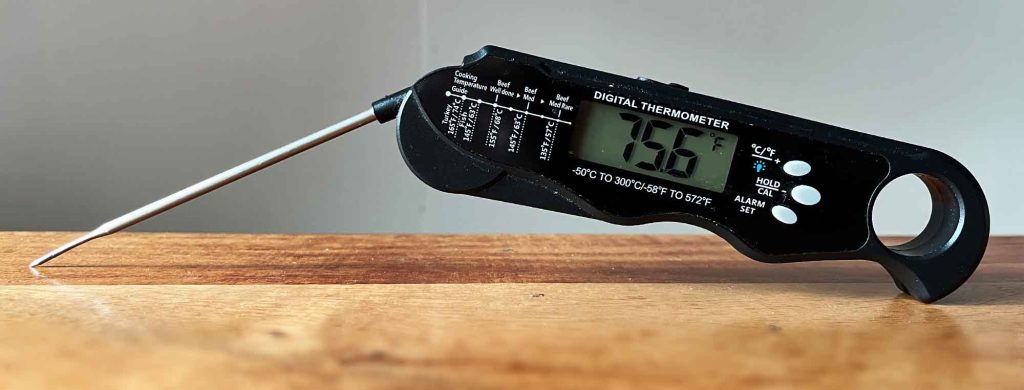
The yeast only care about the temperature of the fermentation. They do not care what your thermostat says. This is why measuring the liquid temperature is useful.
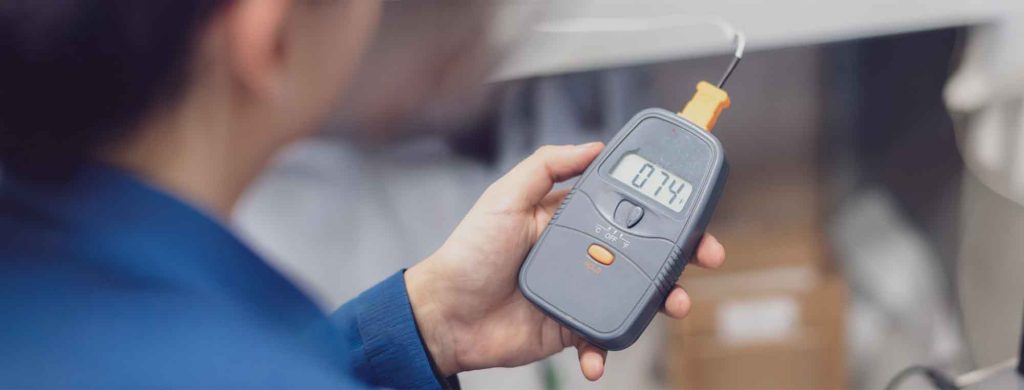
A temperature strip on the fermenter can give you a basic reading. A probe attached to the side of the fermenter can give you better control. Check out our full guide to homebrewing thermometers for more info.
What Happens When Fermentation Is Too Hot?
Hot fermentation can cause several problems. The exact effects depend heavily on the yeast strain.
Common problems include:
- Excessive esters
- Excessive fusel alcohols
- Harsh alcohol character
- Solvent-like aromas
- Fast fermentation
- Poor flavor balance
- Excessive phenolic character in some strains
- Increased stress on the yeast
Some of these flavors can decrease during conditioning. Some may remain. The best solution is to control the temperature before the problem occurs.
What Are Esters?
Esters are flavor and aroma compounds produced during fermentation. They can smell and taste fruity.
Common descriptions include:
- Banana
- Pear
- Apple
- Bubblegum
- Pineapple
- Stone fruit
Esters are not automatically bad.
Some beer styles depend on them – belgian ales are one example.
Some English ales also benefit from ester production.
The problem is excessive ester production. A clean American ale yeast fermented at a high temperature may produce more fruit character than you want. Or a Belgian yeast fermented warm may produce more of the character that you expect from the strain.
The same temperature can be too warm for one yeast and appropriate for another.
What Are Phenols?
Phenols are another group of fermentation compounds.
They can produce flavors and aromas such as:
- Clove
- Spice
- Pepper
- Smoke
- Medicinal character
- Bandage-like character
Again, phenols are not automatically bad. Some beer styles need them.
Certain Belgian and German wheat beer yeasts are selected for phenolic character. These yeasts can produce clove and spice flavors under appropriate conditions.
Other beers should have little or no phenolic character. Some wild yeast and bacterial contamination can also produce phenolic flavors.
This creates an important distinction:
A phenolic flavor is not automatically evidence of contamination.
The yeast strain and beer style matter.
Temperature Can Change Ester and Phenol Production
Temperature is one of the tools that brewers can use to influence yeast character. In general, higher fermentation temperatures can increase yeast metabolism and increase the production of some fermentation compounds. This can increase ester character.
Temperature can also affect phenol production. However, the relationship is not identical for every yeast strain. Yeast genetics matter.
Fermentation temperature is one variable. Yeast strain is another.
Pitch rate, oxygen, nutrients, wort composition, and fermentation pressure can also affect the final result.
This is why you should not use a simple rule such as: “Hot fermentation creates esters and cold fermentation creates phenols.”
Real fermentation is more complicated.
What Happens When Fermentation Is Too Cold?
Cold fermentation is not automatically bad. Many yeast strains perform very well at cool temperatures. Lager yeast, for example, require relatively cool fermentation compared with many ale yeasts.
Some ale strains also work well at cooler temperatures. The problem occurs when you go below the strain’s useful range.
You may see:
- Slow fermentation
- Long lag time
- Reduced yeast growth
- Poor attenuation
- A stalled fermentation
- Yeast settling before fermentation is complete
A cold fermentation can therefore create a different problem from a hot fermentation.
Hot fermentation can produce too much yeast character. Cold fermentation can prevent the yeast from finishing.
Cold Does Not Always Mean Clean
It is tempting to think: Cold = clean. But that is not always true.
A yeast strain that performs poorly at a low temperature may not finish the fermentation. You can end up with a beer that has lower attenuation than expected. You may also have more residual sugar. If you then bottle the beer, that remaining fermentable sugar can create a serious carbonation problem.
This is one way that poor temperature control can contribute to bottle bombs.
Do not bottle until you know that fermentation is finished. Use stable gravity readings.
The Yeast Can Be Too Cold to Start
Temperature matters before fermentation begins.
Dry yeast or liquid yeast can have a preferred temperature range for pitching and fermentation. If you pitch into a temperature that is too cold for the strain, fermentation may start slowly. A long lag time gives you less control over the fermentation.
Follow the yeast manufacturer’s recommendations for pitching and do not assume that every yeast strain should be pitched at the same temperature.
The Yeast Can Be Too Hot to Start
The opposite problem can be worse.
Pitching yeast into very hot wort or must can damage the yeast. This is especially important when brewing with hot wort.
Do not pitch yeast into beer wort that is still near boiling temperature. Instead, cool the wort to an appropriate pitching temperature first. For wine and mead, follow the yeast manufacturer’s instructions.
Temperature During the First Part of Fermentation
The early part of fermentation is especially important. Yeast are growing rapidly. They are producing large amounts of carbon dioxide. They are also producing many fermentation compounds.
This is often the time when temperature control has the greatest effect on the final flavor.
A common strategy is to start near the lower part of the yeast’s recommended range. You can then allow the temperature to rise later. This can give you more control over yeast character while still allowing the yeast to finish.
Do not use this approach without considering the specific yeast strain. Some strains perform better with a different temperature profile.

Should I Let the Temperature Rise at the End?
Often, yes.
Many brewers allow the temperature to increase toward the end of fermentation. This can help the yeast finish the remaining sugars, as well as help the yeast process some fermentation byproducts.
This is sometimes called a diacetyl rest in lager brewing.
The exact temperature and timing depend on the yeast strain and beer style. You do not need a special “rest” for every beer. For many ales, simply allowing the fermentation temperature to rise naturally near the end can help the yeast finish.
Yeast and Temperature in Mead
Mead needs the same basic temperature control as beer. The difference is that mead often has a different fermentation environment.
Honey provides a lot of sugar. It provides much less of the nutrition that yeast need. A poorly nourished yeast fermentation can become stressed. And then temperature can add another source of stress.
This makes temperature control especially useful for mead. A warm, nutrient-poor fermentation can produce more unwanted fermentation character. A cold fermentation can slow an already difficult fermentation.
Use the manufacturer’s recommended range for your yeast. Keep the temperature stable during the main fermentation.
Yeast and Temperature in Cider
Temperature Changes More Than Speed
Cider yeast can produce a wide range of flavor. A cool fermentation can help preserve a clean apple character. A warmer fermentation can produce more yeast-derived fruit character.
This is not a universal rule. The yeast strain matters.
Some cider makers use wine yeast. Others use ale yeast. Others use specialized cider strains.
Each strain has its own behavior. If you change the yeast, reconsider your fermentation temperature. Do not assume that the temperature you used for one cider will work for another.
Yeast and Temperature in Wine
Temperature Is a Flavor Tool
Winemakers use fermentation temperature to influence wine aroma and fermentation performance.
White wines are often fermented at lower temperatures than many red wines. The reason is partly related to aroma retention and fermentation character.
Red wine fermentation can use higher temperatures to support extraction from grape skins. The correct temperature still depends on the yeast, wine style, and winemaking process.
Home winemaking does not need to follow a single universal temperature rule. Follow the yeast manufacturer’s instructions and the requirements of the wine you are making.
How Do I Control Fermentation Temperature?
You do not need a commercial brewery. There are several simple methods.
Use a Cool Room
A basement or other cool room can provide a stable fermentation environment. The problem is that room temperature can change.
Your fermentation temperature can also rise above room temperature. Measure the actual fermentation temperature.
Use a Water Bath
Put the fermenter in a larger container of water. The water helps reduce rapid temperature changes. You can add frozen water bottles to cool the bath. Replace them as needed.
This works well for small batches.
Use a Refrigerator or Freezer
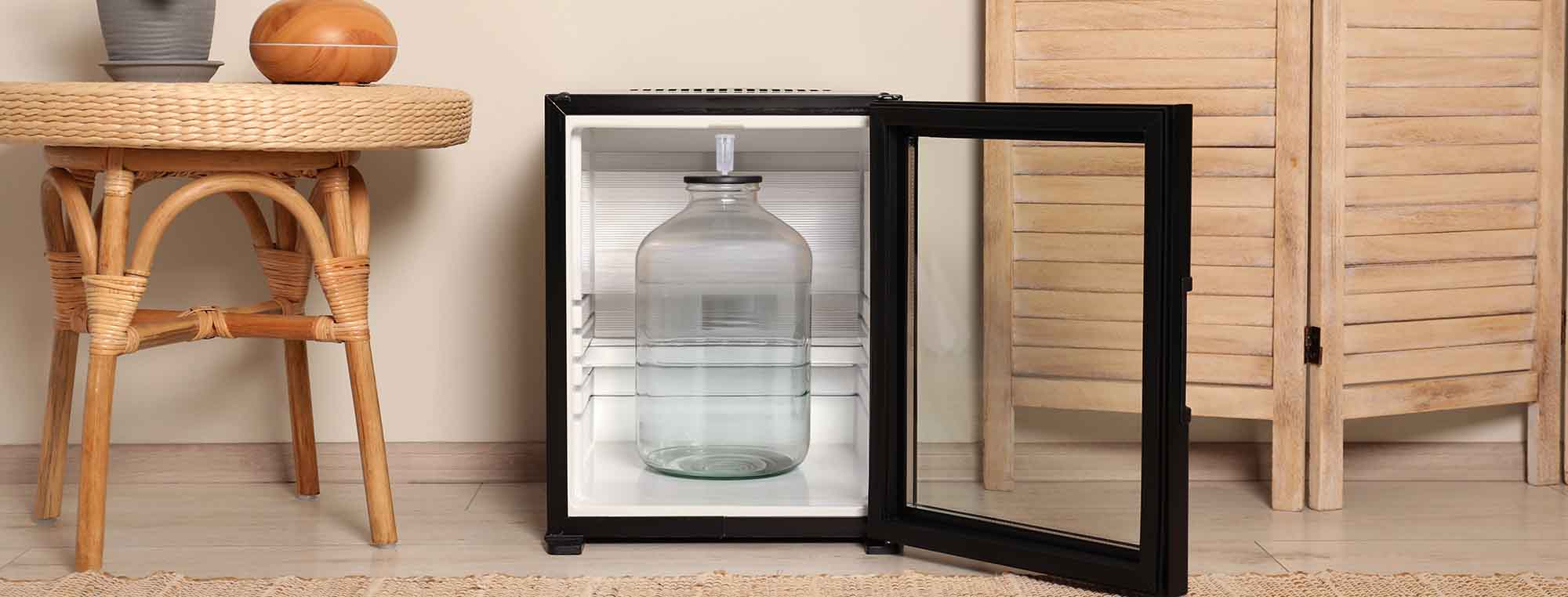
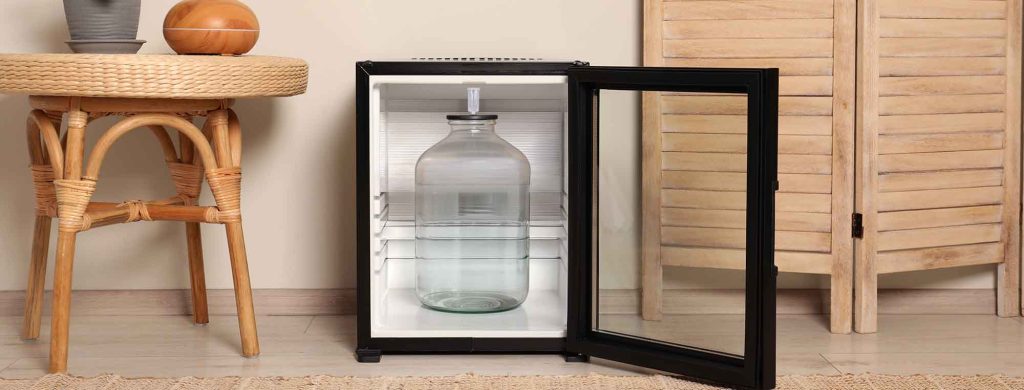
A refrigerator can provide excellent temperature control. You can use an external temperature controller with an appropriate appliance.
The temperature probe measures the fermenter. The controller turns the cooling system on and off.
Do not place an unprotected temperature probe where it can become contaminated.
Use a Fermentation Chamber
A dedicated fermentation chamber gives you more control. You can use heating and cooling equipment with a temperature controller.
This is useful when you ferment throughout the year. It is also useful when you brew multiple styles that need different temperatures.
Avoid Large Temperature Swings
Stable temperature is usually easier for yeast than repeated large changes.
For example:
66°F → 74°F → 64°F → 72°F
…is not an ideal fermentation plan.
A stable fermentation around the yeast’s preferred range is easier to control. Some controlled temperature changes are useful. Random temperature swings are not.
What About a Heat Wave?
Hot weather can create a serious fermentation problem. If your room reaches 80°F, your fermenter may become even warmer during active fermentation.
Simple options include:
- Moving the fermenter to a cooler room
- Using a water bath
- Adding frozen bottles to the water bath
- Using a fermentation chamber
- Using a temperature-controlled refrigerator
Do not put an active fermenter directly into an ice bath and allow the temperature to swing wildly. Make gradual changes when practical.

What About Winter?
Cold weather creates the opposite problem. If your fermentation area becomes too cold, fermentation can slow or stop.
You can use:
- A warmer room
- A fermentation heater
- A heating wrap
- A temperature-controlled fermentation chamber
Use a controller when possible, as a heater that runs continuously can make the fermentation too warm.
Temperature and Yeast Choice
Temperature control starts before you buy the yeast. Consider the environment where you ferment.
If your house is 78°F all summer, a yeast strain that performs best at 60°F will require active cooling. If you do not have cooling equipment, choose a yeast strain that can perform well in your available temperature range.
This is especially useful for simple homebrew setups.
- Choose the yeast for the brew.
- Choose the temperature for the yeast.
Do not force every yeast into the same fermentation temperature.
The Bottom Line
Yeast temperature affects both fermentation and flavor.
Too hot can produce:
- Excessive esters
- Harsh alcohol character
- Fusel alcohols
- Unwanted phenols
- Fast, difficult-to-control fermentation
Too cold can produce:
- Slow fermentation
- Poor attenuation
- Yeast that drops out early
- A stalled fermentation
Esters and phenols are not automatically faults. Some styles depend on them. The goal is not to eliminate every ester or phenol, but rather to produce the character that your yeast and recipe require.
The most important rule is simple:
Follow the recommended temperature range for your specific yeast strain.
Then measure the temperature of the fermenting liquid.
Do not rely only on room temperature. Do not assume that all yeast behave the same way. And do not assume that a hotter fermentation is a faster and better fermentation.
Temperature is one of your most powerful fermentation tools. Use it deliberately.