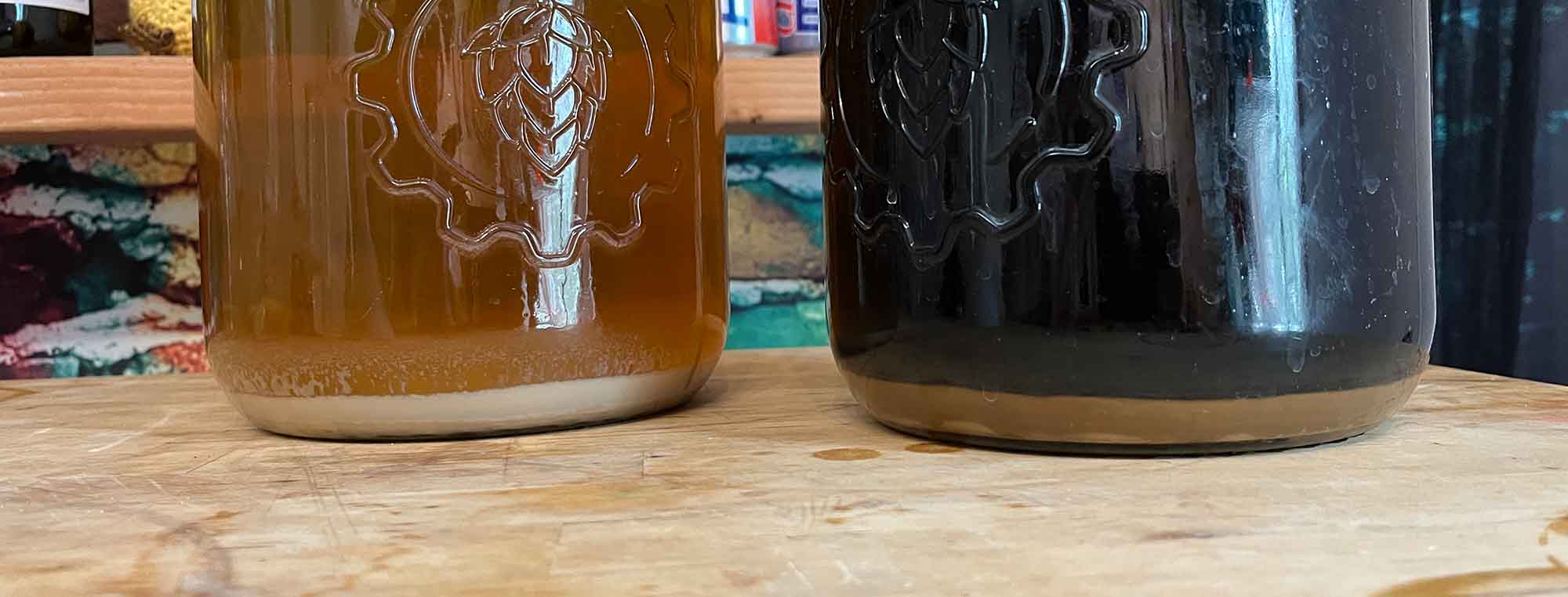
If a beer, cider, mead, or wine finishes too dry, you can add sweetness after fermentation.
The problem is that ordinary sugar is fermentable.
If you add table sugar, honey, juice, or another fermentable sweetener, the yeast can consume it. This can increase alcohol, produce carbon dioxide, and lower the sweetness again. In a bottle, this can create a serious problem.
A nonfermentable sweetener gives you another option. It adds sweetness without providing a normal food source for brewing yeast. See our complete guide to back-sweetening for more information.
Common choices include:
- Erythritol
- Monk fruit
- Xylitol
- Sucralose
- Stevia
- Lactose
- Acesulfame potassium
- Isomalt
- Sorbitol
- Allulose
- Maltodextrin
They do not all behave the same way. Some add body. Some have a cooling effect. Some have a bitter aftertaste. Some are hundreds of times sweeter than sugar.
Ranked: The Best Sweeteners for Homebrew
This ranking is based on practical homebrew use.
It considers:
- Fermentation stability
- Flavor
- Ease of dosing
- Ability to make a dry beverage taste sweet
- Use in beer, cider, mead, and wine
It is not a ranking of nutritional value.
| Rank | Sweetener | Fermented by normal brewing yeast? | Sweetness vs. sugar | Main advantage | Main problem |
| 1 | Erythritol | No significant fermentation expected | ~60–70% | Sugar-like sweetness and useful body | Cooling sensation at higher amounts |
| 2 | Monk fruit | No | ~100–250×+* | Very powerful with little addition | Often sold mixed with fermentable carriers |
| 3 | Xylitol | No significant fermentation expected | ~100% | Tastes very similar to sugar | Cooling effect; toxic to dogs |
| 4 | Sucralose | No significant fermentation expected | ~600× | Very powerful and clean when used carefully | Easy to overdo |
| 5 | Stevia | No | ~200–300× | Cheap and extremely powerful | Can taste bitter or herbal |
| 6 | Lactose | Usually no with common brewing yeast | ~20–40% | Adds sweetness and body | Milk sugar; not suitable for everyone |
| 7 | Acesulfame potassium | No | ~200× | Stable and powerful | Can have a lingering aftertaste |
| 8 | Isomalt | Generally very low fermentation | ~45–65% | Useful bulk sweetener | Less sweet and can have digestive effects |
| 9 | Sorbitol | Generally not fermented by S. cerevisiae | ~60% | Bulk and sweetness | Can have a noticeable cooling effect |
| 10 | Allulose | Not reliably nonfermentable | ~70% | Sugar-like flavor | Yeast behavior is less predictable |
| 11 | Maltodextrin | Very low fermentation | Very low | Adds body | Barely sweet |
*Monk fruit sweetness varies greatly by extract concentration and product formulation.
The exact order can change with the beverage. A sweet stout and a dry mead do not need the same sweetener.
The Most Important Rule: Do Not Assume the Package Is Pure
This causes many sweetening problems.
A sweetener can be nonfermentable while the product containing that sweetener is not.
For example, a packet may contain:
- Sucralose
- Dextrose
- Maltodextrin
- Erythritol
- Other bulking ingredients
The active sweetener may not ferment, but the carrier can. This matters because some granular tabletop products are designed to measure like sugar. They need additional ingredients to provide the bulk. Always read the ingredient list.
If you want predictable results, use a product that clearly identifies the actual sweetening ingredient and does not contain a significant amount of fermentable sugar.
1. Erythritol
Erythritol is a sugar alcohol.
Unlike ordinary sugar, it is not normally fermented by Saccharomyces cerevisiae. Research on S. cerevisiae has specifically found that common polyols including erythritol and xylitol are not metabolized by the organism.
Erythritol is popular because its sweetness is much closer to sugar than high-intensity sweeteners. It also provides some of the physical effect of adding a larger amount of sugar. That can be useful in dry cider and mead.
The problem with erythritol
Erythritol can produce a cooling sensation. You may notice it more when you use a large amount.
This can work well in some beverages. It can be distracting in others.
Erythritol is also not an ordinary brewing sugar. It is a polyol with its own flavor and sensory properties. Do not assume that adding more will simply make a beverage taste more like sugar.
Best uses
Erythritol works particularly well when you want:
- Moderate sweetness
- Some additional body
- A low-intensity sweetener that is easy to measure
It is often an excellent choice for cider and mead.
2. Monk Fruit
Monk fruit sweeteners come from Siraitia grosvenorii. The sweet compounds are mogrosides. Sounds intense, I know.
Pure monk fruit extract is extremely concentrated. You only need a small amount.
This creates one major advantage:
You can add sweetness without adding much material to the beverage.
Monk fruit can work very well in:
- Cider
- Mead
- Wine
- Hard seltzer
- Light beer
The problem is that most monk fruit products sold in grocery stores are not pure monk fruit extract. Many are blends.
A product may contain monk fruit plus:
- Erythritol
- Allulose
- Dextrose
- Maltodextrin
- Other ingredients
Check the label before using it in a fermented beverage.
Monk fruit powder can be misleading
“Monk fruit powder” does not always mean pure powdered monk fruit extract.
Some products are mostly erythritol with a small amount of monk fruit extract. That is not necessarily bad. In fact, an erythritol/monk-fruit blend can be easier to use because the erythritol provides bulk and the monk fruit provides most of the sweetness.
But you need to know what is actually in the product.
3. Xylitol
Xylitol is another sugar alcohol. It tastes much more like ordinary sugar than many high-intensity sweeteners. It is also roughly as sweet as sugar. That makes it easy to understand when you are adjusting a batch.
Xylitol can work well in:
- Cider
- Mead
- Wine
- Fruit beverages
- Some beers
It can also provide some body.
Xylitol has a cooling effect
Like erythritol, xylitol can create a cooling sensation.
Some people like this. Others do not.
Taste it in water before using it in a batch.
Important safety warning
Xylitol is extremely toxic to dogs. Keep xylitol away from dogs during brewing, storage, and cleanup.
Do not leave an open bag of xylitol on the counter. Do not assume a sealed container is safe if a dog can reach it.
4. Sucralose
Sucralose is one of the easiest sweeteners to use in homebrew. It is an extremely concentrated sweetener. You need very little.
This makes it useful when you want to add sweetness without adding a large amount of another ingredient.
Sucralose is especially useful for:
- Cider
- Mead
- Fruit wine
- Hard seltzer
- Light beer
- Fruited beer
It can also work in darker beers, but sweetness and body are different things. A sweetener can make a stout taste sweeter without making it feel thicker.
Watch the carrier
Pure sucralose is not the same thing as every product sold under a brand name containing sucralose. Some granular products contain maltodextrin or other bulking ingredients. Check the label.
How to use it
Do not dump a large amount into the entire batch.
- Take a measured sample of finished beverage.
- Add a small amount of sweetener.
- Mix well.
- Taste it.
- Increase the dose until the sample reaches the sweetness you want.
- Then scale the amount to the full batch.
This is much easier than trying to remove excess sweetness.
5. Stevia
Stevia is a plant-based high-intensity sweetener. It can provide a lot of sweetness with a very small addition. It is therefore useful when you want to increase sweetness without adding much fermentable material.
The main problem is flavor.
Some stevia products can produce:
- Bitterness
- Herbal notes
- Licorice-like notes
- A lingering aftertaste
Some people notice these flavors much more than others – I’m one of them!
Stevia is especially difficult to judge before it is mixed into the finished beverage. Always perform a small bench trial first. A tiny amount may taste excellent. A little more may taste dramatically worse.
6. Lactose
Lactose is milk sugar. Brewing yeast cannot normally ferment lactose, which is why it has been used in milk stouts for a very long time. It is much less sweet than table sugar.
Lactose is about one-fourth as sweet as cane sugar. The advantage is that lactose does more than add sweetness.
It also adds:
- Body
- Weight
- A rounder mouthfeel
This makes it useful in beer.
It is particularly common in:
- Milk stouts
- Sweet stouts
- Pastry-style beers
- Dessert beers
It is usually less useful for a crisp cider or mead.
Lactose is not suitable for everyone
Lactose is a milk-derived sugar.
If the finished beverage needs to be dairy-free, do not use it.
7. Acesulfame Potassium
Acesulfame potassium is usually called acesulfame K or Ace-K.
It is a high-intensity sweetener often used in sugar-free candies. It is much sweeter than sugar, so only a small amount is required. It is also stable and does not provide normal brewing yeast with a useful source of fermentable sugar.
The main problem is sensory. Some people notice a bitter or lingering aftertaste.
For that reason, Ace-K is often more useful as part of a sweetener blend than as the only sweetener.
8. Isomalt
Isomalt is a mixture of sugar alcohols.
It is less sweet than sugar and provides more bulk than high-intensity sweeteners. It is better known in confectionery than in homebrewing, but can still be useful for back-sweetening.
The advantage is that it gives you more material per unit of sweetness. The disadvantage is that it is not as straightforward as erythritol or sucralose.
If you already have access to erythritol, isomalt is usually not the first sweetener I would reach for.
9. Sorbitol
Sorbitol is another sugar alcohol. It is widely used as a food sweetener and humectant.
Like other polyols, it has different fermentation behavior from ordinary sugars.
Common brewing yeast generally does not metabolize sorbitol as it does glucose or sucrose. Research on S. cerevisiae has shown that several common acyclic polyols, including sorbitol, xylitol, and erythritol, are not metabolized by the organism.
Sorbitol can provide both sweetness and bulk. It is not usually the first choice for homebrew because erythritol and xylitol are more familiar options. It can also produce a noticeable cooling or sugar-alcohol character.
A warning: high levels of sorbitol can cause unpleasant tummy issues.
10. Allulose
Allulose deserves special treatment.
It is often marketed as a low-calorie sugar that behaves like sugar. It tastes much more like sugar than stevia or sucralose. That sounds perfect for homebrew.
There is a problem.
Do not treat allulose as a guaranteed nonfermentable sweetener.
Allulose is a rare sugar. Microorganisms can interact with it differently from ordinary brewing yeast, and research has demonstrated microbial production and transformation involving allulose.
Fermentation studies also show that allulose can affect yeast growth and fermentation behavior. That does not mean your normal brewing yeast will suddenly ferment an entire batch of allulose.
It means that “allulose is completely nonfermentable” is too strong a statement.
For a beer, cider, mead, or wine that must remain stable after back-sweetening, I would use a sweetener with a better-established fermentation profile. If you want to experiment with allulose, treat it as an experimental ingredient. Personally, I think it tastes terrible.
11. Maltodextrin
Maltodextrin is often mentioned with nonfermentable sweeteners. But it is important to understand what it actually does.
Maltodextrin is not very sweet.
Its main purpose is to add body and mouthfeel. That makes it useful when a beer or other fermented beverage tastes too thin.
It is not a good solution if your main problem is: “This tastes too dry. I want it to taste sweet.”
Maltodextrin can make the beverage feel fuller. It usually will not make it taste dramatically sweeter. Some maltodextrin is also less completely unfermentable than brewers sometimes assume. Fermentability depends on the product and the yeast.
Use it for body, not as your primary sweetener.
High-Intensity Sweeteners vs. Bulk Sweeteners
This distinction makes choosing a sweetener much easier.
High-intensity sweeteners
These require very small amounts.
Examples:
- Sucralose
- Stevia
- Monk fruit
- Acesulfame K
Advantages:
- Very little material added
- Very little effect on body
- Easy to keep calories low
- Useful for very dry beverages
Disadvantages:
- Easy to overdose
- Some have strong aftertastes
- Small measurement errors can make a big difference
Bulk sweeteners
These require larger amounts.
Examples:
- Erythritol
- Xylitol
- Lactose
- Sorbitol
- Isomalt
Advantages:
- Easier to dose
- More sugar-like sensory effect
- Can add body or mouthfeel
Disadvantages:
- Larger additions
- Sugar-alcohol cooling effects can become noticeable
- Some have digestive effects
- Some are not appropriate for all diets
How to Sweeten a Finished Homebrew
The safest way to experiment with balancing is with a bench trial. Do not immediately add your calculated amount to the entire batch.
Take several measured samples.
For example:
- 100 mL sample 1
- 100 mL sample 2
- 100 mL sample 3
- 100 mL sample 4
Add progressively larger amounts of sweetener.
Taste each sample. Find the smallest addition that gives you the result you want. Then scale that dose to the batch. This method also lets you compare sweeteners.
You may discover that:
- Erythritol tastes better than sucralose
- Sucralose tastes better than stevia
- A monk fruit/erythritol blend tastes better than either ingredient alone
- Lactose provides exactly the body you wanted
- You did not actually need much sweetness at all
Sweetness Is Not the Same as Balance
Before adding sweetener, taste the beverage carefully.
A beer or wine can taste “too dry” for several reasons.
It may actually need:
- More sweetness
- More body
- Less acidity
- Less bitterness
- More fruit character
- Less alcohol heat
- More carbonation
Sweetening will not fix every one of these problems.
For example, a sharp cider may taste much better after a small amount of sweetness. A thin cider may still taste thin after you sweeten it. That cider may need both sweetness and body. This is where erythritol, lactose, or another bulk ingredient can behave differently from sucralose or stevia.
Do Not Use Fermentable Sugar for Back-sweetening Without a Plan
Table sugar, honey, apple juice, grape juice, and similar ingredients are fermentable.
If you add them to finished homebrew, the yeast can start working again.
The result can be:
- Lower final gravity
- Increased alcohol
- Carbonation
- Loss of sweetness
- Overcarbonation
- Bottle bombs
Ordinary sugars such as sucrose and dextrose are highly fermentable. This is why back-sweetening and bottle conditioning require special care. If you want a sweet carbonated beverage in bottles, you cannot simply add sugar until it tastes right and then cap the bottles. The sugar may ferment.
What About Sorbate and Sulfite?
Potassium sorbate and sulfite are often used when making sweet cider, mead, and wine.
They are not sweeteners. Rather, they are used to help prevent yeast from restarting under appropriate conditions. This is a different strategy from using a nonfermentable sweetener.
For wine, cider, and mead, stabilization followed by back-sweetening can be useful.
For beer, the situation is different. Do not assume that a wine-style stabilization process is appropriate for every beer – especially if you’re bottle conditioning rather than kegging.
And stabilization is not a substitute for understanding your carbonation method.
What Should You Use?
For most homebrewers, I would start with one of three approaches.
Want the simplest high-intensity sweetener?
Try sucralose.
It requires very little and gives you a lot of control.
Want a more sugar-like sweetener?
Try erythritol.
It is less intensely sweet and can contribute more body.
Want a very natural-tasting high-intensity sweetener?
Try monk fruit.
But check the ingredient list carefully. A “monk fruit” product may actually be a monk-fruit/erythritol blend or contain another carrier.
Want to experiment?
Try:
- Stevia
- Xylitol
- Ace-K
- Isomalt
- Sorbitol
- Allulose
But test them in a glass or measured sample first.
The Bottom Line
There is no single perfect sweetener for every homebrew.
For a typical finished beer, cider, mead, or wine:
- Erythritol is one of the best bulk sweeteners.
- Monk fruit can work extremely well when you use a suitable product.
- Xylitol tastes very sugar-like but requires extra safety around dogs.
- Sucralose is the easiest high-intensity option.
- Stevia works, but its flavor is highly dependent on the product and dose.
- Lactose is excellent when you want sweetness and body in beer.
- Allulose should not be treated as a guaranteed nonfermentable sweetener.
And always remember:
The sweetener is only half the equation. The product you buy matters too.
Read the ingredient list. Test a small sample. Add less than you think you need. Taste again. That approach will save you a lot of ruined batches.