
Force carbonation is the fastest way to carbonate beer, cider, mead, or wine.
Instead of adding sugar and waiting for yeast to produce carbon dioxide, you add carbon dioxide directly to the finished beverage.
The basic process is simple:
- Finish fermentation.
- Transfer the beverage to a keg.
- Remove oxygen from the keg.
- Chill the keg.
- Connect CO₂.
- Set the correct pressure.
- Give the CO₂ time to dissolve.
- Serve.
You can speed up the process by gently agitating the keg. A cold keg, correct CO₂ pressure, and good contact between the gas and liquid are the keys to fast carbonation.
What Is Force Carbonation?
Force carbonation means adding carbon dioxide from a CO₂ tank to your beverage. Yeast does not need to produce the carbonation.
You control the carbonation with:
- CO₂ pressure
- Beverage temperature
- Time
- Agitation
This is different from bottle conditioning. With bottle conditioning, yeast consumes added sugar inside the bottle and produces CO₂. With force carbonation, you add CO₂ directly.
What Do I Need?
For basic force carbonation, you need:
- A pressure-rated keg
- CO₂ tank
- CO₂ regulator
- Gas disconnect
- Beer or beverage disconnect
- Beer line
- Faucet
- Refrigerator or kegerator
- Cleaner
- No-rinse sanitizer
- Carbonation chart or calculator
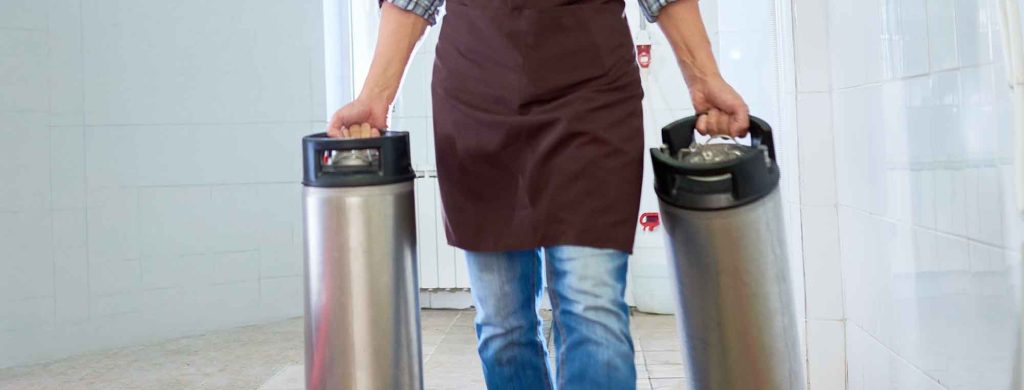
A Cornelius keg is a common choice for homebrewers – typically with the ball-lock style connectors.
The same basic equipment can carbonate beer, cider, mead, wine, and other beverages.
Make Sure Fermentation Is Finished First
Do not put actively fermenting beer, cider, mead, or wine into a keg and assume the CO₂ pressure will control the fermentation. Take hydrometer readings on different days. The gravity should remain stable before you package the beverage.
If the gravity is still dropping, fermentation is still happening. This matters because a keg can hold pressure much better than most fermentation vessels. Continued fermentation can create more pressure than you expect and cause issues with your carbonation plans.
The exception: spunding
A pressure-rated fermenter can be used for controlled natural carbonation. This is called spunding.
That is different from simply putting unfinished beer into a normal keg. Do not attempt pressure fermentation or spunding in equipment that is not designed to hold pressure. For most homebrewers, force carbonation in a keg is simpler.
Transfer to a Clean, Sanitized Keg
Clean the keg before you use it. Then sanitize it.
Transfer the finished beverage into the keg. Avoid splashing. Oxygen is especially damaging to finished beverage, and it can also cause quality problems in wine, cider, and mead.
A closed transfer is the best option when your equipment supports it. If you do not have a closed-transfer setup, carefully siphon the beverage into the keg.
Leave some headspace. Do not fill the keg completely.
Purge the Keg With CO₂
Try to remove as much oxygen as practical before carbonation.
One good method is to purge the keg before you fill it.
The sanitizer-purge method
- Clean and sanitize the keg.
- Fill the keg completely with sanitizer.
- Push the sanitizer out with CO₂.
- Leave the keg filled with CO₂.
- Transfer your beverage into the purged keg.
This replaces most of the air in the keg with CO₂ before the beverage enters.
You can also purge the headspace after filling:
- Connect the CO₂.
- Pressurize the keg.
- Pull the pressure-relief valve.
- Repeat several times.
This reduces the amount of oxygen in the headspace.
Chill the Keg
Cold beverage carbonates much more easily than warm beverage. This is one of the most important parts of fast force carbonation.
For most beer, mead, or cider, about 35–40°F (2–4°C) is a useful starting range. Cold liquid absorbs CO₂ more easily.
Do not try to carbonate a warm keg with the same pressure you would use for a cold keg. Temperature changes the amount of CO₂ that will dissolve at a given pressure.
Decide How Much Carbonation You Want
Not every beverage should have the same amount of carbonation.
Examples:
- British-style ales often use lower carbonation.
- American ales often use moderate carbonation.
- Lagers often use moderate carbonation.
- Wheat beers often use higher carbonation.
- Belgian-style beers often use higher carbonation.
- Cider can range from lightly sparkling to highly carbonated.
- Mead can be still, lightly sparkling, or highly carbonated.
- Wine may be still or sparkling.
Use a carbonation chart or calculator instead of guessing.
Your target carbonation depends on:
- Beverage temperature
- Desired carbonation level
- CO₂ pressure
Pressure Is Not the Same Thing as Carbonation
This causes a lot of confusion for new keggers. Higher pressure does not automatically mean higher carbonation right now.
Carbonation depends on the relationship between:
- Temperature
- Pressure
- Time
- Gas contact
A cold beverage at a given pressure can absorb more CO₂ than a warm beverage at the same pressure. This is why carbonation charts use both temperature and pressure.
The Fastest Practical Method: Cold Keg + Agitation
If you want the beverage carbonated as quickly as practical, use a cold keg and agitation.
A basic fast process is:
- Finish fermentation.
- Transfer to a sanitized keg.
- Purge the keg with CO₂.
- Chill the keg completely.
- Connect CO₂.
- Set the regulator to an appropriate carbonation pressure.
- Allow the beverage to sit under pressure for a short period.
- Disconnect the gas.
- Gently rock or roll the keg.
- Let the keg rest cold.
- Check the carbonation.
- Repeat briefly if necessary.
- Reduce to serving pressure.
- Serve.
Agitation increases contact between the beverage and the CO₂. This allows the beverage to absorb CO₂ much faster than simply leaving it alone.
How Hard Should I Shake the Keg?
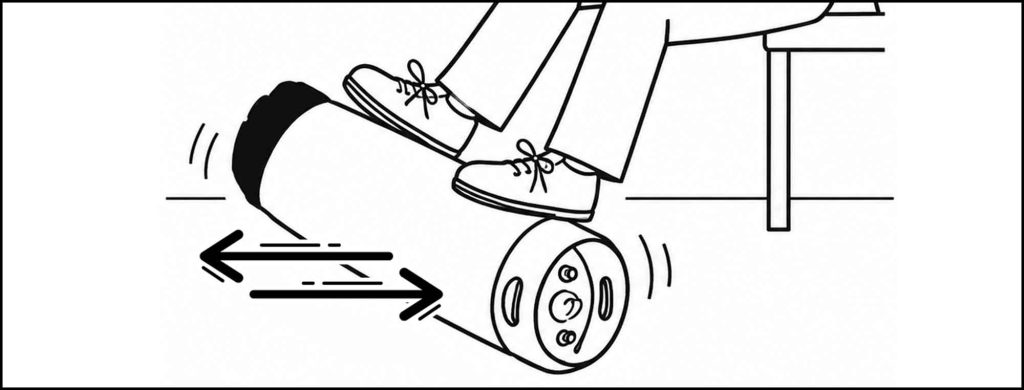
You do not need to violently shake it. Gentle rocking or rolling is enough – often called the “logroll” method.
The goal is to increase contact between the liquid and CO₂. You are not trying to make a keg cocktail!
Violent shaking also makes it easier to overshoot your carbonation target. A controlled approach is easier to repeat.
The High-Pressure Burst Method
A common fast method is to use a higher pressure for a short period. For example, you might use pressure as high as 30 PSI during the initial carbonation process.
The exact pressure depends on:
- Temperature
- Desired carbonation
- How long you apply the pressure
- Whether you agitate the keg
Do not treat 30 PSI as a universal carbonation setting. It is a tool for speeding up carbonation. After the beverage reaches the desired carbonation level, reduce the pressure to your normal serving pressure.
Do Not Shake an Overpressurized Keg
Do not simply turn the regulator as high as possible and start shaking.
That can cause:
- Overcarbonation
- Excessive foam
- Difficult-to-control results
If you use agitation:
- Keep it cold.
- Use a reasonable pressure.
- Agitate gently.
- Check the carbonation.
- Stop when you reach your target.
You can always add more CO₂. Removing excess carbonation takes more time.

How Long Does Fast Force Carbonation Take?
There is no single time that works for every keg. A small keg of cold beverage can become drinkable within a few hours. A typical fast process may take several hours.
The exact time depends on:
- Beverage temperature
- CO₂ pressure
- Beverage volume
- Keg geometry
- Agitation
- Desired carbonation level
After an agitation session, let the keg rest cold before judging the carbonation. The beverage needs time to absorb the CO₂ and reach a more stable state.
The Overnight Method
If you can wait until tomorrow, there is an easier method.
This is one of the best compromises between speed and consistency.
- Finish fermentation.
- Transfer to a sanitized keg.
- Purge the keg.
- Chill the keg completely.
- Connect CO₂.
- Set the regulator to the pressure required for your target carbonation.
- Leave the keg connected overnight.
- Check the carbonation the next day.
- Reduce to serving pressure.
- Serve.
This method is slower than agitation. It is also much harder to overcarbonate.
For many homebrewers, cold + correct pressure + overnight is the easiest reliable approach.
The Set-and-Forget Method
You can also carbonate without agitation or high pressure.
This is the simplest method.
- Transfer the finished beverage to a sanitized keg.
- Purge the keg.
- Chill it.
- Connect CO₂.
- Set the regulator to your serving pressure (usually not more than 10 PSI).
- Leave the keg cold and connected.
The beverage gradually absorbs CO₂.
This can take several days to about a week. The advantage is consistency.
You do not need to shake the keg, nor do you need to repeatedly adjust the pressure. You simply wait!
Fast vs. Easy Carbonation
| Method | Typical Time | Difficulty | Overcarbonation Risk |
|---|---|---|---|
| Agitation | A few hours | Moderate | Higher |
| High-pressure burst | Several hours | Moderate | Higher |
| Overnight | Overnight | Easy | Moderate |
| Set and forget | Several days | Very easy | Low |
These times are estimates.
Your actual carbonation time will depend on temperature, pressure, volume, and the carbonation level you want.
What About 30 PSI for 24 Hours?
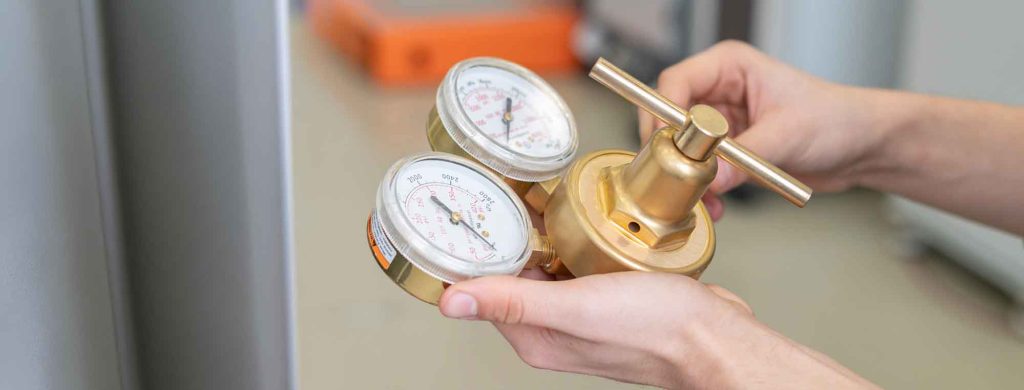
You may see the recommendation to set a keg to around 30 PSI for 24 hours. This can work.
It is not a universal setting.
The correct pressure depends on the temperature of the beverage and the carbonation level you want. A fixed pressure can overcarbonate one beverage and undercarbonate another.
If you use a high-pressure method, check the carbonation before serving and reduce the pressure afterward. It’s sloppy, but it works!
What About Shaking at 30 PSI?
Shaking a cold keg at high pressure can carbonate a beverage very quickly. It can also overshoot your target very quickly.
The problem is not that the method does not work, but simply your level of control. If you use this method, use reasonable pressure, keep the beverage cold, agitate gently, and check your results.
You do not need to shake violently.
Do I Need a Carbonation Stone?
No. A carbonation stone can increase the surface area available for CO₂ absorption. It can be useful in some kegging setups.
You do not need one for fast carbonation. A cold keg, appropriate CO₂ pressure, and agitation are enough.
Can I Force Carbonate Mead?
Yes. Mead can be force carbonated just like beer.
Make sure fermentation is finished first. Transfer the mead to a keg. Purge it with CO₂. And chill it.
Set the pressure for your desired carbonation. Then allow the CO₂ to dissolve.
A carbonated mead can range from lightly sparkling to highly carbonated. Keep the final carbonation level appropriate for the beverage and the pressure rating of the packaging you use.
Can I Force Carbonate Cider?
Yes. Cider is well suited to force carbonation.
The process is the same:
Finish → transfer → purge → chill → pressurize → carbonate → serve.
Force carbonation is especially useful for cider because you can carbonate a dry cider without adding priming sugar. If you want a sweet sparkling cider, force carbonation also gives you more control over the sugar.
However, sweetness and carbonation are separate problems. Make sure any added fermentable sugar cannot restart fermentation in the keg.

Can I Force Carbonate Wine?
Yes, if the wine and equipment are appropriate for carbonation.
Sparkling wine requires pressure-rated equipment and packaging. Force carbonation lets you add CO₂ without relying on a bottle fermentation.
For a lightly sparkling wine, use a lower carbonation target. For a highly sparkling wine, use a higher target.
You can also use a counter-pressure filler to fill bottles from the keg. Do not assume that every wine bottle is suitable for carbonated wine. Use pressure-rated packaging.
Can I Carbonate a Warm Keg?
Yes. It is just not the easiest way to do it.
Warm liquid requires more pressure to reach the same carbonation level. It also makes serving more difficult because warm carbonated liquid is more likely to foam.
For fast and predictable carbonation:chill the keg first.
Serving Pressure Is Different From Carbonation Pressure
The pressure you use to carbonate a keg does not always need to be the pressure you use to serve it.
Once the beverage reaches the desired carbonation level, reduce the regulator to a suitable serving pressure. A draft system needs enough pressure to move the beverage through the beer line. Do not simply use the lowest pressure possible.
Your serving setup depends on:
- Beverage temperature
- CO₂ pressure
- Beer-line length
- Beer-line diameter
- Faucet
A balanced draft system gives you good flow without causing excessive foaming or allowing carbonation to fall out of solution.
Why Is My Carbonated Beer So Foamy?
Carbonation is not the only cause of foam.
Check:
- Beverage temperature
- Beer-line temperature
- Serving pressure
- Beer-line length
- Beer-line cleanliness
- Faucet setup
- Carbonation level
Keep the entire beverage path cold. That means:
Keg → beer line → faucet
A cold keg with a warm beer line can still produce a terrible pour.
Can I Overcarbonate a Keg?
Yes.
The easiest way to overcarbonate a keg is to combine:
- Very cold beverage
- High pressure
- Long contact time
- Agitation
This is why the fastest methods require more attention. The good news is that overcarbonation is usually fixable. The better approach is to check the carbonation as you go.
How Do I Fix Overcarbonated Homebrew?
Do not panic. You can remove some CO₂.
First, disconnect the CO₂ supply. Then pull the pressure-relief valve to release some pressure. Wait. Repeat if necessary.
Once the pressure has dropped, reconnect the CO₂ at the correct serving pressure. Do not repeatedly vent the keg every few seconds.
The CO₂ dissolved in the beverage needs time to come out of solution. Let the keg rest cold between adjustments.
What About Headspace?
A keg needs some headspace, so do not fill it completely. The headspace also gives you a place to add CO₂ and purge oxygen.
However, the amount of headspace is not the main factor controlling carbonation. The temperature and pressure of the beverage matter much more.
The Simplest Fast Method
If you want homebrew ready as quickly as practical, use this process:
- Finish fermentation.
- Confirm stable gravity.
- Transfer to a sanitized keg.
- Purge the keg with CO₂.
- Chill the keg to about 35–40°F for beer.
- Connect CO₂.
- Set the regulator to the pressure required for your target carbonation.
- Gently rock (logroll) the keg for several minutes.
- Let the keg rest cold.
- Check the carbonation after a few hours.
- Repeat a short agitation session if needed.
- Reduce to serving pressure.
- Serve.
If you can wait overnight, skip the shaking. Chill the keg, set the correct pressure, and leave it connected overnight. That method is slower, but it is easier to control.
Related: What is the Fastest Way to Carbonate a Keg?

Common Force-Carbonation Mistakes
Carbonating warm beer
Warm beer does not absorb CO₂ as easily.
Fix: Chill the keg first.
Using the same pressure for every beer
Different temperatures and carbonation targets require different pressures.
Fix: Use a carbonation chart or calculator.
Shaking too hard
Violent agitation makes overcarbonation more likely.
Fix: Gently rock the keg.
Using high pressure for too long
High pressure is useful for speeding up carbonation, but it is easy to overshoot.
Fix: Check the beverage and reduce the pressure when it reaches the target.
Skipping the purge
Oxygen in the keg can damage the flavor and freshness of the beverage.
Fix: Purge the keg before and, if needed, after filling.
Carbonating before fermentation is finished
Continued fermentation can create unexpected pressure.
Fix: Confirm stable gravity first unless you are intentionally using a controlled pressure-fermentation process.
Reducing serving pressure too far
The beverage may pour slowly or lose carbonation in the draft system.
Fix: Balance the serving pressure with your beer line and system.
Force Carbonation for Beer, Cider, Mead, and Wine
The basic process does not change:
Finish fermentation → transfer → purge → chill → pressurize → carbonate → serve.
What changes is the target carbonation.
- Beer may need anything from low to high carbonation depending on the style.
- Cider can be lightly sparkling or highly carbonated.
- Mead can be still, lightly sparkling, or highly carbonated.
- Wine can be still or sparkling.
Choose the carbonation level for the beverage you are making.
Bottom Line
Force carbonation is not complicated.
You need:
A finished beverage + a pressure-rated keg + CO₂ + cold temperature + the correct pressure.
For the fastest practical result:
Cold keg + appropriate CO₂ pressure + gentle agitation.
For the easiest reliable result:
Cold keg + correct pressure + overnight.
For the least work:
Cold keg + correct pressure + set and forget.
Do not simply crank the regulator as high as it will go. The goal is not maximum pressure, but rather to get the right amount of CO₂ into the beverage.
Keep it cold. Use the right pressure. Give the CO₂ good contact with the liquid. Then let the keg do the work.