Mold can grow in homebrew. In fact, it’s a perfect environment for mold – in some circumstances.
- Mold can grow in beer.
- It can grow in cider.
- It can grow in mead.
- It can also grow on fruit, brewing ingredients, equipment, and surfaces around your fermentation area.
Sometimes mold is easy to identify. Sometimes it is not.
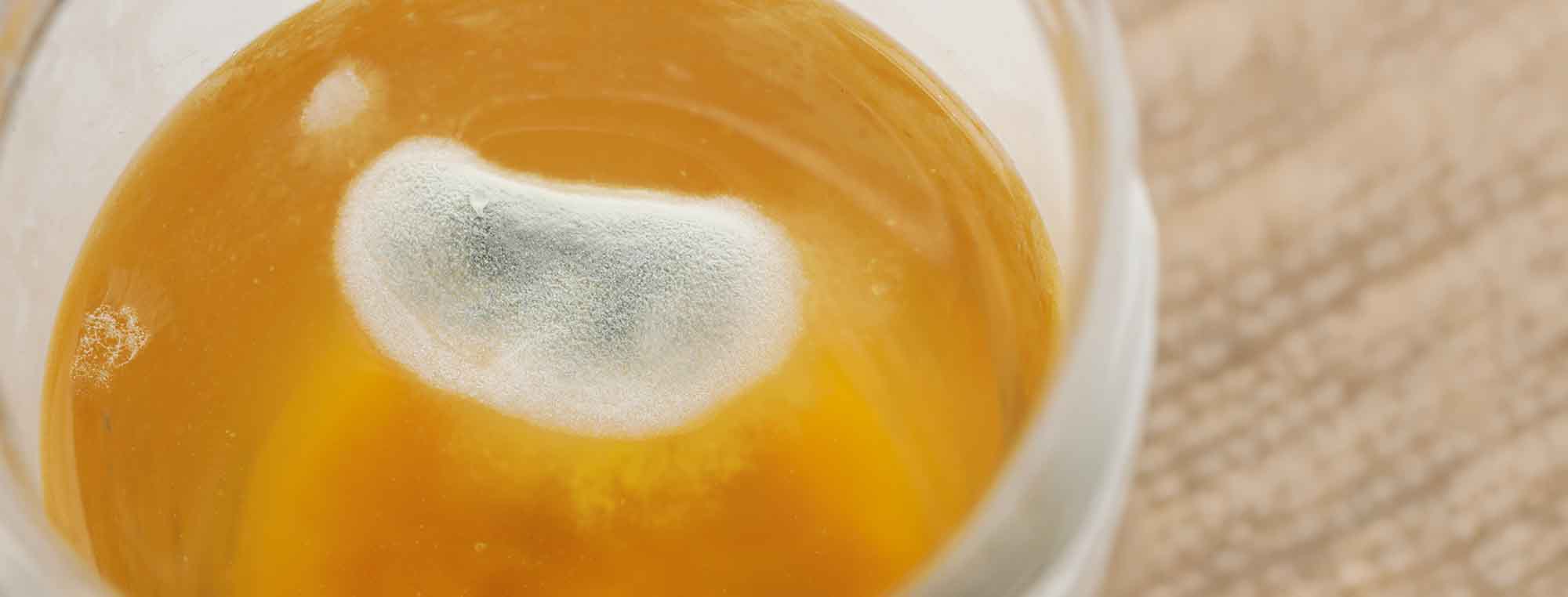
You may see a fuzzy patch on the surface. You may see a thin film. You may see spots that are white, green, blue, black, or another color.
But you may also see something that looks strange but is not mold.
This creates an important rule:
If you cannot identify the growth with confidence, do not assume that it is safe.
When mold is growing in a finished beverage, the safest choice is to discard the batch.
- Do not taste it to identify the growth.
- Do not smell it closely.
- Do not skim the mold and keep the rest of the batch.
- Do not assume that boiling or pasteurizing will make it safe.
What Does Mold Look Like in Homebrew?
Mold usually grows where oxygen is available. This means that the surface of a fermenter is a common location.
You may see:
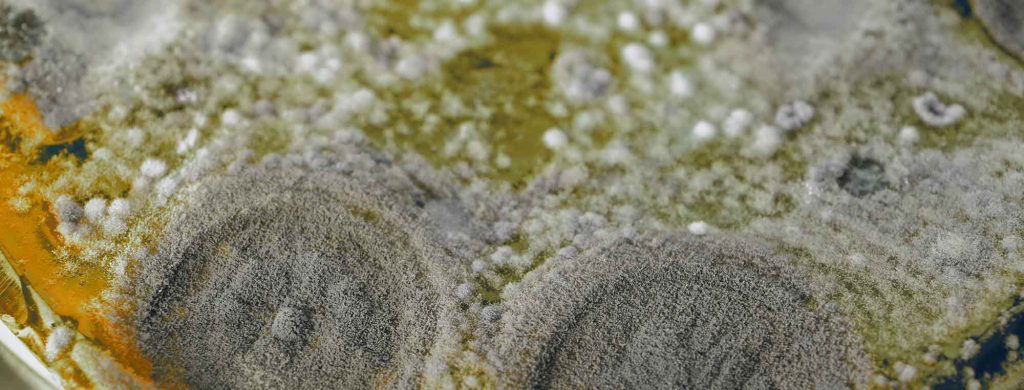
- Fuzzy spots
- Hair-like growth
- Circular colonies
- Powdery patches
- Colored spots
- A thick surface layer
- A dry-looking film
- Growth attached to fruit floating on the surface
Mold can be white, green, blue, gray, black, or other colors. Color alone does not identify a mold species. This is important.
You cannot determine whether a mold is dangerous by its color.
You also cannot determine safety by appearance alone.
Some molds produce toxins. Some do not. You normally cannot tell which is which by looking at the colony.
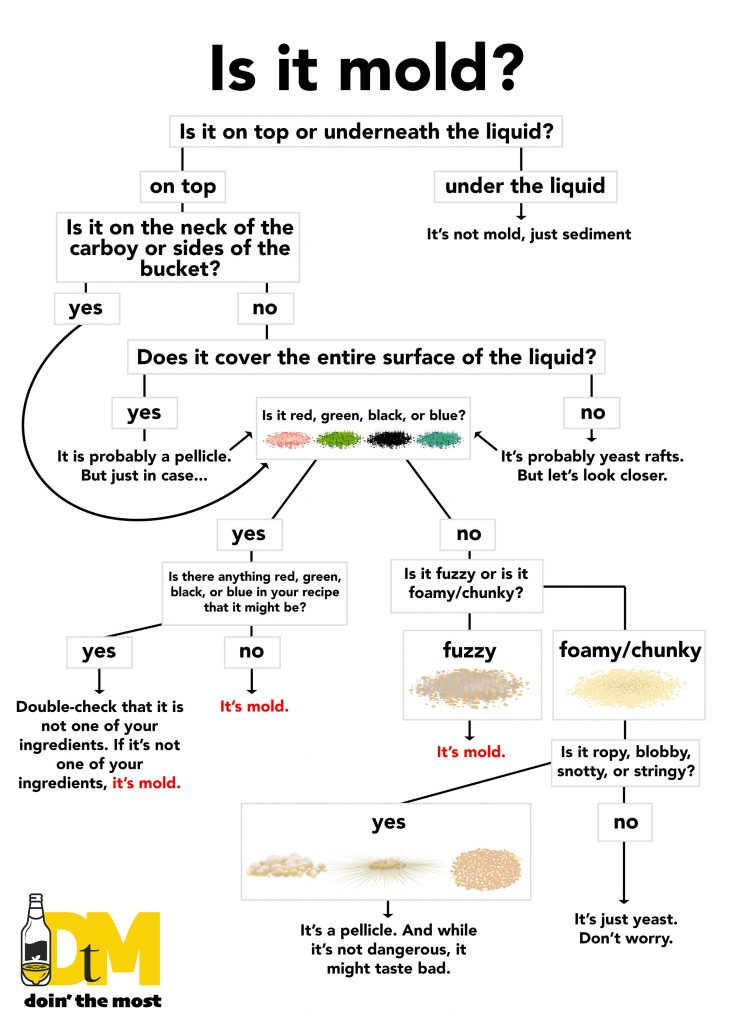
Mold vs. Yeast
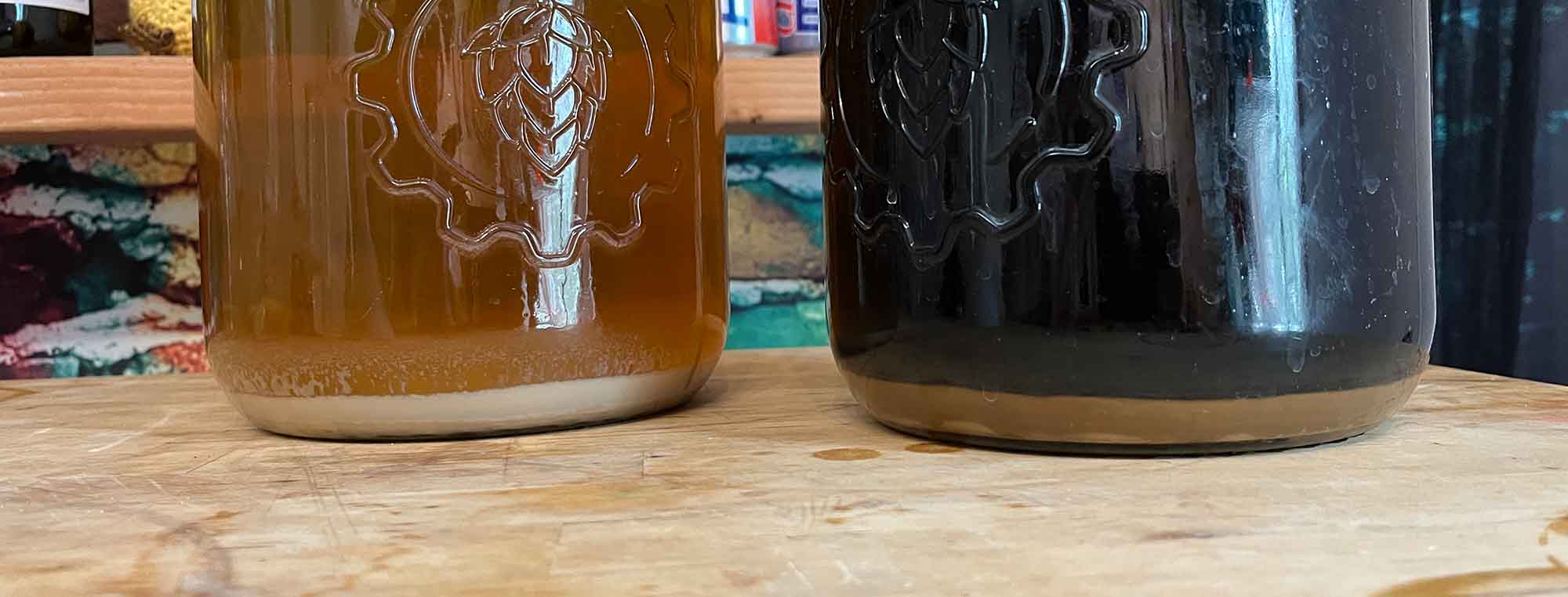
Not everything growing in your fermenter is mold. Yeast can create strange-looking surfaces.
A healthy fermentation can produce:
- Krausen
- Foam
- Yeast rafts
- Sediment
- Bubbles
- Protein deposits
These can look unusual.
Some yeast and bacteria can also form a film on the surface of a beverage. A film does not automatically mean mold. Mold is more likely when you see visible fuzzy or filamentous growth.
The problem is that homebrew does not always provide a clean visual identification. If you do not know what you are seeing, do not taste the beverage as a test.
What Does Mold on Homebrew Look Like?
A common mold colony looks different from normal fermentation. For example, you may see small circular spots on the surface. The spots may grow larger over time. They may develop a fuzzy texture. And several spots may join together and form a larger mat.
You may also see mold growing on fruit that is floating above the liquid.
This is especially important with:
- Fruit mead
- Fruit wine
- Fruit cider
- Sour beer
- Open fermentations
Fruit can provide a good surface for mold growth when it is exposed to oxygen. If fruit is floating above the liquid, inspect it and “punch” down the fruit cap regularly.
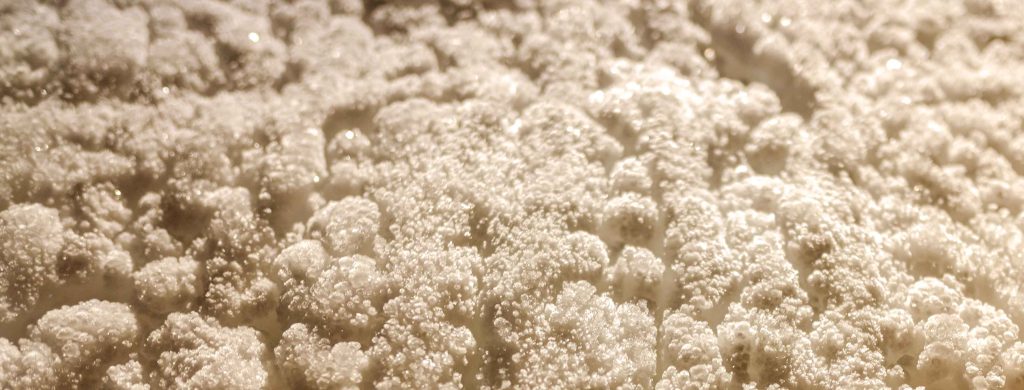
What About a White Film?
A white film does not automatically mean mold. Some yeast and bacteria can form a surface film. So-called “kahm yeast” is one example of a surface-growing yeast that can produce a thin, white layer. It is, essentially, a wild yeast that has taken hold in your batch.
It is often described as a smooth or wrinkled film. It can occur in fermented foods and beverages. Kahm yeast is not the same thing as mold.
However, identifying a microorganism by appearance alone can be difficult. If you are not sure what you are seeing, treat an unknown growth with caution. Again,do not taste an unknown surface growth to identify it.
What About Fuzzy Mold?
Fuzzy growth is a much stronger warning sign. Mold grows using structures called hyphae. These structures can produce the familiar fuzzy appearance.
You may see:
- Fine hairs
- Cotton-like patches
- Powdery growth
- Raised colonies
- Fuzzy circles
- Tiny mushroom-like growths
If you see obvious fuzzy growth on your homebrew, do not taste the batch. At that point, the safest option is disposal.
Can I Just Remove the Mold?
No. Do not treat mold like a piece of fruit floating in your beer. You cannot safely remove a visible patch and assume that the rest of the batch is safe.
Mold can, and will, grow below the visible surface once the surface infection gains strength. Microscopic fungal structures can also extend beyond the area that you can see.
Some molds can produce compounds called mycotoxins. These compounds may be present even when you cannot see them. This means that removing the visible mold does not necessarily remove the hazard.
What Are Mycotoxins?
Mycotoxins are toxic compounds produced by certain fungi. Not every mold produces mycotoxins. Different fungi can produce different toxins.
Some important mycotoxins include:
- Aflatoxins
- Ochratoxin A.
- Patulin
- Fumonisins
- Deoxynivalenol (DON)
- Zearalenone
These toxins are usually associated with contaminated agricultural products and food. They are not produced by every mold. They are also not all relevant to every brewing situation.
The important point for homebrewers is simple: You cannot determine mycotoxin risk by looking at a mold colony. You would need appropriate testing to identify specific toxins.
Why Are Mycotoxins Dangerous?
Mycotoxins can have several effects on human health.
The effects depend on:
- The specific toxin
- The amount consumed
- How often exposure occurs
- The person exposed
- The route of exposure
Some mycotoxins can cause acute poisoning at high exposure levels. Long-term exposure to some mycotoxins can cause more serious effects.
For example, aflatoxins are associated with liver damage and liver cancer. Ochratoxin A has been associated with kidney toxicity and other health effects.
The presence of mold does not mean that one of these toxins is definitely present. But it means that you cannot use appearance alone to rule out the possibility.
Mold Does Not Automatically Mean Mycotoxins
This distinction matters.
It is incorrect to say:
“If you see mold, the entire batch contains dangerous mycotoxins.”
That is not established by simply seeing mold. Different fungi produce different compounds. Some fungi do not produce known mycotoxins. The amount of toxin can also vary.
However, you normally do not know the fungal species or toxin concentration in a contaminated homebrew. That is why the practical food-safety recommendation is conservative.
Do not consume visibly moldy homebrew.
You do not need to determine exactly which mold you have before deciding not to drink it.
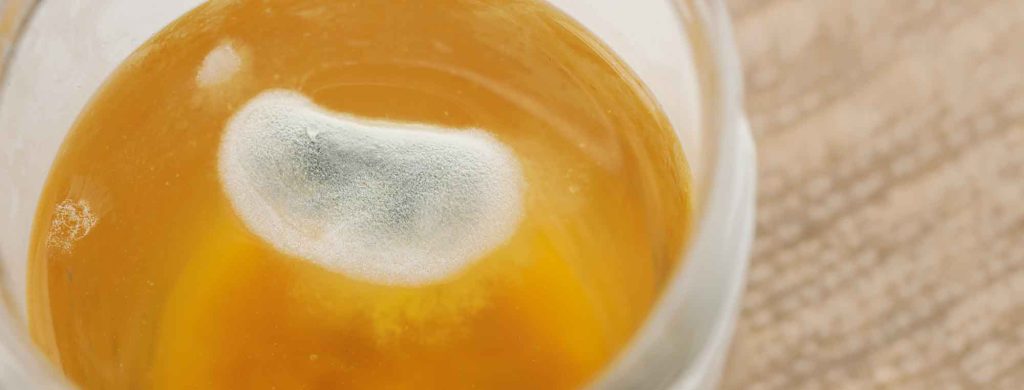
Can Fermentation Kill Mold?
Fermentation does not guarantee that mold will be eliminated.
Alcohol can inhibit many microorganisms. Low pH can also inhibit many microorganisms. Neither condition means that mold cannot grow.
A beverage can be acidic and alcoholic and still develop surface mold if oxygen and other conditions are suitable. Do not use alcohol content as a safety test.
A 12% ABV mead is not automatically protected from mold. Nor is a 6% ABV beer is automatically protected from mold.
Can Boiling Kill Mold?
Heat can kill many living microorganisms.
That does not mean that boiling a moldy beverage makes it safe to drink. Some mycotoxins are relatively resistant to heat. The effectiveness of heating depends on the specific toxin and the heating conditions.
Home pasteurization is not a reliable method for removing an unknown mycotoxin. Do not boil a moldy batch and assume that you have made it safe. Discard it – no brew is worth sacrificing your health.
Can Pasteurization Fix Moldy Homebrew?
No. Pasteurization is useful for controlling specific microorganisms under controlled conditions. It is not a general-purpose mold and toxin removal process.
If mold has grown in your finished beverage, do not use pasteurization as a rescue method. The safest approach is disposal. This is especially important because pasteurization does not provide a simple way to determine whether any fungal toxins are present.
What About Racking Away From the Mold?
You will see this recommended often online – do not do this. Racking can remove the liquid from contact with visible mold but it does not prove that the beverage is free of mold contamination or fungal compounds.
It can also spread contamination to:
- Your siphon
- Your tubing
- Your fermenter
- Your bottling equipment
- Your work surface
The batch is not worth the risk. Discard it. Then clean and sanitize the equipment.
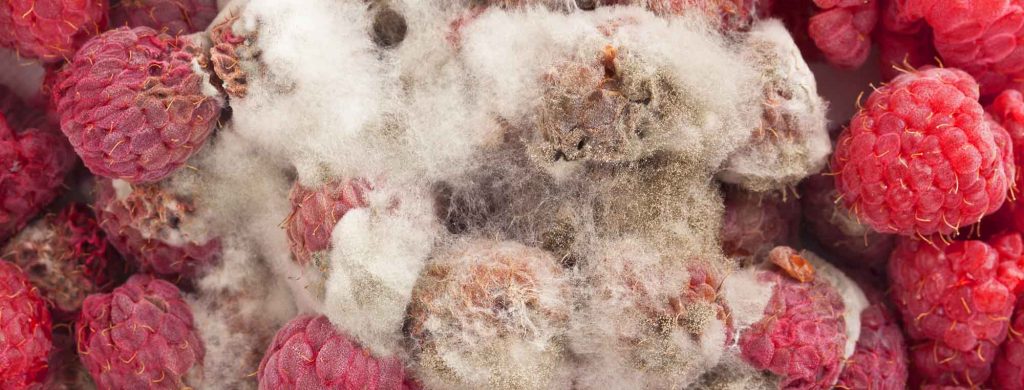
What If the Mold Is Only on the Fruit?
This can be a little harder to judge.
Suppose you have a fruit mead. A piece of fruit rises above the liquid. You later see mold on that fruit.
It may be tempting to remove the fruit and continue fermentation. Do not assume that this is safe.
The fruit has been in contact with the beverage. Mold can also grow beyond the visible area. Personally, I’d dump the batch. But a more daring approach would be to isolate and remove the small mold patch and wait a few weeks to see if it grows back. If it does not, then that small patch may have been all there was. Since mold needs air to grow, it would re-grow on top before spreading further. Importantly, I would only risk this if the mold was small and on an isolated piece of fruit. But still, it’s a risk.
Mold on Brewing Ingredients
Mold can also appear before fermentation begins.
Pay attention to ingredients such as:
- Fruit
- Juice
- Spices
- Grains
- Honey
- Dried fruit
- Herbs
Do not use visibly moldy ingredients in a batch. And this is particularly important for fruit. If a piece of fruit has a small mold spot, cutting away the visible spot does not guarantee that the rest of the fruit is safe.
Some molds can penetrate into food beyond the visible colony.
For brewing, there is no good reason to take this risk. Discard visibly moldy fruit. Use fresh, sound ingredients.
Honey and Mold
Pure honey is not a common environment for active mold growth. Its low water concentration makes it difficult for most microorganisms to grow.
However, honey can become contaminated after dilution or handling. Honey mixed with water creates a very different environment. This is one reason that sanitation becomes important as soon as you make your must.
If you see mold in a honey container, do not assume that you can simply remove the visible growth and use the rest. For questionable ingredients, follow the manufacturer’s or food-safety guidance.
What About Mold in the Airlock?
An airlock can develop mold or other growth. This does not necessarily mean that the entire batch is contaminated.
The airlock is exposed to the environment. It can collect dust, organic material, and microorganisms.
If the airlock contains mold:
- Remove the airlock.
- Avoid pushing the contaminated liquid into the fermenter.
- Clean the airlock.
- Sanitize it.
- Replace the airlock with fresh sanitizer.
Inspect the fermenter. If there is no visible contamination in the beverage, the batch may not have a problem.
The airlock is not the same as the contents of the fermenter.
What About Mold on the Outside of the Fermenter?
Mold on the outside of a fermenter does not automatically mean mold inside the fermenter.
- Clean the outside surface.
- Check the lid and seals.
- Check for leaks.
- Check the inside of the fermenter.
If the beverage itself has no visible contamination, you do not need to discard a batch only because you found mold on the outside of the container.
How Do I Prevent Mold?
Mold prevention starts with sanitation.
Keep your homebrewing equipment clean. Then sanitize equipment that will contact the finished beverage.
Pay particular attention to:
- Fermenters
- Lids
- Airlocks
- Siphons
- Tubing
- Bottling equipment
- Kegs
- Spigots
- Fruit preparation equipment
Clean equipment removes organic material. Sanitizing reduces microorganisms on clean surfaces. You need both steps.
Sanitizer does not replace cleaning.
Keep Oxygen Out When Appropriate
Many molds need oxygen to grow.
A healthy primary fermentation naturally produces carbon dioxide. That creates some protection from oxygen exposure. After fermentation slows, the risk of oxygen exposure increases.
This is one reason to:
- Keep fermenters closed.
- Use an appropriate airlock.
- Avoid unnecessary opening.
- Minimize headspace when practical.
- Transfer carefully.
- Keep fruit submerged when the recipe allows it.
Oxygen is not the only factor that affects mold growth. It is simply an important factor.
Fruit Needs Extra Attention
Fruit can introduce microorganisms into a batch. It can also create a surface where mold can grow.
Use clean, sound fruit. Remove damaged or visibly moldy fruit. And avoid leaving fruit floating above the surface for long periods.
If you use fruit in fermentation, follow a process that keeps the fruit and beverage under appropriate fermentation conditions.
What If I See Something Weird?
Do not taste it. Take a photo if you want to identify it later. Then inspect the fermentation.
Ask:
- Is the growth fuzzy?
- Is it forming distinct colonies?
- Is it growing on the surface?
- Is it attached to exposed fruit?
- Is it spreading?
- Does it look different from normal krausen or yeast?
- Did it appear after fermentation slowed?
If the answer is unclear, treat the growth as an unknown contamination.
When visible mold is present in the beverage, discard the batch.

How Do I Dispose of a Moldy Batch?
Do not pour a moldy batch into a sink while splashing it around.
- Wear gloves.
- Avoid creating aerosols or splashes.
- Keep your face away from the contaminated material.
- Dispose of the beverage according to normal household waste and local disposal rules.
- Then clean the fermenter and equipment thoroughly.
- Remove visible organic material first.
- Then use an appropriate cleaner.
After cleaning, sanitize equipment according to the sanitizer manufacturer’s instructions. If porous materials such as scratched plastic equipment have been heavily contaminated, replacement may be easier than trying to prove that they are completely clean.
What About My Brewing Space?
Mold on one batch does not mean that your entire brewing area is contaminated.
- Clean any surfaces that contacted the moldy beverage.
- Wash your hands.
- Clean contaminated equipment.
- Check nearby ingredients.
If you repeatedly find mold in your brewing area, look for the source.
Common sources include:
- Standing water
- Damp equipment
- Wet towels
- Poor ventilation
- Leaking fermenters
- Damp walls
- Moldy fruit waste
- Dirty drains
A clean, dry brewing area reduces the opportunity for mold to grow.
The Bottom Line
Mold can be difficult to identify.
Not every unusual surface growth is mold. Not every mold produces mycotoxins. But you normally cannot determine the species or toxin production of an unknown mold by looking at it.
That makes the practical answer simple.
If you see obvious mold growing in your homebrew, discard the batch.
Do not:
- Taste it
- Smell it closely
- Skim the mold
- Rack away from it
- Boil it
- Pasteurize it
- Bottle it
Mycotoxins are a real food-safety concern, but their presence should not be assumed simply because you see mold. The bigger lesson is that you do not need to identify the exact toxin before deciding that moldy homebrew is not worth drinking. Homebrew is cheap compared with a trip to the emergency room.
When in doubt, dump it out.