If you bottle-condition beer, mead, or cider, you need to add a small amount of fermentable sugar before bottling.
This sugar is called priming sugar. The remaining yeast in the beer consumes the sugar inside the sealed bottle.
The yeast produces carbon dioxide (CO₂). The CO₂ dissolves into the beer. This creates carbonation.
The amount of priming sugar controls how much carbonation you produce. Use too little sugar and the beer can be flat. Use too much sugar and the beer can become overcarbonated.
In severe cases, excessive pressure can cause bottles to break.
The simplest answer is:
For a typical 5-gallon batch of ale, about 4 to 5 ounces of corn sugar is a common starting point.
However, the correct amount depends on several factors.
What Is Priming Sugar?
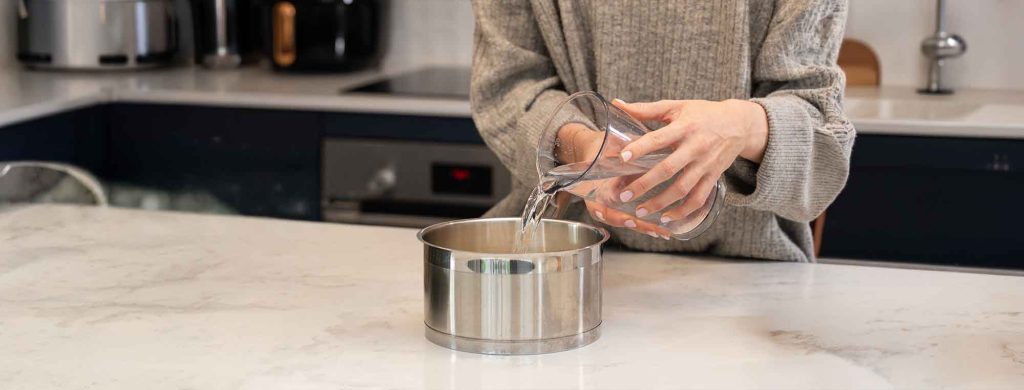
Priming sugar is fermentable sugar added to beer immediately before bottling.
Common choices include:
- Corn sugar (dextrose)
- Table sugar (sucrose)
- Dry malt extract
- Belgian candi sugar
Corn sugar is a common choice because it dissolves easily and produces predictable results. Table sugar also works well.
You do not need a special type of sugar to carbonate beer. You can even use honey!
Why Do I Need Priming Sugar?
Most of the CO₂ produced during primary fermentation escapes from the fermenter. The beer therefore has less dissolved CO₂ than you want in a finished beer. Priming sugar provides a small amount of new fermentable sugar.
The yeast consumes this sugar inside the sealed bottle. Because the CO₂ cannot escape, it dissolves into the beer. This creates carbonation.
How Much Priming Sugar Should I Use?
There is no single amount that works for every beer.
The correct amount depends on:
- Batch volume
- Desired carbonation
- Existing dissolved CO₂
- Beer temperature
- Sugar type
- Packaging method
For a typical 5-gallon batch, a common amount of corn sugar is approximately:
4 to 5 ounces by weight
This often produces moderate carbonation. However, measuring the sugar by weight is more accurate than measuring it by volume.
Why Should I Weigh Priming Sugar?
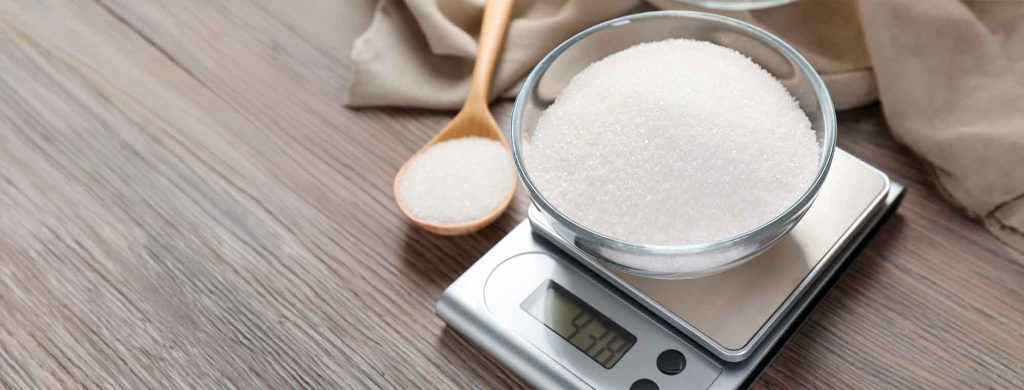
Sugar can have different densities. A cup of one sugar may not weigh the same as a cup of another sugar. Even the same sugar can be packed differently.
A kitchen scale removes much of this variation. Use a scale that measures grams. Grams are especially convenient for priming sugar calculations.
How Much Priming Sugar for 5 Gallons?
For a typical beer, you might start with approximately:
4.5 ounces (128 grams) of corn sugar for 5 gallons of beer.
This is only a general starting point. The actual amount should be adjusted for the beer style and desired carbonation. Also remember that your actual beer volume may be less than 5 gallons after fermentation. If you have only 4 gallons of beer, do not use the amount calculated for 5 gallons.
Why Does Batch Volume Matter?
The priming sugar must be distributed through the beer. If you add the same amount of sugar to different volumes, the smaller batch receives a higher concentration of sugar.
For example: 5 gallons + 4 ounces sugar
does not have the same carbonation potential as: 3 gallons + 4 ounces sugar
The smaller batch will receive more sugar per gallon. Measure your actual packaging volume.
What Is Carbonation Level?
Carbonation level describes how much dissolved CO₂ is present in the beer. Different beer styles have different typical carbonation levels.
Examples include:
- Low carbonation
- Moderate carbonation
- High carbonation
A British ale often uses less carbonation than a Belgian wheat beer. The beer style should influence your target.
What Are CO₂ Volumes?
Brewers often describe carbonation using volumes of CO₂.
For example:
2.0 volumes of CO₂
means that the beer contains approximately two volumes of dissolved CO₂ for each volume of beer under standard reference conditions.
You do not need to understand the chemistry to bottle-condition beer. However, carbonation calculators use this measurement.
Typical Carbonation Ranges
These are useful general targets:
| Beer type | Approximate CO₂ |
| British ale | 1.5–2.0 volumes |
| American ale | 2.2–2.7 volumes |
| IPA | 2.2–2.7 volumes |
| Belgian beer | 2.5–3.5 volumes |
| Wheat beer | 2.5–4.0 volumes |
| Stout | 1.5–2.2 volumes |
These are general ranges. Individual recipes can use different carbonation levels.

How Does Temperature Affect Priming Sugar?
Temperature is important because beer retains dissolved CO₂. Cold beer holds more CO₂ than warm beer. This means that the amount of priming sugar depends partly on the highest temperature the beer reached after fermentation.
For example, beer fermented at 68°F may already contain more dissolved CO₂ than beer that fermented at 75°F. A priming sugar calculator accounts for this residual CO₂.
What Temperature Should I Use?
Use the highest temperature the beer reached after fermentation. This is not always the temperature of the beer on bottling day.
For example:
- Fermentation temperature: 68°F
- Beer later cooled to: 60°F
- Bottling temperature: 60°F
The residual CO₂ calculation should generally use the highest temperature reached after fermentation, not simply the current temperature.
Why Does Residual CO₂ Matter?
Beer retains some CO₂ after fermentation. You do not need to create all of the desired carbonation with priming sugar. Some carbonation already exists.
If you ignore the existing CO₂ and add too much sugar, the beer can become overcarbonated.
Should I Use a Priming Sugar Calculator?
Yes. A calculator is one of the easiest ways to determine the amount of sugar needed.
Enter:
- Beer volume
- Beer temperature
- Desired carbonation
- Sugar type
The calculator then estimates the required sugar. This is more precise than using a fixed amount for every beer.
What Is the Best Priming Sugar?
For beginners, corn sugar (dextrose) is a simple choice.
It is:
- Easy to dissolve
- Easy to measure
- Widely available
- Predictable
Table sugar is also a good option. There is no need to buy an expensive specialty sugar simply to carbonate beer.
Can I Use Table Sugar?
Yes. Table sugar is sucrose. Brewing yeast can ferment it. You can use ordinary white table sugar for bottle conditioning.
Use a calculator designed for the specific sugar type or use an appropriate conversion. Do not assume that the same weight of every sugar produces exactly the same result.
Can I Use Honey?
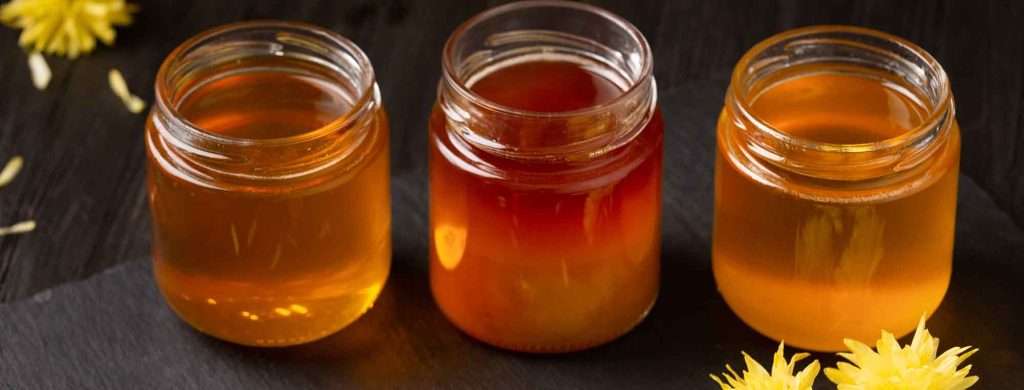
Yes, but honey is less convenient for precise carbonation. Honey varies in water content and sugar composition. It can therefore be more difficult to calculate accurately.
For consistent carbonation, dextrose or table sugar is simpler.
Can I Use Maple Syrup?
You can use fermentable syrups, but they are not the simplest choice for priming. The sugar concentration can vary.
If you want predictable carbonation, use a measured dry sugar.
Can I Use Dry Malt Extract?
Yes. Dry malt extract can be used for bottle conditioning.
It usually requires more material than simple sugar because it is not completely fermentable. For beginners, corn sugar or table sugar is easier.
How Do I Prepare Priming Sugar?
The simplest method is to make a priming solution.
For example:
- Measure the required sugar.
- Add the sugar to a small amount of water.
- Heat the solution to dissolve the sugar.
- Allow the solution to cool.
- Add it to the bottling bucket.
- Transfer the beer onto the solution.
- Bottle the beer.
Do not add hot sugar solution directly to the beer. Cool the solution first.
How Much Water Should I Use?
You only need enough water to dissolve the sugar. A small amount is sufficient. For example, you can dissolve your priming sugar in approximately 1 to 2 cups of water.
The exact amount is not critical. You do not want to add a large amount of water to the beer.
Do I Need to Boil Priming Sugar?
Many homebrewers heat the sugar solution to sanitize it. A short boil can also help dissolve the sugar. Use clean equipment. Avoid prolonged boiling. You only need a sanitary, dissolved sugar solution.
How Do I Add the Sugar to the Beer?
The safest method for a beginner is to use a bottling bucket.
The process is:
- Clean the bottling bucket.
- Sanitize the bottling bucket.
- Prepare the priming sugar solution.
- Add the cooled sugar solution to the bottling bucket.
- Transfer the beer into the bucket.
- Allow the beer to mix gently with the sugar.
- Bottle the beer.
Do not pour the sugar solution directly into individual bottles unless you are using a carefully controlled method.
Should I Stir the Beer?
Be gentle. You want the priming sugar distributed evenly. You do not want to introduce oxygen.
If you transfer the beer gently onto the priming solution, the beer should mix with the sugar. If necessary, use a sanitized spoon to stir very gently. Do not splash the beer.
Why Is Oxygen a Problem?
Oxygen can cause oxidation.
Oxidized beer can develop:
- Stale flavors
- Cardboard-like flavors
- Dull hop character
- Loss of freshness
Avoid splashing during transfer. Keep the bottling process gentle.
Can I Add Priming Sugar Directly to Each Bottle?
Yes, but it is more difficult to control. You would need to accurately measure a small amount of sugar for every bottle. A small error can produce a significant difference between bottles.
A bottling bucket provides more consistent distribution.
What About Carbonation Drops?
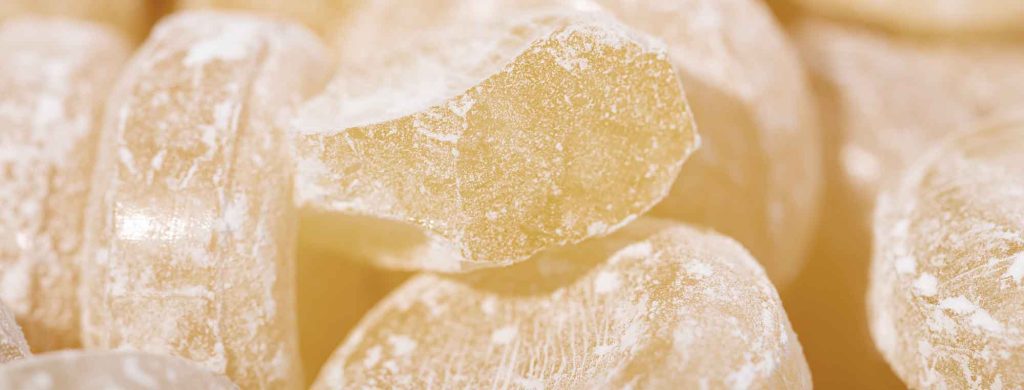
Carbonation drops are pre-measured pieces of sugar. They are designed to simplify bottle conditioning.
The process is simple:
- Sanitize the bottle.
- Add the recommended number of drops.
- Fill with beer.
- Cap the bottle.
- Allow it to condition.
They are convenient for beginners. However, they offer less control than calculating a specific amount of priming sugar.
How Many Carbonation Drops Should I Use?
Follow the manufacturer’s instructions, as different products have different sugar quantities.
Do not assume that every carbonation drop has the same amount of sugar.
What Happens If I Use Too Much Priming Sugar?
Too much priming sugar creates too much CO₂.
The result can be:
- Excessive carbonation
- Large amounts of foam
- Beer spraying from the bottle
- Leaking bottles
- Excessive pressure
In severe cases, bottles can break. This is called a bottle bomb.
What Is a Bottle Bomb?
A bottle bomb is a bottle that fails because internal pressure becomes too high.
This can happen when:
- Too much priming sugar is added.
- Beer is bottled before fermentation is complete.
- Bottles are not designed for carbonation.
- Other fermentable material remains in the beer.
Glass bottles can fail violently. Treat bottle conditioning as a pressure-producing process.
How Can I Prevent Bottle Bombs?
Use these basic practices:
- Make sure primary fermentation is complete.
- Confirm stable gravity readings.
- Measure priming sugar by weight.
- Use an appropriate carbonation target.
- Use bottles designed for carbonated beverages.
- Use suitable bottle caps.
- Store bottles safely during conditioning.
The most important step is confirming that fermentation is complete before bottling.
Can I Bottle If Fermentation Is Almost Finished?
No. “Almost finished” is not finished. If the gravity is still decreasing, the yeast is still producing CO₂. Adding priming sugar creates even more fermentable sugar. This can result in excessive pressure. Wait until the gravity is stable.

How Long Does Bottle Conditioning Take?
Many beers carbonate in approximately four to six weeks. Some beers require longer.
Factors include:
- Temperature
- Yeast health
- Beer strength
- Priming sugar
- Bottle size
- Yeast strain
Do not assume that a bottle is fully carbonated after a specific number of days.
What Temperature Should I Use for Bottle Conditioning?
Keep the bottles at an appropriate fermentation temperature. For many ales, approximately 65–72°F is suitable.
The exact temperature depends on the yeast. Do not refrigerate the bottles immediately after packaging. Cold temperatures slow yeast activity.
Why Is My Bottled Beer Still Flat?
Possible causes include:
- Insufficient priming sugar
- Beer was too cold during conditioning
- Yeast activity is low
- Bottles were not sealed correctly
- Fermentation was not suitable for bottle conditioning
- Not enough conditioning time has passed
Give the bottles adequate time at an appropriate temperature.
Can I Add More Sugar to a Flat Bottle?
Do not casually open every bottle and add more sugar. This creates a difficult carbonation problem and can introduce contamination.
If a batch is flat, determine the cause before taking corrective action.
What If Some Bottles Are Carbonated and Others Are Flat?
Uneven carbonation often indicates uneven sugar distribution. This can happen when priming sugar is not mixed thoroughly.
Another possibility is that some bottle caps did not seal correctly. A bottling bucket and careful transfer can improve consistency.
Can I Carbonate Beer With a Keg?
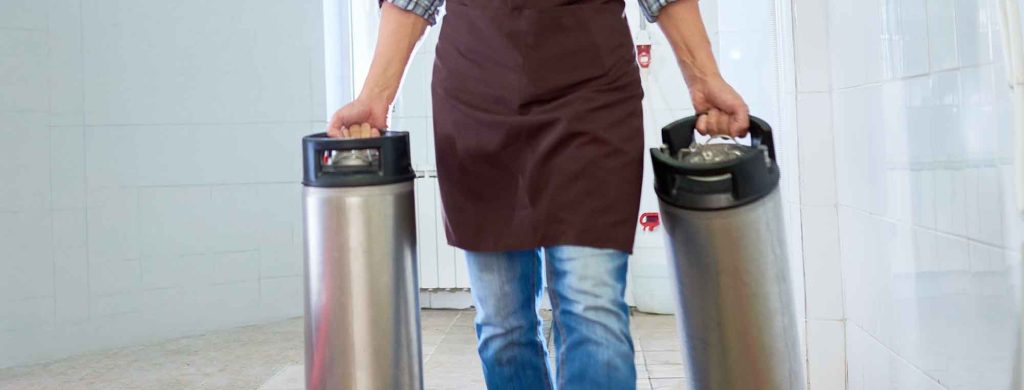
Yes. Kegging uses a different carbonation method.
Instead of adding priming sugar, you can add CO₂ from a gas cylinder. This gives you much more control over carbonation. You do not need priming sugar when force-carbonating beer.
Priming Sugar vs. Force Carbonation
| Bottle conditioning | Force carbonation |
| Uses fermentable sugar | Uses CO₂ cylinder |
| Carbonates in the bottle | Carbonates in a keg |
| Requires live yeast | Does not require fermentation |
| Low equipment cost | Higher equipment cost |
| Takes time | Can be relatively fast |
| Produces sediment | Usually produces clearer beer |
Bottle conditioning is a simple way to carbonate beer without a kegging system.
Does Priming Sugar Affect Alcohol Content?
Yes, but only slightly. The yeast converts some of the priming sugar into alcohol and CO₂.
The amount of alcohol produced is small compared with the primary fermentation. It is usually not important for normal homebrew calculations.
Does Priming Sugar Change the Flavor?
Usually, very little. The yeast consumes the sugar during bottle conditioning.
The main purpose is carbonation. Different sugars can produce minor differences in fermentation character, but simple sugars such as dextrose and sucrose are commonly used because they ferment cleanly.
What About Naturally Carbonated Beer?
Bottle conditioning is a form of natural carbonation. The yeast produces the CO₂ inside the sealed bottle.
This is different from force carbonation, where compressed CO₂ is added from a gas cylinder.
Can I Bottle Condition Very Strong Beer?
Yes, but strong beers can require more time to carbonate. High alcohol levels can reduce yeast activity. Some strong beers may need additional yeast for reliable bottle conditioning.
Follow the recipe and yeast manufacturer’s recommendations.
What Equipment Do I Need?
For basic bottle conditioning, you need:
- Bottling bucket
- Bottling wand
- Food-safe tubing
- Beer bottles rated for carbonation
- Bottle caps
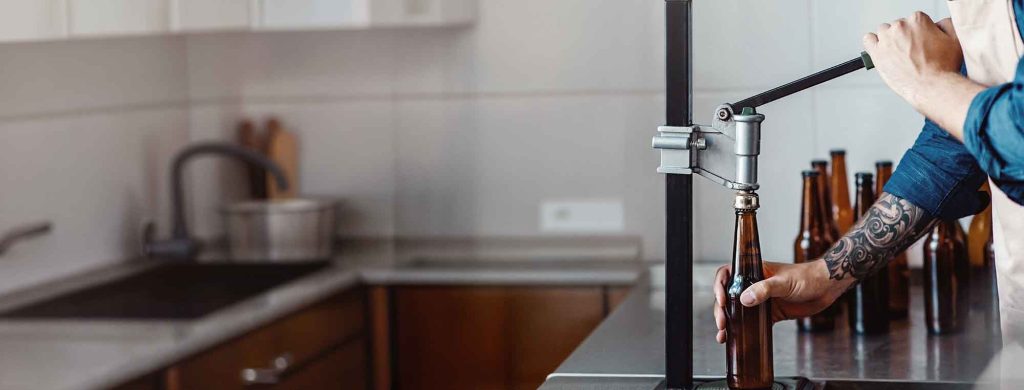
- Bottle capper
- Priming sugar
- Kitchen scale
- Brewing pot
- Measuring cup
- Brewing sanitizer
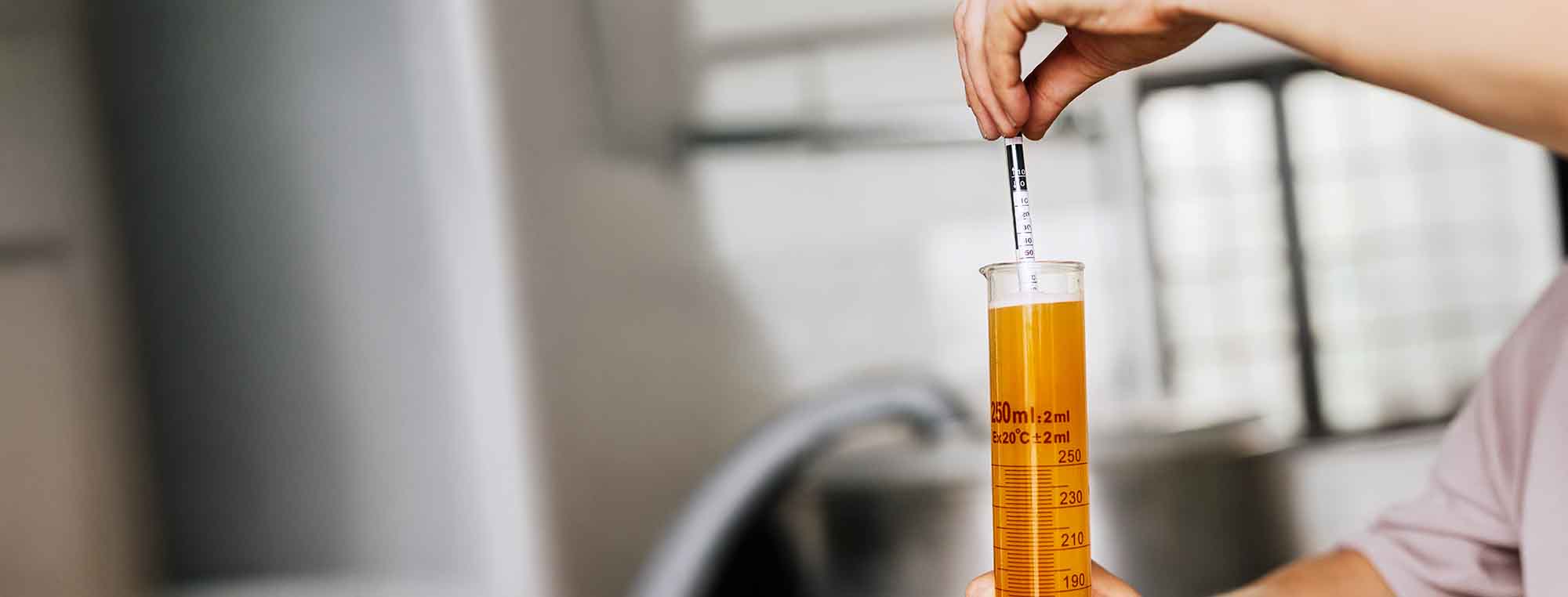
A hydrometer is also essential for confirming that fermentation is complete.
How Much Priming Sugar for One Gallon?
The amount depends on your target carbonation.
As a rough example, a moderate carbonation level may require approximately:
0.8 to 1.0 ounce of corn sugar for one gallon.
However, use the actual beer volume and a carbonation calculator for a more accurate result. Do not simply divide a 5-gallon recipe by five if the original calculation used different assumptions.
How Much Priming Sugar for Three Gallons?
A moderate carbonation level may require approximately:
2.5 to 3 ounces of corn sugar for three gallons.
Again, this is a general estimate. Use a calculator for your desired carbonation level and actual beer volume.
How Much Priming Sugar for Five Gallons?
A common starting point is approximately:
4 to 5 ounces of corn sugar for 5 gallons.
For more precise carbonation, calculate the amount using:
- Actual beer volume
- Beer temperature
- Desired CO₂ level
- Sugar type
How Much Priming Sugar for Ten Gallons?
For a typical moderate carbonation level, you might use approximately:
8 to 10 ounces of corn sugar for 10 gallons.
The exact amount should still be calculated. Do not assume that doubling the amount from a 5-gallon batch will always produce the correct result if the batch conditions are different.
What Is the Easiest Method for Beginners?
For a new brewer, the simplest reliable process is:
- Finish primary fermentation.
- Confirm stable gravity readings.
- Measure the actual amount of beer.
- Choose a carbonation level.
- Use a priming sugar calculator.
- Weigh the sugar.
- Dissolve it in water.
- Heat the solution to sanitize it.
- Cool the solution.
- Add it to a sanitized bottling bucket.
- Transfer the beer gently onto the sugar solution.
- Bottle the beer.
- Cap the bottles.
- Store them at an appropriate temperature.
- Wait for carbonation.
Priming Sugar Checklist
Before bottling:
- Fermentation is complete.
- Gravity readings are stable.
- Beer volume is measured.
- Desired carbonation is selected.
- Priming sugar is calculated.
- Sugar is weighed.
- Sugar solution is prepared.
- Bottling equipment is clean.
- Bottling equipment is sanitized.
- Bottles are suitable for carbonation.
- Bottle caps are ready.
The Bottom Line
The correct amount of priming sugar depends on more than batch size.
For a typical 5-gallon batch, 4 to 5 ounces of corn sugar is a common starting point for moderate carbonation.
However, the better method is to calculate the amount based on:
Beer volume + beer temperature + desired carbonation + sugar type.
- Use a kitchen scale.
- Use a priming sugar calculator.
- Mix the sugar evenly through the beer.
Most importantly, make sure fermentation is finished before adding priming sugar and bottling. If fermentation is still active, the yeast can ferment both the remaining wort sugars and the priming sugar. That can produce far more CO₂ than intended.
When bottle conditioning, a little measurement goes a long way. Measure the sugar, confirm stable gravity, and let the yeast provide the carbonation.