
Barrel fermentation can produce flavors that are difficult to create in a glass carboy, bucket, or stainless-steel fermenter.
A barrel can add:
- Oak flavor
- Vanilla
- Toasted wood flavors
- Tannins
- Small amounts of oxygen
- Concentration from evaporation
- Flavors from previous contents
But a barrel is not simply an expensive fermenter.
A wooden barrel is a porous container. It can leak. It can allow oxygen into the fermentation. It can hold microorganisms from previous batches. It can dry out between uses. It can also add much more oak flavor than you expect.
For a homebrewer, barrel fermentation is a tradeoff.
You get unique flavors and fermentation characteristics. You also get more work.
This guide explains how to ferment and age beer, wine, and mead in a barrel at home.
What does a barrel actually do?
A barrel can affect your fermentation in several ways.
It adds wood flavor
New oak can add:
- Vanilla
- Coconut
- Toast
- Caramel
- Spice
- Wood tannin
The exact flavors depend on:
- Oak species
- Toast level
- Barrel size
- Barrel age
- Contact time
- Beverage
- Temperature
A new small barrel can add a large amount of oak flavor very quickly.
It allows oxygen exchange
Wood is not completely airtight. A barrel allows more oxygen exchange than a glass carboy or stainless-steel fermenter.
This can be useful for some styles. It can also damage beer, wine, or mead if you leave it exposed for too long.
It can concentrate the beverage
Some liquid is lost through evaporation. This is sometimes called the angel’s share.
Water and alcohol can evaporate through the wood. The exact amount depends on the barrel, humidity, temperature, and storage conditions.
It can contain microorganisms
This is especially important with used barrels.
A barrel that previously held:
- Bourbon
- Wine
- Sour beer
- Mead
- Cider
- Fruit
…may contain microorganisms and compounds from the previous fermentation.
That can be a benefit if you want those organisms. It can be a problem if you do not.
What kind of barrel should a homebrewer use?
There are several types of barrels available to homebrewers.
New oak barrels
A new oak barrel has not previously held another beverage. It can provide strong oak character.
This makes small new barrels especially powerful. A new 5-gallon barrel can extract oak much faster than a commercial brewer’s large 53-gallon barrel.
Do not assume that five gallons of beer in a small barrel will behave like 53 gallons of beer in a large barrel. It will not.
Used spirit barrels
Used bourbon, whiskey, rum, tequila, and other spirit barrels are popular with homebrewers.
They can add:
- Oak
- Spirit character
- Vanilla
- Caramel
- Toast
- Flavor from the previous spirit
The barrel may also contain enough spirit to influence the finished beer. Used spirit barrels can be particularly useful for strong beers.
Examples include:
- Imperial stout
- Barleywine
- Old ale
- Strong porter
- Strong mead
The high alcohol and intense flavors can stand up to barrel character.
Used wine barrels
Wine barrels can work well for:
- Red wine
- Fruit wine
- Mead
- Saison
- Farmhouse beer
- Mixed-fermentation beer
- Sour beer
A wine barrel can contribute tannin and wine-derived flavors. The previous wine can also affect the character of the new fermentation.
Small barrels vs. large barrels
Barrel size matters. A lot.
A smaller barrel has more wood surface area relative to the amount of liquid inside.
This means: Small barrel = faster extraction and faster oxygen exposure.
A large barrel generally extracts oak more slowly. This is one reason small barrels are difficult to manage. A 5-gallon barrel is not simply a miniature 50-gallon barrel. The ratio of wood to liquid is vastly different.
Should you ferment or age in the barrel?
These are different practices.
Barrel fermentation
You put the unfermented or partially fermented beverage into the barrel and allow fermentation to occur there.
This exposes the fermentation to the barrel from the beginning.
Barrel aging
You ferment the beverage somewhere else. You then transfer the finished or nearly finished beverage into the barrel. This gives you more control.
For a first barrel project, aging a finished beer, wine, or mead in the barrel is often easier to manage. You can monitor the fermentation separately and know what you are putting into the barrel.
Why ferment in a barrel?
Barrel fermentation can affect the fermentation environment. Yeast and other microorganisms interact with the wood and oxygen differently than they do in a sealed glass or plastic fermenter.
This can be useful for certain traditional styles. However, most homebrewers do not need to ferment their beer in a barrel to get good fermentation.
A normal fermenter gives you much more control. A barrel is most useful when the barrel itself is part of the flavor and fermentation process.
A barrel is not a sterile fermenter
This is one of the biggest differences between a barrel and a normal homebrew fermenter.
You can sanitize a glass carboy. You can clean stainless steel. (Related: What is the difference between Cleaning and Sanitizing?)
Wood is different. A barrel contains pores and microscopic spaces. Microorganisms can enter the wood. Once they are there, you cannot assume that a normal sanitizer will remove them.
This is not necessarily bad. For mixed-fermentation beer, it can be exactly what you want. For a clean lager, it can be a disaster.
Decide whether the barrel is clean or wild
Before you use a used barrel, decide what role it will have.
Clean barrel
You want to produce a clean beer, wine, or mead with no intentional contribution from wild microorganisms.
You must take contamination seriously.
Wild or mixed-fermentation barrel
You intentionally want organisms such as:
- Brettanomyces
- Lactic acid bacteria
- Acetic acid bacteria
…or organisms from previous batches.
In this case, the barrel becomes part of your microbial culture. Once you use a barrel this way, do not assume that it can return to clean service. Treat it as a dedicated mixed-fermentation barrel.
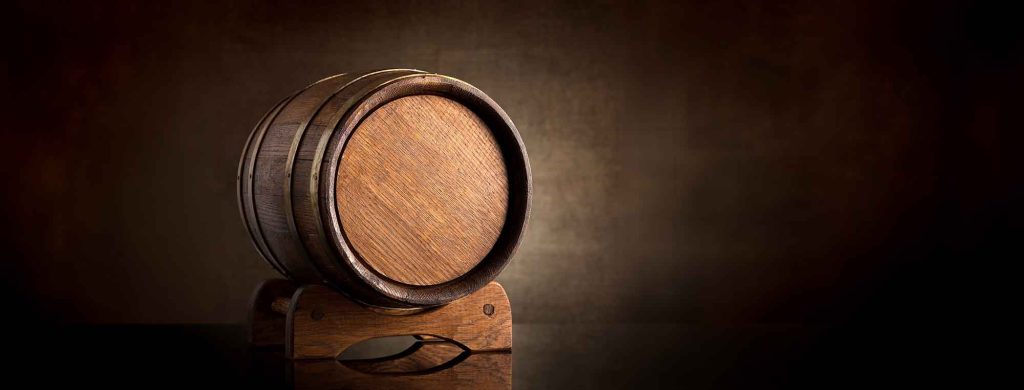
How do you prepare a new barrel?
Follow the barrel manufacturer’s instructions. Different barrels have different preparation requirements.
A new barrel may need to be:
- Rinsed
- Swelled with water
- Filled with water
- Checked for leaks
- Prepared for immediate use
The goal is to make the wood absorb enough water to swell and seal the barrel. Do not assume that a dry wooden barrel will be watertight. It may leak heavily when you first fill it.
What if the barrel leaks?
Some leaking is normal when a dry barrel is first filled.
The wood can swell and close small gaps. Place the barrel somewhere where a leak will not damage your house. A bathtub, utility sink, garage, or other controlled location can be useful depending on the barrel size.
Do not place a newly filled barrel on an expensive wood floor and hope for the best! Ask me how I know.
Do not leave a barrel full of water indefinitely
Water is useful for checking and swelling a barrel. It is not a good long-term storage solution. Long periods filled with plain water can create conditions that encourage unwanted microbial growth and can affect the wood.
Once the barrel is ready, fill it with the beverage you intend to ferment or age. A barrel is happiest when it is either full of the intended beverage or properly maintained for storage.
How full should the barrel be?
Keep the barrel as full as practical.
You want minimal headspace. A large air space creates more opportunity for oxidation.
This is particularly important during aging. The barrel already allows oxygen exchange through the wood. You do not need to add a large pocket of air above the beverage.
Fermentation headspace is different
During active fermentation, carbon dioxide provides some protection from oxygen.
As fermentation slows, that protection decreases. A barrel that was safe during active fermentation can become an oxidation problem later.
This is why barrel fermentation requires monitoring. Do not put your homebrew into a barrel and ignore it for three months because the airlock is still attached.
What about the airlock?
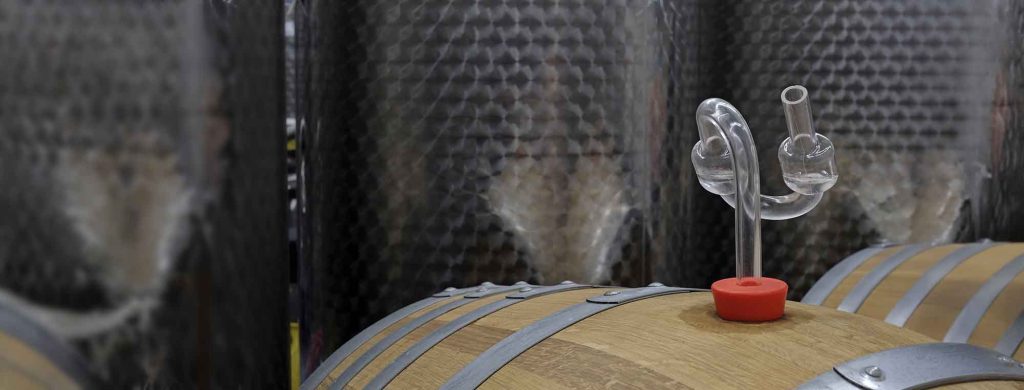
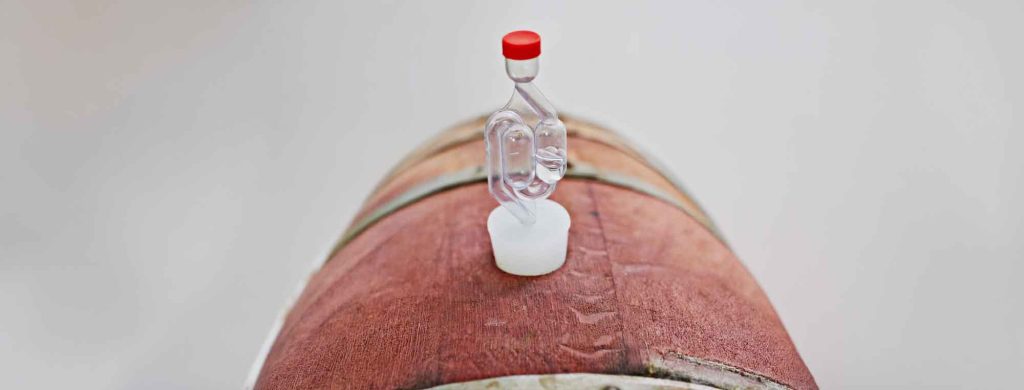
Many small barrels are designed to use a bung and airlock. Use one if your barrel configuration allows it.
During active fermentation, the airlock provides a controlled path for gas to escape. During aging, the airlock can also help reduce exposure to open air.
Check the airlock regularly. It can dry out. It can also become clogged during vigorous fermentation.
Fermentation in a barrel can be messy
Barrel fermentation has the same problems as fermentation in a carboy. But the cleanup is harder.
A vigorous fermentation can push:
- Foam
- Krausen
- Yeast
- Fruit
- Beer
through the bung or airlock.
Do not fill a barrel to the absolute top before a vigorous primary fermentation. Leave appropriate fermentation headspace.
If necessary, use a blow-off tube.
What should you ferment in a barrel?
Barrel fermentation works best when the barrel adds something useful.
Beer
Common choices include:
- Imperial stout
- Barleywine
- Old ale
- Belgian strong ale
- Saison
- Farmhouse beer
- Mixed-fermentation beer
- Sour beer
Wine
Barrel fermentation and aging are common with many traditional wine styles.
At home, the same basic issues apply:
- Oxygen
- Evaporation
- Oak extraction
- Headspace
- Temperature
- Microbial contamination
Mead
Mead can work extremely well in oak.
Barrel-aged mead can develop:
- Vanilla
- Oak spice
- Tannin
- Caramel notes
- Oxidative character
Strong meads can be especially interesting because the alcohol and residual flavor can balance strong barrel character.
Do not barrel a delicate beverage without a plan
A barrel can overpower subtle flavors.
- A light beer can become heavily oaked.
- A delicate white wine can become dominated by wood.
- A subtle mead can taste like oak extract.
This is why strong, flavorful beverages are often easier starting points.
How long should beer stay in a barrel?
There is no universal barrel-aging time.
The correct time depends on:
- Barrel size
- Barrel age
- Toast level
- Previous contents
- Beverage
- Temperature
- Desired flavor
Small new barrels can reach strong oak character in weeks.
A large used barrel can take much longer. Do not use the calendar as your primary measurement. Taste the beverage.
Taste your barrel regularly
This is one of the most important barrel-aging habits. Start tasting early. Then taste on a regular schedule.
You are looking for:
- Oak intensity
- Tannin
- Oxidation
- Spirit character
- Acidity
- Alcohol integration
- Flavor balance
If the beverage tastes perfect today, it does not become more perfect because you leave it in the barrel for another month. Barrel aging has a stopping point.
What happens if you leave it too long?
You can get:
- Excessive oak
- Harsh tannin
- Oxidation
- Acetic character
- Excessive alcohol concentration
- Loss of fresh flavors
The barrel does not improve the beverage forever. At some point, the barrel becomes the dominant flavor.
Topping up the barrel
Evaporation causes the liquid level to drop. This creates additional headspace. Headspace increases oxidation risk. The traditional solution is topping up.
You add more of the same or a compatible beverage to bring the level back up. For example, if you are aging a 5-gallon batch in a barrel and lose liquid through evaporation, you may need additional beer or wine to keep the barrel full. Plan for this before you start. Do not make your only batch exactly the volume required to fill the barrel.
Keep some extra beverage
If you plan to barrel-age 5 gallons, consider making more than 5 gallons.
The extra beverage can be used for:
- Topping up
- Replacing samples
- Blending
- Bottling separately
- Correcting the final batch volume
This makes barrel management much easier.
Oxygen is both useful and dangerous
Barrel aging depends partly on controlled oxygen exposure. Small amounts can contribute to desirable changes. Too much oxygen causes oxidation.
Oxidation can produce:
- Stale flavors
- Loss of hop character
- Darkening
- Flat fruit character
- Cardboard-like flavors in some beers
The goal is not zero oxygen. The goal is controlled oxygen exposure.
Barrel aging and hop-forward beer
Be careful with heavily hopped beer. Oxygen exposure can damage hop aroma and flavor.
A barrel is usually a better match for malt-forward beer than for a fresh IPA. A barrel-aged IPA may be interesting. It is not the easiest way to preserve bright hop character.
Barrel aging and sour beer
Barrels are particularly useful for mixed-fermentation and sour beer.
Wood can provide a stable environment for microorganisms and allow slow oxygen exchange. A barrel can also retain organisms from previous sour batches.
This creates a useful practice:
Dedicate the barrel to sour or mixed fermentation.
Do not use the same barrel for clean beer afterward unless you are willing to accept contamination risk.
A barrel can become part of your yeast and bacteria culture
This is one of the most interesting aspects of barrel brewing. After repeated use, a barrel can contain a population of microorganisms.
The barrel is no longer simply a container. It becomes part of the fermentation system. This is one reason traditional barrel programs can produce a consistent house character. But it is also why cleaning a barrel can be difficult.
Cleaning a barrel
Cleaning depends heavily on how you used the barrel. A barrel used for a clean spirit-aged beer requires different handling from a barrel used for sour beer.
Do not assume that aggressive cleaning is always better. Some cleaning methods can damage the wood or remove desirable compounds.
Follow the barrel manufacturer’s instructions and use a method appropriate for the barrel’s intended future use.
Can you sanitize a barrel?
You can reduce contamination risk. You cannot treat a wooden barrel like stainless steel and assume that you have sterilized the entire interior.
This distinction is critical.
If a barrel previously contained sour beer, microorganisms may remain inside the wood. If you need a completely clean fermentation environment, stainless steel or glass is a better tool.
Storing an empty barrel
An empty barrel can dry out. A dry barrel can shrink, which can cause leaks.
Storage methods vary based on barrel type and how long you plan to store it. Some barrels are stored wet. Some are stored dry after appropriate treatment. Some barrels are filled with a storage solution.
Follow the barrel manufacturer’s recommendations. Do not leave an expensive barrel sitting empty in a hot garage for six months and expect it to be ready for use.
Temperature matters
Temperature affects:
- Fermentation speed
- Yeast behavior
- Extraction
- Evaporation
- Oxygen transfer
- Microbial activity
Try to keep the barrel in a stable environment. A large temperature swing can also cause the liquid and air inside the barrel to expand and contract. This can increase movement of air through the wood and fittings.
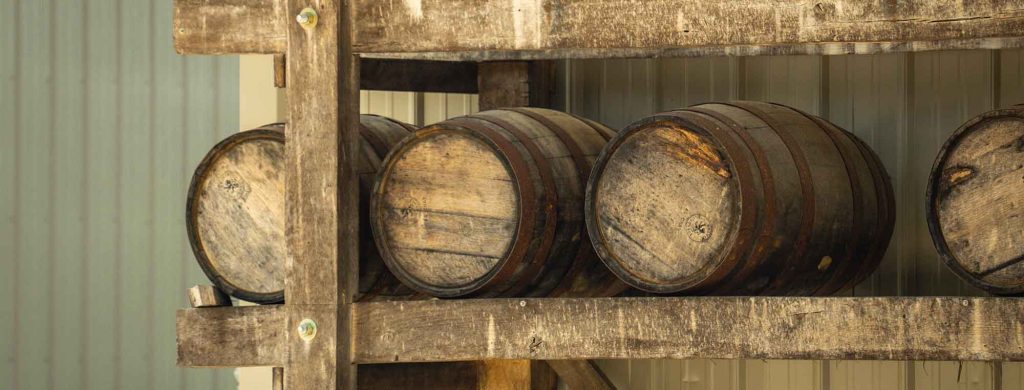
Barrel aging in a garage
A garage can work. It can also be a poor choice.
Consider:
- Temperature
- Humidity
- Pests
- Dust
- Direct sunlight
- Freezing
- Excessive heat
A stable basement, cellar, temperature-controlled room, or other suitable area is usually easier to manage.
What about barrel wax?
Barrel wax can be used on some barrels to reduce leakage or change the amount of oxygen exchange.
Do not assume that coating a barrel with wax is always beneficial. It can change the way the barrel breathes. Follow the barrel manufacturer’s recommendations.
Barrel size changes your process
A 5-gallon barrel requires more frequent attention than a 30- or 50-gallon barrel. The smaller the barrel, the more quickly changes happen.
This means a small homebrew barrel can require:
- More frequent tasting
- More frequent topping up
- Shorter aging periods
- Faster decisions
This is why small barrels can be fun but unforgiving.
Barrel aging vs. oak cubes
You do not need a barrel to get oak flavor. Oak cubes, spirals, chips, and staves can add oak to beer, wine, or mead in a normal fermenter. This has several advantages.
You can:
- Control contact time
- Reduce oxygen exposure
- Sanitize the vessel more easily
- Avoid leaks
- Avoid barrel storage problems
- Use the same fermenter for many batches
A barrel provides more than oak. It provides a combination of wood, oxygen exchange, evaporation, and history.
That is what you are paying for.
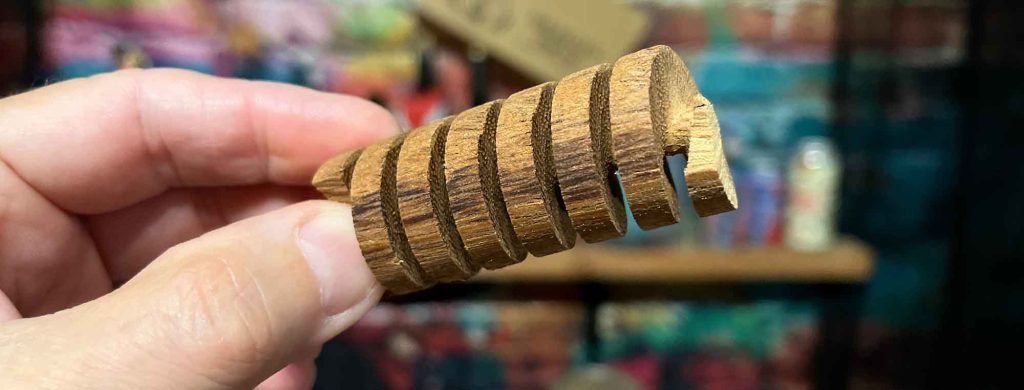
Barrel aging vs. an oak spiral
An oak spiral can reproduce part of the flavor contribution of a barrel. But it does not reproduce the entire barrel environment.
If your goal is simply: “I want this beer to taste like oak.” An oak product may be easier.
If your goal is: “I want to ferment or age this beverage in wood.” A barrel provides something different.
What about barrel-aged beer kits?
Some homebrew recipes are designed specifically for barrel aging.
These recipes often use:
- Strong malt flavor
- Higher alcohol
- Lower hop bitterness
- Dark roasted grains
- Belgian yeast
- Brettanomyces
- Fruit
The recipe should support the barrel. Do not take a delicate 4% lager and assume a bourbon barrel will automatically improve it.
Barrel aging a finished beer
For a first project, this is one of the easiest approaches.
1. Brew the beer normally.
Ferment it completely.
2. Confirm that fermentation is finished.
Use gravity readings.
Do not rely only on the airlock.
3. Prepare the barrel.
Follow the barrel manufacturer’s instructions.
4. Transfer the beer.
Use sanitized equipment.
Avoid unnecessary splashing.
5. Fill the barrel as completely as practical.
Minimize headspace.
6. Seal the barrel.
Use an appropriate bung and airlock.
7. Store it at a stable temperature.
8. Taste regularly.
9. Remove the beer when the flavor is right.
10. Package carefully.
Avoid introducing oxygen during transfer and packaging.
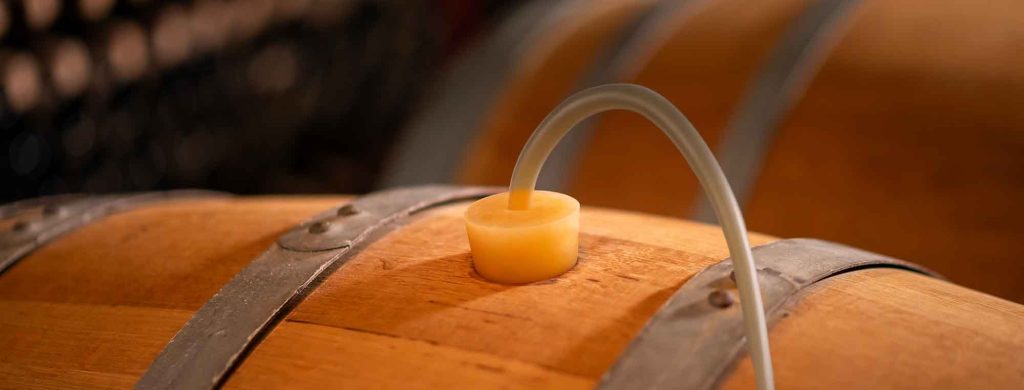
Barrel fermentation from the beginning
If you want to ferment directly in the barrel:
1. Prepare the barrel.
Make sure it is ready to hold the beverage.
2. Transfer the wort, must, or juice.
Leave enough headspace for fermentation.
3. Pitch the yeast.
Use an appropriate pitch rate.
4. Install the bung and airlock.
5. Monitor fermentation.
Use gravity readings when practical.
6. Monitor the barrel.
Check for leaks, drying airlocks, and other problems.
7. Manage headspace after fermentation.
Once fermentation slows, minimize oxygen exposure.
8. Taste regularly.
Do not let the barrel determine the schedule.
Should you ferment fruit in a barrel?
You can, but it’s ill-advised. Fruit adds additional complications.
Fruit can:
- Increase fermentation activity
- Add pulp
- Add sugar
- Increase pressure
- Add microorganisms
- Create more sediment
A barrel can be difficult to clean after fruit fermentation. If you ferment fruit in a barrel, assume that the barrel may be permanently associated with that fermentation.
Barrel bombs are possible
A barrel is not automatically safe from pressure. If fermentation continues in a sealed barrel, pressure can build.
This is especially important when:
- Fermenting at high gravity
- Adding fruit
- Adding sugar
- Using Brettanomyces
- Bottling from a barrel
- Packaging before gravity is stable
Never seal an actively fermenting beverage in a vessel that cannot safely vent pressure. Use an appropriate airlock or pressure-rated system.
Can you carbonate in the barrel?
Some systems can hold pressure. A traditional wooden barrel is not automatically a pressure vessel. Do not force-carbonate a barrel unless the barrel is specifically designed and rated for that use.
For normal homebrew barrels, carbonate the finished beverage in an appropriate pressure-rated bottle or keg.
Barrel aging mead
Mead is an excellent barrel candidate. The combination of honey, alcohol, oak, and time can produce complex flavors.
Good candidates include:
- Traditional mead
- Bochet
- Braggot
- Fruit mead
- Strong dessert-style mead
Barrel-aged mead can also benefit from careful blending. For example, you can blend a heavily oaked portion with unaged mead to reduce oak intensity.
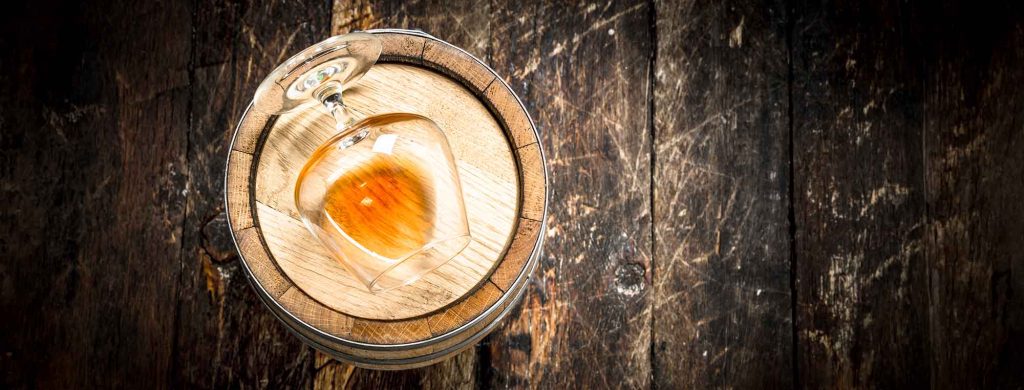
Barrel aging cider
Cider can also work well in oak.
Oak can add:
- Vanilla
- Spice
- Tannin
- Structure
Barrel-aged cider can become very dry. Monitor gravity and flavor.
If you want a sweet cider, do not assume the barrel will stop fermentation. A barrel does not, in any way, stabilize an active fermentation.
Sweet beverages require extra caution
If you want a sweet beer, cider, wine, or mead, you must control fermentation before packaging. A beverage that tastes sweet in the barrel can contain fermentable sugar.
Yeast can continue working after packaging. This can create dangerous pressure.
What if the barrel develops mold?
Do not ignore visible mold.
The correct response depends on:
- Where the mold is
- What caused it
- Whether the barrel is empty
- Whether the barrel is intended for clean or mixed fermentation
- The manufacturer’s maintenance instructions
Do not assume that rinsing the barrel removes all contamination.
If a barrel becomes badly contaminated and you do not know its history, replacing it may be more practical than trying to rescue it.
The biggest homebrew barrel mistakes
Buying a barrel before choosing the brew
Start with the beverage.
Then choose the barrel.
Buying too small a barrel
Small barrels are fast.
A first-time brewer may not be ready for that speed.
Leaving homebrew in the barrel too long
Taste it.
Allowing the barrel to develop headspace
Top it up.
Ignoring evaporation
Expect losses.
Treating a barrel like glass
Wood behaves differently.
Assuming a used barrel is clean
It may contain microorganisms.
Using a sour barrel for clean brews
That is a contamination risk.
Fermenting without enough headspace
Barrel fermentation can produce vigorous foam.
Forgetting about packaging oxygen
Barrel aging does not make oxygen during transfer harmless.
Is barrel fermentation worth it for a homebrewer?
A barrel is worth considering if you want the things a barrel uniquely provides:
- Wood character
- Spirit character
- Wine character
- Slow oxygen exposure
- Evaporation
- Mixed fermentation
- A reusable microbial environment
A barrel is not necessary to make excellent beer, wine, cider, or mead. It adds another variable.
That variable can be exactly what makes the project interesting. But it also means you need to monitor the beverage more closely than you would in a normal fermenter.
A simple first barrel project
If you have never used a barrel before, keep the first project simple.
- Make a strong, flavorful beverage.
- Ferment it completely in your normal fermenter.
- Prepare a properly sized barrel.
- Transfer the finished beverage with minimal oxygen exposure.
- Keep the barrel full.
- Store it somewhere stable.
- Taste it regularly.
- When the barrel character is right, package it.
Do not wait for an arbitrary number of months.
The bottom line
A barrel is more than an oak flavoring device.
- It is a porous fermentation and aging environment.
- It adds wood.
- It allows oxygen exchange.
- It loses liquid through evaporation.
- It can contain microorganisms.
- It can retain flavors from previous beverages.
- And it can change a beer, wine, cider, or mead much faster than you expect.
For homebrewers, the key is control.
Start with the right beverage. Choose the barrel for the result you want. Keep the barrel full. Monitor temperature and evaporation. Taste frequently. Treat used barrels as potential microbial cultures.
And most importantly: Take the brew out when the barrel is finished with it—not when the calendar says it is finished.